
Every now and then, physics drops a discovery so wild that it doesn’t just tweak a formula – it rips up our mental picture of reality and forces us to start again. These breakthroughs are the kind that make you sit back, stare at the ceiling, and wonder what on earth is actually going on underneath everyday life. They’re not just about numbers on a chalkboard; they reshape how we think about space, time, matter, and even what it means to “exist.”
I still remember the first time I really understood that time runs at different speeds depending on how fast you move or how strong gravity is. It felt less like learning a fact and more like finding out the rules of the game had been different all along. The discoveries below have that same unsettling, thrilling quality. They’re the moments in physics when reality turned out to be stranger, deeper, and far more beautiful than anyone expected.
Einstein’s Relativity: Time and Space Aren’t What You Think
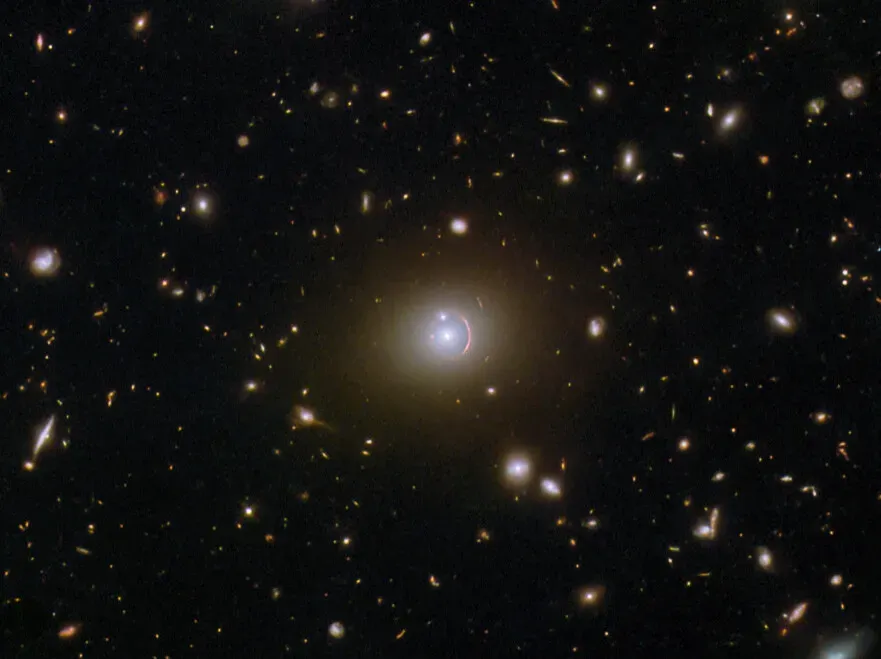
Imagine finding out that your watch and mine tick at different speeds, not because one of us forgot to wind it, but because we’re moving differently or standing in different gravitational fields. That’s the shock that came with Albert Einstein’s theories of special and general relativity in the early twentieth century. He showed that space and time are not rigid, separate things; they fuse into a flexible four-dimensional fabric called spacetime that can stretch, bend, and twist.
In special relativity, time slows down and lengths shrink for objects moving close to the speed of light, which has been confirmed with fast-moving particles and even ultra-precise atomic clocks on airplanes and satellites. General relativity goes further, revealing gravity not as a mysterious force pulling objects together, but as the curvature of spacetime caused by mass and energy. The fact that GPS systems have to correct for both kinds of relativistic effects just to tell you where your nearest coffee shop is still blows my mind.
Quantum Mechanics: Reality at Small Scales Is Inherently Weird
Zoom down to the level of atoms and smaller, and the world stops behaving like anything your intuition can handle. Quantum mechanics, developed in the early and mid-twentieth century, revealed that particles like electrons and photons can act like both waves and particles, and their behavior is described not by definite paths but by probabilities. Until a measurement is made, they exist in a kind of fuzzy blend of possible states, a phenomenon known as superposition.
One of the simplest but most disturbing examples is the famous double-slit experiment: individual particles sent through two slits build up an interference pattern as if each one somehow went through both slits at once. When you try to “peek” to see which slit they choose, the pattern changes. This isn’t just a lab curiosity; the rules of quantum mechanics underlie semiconductors, lasers, MRI machines, and the entire modern electronics industry. Our phones work because the universe, at its core, is stranger than common sense.
Wave–Particle Duality: Light and Matter Refuse to Pick a Side
For a long time, physicists argued about whether light was a wave, like ripples on a pond, or a stream of tiny particles. Wave–particle duality smashed that debate by saying, in effect, that light is both, depending on how you look at it. Experiments in the early twentieth century showed that light comes in discrete packets of energy, called photons, which behave like particles, while other experiments revealed unmistakable wave patterns like interference and diffraction.
The twist came when the same dual behavior was discovered for matter itself. Electrons, and even much larger particles such as atoms and some molecules, can show interference patterns as if they are waves spread out in space. It’s like finding out a baseball can sometimes pass through two windows at once and interfere with itself. Wave–particle duality doesn’t just challenge our vocabulary; it forces us to admit that the categories we use in everyday life don’t map neatly onto how nature actually works.
Quantum Entanglement: Spooky Connections Across Space
Quantum entanglement is one of those ideas that sounds like science fiction until you see how solid the evidence is. When two particles become entangled, their properties are linked so deeply that measuring one instantly tells you something about the other, no matter how far apart they are. Change the setup of your measurement on one side, and the statistics of what you see on the other side adjust in a way that can’t be explained by any simple “hidden” instructions they carried from the start.
This “spooky action at a distance,” as Einstein skeptically called it, has been confirmed again and again in experiments that rule out classical explanations. In the last decade, entanglement has gone from a philosophical headache to a powerful resource: it underpins quantum cryptography, quantum teleportation of information, and emerging quantum networks. The universe, it turns out, allows correlations that don’t care about classical distance in the way we thought, even though relativity’s speed limit on sending usable signals still holds.
The Uncertainty Principle: Limits on What We Can Ever Know
Many people imagine that if we just had better instruments, we could measure everything in the universe as precisely as we like. The uncertainty principle, introduced by Werner Heisenberg, shatters that dream. It says that certain pairs of quantities, like a particle’s position and momentum, cannot both be known arbitrarily well at the same time. The more precisely you pin down one, the more blurred the other becomes, and this is a fundamental feature of nature, not just a technological shortcoming.
You can picture it like trying to photograph a hummingbird’s wings in perfect detail while also tracking their exact speed: the act of zooming in on one aspect ruins your handle on the other. In quantum mechanics, this trade-off is built into the mathematics and has measurable consequences, from the stability of atoms to the way electrons fill energy levels in matter. The uncertainty principle forces a kind of humility: there are hard limits not just on what we currently know, but on what is even in principle knowable.
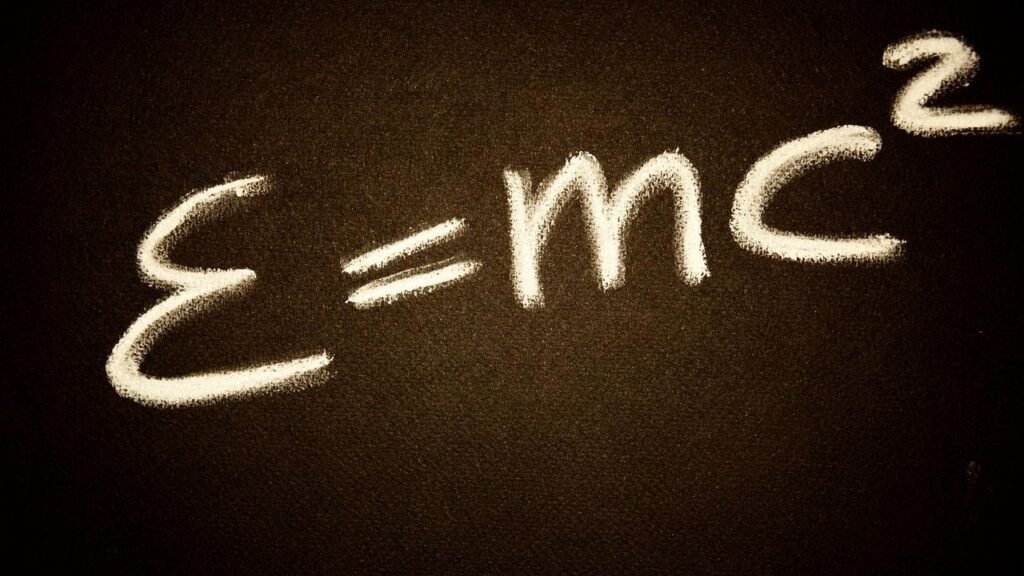
E = mc² and the Energy–Mass Connection
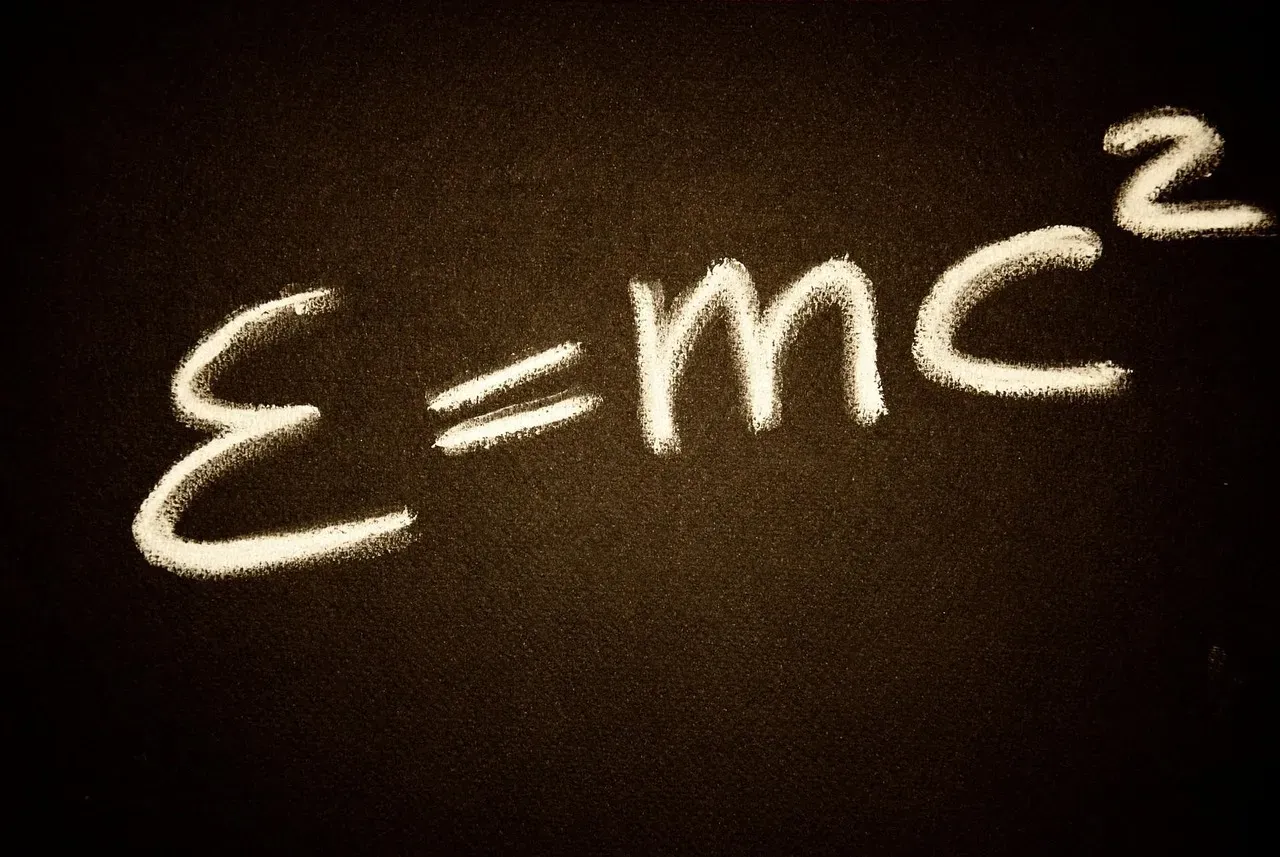
Einstein’s famous relation between energy and mass looks deceptively simple, but its implications are enormous. It says that mass is just another form of energy, and even a tiny amount of mass corresponds to a staggering amount of energy when multiplied by the square of the speed of light. This is why nuclear reactions, which convert a small fraction of mass into energy, can power stars for billions of years and release destructive forces in nuclear weapons.
Beyond dramatic explosions, the mass–energy connection quietly reshaped our understanding of what “stuff” is. It means that fields and particles, radiation and matter, are all part of a single energy story. In particle accelerators, when high-energy collisions produce new, heavier particles, that’s E = mc² in action: kinetic energy turning into mass. It also explains why objects become slightly more massive as they store energy, even if the change is far too tiny to notice in daily life.
The Big Bang and the Expanding Universe
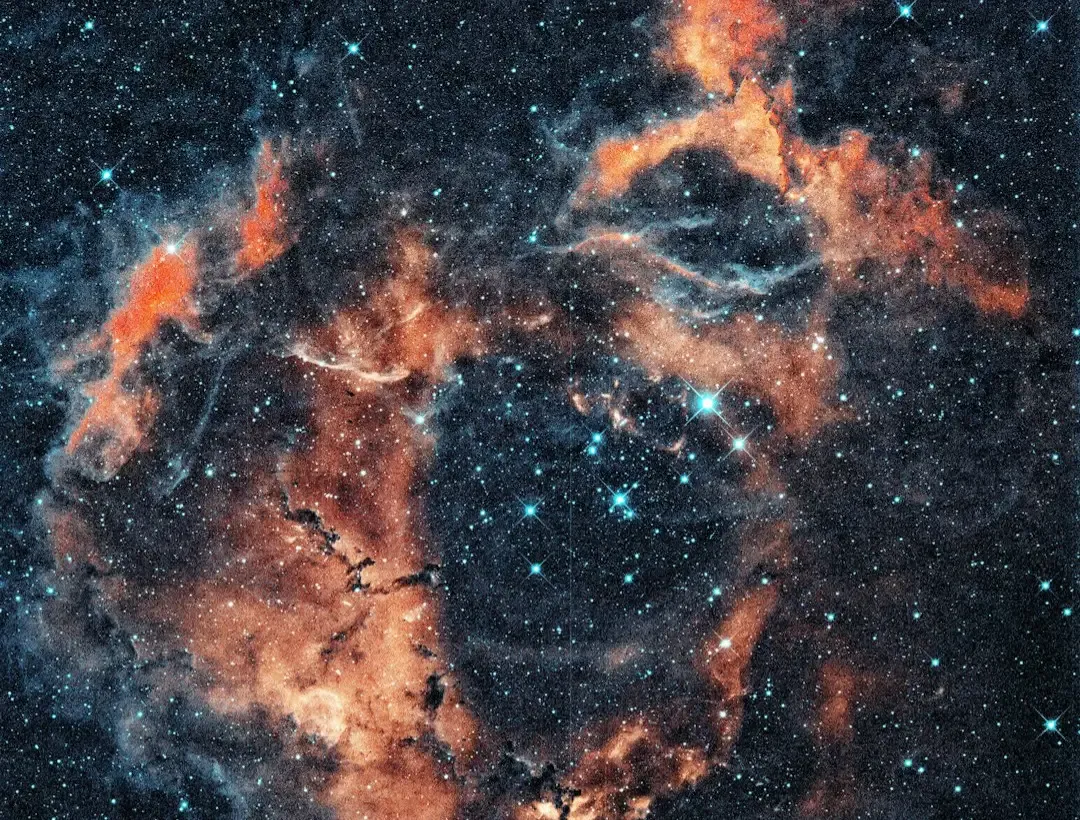
For much of human history, people assumed the universe was eternal and unchanging on the largest scales. Observations in the twentieth century upended that view when astronomers found that distant galaxies are, on average, moving away from us, with more distant ones receding faster. The simplest explanation is that space itself is expanding, which, when you run the clock backward, leads to a hot, dense beginning: the Big Bang.
Follow-up discoveries, like the faint afterglow of that early fireball (the cosmic microwave background) and the distribution of elements like hydrogen and helium, reinforced this picture. It’s a bit like walking into a room, seeing shards of glass and water on the floor, and realizing there must have been a shattered fish tank, not a static display. The Big Bang model doesn’t just tell us the universe has a history; it gives us a framework to talk about its birth, growth, and possible futures.
Dark Matter: Invisible Mass Shaping the Cosmos
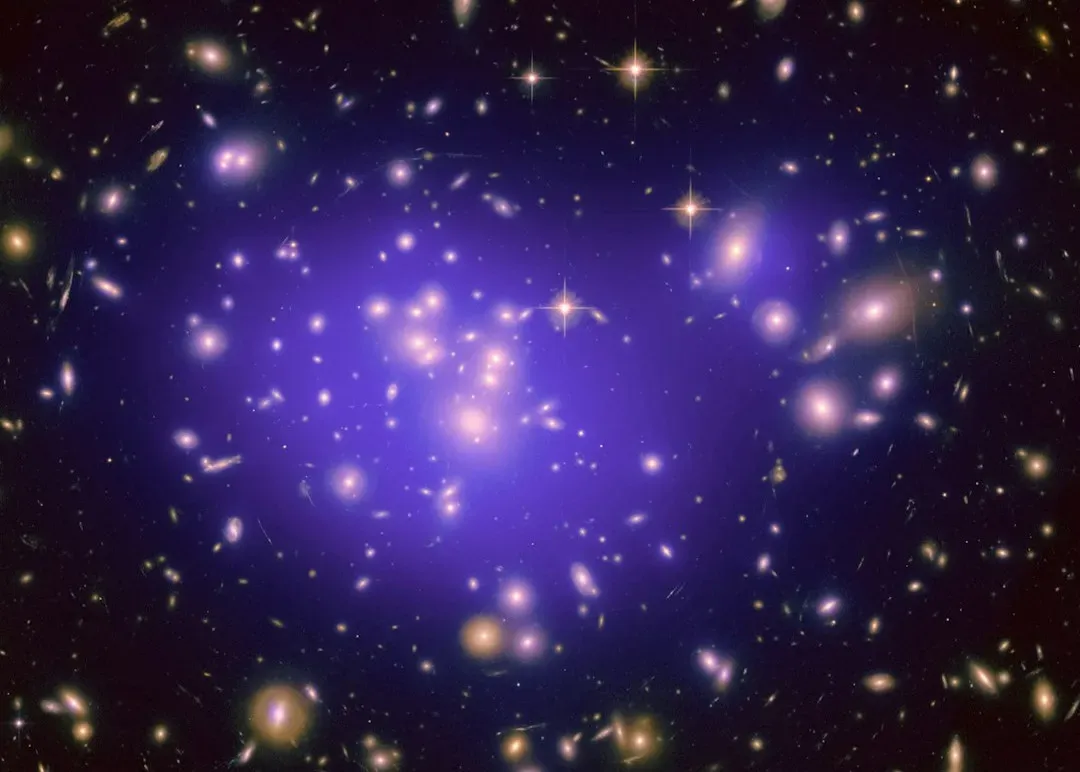
When astronomers carefully measured how fast stars move in galaxies, they noticed something strange: the outer regions were spinning too quickly to be held together by the visible matter alone. Galaxies should have been flying apart or at least looking very different. The simplest explanation was that there is additional, invisible mass providing extra gravity – what we now call dark matter.
Over the decades, multiple independent observations have pointed in the same direction: from the way galaxies cluster together to the bending of light around massive objects and patterns in the cosmic microwave background. Today, most physicists think that the vast majority of matter in the universe is this unseen kind, which doesn’t emit or absorb light and likely consists of particles we haven’t yet directly detected. It’s like realizing that most of the “furniture” in the universe is hidden behind the walls, yet it still defines how everything moves.
Dark Energy: A Mysterious Force Pushing Space Apart
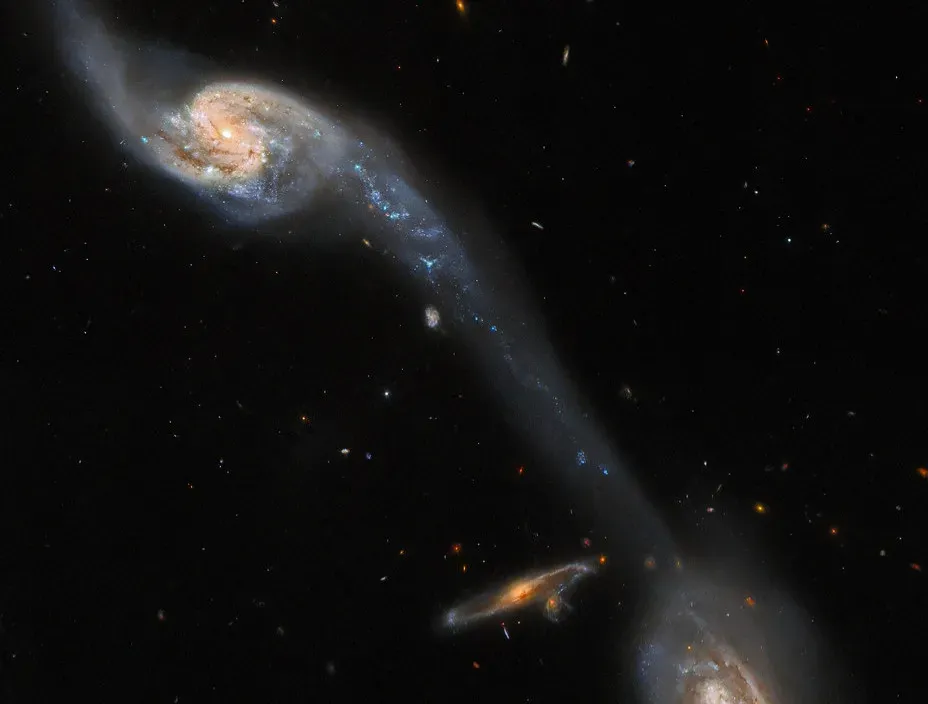
Just when physicists were getting used to an expanding universe, late-twentieth-century observations of distant exploding stars delivered another surprise: the expansion isn’t slowing down under gravity’s pull, it’s speeding up. To account for this accelerated expansion, scientists introduced the idea of dark energy, a pervasive component of the universe that behaves like a kind of negative pressure driving space to stretch faster and faster.
Measurements of the cosmic microwave background and large-scale structure suggest that dark energy makes up the majority of the total energy content of the universe. Yet we still don’t know what it fundamentally is. Some models treat it as an intrinsic energy of empty space, while others imagine new fields or modifications to gravity at cosmological scales. Either way, it flips the story: instead of gravity alone sculpting the universe’s fate, there is a competing influence quietly pulling the cosmic fabric apart.
The Higgs Field and the Origin of Mass for Fundamental Particles
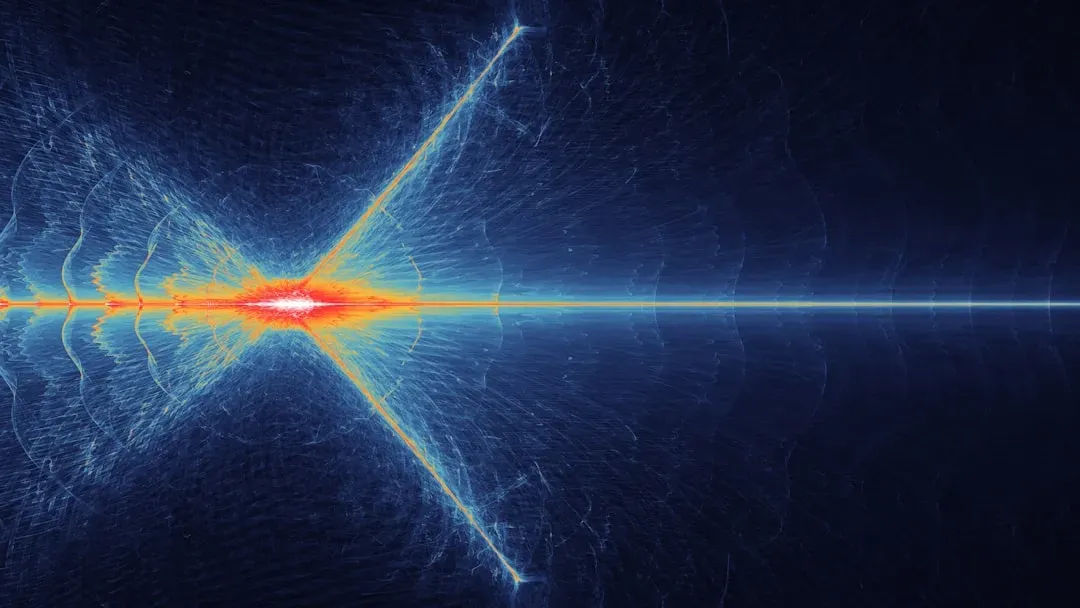
For a long time, the Standard Model of particle physics described a zoo of particles and forces, but there was a glaring question: why do many particles have mass at all, instead of zipping around at the speed of light? The proposed answer was the Higgs field, an invisible field thought to fill all of space. Particles interacting with this field feel a kind of drag that shows up as mass, while particles that don’t interact stay massless.
This idea remained a hypothesis until the Large Hadron Collider, after years of pushing protons to enormous energies and smashing them together, finally detected a new particle in 2012 whose properties matched the predicted Higgs boson. That discovery confirmed that the Higgs mechanism is real, solidifying our current picture of how fundamental particles get their masses. It’s as if we learned that everything is moving through a cosmic “molasses,” and how sticky each particle is determines how heavy it feels.
A Universe Stranger Than Our Imagination
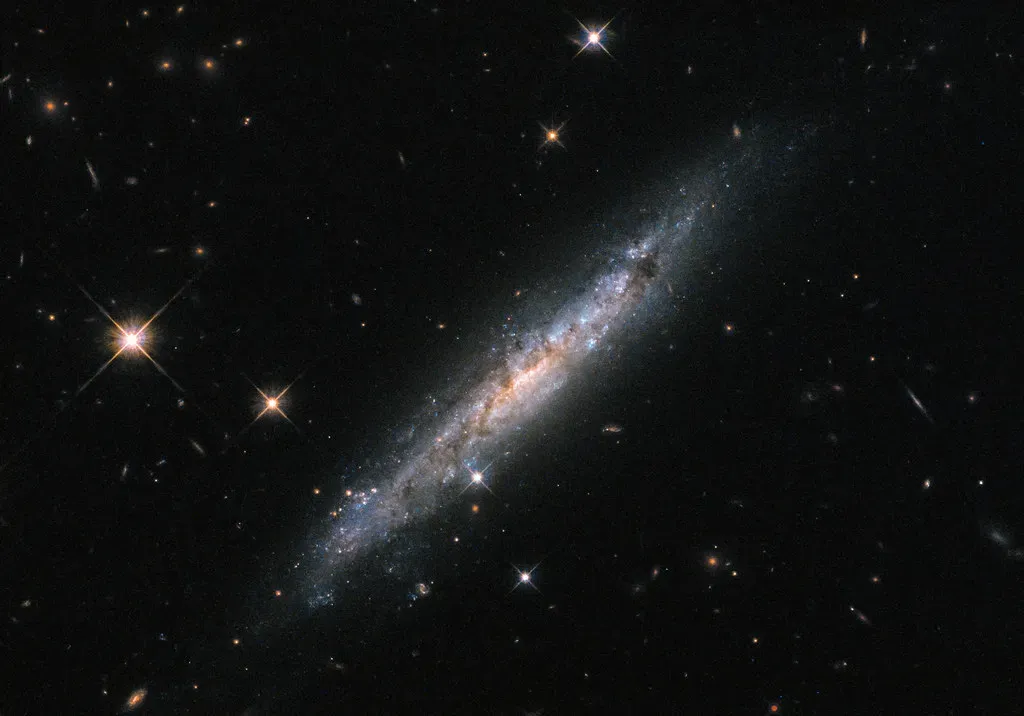
Looking across these discoveries, a pattern emerges: every time physicists thought they had reality mostly figured out, nature revealed another twist. Time is elastic, particles are waves, emptiness is full of mysterious energy and fields, and most of the universe’s matter is invisible. Instead of a simple clockwork machine, we live in a universe that’s layered, subtle, and often deeply counterintuitive.
What makes this even more striking is that these mind-bending ideas are not just abstract theories; they are tested, measured, and built into the technology and observations we rely on every day. From GPS and electronics to telescopes that peer back near the dawn of time, our tools work because these strange laws are true. With open puzzles like dark matter, dark energy, and quantum gravity still on the table, it’s hard not to wonder what the next big shock will be. Which of these discoveries surprised you the most?