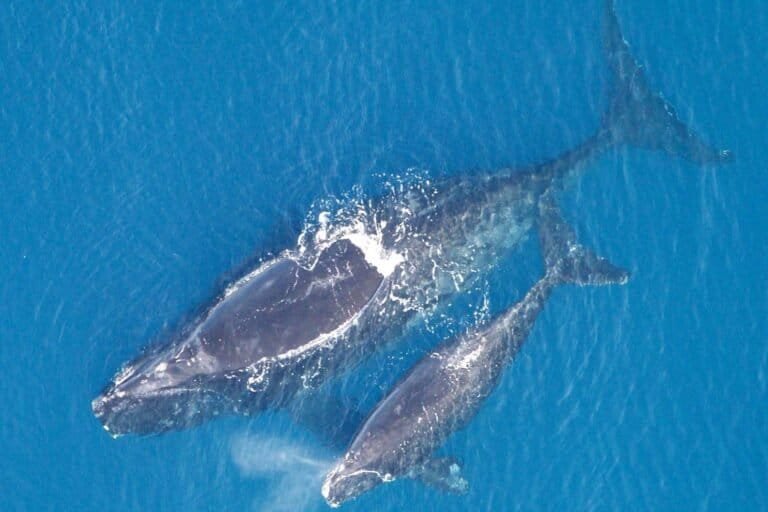
A Welcome Surge in Newborns (Image Credits: Imgs.mongabay.com)
Off the southeastern U.S. coast, researchers have spotted a promising uptick in North Atlantic right whale births this winter, offering a glimmer of hope for one of the world’s most endangered marine mammals.
A Welcome Surge in Newborns
Fifteen calves have been confirmed so far in the 2025-2026 calving season, marking a notable increase from previous years. This development stands out especially after periods of low reproduction that raised alarms among conservationists. Scientists from organizations like the New England Aquarium have tracked these sightings closely, noting the whales’ migratory patterns along the Atlantic seaboard.
The population, estimated at 384 individuals by the end of 2024, has shown slow but steady growth. This represents a roughly 7% rise since 2020, when numbers dipped to 358. Experts attribute part of this progress to first-time mothers entering the breeding cycle and some females giving birth at shorter intervals than before. Such trends provide critical data for assessing the species’ viability in a fragile ecosystem.
Understanding the Factors Behind the Boost
Biologists point to improved environmental conditions as a possible contributor to the higher birth rates. Warmer ocean temperatures and shifts in prey distribution, influenced by climate patterns, may have supported better nutrition for the whales during feeding seasons. However, these same changes pose long-term risks, as they alter traditional habitats.
Conservation measures have also played a role. Enhanced monitoring through aerial surveys and vessel speed restrictions in key areas have reduced some human-related threats. For instance, mandatory slow-down zones during calving periods off Florida help prevent collisions. Still, the arithmetic remains challenging; in a population this small, each calf represents a vital step toward stability.
Persistent Threats to the Species
Despite the positive news, North Atlantic right whales face relentless dangers from human activities. Entanglement in fishing gear continues to injure or kill individuals, while ship strikes remain a leading cause of mortality. Climate change exacerbates these issues by disrupting food sources like copepods, which the whales depend on for sustenance.
Recent reports highlight the urgency. Projections suggest that without stronger protections, the population could fail to reproduce sufficiently by 2035. Organizations such as NOAA emphasize the need for broader regulations on offshore wind development and gear modifications in fisheries. Every birth matters, but sustained recovery demands comprehensive action across international waters.
Conservation Efforts Gaining Momentum
Stakeholders from governments, NGOs, and industry groups are intensifying collaborations. The North Atlantic Right Whale Consortium coordinates data sharing to refine protection strategies. Recent advancements include acoustic monitoring devices that detect whale calls in real time, allowing for dynamic adjustments to shipping routes.
Public awareness campaigns have mobilized support, with calls for policy changes echoing through scientific communities. For example, experts advocate for ropeless fishing traps to minimize entanglements. These initiatives build on years of advocacy, aiming to create safer oceans for the whales.
- Aerial and drone surveys have identified mother-calf pairs more efficiently this season.
- International agreements, like those under the U.S. Marine Mammal Protection Act, enforce speed limits in high-traffic zones.
- Research into whale genetics helps track breeding success and population health.
- Climate modeling informs predictions about future habitat shifts.
- Community involvement in beach cleanups reduces plastic debris that could harm marine life.
Key Takeaways
- The 15 confirmed calves signal potential growth, but the population remains critically low at around 384.
- Human threats like entanglements and strikes must be addressed urgently to sustain this progress.
- Ongoing monitoring and policy reforms offer the best path to long-term recovery.
As these majestic creatures navigate uncertain waters, the recent births remind us of nature’s resilience when supported by human effort. Protecting the North Atlantic right whale requires collective commitment to safeguard their future. What steps do you believe are most crucial for their survival? Share your thoughts in the comments.