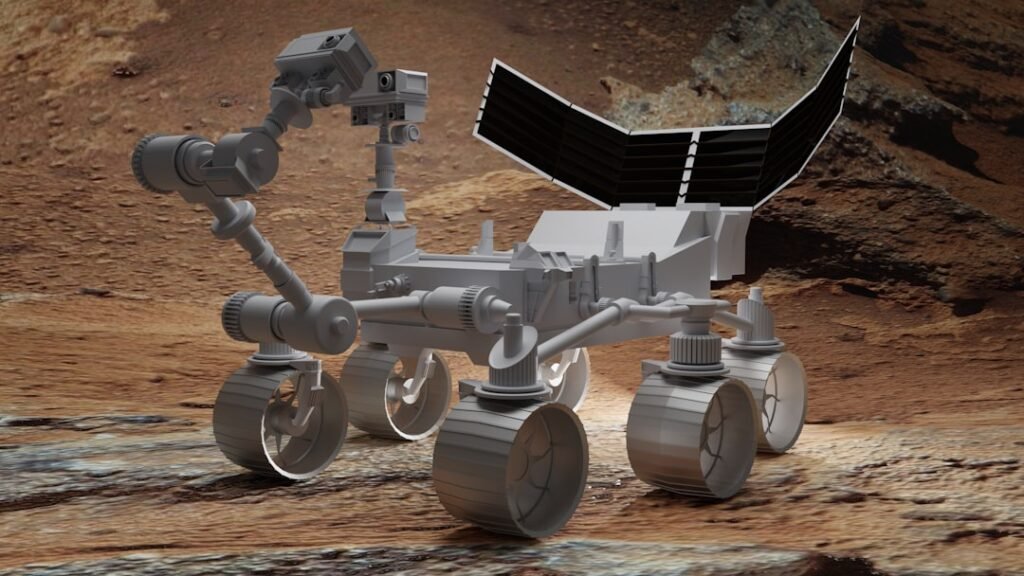

A Landmark Mission on the Brink (Image Credits: Unsplash)
The cancellation of NASA’s Mars Sample Return project has ignited fierce debate within the scientific community, raising questions about the future of Martian exploration.
A Landmark Mission on the Brink
Launched as a collaborative endeavor between NASA and the European Space Agency, the Mars Sample Return project aimed to bring back rocks and soil collected by the Perseverance rover from the Red Planet’s surface. This initiative represented a pivotal step in planetary science, promising unprecedented access to Martian materials for detailed laboratory analysis on Earth. Engineers and scientists invested years in designing complex retrieval systems, including orbiters and landers, to secure the samples gathered since 2021.
However, escalating costs and technical hurdles led to repeated delays. By early 2026, the U.S. Congress endorsed the Trump administration’s decision to terminate the program, citing budget constraints that ballooned beyond initial estimates of $11 billion. This move effectively stranded the precious samples on Mars, depriving researchers of a chance to probe for signs of ancient life.
Cost Overruns and Political Pressures
The project’s troubles began well before the final axe fell. Independent reviews as far back as 2023 highlighted a lack of feasible schedules and budgets, prompting NASA to pause development and solicit cheaper alternatives from industry partners like Boeing and Lockheed Martin. Despite efforts to streamline the mission, funding shortages persisted, exacerbated by competing priorities in the federal budget.
In January 2026, a congressional spending bill sealed the fate, restoring funds for other NASA science initiatives but omitting any allocation for sample retrieval. Administration officials argued that the program’s inefficiencies made it untenable, redirecting resources toward more immediate goals like lunar exploration. Yet, this decision overlooked the mission’s role in addressing fundamental questions about Mars’ habitability.
Voices from the Planetary Science Frontlines
Planetary scientists have mobilized swiftly against the cancellation, emphasizing the irreplaceable value of the Perseverance samples. These advocates warn that abandoning the effort could hinder decades of progress in understanding extraterrestrial life. Community leaders point to the mission’s potential to analyze organic compounds and geological features in ways impossible with remote instruments alone.
Opposition extends to concerns about international dynamics, as other nations like China advance their own Mars programs. Experts fear that without U.S. leadership, America risks ceding ground in the global space race. Petitions and public statements from organizations such as the American Astronomical Society underscore the urgency, calling for renewed commitment to the project.
What Lies Ahead for Mars Exploration
The fallout from this cancellation reverberates across NASA’s portfolio. Future missions, including those building on Perseverance’s data, now face uncertainty, with some researchers advocating for private sector involvement to bridge the gap. Meanwhile, the cached samples on Mars remain a tantalizing resource, potentially viable for retrieval in a revised, lower-cost framework proposed by the Jet Propulsion Laboratory.
To illustrate the broader impacts, consider the following key areas affected:
- Loss of direct evidence for past microbial life on Mars.
- Delayed advancements in astrobiology and planetary geology.
- Strained international partnerships with the European Space Agency.
- Increased competitive pressure from emerging space powers.
- Potential reallocation of funds to less ambitious projects.
Though the path forward remains unclear, ongoing discussions in Congress and NASA suggest room for compromise.
Key Takeaways
- The Mars Sample Return project promised groundbreaking insights into Red Planet life but succumbed to budget woes.
- Scientific opposition highlights risks to U.S. leadership in space exploration.
- Stranded samples could still inform future missions if alternatives emerge.
As the debate intensifies, the cancellation serves as a stark reminder of the delicate balance between ambition and fiscal reality in space science – one that could redefine humanity’s reach beyond Earth. What steps should NASA take next to salvage this vital endeavor? Share your thoughts in the comments below.