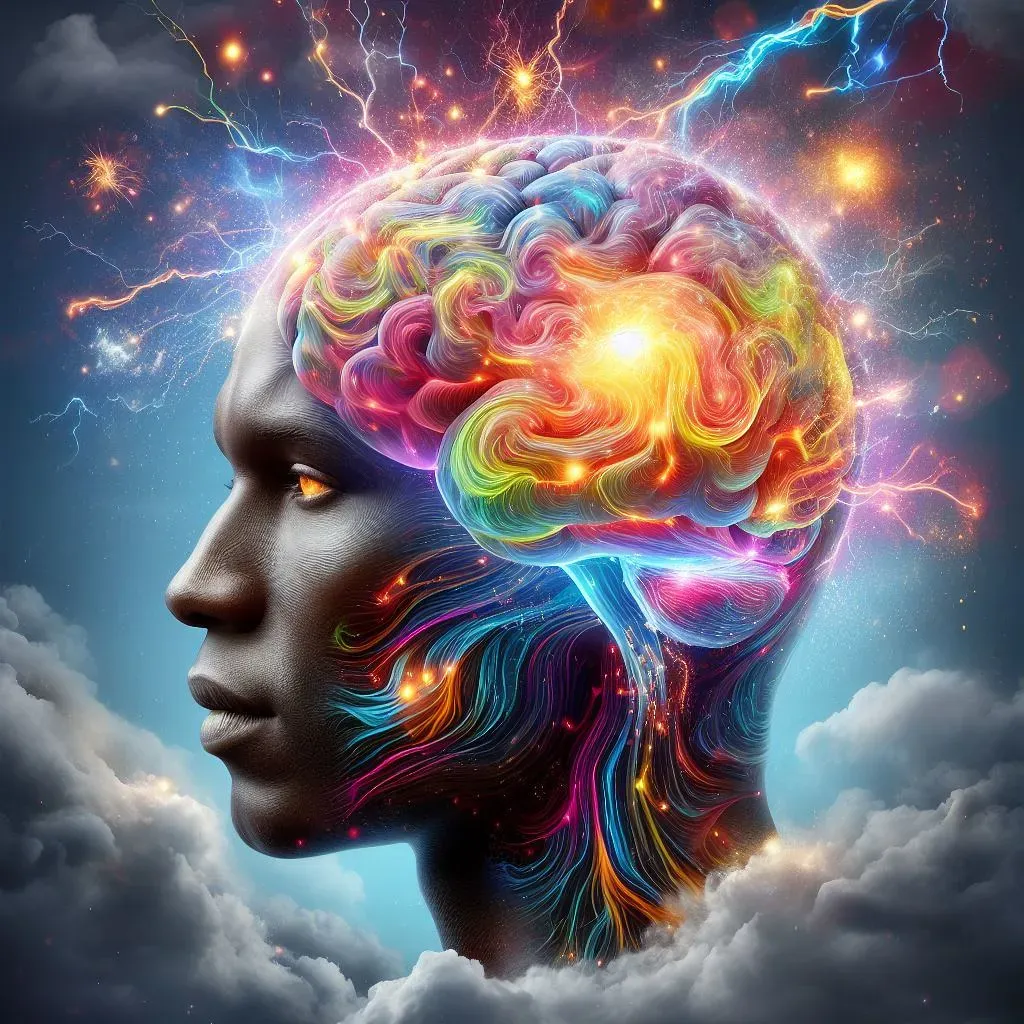

You’ve probably never questioned whether your sense of self is real. That feeling of being “you,” sitting behind your eyes, experiencing the world as a single, continuous entity? It seems as solid as the ground beneath your feet. Yet science is now uncovering something extraordinary: that persistent feeling might be one of nature’s most elaborate tricks. The biggest illusion in our universe isn’t out there among the stars or hiding in quantum realms. It’s happening right now between your ears.
Scientists are peeling back layers of mystery surrounding consciousness, and what they’re finding challenges everything you thought you knew about reality. Let’s dive in.
The Fundamental Problem That Stumped Science for Centuries
The hard problem of consciousness asks why and how humans have subjective experience, contrasting with the “easy problems” of explaining physical systems that enable discrimination, integration of information, and behavioral functions. You can feel the redness of red, the sharp sting of pain, the warmth of sunlight on your skin. These are qualia, the raw feels of existence that seem impossible to reduce to mere brain activity.
The real conundrum is how subjective experience emerges from the body: how the brain produces a subjective “feel”. Think about it this way: you could theoretically build a robot that reacts to damage by withdrawing and making distress signals. Yet would it actually hurt? This gap between physical processes and felt experience has haunted philosophers and scientists for generations, creating what feels like an unbridgeable chasm between matter and mind.
Your Brain Creates Stories, Not Truths

Here’s where things get unsettling. Our brains are always thinking in terms of stories, and our self is a fabrication which emerges out of the story-telling powers of our brain. Your sense of being a unified “you” isn’t a fundamental feature of reality. It’s more like a narrative your brain constructs to make sense of countless parallel processes happening beneath your awareness.
To some philosophers, our conception of a self is an illusion created by our experience of the world, like an object’s center of gravity, which is an abstraction yet we treat it as something real. Your brain takes fragments of sensory information, memories, predictions, and intentions, then weaves them into a coherent storyline with you as the main character. Without this narrative trick, you’d be overwhelmed by the blooming, buzzing confusion of raw neural activity.
Consciousness Might Be More Fundamental Than Matter Itself
In a stunning reversal of traditional thinking, new theoretical models propose that consciousness is fundamental, and only thereafter do time, space and matter arise, presented by Professor Maria Strømme at Uppsala University. This isn’t mysticism. It’s serious physics proposing that consciousness isn’t produced by brains but rather that brains interact with a fundamental consciousness field permeating reality.
This model suggests that the apparent separateness of individual consciousness is an illusion, with all experience ultimately arising from a unified, formless substrate. Imagine your individual awareness like a wave on an ocean – it appears separate but is fundamentally inseparable from the whole. According to this model, matter is secondary and much of what we experience is representation or illusion. Your solid sense of being a distinct individual might be the universe’s grandest magic trick.
The Illusion Has a Purpose: It Keeps You Alive
Consciousness evolved in stages, starting with basic survival responses like pain and alarm, then expanding into focused awareness and self-reflection, helping organisms avoid danger, learn from the environment, and coordinate socially. That stabbing sensation when you stub your toe? It’s not just information about tissue damage. It’s a visceral alarm system that commandeers your attention and motivates you to protect yourself.
Your constructed self serves biological imperatives. Cases of patients who lose narrative capacity through brain damage show not only that the sense of self depends on multiple brain regions and processes, but that our happiness depends on the illusion of self. Without the organizing principle of a coherent self, life becomes fragmented and meaningless. The illusion, it turns out, is essential for human flourishing.
Where in the Brain Does Consciousness Actually Live
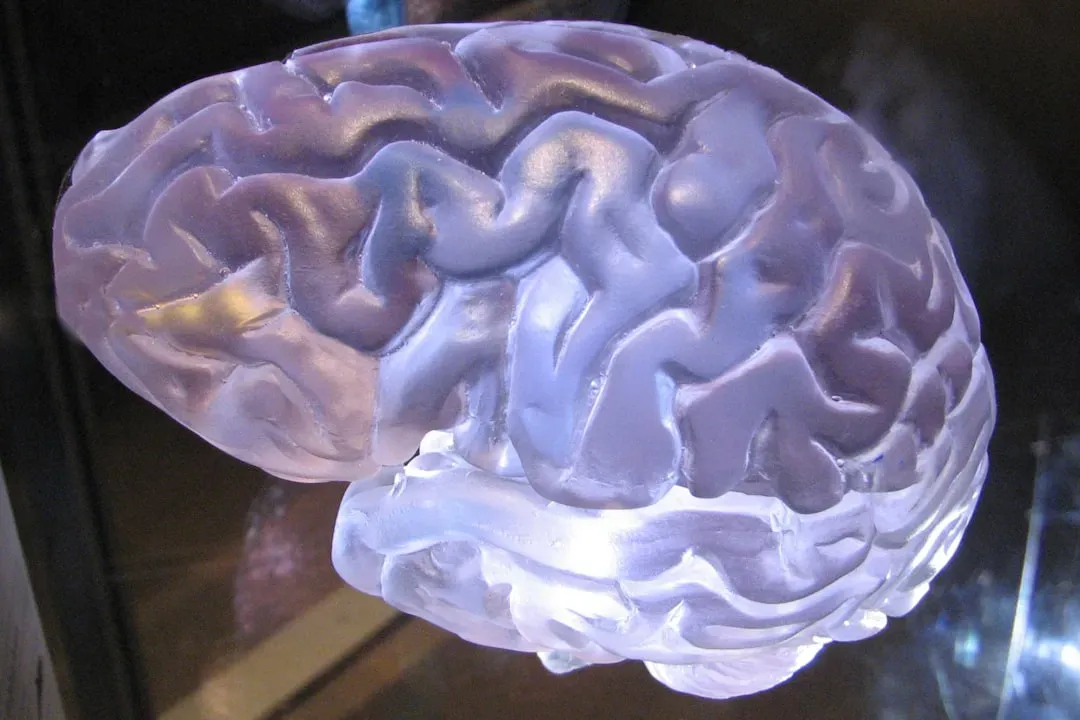
Recent landmark studies de-emphasize the importance of the prefrontal cortex in consciousness, suggesting that while it’s important for reasoning and planning, consciousness itself may be linked with sensory processing and perception. In other words, intelligence is about doing while consciousness is about being. You don’t think your way into consciousness – you perceive your way into it.
A large brain-imaging study testing two leading theories of consciousness was effectively a draw and raised far more questions than it answered, though leading consciousness researchers say the results point to a way forward for understanding how consciousness arises. The fact that neither dominant theory fully explained the data suggests consciousness is more complex than we imagined. The back of the brain seems crucial for holding specific details of what you see, like orientation, while the front part is involved in identifying the general category of an object.
Consciousness Isn’t Unique to Humans

Birds show many of the same conscious traits as humans, from subjective perception to basic self-awareness, suggesting consciousness is far older and more widespread than once believed and does not require a human-like brain to emerge. Crows, for instance, have neural signals that reflect what they perceive rather than just the physical stimulus itself. Pigeons alternate between different interpretations of ambiguous images, just like you do.
This discovery demolishes human exceptionalism. Findings suggest that consciousness did not emerge recently or exclusively in humans but appears to be an ancient and widespread feature of evolution, with birds demonstrating that conscious processing can occur without a cerebral cortex. Evolution found multiple pathways to awareness, each tailored to different survival challenges. Consciousness, far from being the pinnacle of human achievement, is woven throughout the fabric of life.
The Mystery Deepens With Quantum Connections
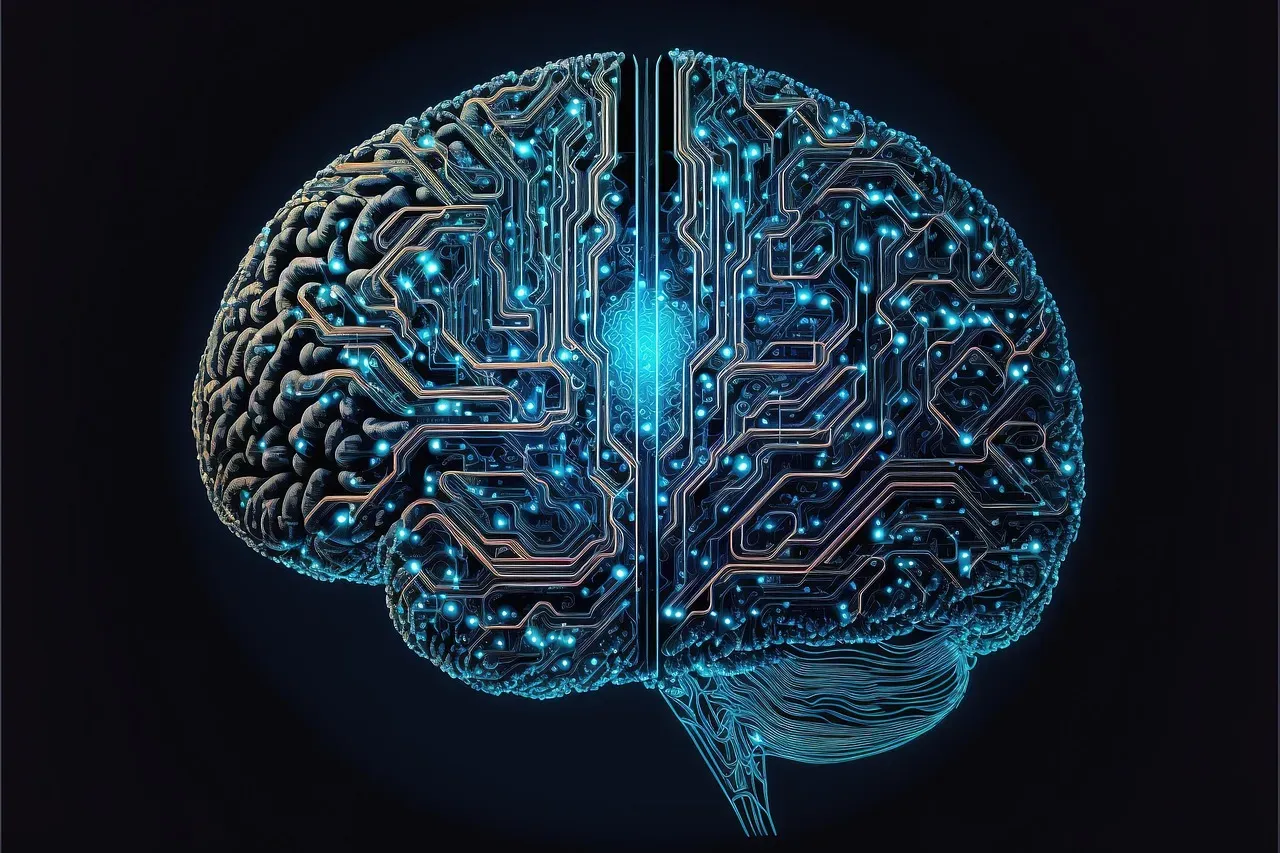
New research published in Frontiers in Human Neuroscience indicates that conscious states may arise from the brain’s capacity to resonate with the quantum vacuum, the zero-point field that permeates all of space. This isn’t science fiction. Physicist Joachim Keppler is exploring whether consciousness taps into quantum fields at the most fundamental level of physical reality.
The brain’s basic functional units might couple directly with quantum fields, igniting the complex dynamics of conscious processes. The novel synthesis suggests that the brain’s basic functional building blocks, cortical microcolumns, couple directly to the zero-point field, igniting the complex dynamics characteristic of conscious processes. If verified, this would mean your thoughts connect to the quantum hum underlying all existence. Your awareness isn’t just produced by neurons firing – it’s your brain catching a frequency that pervades the cosmos.
The Future of Consciousness Science

Neuroscientist Anil Seth argues that consciousness isn’t a mysterious spark but a deeply biological process, one that depends on prediction, perception, and the body’s constant negotiation with the world. Your brain constantly generates predictions about what’s coming next, comparing them against sensory input. Consciousness, in this view, is your brain’s best guess about reality, continuously updated and refined.
Multiple studies in recent years demonstrated that psychedelic compounds can rapidly reorganize brain networks, and many advancements have challenged long-held assumptions about where and how consciousness originates, how widespread it may be, and how profoundly altered states can reshape human perception. We’re entering an era where consciousness can be systematically studied, manipulated, and perhaps eventually understood. The tools exist now to test these theories rigorously.
Conclusion
The science of consciousness is revealing that your sense of self, your feeling of being a unified observer experiencing reality, is an elaborate construction. Yet this doesn’t diminish its beauty or importance. Like a magnificent painting, the illusion contains profound truth – about evolution, survival, and what it means to be alive in this strange universe.
Layer by layer, the evidence points toward a provocative conclusion: consciousness is an emergent illusion. Your brain orchestrates countless unconscious processes, weaves them into a coherent narrative, and presents you with the gift of subjective experience. Perhaps the ultimate irony is that to study consciousness, we must use consciousness itself – the very thing that might be tricking us. What does this mean for your understanding of reality? Can you feel the ground shifting beneath your certainty?