Physicists have quietly been rewriting what time is, and the picture that’s emerging looks nothing like the ticking-arrow metaphor most of us carry around in our heads. Instead of a universal flow marching everything from past to future, time is starting to look more like something built from relationships, information, and perspective. Recent work in quantum gravity, cosmology, and quantum information theory is converging on one unsettling idea: time might not be fundamental at all. It could be an emergent feature, like temperature, that only appears when enough parts of the universe interact in the right way. If that is true, then everything from your memories to the Big Bang itself has to be reinterpreted.
From Newton’s Cosmic Clock to Einstein’s Flexible Fabric
For centuries, the dominant picture of time was almost comfortingly mechanical: Isaac Newton imagined a kind of cosmic clock that ticked steadily, the same everywhere, whether or not anything happened. In that view, time was the neutral stage on which the universe played out, never influenced, never distorted, always flowing at a single, absolute rate. Everyday experience seems to agree with this; a second on your kitchen clock feels like the same second on a satellite or in a distant galaxy. That intuitive certainty was so strong that for a long time, even doubting it sounded unscientific.
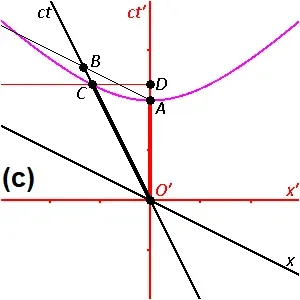
Then relativity wrecked that confidence. In the early twentieth century, Einstein showed that time does not tick the same for everyone, but stretches and compresses depending on speed and gravity. A clock on a fast-moving spacecraft or near a massive object really does run slower compared with a clock on Earth, and this has been confirmed over and over with precise atomic clocks and GPS satellites. Time turned from a rigid background into a flexible dimension woven together with space, and past and future became less like a single shared timeline and more like different slices of a four‑dimensional reality chosen by each observer’s motion.
When Quantum Theory Says Time Is Not in the Rules
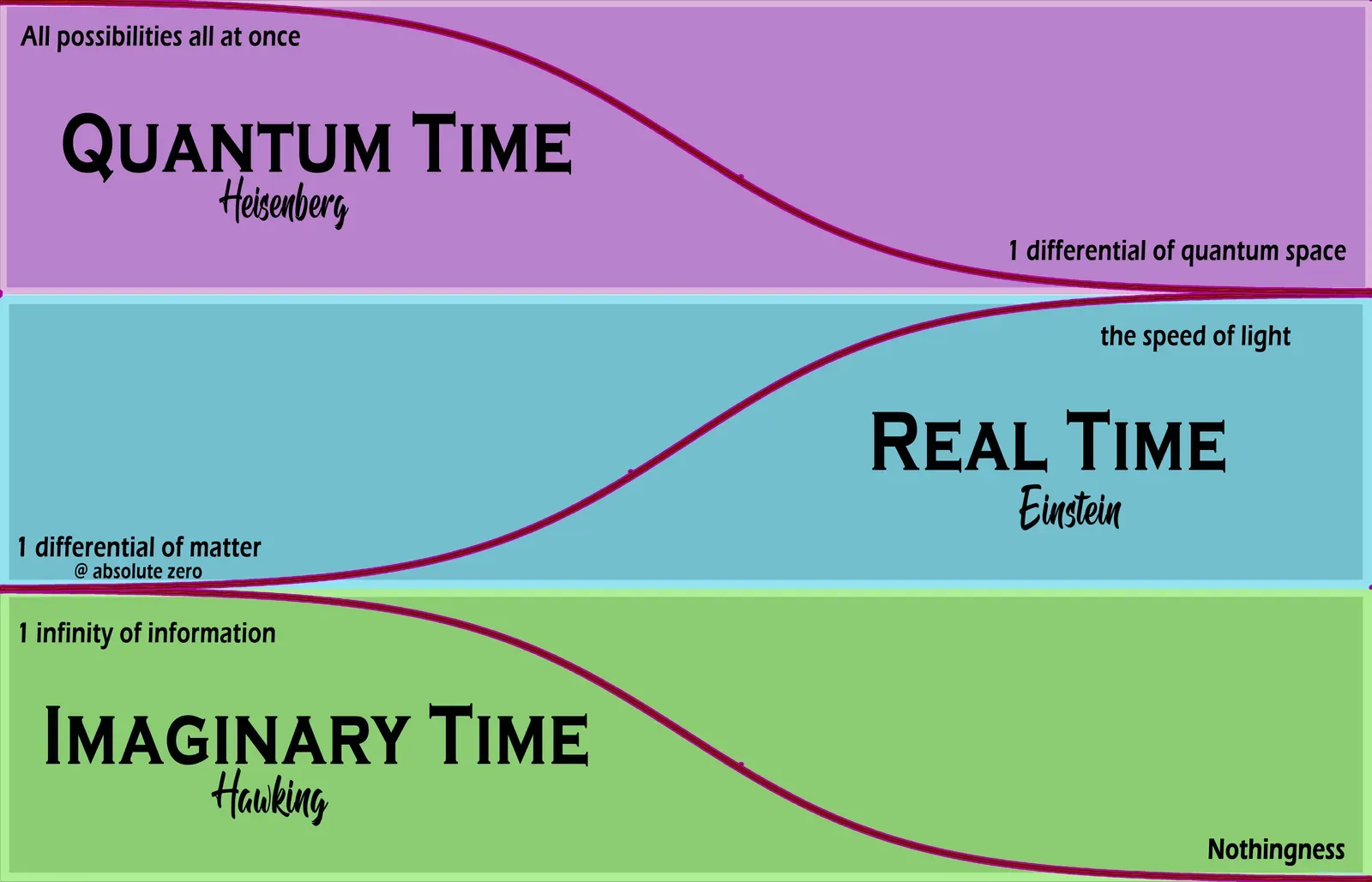
While relativity reshaped our picture of time on large scales, quantum mechanics quietly introduced an even stranger twist: its basic equations do not obviously care about time at all. The core quantum equation that governs how a closed system behaves treats past and future almost symmetrically, as if they were just labels we humans stick onto solutions. In the most stripped-down formulations, you can write the state of the universe without a special “now” anywhere in sight. That clashes with the daily feeling that the present is somehow real in a way the past and future are not.
Some approaches to quantum gravity push this to an extreme. In certain canonical formulations, known for producing what is often called the “problem of time,” the equation describing the universe famously seems to say that nothing changes in a fundamental sense. Change, including the passage of time, seems to arise only when you pick out some part of the universe and use it as a kind of internal clock relative to the rest. In other words, the universe’s deepest laws might be timeless, and what we call time could be a clever bookkeeping trick built from how subsystems compare to one another.
Emergent Time: When Change Comes from Entanglement
The new, disruptive idea gaining traction is that time might emerge from quantum entanglement and correlations rather than existing as a basic ingredient. In several modern proposals, you start with a huge, static quantum state of the universe and then define “before” and “after” by how different parts of that state correlate with each other. A subsystem that becomes more entangled with its surroundings can serve as a clock, ticking not because something fundamental is flowing, but because patterns of correlation are evolving. Time, in this picture, is less like a river and more like the way a story unfolds as you flip through a book’s pages.
Some researchers have even shown that if you assume a universe with no built-in time variable but with enough entangled degrees of freedom, you can derive something that looks astonishingly like ordinary quantum mechanics with a time parameter. The apparent flow of time then comes from how one chosen part of the universe acts as a reference for changes in the rest. That is a radical shift from thinking of time as the container of events; it becomes a byproduct of relationships between quantum pieces, emerging at larger scales the way temperature emerges in a gas even though individual molecules do not “have” temperature on their own.
The Arrow of Time and the Illusion of a One-Way Flow
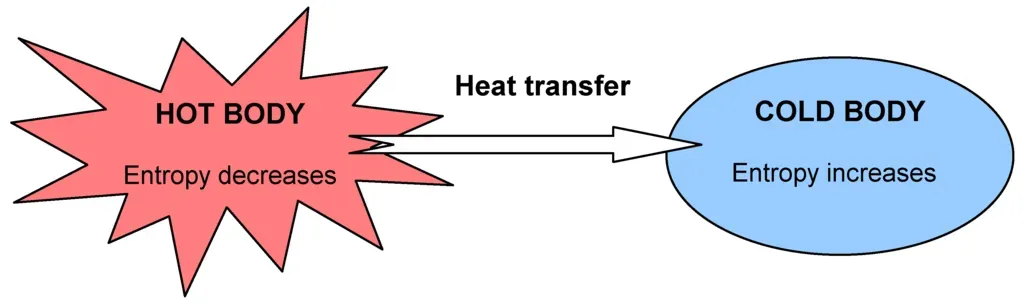
If the deep laws of physics treat past and future nearly symmetrically, why do we feel that time moves in one direction? The most powerful answer so far leans on entropy, the measure of disorder or the number of possible microscopic configurations consistent with what we see. Almost all the equations in fundamental physics work just as well if you reverse time, yet in daily life we only see eggs scramble, not unscramble, and we only remember the past, not the future. That asymmetry is usually traced back to the universe’s extremely low-entropy, highly ordered initial state.
The new theories of emergent time do not erase the arrow of time, but they shift the conversation about it. If time emerges from entanglement and information, then the arrow of time could emerge from how information spreads and gets irreversibly scrambled across many degrees of freedom. As systems interact, their correlations become more complex and harder to undo, which we experience as irreversible processes: cooling coffee, aging bodies, decaying stars. The emotional weight we attach to time – nostalgia, regret, anticipation – then rides on top of a deeper statistical fact: it is overwhelmingly likely that the universe moves from rare, ordered states to more typical, disordered ones, making a one-way narrative feel inevitable.
Relational Time: When “Now” Depends on Who You Ask
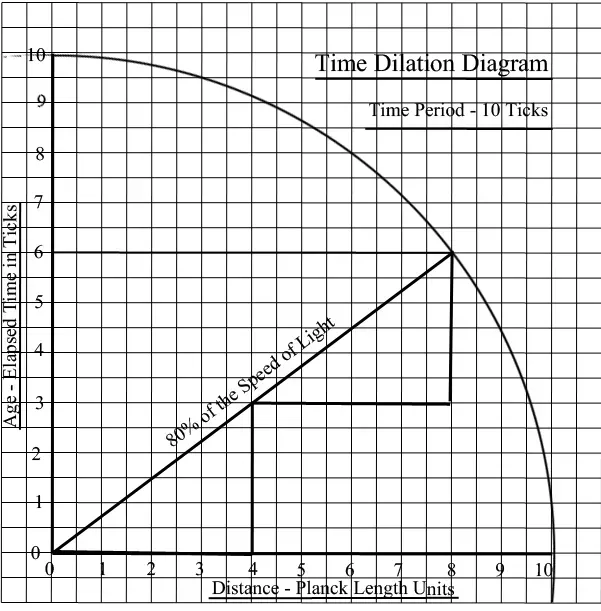
One of the more unsettling consequences of these new views is that there may be no single, universal “now” that everyone shares. Relativity already showed that what counts as simultaneous depends on how you are moving, and two observers in different gravitational fields will disagree about how much time has passed between events. When you combine that with quantum ideas that define time through relationships between subsystems, time starts to look thoroughly relational: it is something each physical system builds based on its own interactions and available information. My present and your present might literally be different cuts through the deeper structure of reality.
That sounds philosophical, but it has practical bite. Extremely precise experiments with atomic clocks on airplanes, satellites, and even tall buildings have confirmed that time passes differently depending on altitude and speed in exactly the way relativity predicts. At the quantum scale, experiments on delayed-choice measurements and quantum interference hint that our usual ideas of “before” and “after” are not always the right language to describe what is going on. Put together, these findings suggest that the comfortable, shared timeline we treat as obvious is a local approximation built out of many overlapping, relational time frames.
Rewriting the Big Bang: A Beginning Without a First Moment
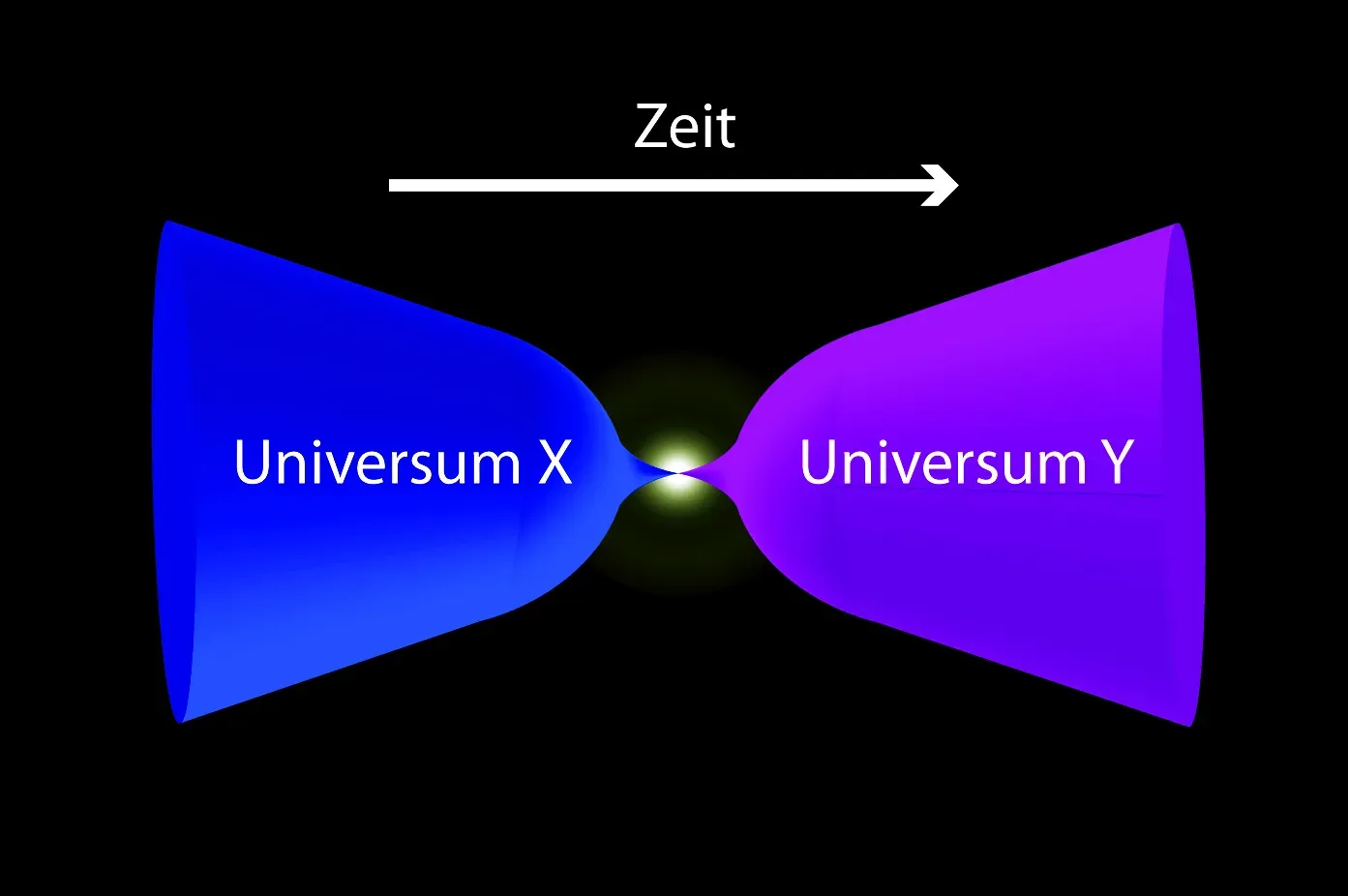
If time is emergent rather than fundamental, the phrase “beginning of time” may itself be misleading. Traditional cosmology describes the Big Bang as a singular moment when space, time, and energy burst into existence from an unimaginably hot, dense state. But in many modern models that try to unify quantum mechanics and gravity, that singularity is replaced by something like a bounce, a transition, or a phase change. What we call the Big Bang could be a boundary where our emergent description of time breaks down, not an absolute first tick of a cosmic clock.
Some quantum cosmology scenarios suggest that before the Big Bang, the universe could have existed in a timeless quantum state, or in a different phase where “before” simply has no clear meaning. As the universe expanded and cooled, complex structures formed, entanglement patterns changed, and a familiar sense of time may have crystallized out, much like ice forming from liquid water. In that view, asking what happened before time emerged is like asking what is north of the North Pole: the question stretches a useful concept beyond where it applies. This does not make the universe any less real; it just means our language about beginnings might need an upgrade.
Deep Implications: Causality, Free Will, and What Physics Really Describes
Seeing time as emergent forces a hard rethink of some of our most cherished ideas, including cause and effect. In everyday reasoning, causes come before effects, and that ordering feels fundamental. But if time itself is a large-scale construct arising from deeper, mostly timeless laws, then causality might also be an emergent pattern that holds remarkably well at human scales but is not built into the ultimate fabric of reality. That does not mean anything goes; it means that what we call a cause could be a stable, statistical regularity within a particular emergent time direction, rather than a primitive ingredient.
This shift also brushes up against long-running debates about free will. If the universe can be described as a timeless whole, with all events encoded in a vast, static structure, then our sense of choosing in the moment might be like walking through a pre-written story, discovering rather than creating each page. On the other hand, some researchers argue that emergence itself opens a window: higher-level patterns such as brains, organisms, and societies might exhibit forms of causation that are not visible in the underlying equations. At minimum, the new theory of time suggests that physics is less about predicting a single future from a known present, and more about mapping the consistent relationships that make narratives like “before,” “after,” and “because” possible.
What This Changing Picture of Time Means for Everyday Life
It is tempting to treat all of this as abstract speculation safely quarantined in blackboard equations, but it has a way of slipping into daily life. Every time your phone uses GPS to locate you, it quietly relies on the fact that satellites experience time differently from receivers on Earth, and that engineers have to correct for relativity to keep the system accurate. Medical imaging, particle accelerators, and precision electronics all depend on technologies calibrated to a non-Newtonian understanding of time. Even the semiconductor industry now pays attention to quantum effects that blur where, and when, electrons are.
On a more personal level, this new theory of time offers a strange kind of psychological freedom. If time’s flow is not a fundamental cosmic river but a pattern emerging from interactions and information, then some of the panic we attach to racing clocks and hard deadlines starts to look negotiable. Our brains evolved to build a linear, flowing narrative because it is useful for survival, not because it is the only way reality can be. Recognizing that can soften the feeling of being dragged forward by an invisible force and invite a more curious stance: you are part of the machinery that constructs time, not just a passenger strapped to its conveyor belt.
How to Stay Curious While Physicists Dismantle Time
The most practical response to this changing picture of time is not to throw out your calendar, but to deepen your scientific literacy and curiosity. You can follow public lectures and open courses on relativity, quantum mechanics, and cosmology from universities and research institutes, many of which are deliberately designed for non-specialists. Popular science books and essays by working physicists often walk through these ideas with minimal mathematics, focusing instead on the concepts and the evidence behind them. Watching how different researchers disagree, refine, and sometimes abandon their own theories is itself a way to see science as a living, self-correcting process.
You can also train your own sense of time by noticing it in action: how waiting in a line feels longer than a walk of the same duration, how intense experiences seem to slow time down, how memories rearrange your internal timeline. Keeping a simple observation journal, reading about the neuroscience of time perception, or even trying short mindfulness exercises can make the constructed nature of your personal “now” more vivid. None of this will solve the equations of quantum gravity, but it puts you in a better position to understand and question the next wave of discoveries about time, instead of just letting them wash past you.