
The idea that the universe might run on a kind of underlying code sounds like philosophy or science fiction, but right now a surprising number of hard-headed physicists and mathematicians are treating it as a concrete research question. From the way galaxies cluster to the way subatomic particles interact, patterns keep showing up that feel less like chaos and more like design rules. Researchers are not talking about a cosmic architect, but about a deep mathematical structure that could explain why the universe has the laws it does, and not a million other possibilities. Over the past few years, new tools in cosmology, quantum information, and high‑energy theory have converged on the same unsettling suggestion: we may be closing in on a hidden blueprint that sits beneath space, time, and matter. If that sounds dramatic, it is – and the most intriguing part is that for the first time, parts of this blueprint are turning into testable science rather than late-night speculation.
Clues in the Cosmic Web: Patterns Too Orderly to Ignore
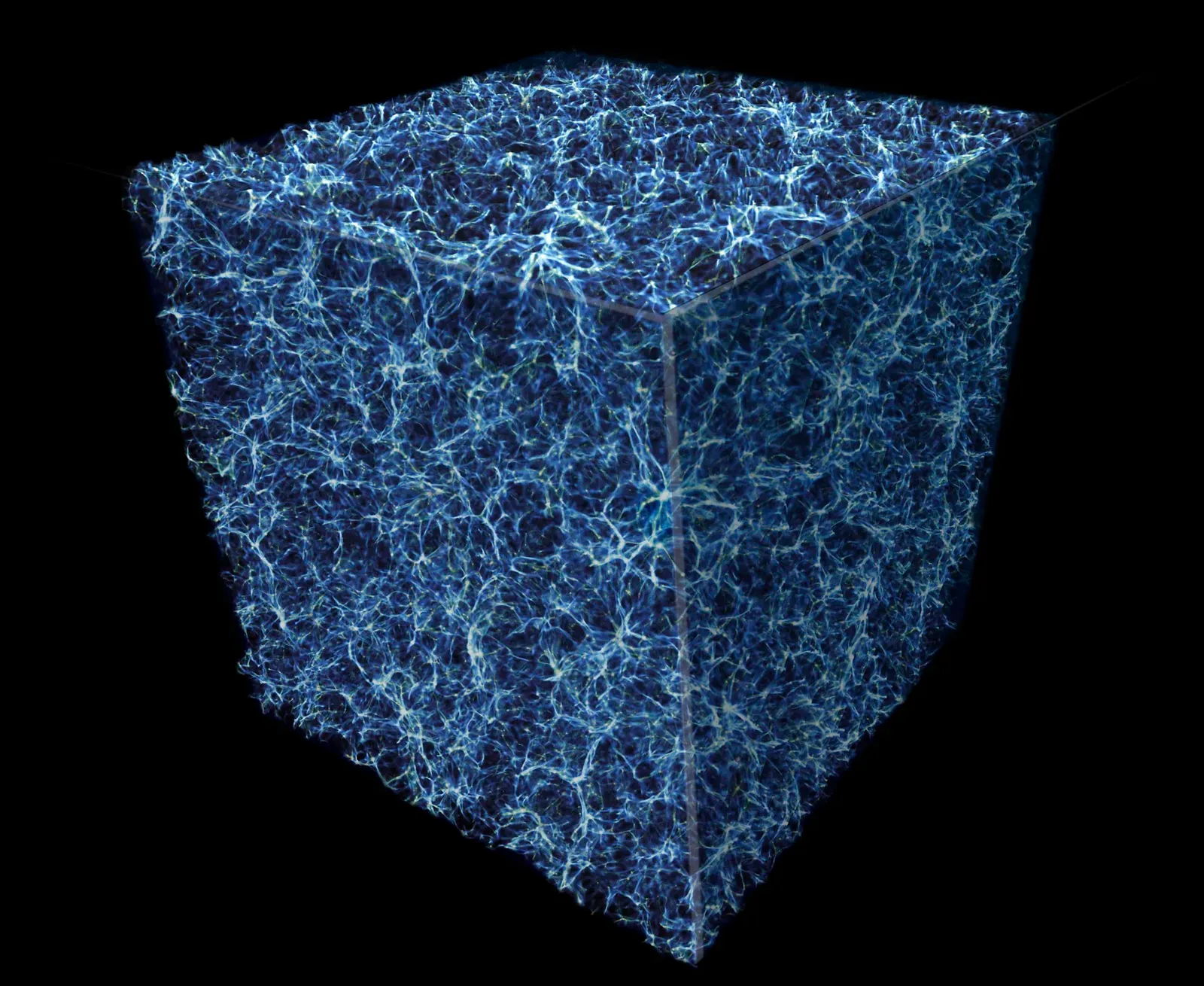
Look deep into the universe, and you do not see a random smear of galaxies; you see a sprawling cosmic web of filaments, knots, and vast empty voids, shaped by gravity acting over billions of years. Cosmologists simulate this web on supercomputers, feeding in different values for things like dark matter, dark energy, and the strength of gravity, and then compare the output to sky surveys that map hundreds of thousands of galaxies. What makes many of them pause is how sensitively the large-scale pattern reacts to tiny changes in those fundamental parameters, as if the universe were tuned to land in a narrow, life-friendly range. That does not prove intent, but it does suggest that the laws are not arbitrary, and that there may be deeper constraints – blueprints – that make only certain “universes” mathematically possible.
New surveys like the Dark Energy Spectroscopic Instrument and the Euclid mission are now measuring the cosmic web’s geometry with extraordinary precision, tracking how structures grow and how space itself expands over time. Those measurements let researchers test whole families of theoretical models at once, essentially asking which sets of rules can actually generate a universe that looks like ours. In my own notes from talking to cosmologists, what stands out is not mysticism but a kind of quiet discomfort: the more accurate the data get, the more our universe looks like a very special solution picked from a vast menu we barely understand. That sense of “why this one?” is one of the strongest hints that a deeper organizing principle is still missing.
Holograms, Entanglement, and the Idea That Space Is Not Fundamental

For decades we pictured space as the stage on which physics happens, but a growing number of theorists now think space itself might be a secondary effect, like a hologram emerging from a hidden layer of information. In this view, the true blueprint of the universe is not written in distances and coordinates, but in patterns of quantum entanglement – who is correlated with whom, and how strongly. Work on black hole physics and the so‑called holographic principle suggests that the information content of a region of space behaves more like the surface area of its boundary than the volume inside, which is deeply counterintuitive if space is supposedly basic. That strange behavior makes more sense if our familiar three-dimensional reality is encoded on a kind of lower-dimensional information sheet we cannot directly see.
In the last ten years, researchers have started to use tools from quantum information theory to explicitly build toy universes where space literally emerges from networks of entangled bits. In some of these models, if you gradually weaken the entanglement, the simulated space literally falls apart, as if you were dissolving a structure by erasing the relationships that define it. That picture is radically different from the old mechanical universe of billiard balls and forces, and it points to a blueprint written in logic and correlation rather than substance. It also hints that gravity itself might be a large-scale consequence of how information is organized, which is about as far from our everyday intuition as you can get.
Mathematical Objects That Predict Particles Before We Ask
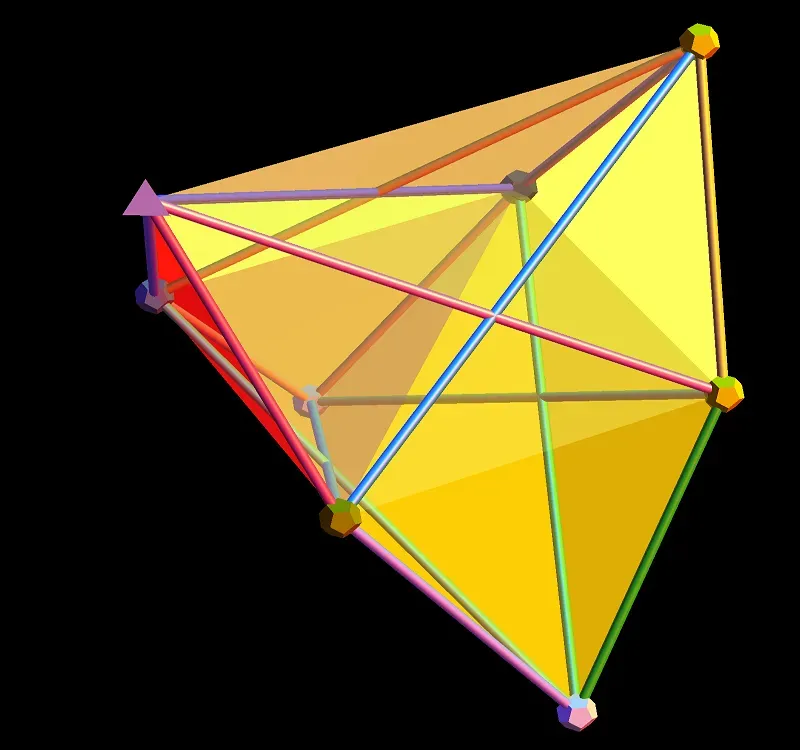
One of the most unsettling developments in high-energy physics has been the discovery of abstract mathematical structures that seem to know more about particle interactions than our traditional equations do. A famous example is the amplituhedron, a geometric object introduced in the 2010s that allows certain particle scattering probabilities to be computed as volumes inside a high-dimensional shape. Instead of summing over countless Feynman diagrams, these calculations fall out of a clean geometric rule, suggesting that our usual quantum field theory machinery might be a clumsy projection of something simpler and more fundamental. It is as if, after years of describing a building from the shadows it casts, someone suddenly hands you the actual blueprint.
Physicists have since uncovered families of related structures in other kinds of theories, and a recurring theme is that symmetry and geometry end up doing far more work than expected. These objects often reveal previously hidden relationships among particles and forces, the way a finished floor plan explains why certain walls, doors, and windows must line up. To me, the striking thing is not that the math is beautiful – physicists say that all the time – but that it is brutally efficient, discarding much of the complicated machinery of older formalisms while preserving the answers. That kind of compression is a classic sign you are getting closer to the underlying design rules rather than just learning more tricks to juggle equations.
The Universe as a Computation: From Metaphor to Working Framework
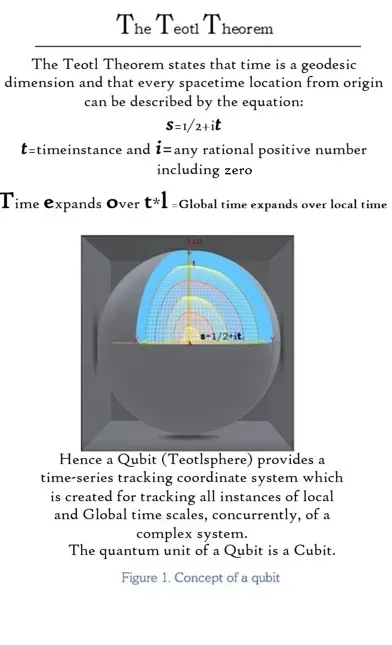
Comparing the universe to a computer has long been a cozy metaphor, but in the last couple of decades it has quietly turned into a quantitative research program. In quantum information science, researchers describe physical processes as computations carried out on quantum bits, and they have found that many deep principles – like the limits of how fast information can move or how much can be packed into a region – map neatly onto constraints in physics. Black holes, which used to be exotic edge cases, are now studied as the most extreme information processors allowed by the laws of nature, saturating bounds on entropy and storage capacity. That shift in viewpoint reframes the universe not as a machine that just happens to perform computations, but as a system whose very laws are computational rules.
Once you take that seriously, the idea of a hidden blueprint stops being mystical and starts sounding like a rulebook for allowed computations. Some theorists argue that the fundamental constants and types of particles we see may be the only ones compatible with a self-consistent, information-preserving evolution of the universe. Others use quantum computers and classical algorithms to simulate alternate rule sets, trying to see which ones lead to something like stable matter, chemistry, and eventually observers. While those efforts are still young and sometimes rough around the edges, they embody a powerful shift: instead of guessing laws that fit our universe and stopping there, we are beginning to map the space of possible universes and asking why ours sits where it does on that vast landscape.
Symmetry, Broken Symmetry, and the Search for Deeper Order

Symmetry has always been a guiding star in physics, but the emerging picture is that the true blueprint might be a hierarchy of symmetries, many of them hidden from direct view. The Standard Model of particle physics itself is basically a compact statement about certain symmetries and how they break, giving rise to different forces and particle types as if from a single underlying pattern. When symmetries break, they leave behind characteristic fingerprints – mass differences, conserved quantities, interaction strengths – that function like the decorative trim on a building hinting at the structure of the beams inside the walls. That is why so many high-energy experiments, from colliders to precision measurements of particle decays, are really hunting for small deviations that would signal a deeper symmetry lurking underneath.
Recent anomalies, like subtle tensions in measurements of the muon’s magnetic properties or rare decays of particles containing heavy quarks, have sparked waves of excitement and disappointment as data sets grow and early hints sometimes fade. Even when a tantalizing blip vanishes with more precise measurements, the process narrows down which blueprints are still viable and which must be tossed out. The search is not random poking in the dark; it is guided by increasingly sophisticated symmetry-based models that predict where cracks might appear in the Standard Model’s facade. In that sense, every precise confirmation or refutation is a clue about how elaborate, or how spare, the universe’s hidden design might really be.
What “Blueprint” Really Means: An Analytical Look at Deeper Structure
Talk of a universe-wide blueprint can easily drift into mystical territory, so it is worth being precise about what many scientists mean by it. They are not proposing a literal set of construction drawings or a script for cosmic events, but a compact set of principles from which the observed laws, constants, and structures logically follow. In older physics, we tended to treat those laws and constants as fixed inputs, the way early mapmakers accepted coastlines without asking why they had those shapes. The current wave of research in quantum gravity, cosmology, and mathematical physics is instead asking whether those apparent inputs can be derived from deeper consistency conditions, such as the requirement that information is never destroyed, or that quantum theories must have a sensible gravitational dual description.
Compared to earlier generations, today’s search is less about inventing ever more complicated equations and more about pruning possibilities through sharp constraints. Theories that once seemed mathematically acceptable are now being ruled out because they violate subtle principles of causality, thermodynamics, or quantum consistency when pushed to extremes like black holes or the very early universe. That analytic winnowing process is what gives the blueprint idea its credibility: we are not just dreaming up pretty patterns, we are watching nature veto whole classes of designs. The picture that emerges is that our universe may be one of the relatively few ways to satisfy all those deep conditions at once, which is a much stronger statement than simply noting that it happens to support life.
Unfinished Lines: Where the Blueprint Still Refuses to Show Itself
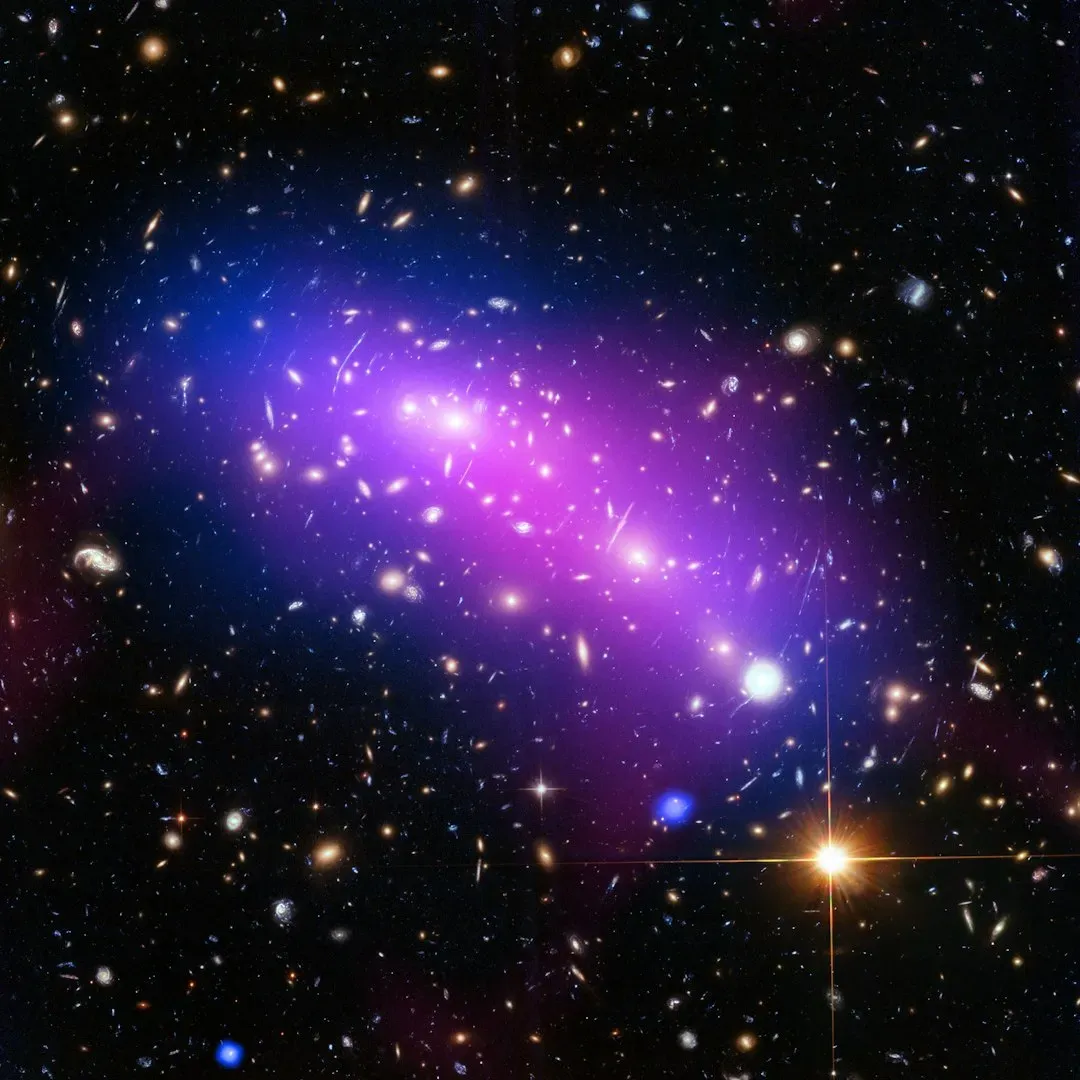
For all the progress, some of the most important pieces of the puzzle remain stubbornly out of reach, and scientists are open about those gaps. Dark matter and dark energy together dominate the cosmic energy budget, yet we still do not know what dark matter is made of or whether dark energy is a simple constant or something more exotic. The early universe, especially the first sliver of a second after the Big Bang, is still described by models like inflation that work astonishingly well as bookkeeping tools but may not be the final word on what really happened. On the quantum side, efforts to unify gravity with the rest of physics – through frameworks like string theory, loop quantum gravity, or newer hybrids – have produced rich mathematics but few decisive experimental signatures so far.
These blind spots matter because they mark the places where our candidate blueprints break down or become uncomfortably flexible. A good design rulebook should not need constant ad hoc patches to accommodate new data, yet that is often how cosmologists and particle physicists feel as they stretch existing models to cover newly precise observations. At the same time, technology is rapidly improving our ability to probe these regimes, from gravitational wave detectors listening for ripples from the early universe to laboratory experiments hunting for feeble dark matter interactions. The tension between elegant theory and stubborn data is sometimes frustrating, but it is also exactly the kind of pressure that tends to force real conceptual breakthroughs rather than cosmetic tweaks.
How Ordinary People Can Engage With an Extraordinary Blueprint
Most of us will never write down a new equation for quantum gravity or design a sky survey, but that does not mean this search for the universe’s blueprint is some distant, elite project. Simply paying attention to how quickly our picture of reality is evolving – and being willing to update old mental models – is a powerful form of scientific literacy. It can mean seeking out trustworthy explainers from research institutions, asking how we know what we claim to know, and noticing when stories about cosmic design lean more on drama than on evidence. In my own life, a single well-explained public lecture on cosmology did more to shift how I see everyday reality than years of reading abstract popular science books.
There are also very practical ways to plug in: you can explore open data from sky surveys that are freely accessible, support science journalism that covers these topics with nuance, or participate in citizen science projects that help classify galaxies and gravitational lenses. Even small choices, like encouraging kids’ questions about space instead of brushing them off, help build a culture that takes these deep questions seriously rather than treating them as trivia. The blueprint, if we manage to sketch it, will not belong only to the theorists who formalize it, but to everyone living inside the structure it describes. The more people understand that this is not just abstract math but an attempt to answer what kind of universe we live in, the richer the conversation becomes for all of us.
Suhail Ahmed is a passionate digital professional and nature enthusiast with over 8 years of experience in content strategy, SEO, web development, and digital operations. Alongside his freelance journey, Suhail actively contributes to nature and wildlife platforms like Discover Wildlife, where he channels his curiosity for the planet into engaging, educational storytelling.
With a strong background in managing digital ecosystems — from ecommerce stores and WordPress websites to social media and automation — Suhail merges technical precision with creative insight. His content reflects a rare balance: SEO-friendly yet deeply human, data-informed yet emotionally resonant.
Driven by a love for discovery and storytelling, Suhail believes in using digital platforms to amplify causes that matter — especially those protecting Earth’s biodiversity and inspiring sustainable living. Whether he’s managing online projects or crafting wildlife content, his goal remains the same: to inform, inspire, and leave a positive digital footprint.