There’s something spine-tingling about standing where countless others have stood for thousands of years, knowing most of their stories vanished without a trace. Archaeology is basically our species rummaging through its own attic, finding things we didn’t even know we’d forgotten. Some sites don’t just confirm what we suspected; they flip the script on what we thought it meant to be human in the first place.
The seven sites below don’t just fill in historical gaps – they tear open new chapters that no one realized existed. From vanished cities buried under jungle canopies to 12,000-year-old temples older than the pyramids, each place feels like a message in a bottle from another version of us. As you read, try to imagine not just the ruins, but the people, noise, fear, ambition, and hope that once pulsed through these places. That’s when the stones really start to talk.
1. Göbekli Tepe: The Temple That Came Before Cities
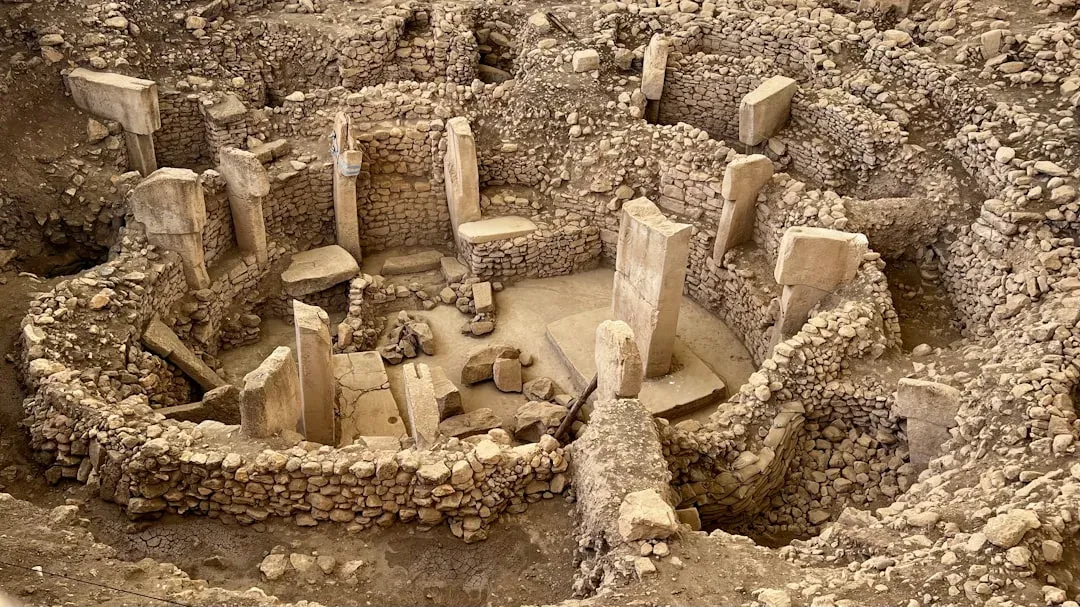
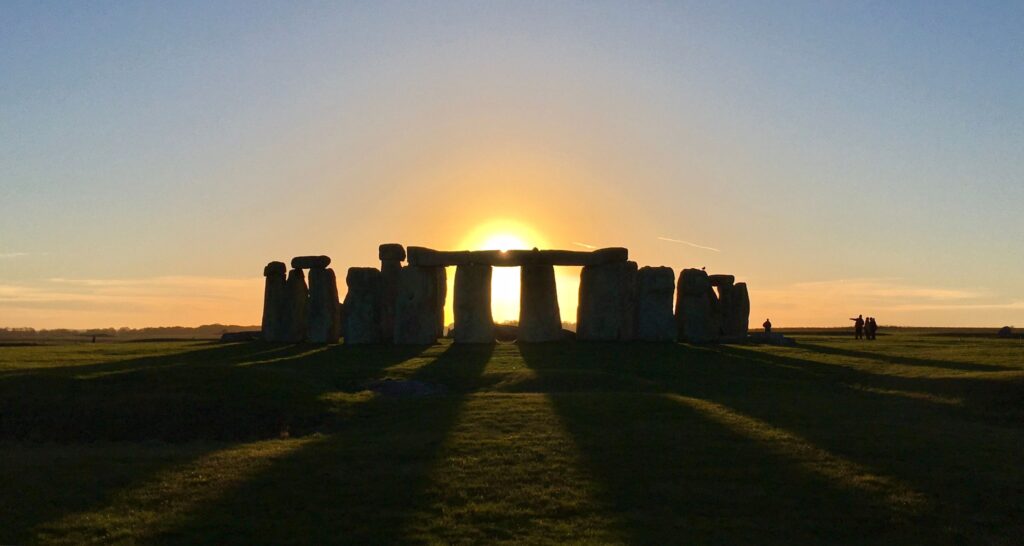
The first time I really grasped what Göbekli Tepe meant, I had to reread the dates twice: about 12,000 years old. That’s older than Stonehenge, older than the pyramids, and older than the idea that humans needed villages and farms before they could build giant sacred spaces. On a hill in southeastern Türkiye, massive T-shaped stone pillars carved with animals and abstract symbols form circular enclosures that look like a Stone Age cathedral built by hunter-gatherers.
What makes Göbekli Tepe shocking is that it flips a long-held assumption: we used to think agriculture came first, then religion and large communal monuments. Here, the evidence hints that shared ritual might have come before settled farming, as if people built a sacred meeting place first and then stuck around to feed the crowds. The site also appears to have been deliberately buried, which is such a human thing to do – almost like closing a chapter on purpose. Every excavation season adds more questions than answers, and that’s exactly why it feels like a hidden chapter of our origin story.
2. Çatalhöyük: A City Without Streets
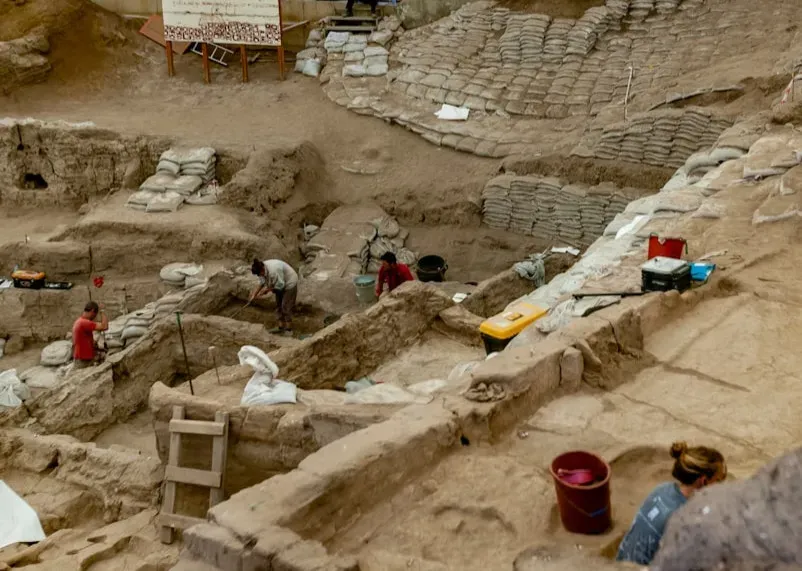
Imagine a city where you visit your neighbor by walking across their roof and climbing down a ladder into their living room. That was life in Çatalhöyük, one of the earliest known large settlements, in what is now central Türkiye around nine thousand years ago. Thousands of people lived in closely packed mudbrick houses with no streets between them, forming a honeycomb of rooftops that doubled as sidewalks.
Inside, walls were decorated with vivid paintings, reliefs, and sometimes actual bull horns embedded in the plaster, suggesting that art and symbolism were baked into daily life, not just reserved for elites. Burials found under house floors hint that ancestors remained part of family life in a very literal way, sharing the same space generation after generation. There’s no obvious palace, no clear temple towering over the rest, which challenges the idea that hierarchy and kings are automatic side effects of dense living. Instead, Çatalhöyük whispers about a different way humans first experimented with urban life: intimate, tangled, and surprisingly egalitarian.
3. Sanxingdui: The Mysterious Bronze Civilization of China
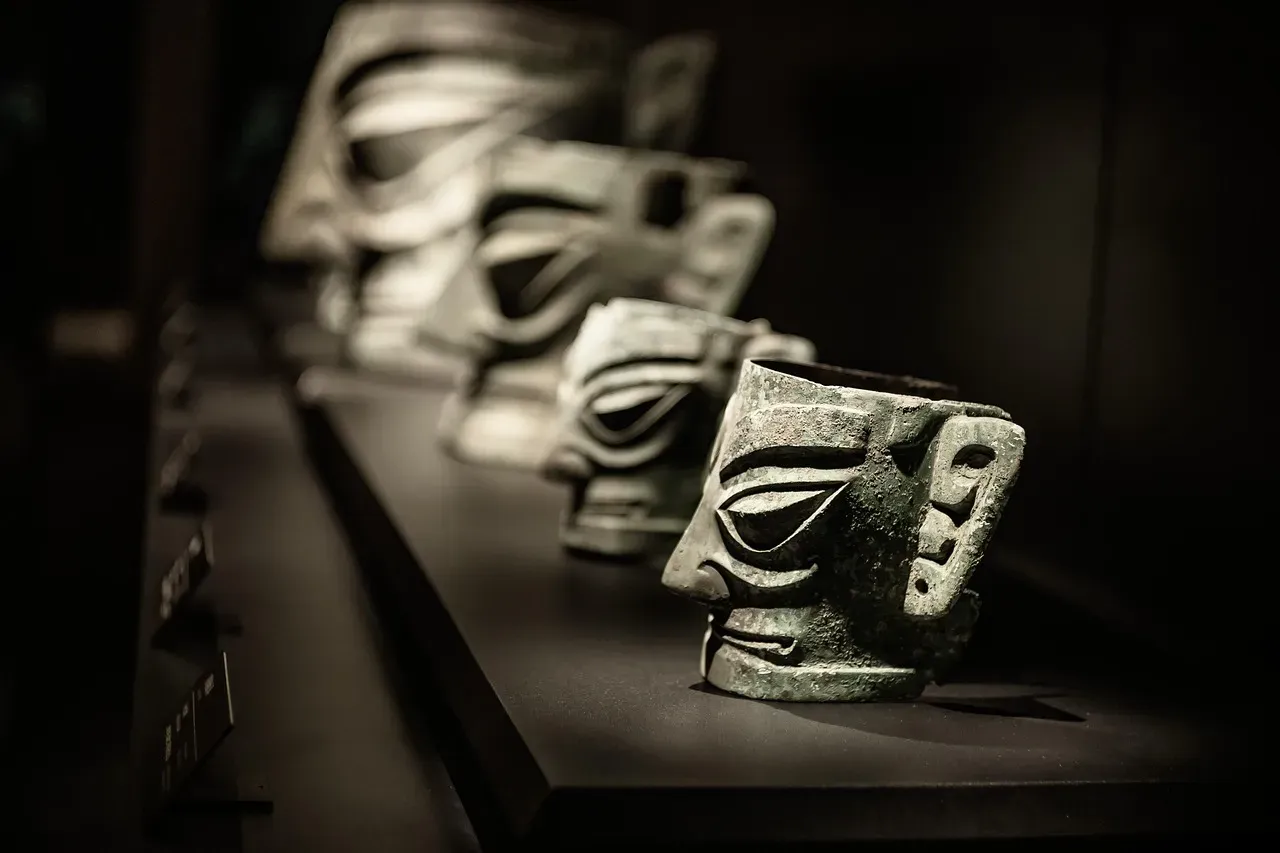
When workers accidentally hit a pit full of ancient jade in 1986 near Guanghan in Sichuan, they weren’t expecting to help uncover one of the strangest Bronze Age cultures ever found. Sanxingdui turned out to be a sprawling archaeological site linked to a previously unknown civilization that flourished roughly three thousand years ago, alongside but distinct from the more familiar dynasties of early China. What stunned archaeologists were the objects: towering bronze masks with exaggerated eyes, huge standing figures, and wild, almost alien-looking ritual trees.
These artifacts don’t fit neatly into the classic narrative of early Chinese art and symbolism; they seem to belong to an entirely separate visual language. The discovery forced historians to admit that early China wasn’t a single, tidy cultural stream but a braided river of different centers, some of which left no written records at all. More recent excavations in new pits have uncovered even more surreal bronzes and silk fragments, deepening the sense that we’re only just meeting this culture for the first time. It’s like finding an unknown chapter in a famous book and realizing the original plot was much more complicated than you thought.
4. Çatalhöyük’s Distant Cousin: Jericho and the Birth of Defensive Walls
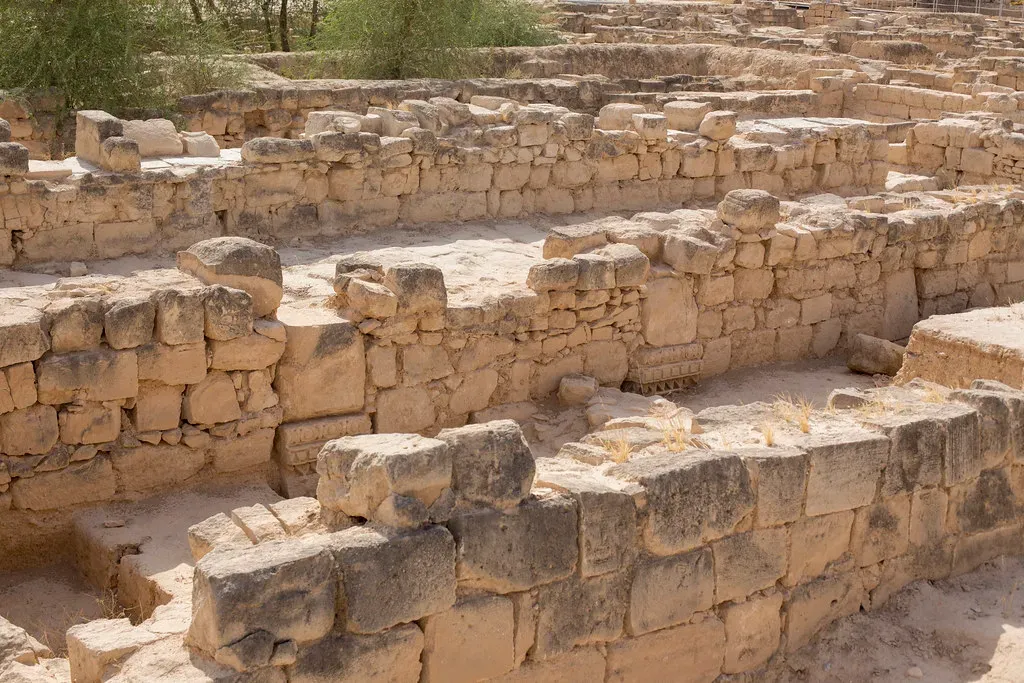
On the edge of the Jordan Valley, the ancient site of Jericho hides under layers of dust and history that go back far beyond biblical stories. Archaeologists have unearthed evidence of a very early settlement with a massive stone tower and thick walls dating back roughly nine thousand years. For a long time, those walls were interpreted as purely defensive, suggesting that even at the dawn of settled life, people already feared attack enough to ring their homes with stone.
More recent perspectives are a bit more nuanced, hinting that the tower and walls might also have had symbolic or ritual roles, maybe impressing visitors or marking a boundary between the community and the wild. Either way, Jericho shows us that early farmers weren’t living in peaceful garden utopias; they were investing serious labor in collective structures that protected and defined them. That urge to wall off, to guard, to draw a sharp line between “us” and “them” is revealed here in one of its earliest and most tangible forms. In a sense, Jericho captures the moment when humans started building not just homes, but shared fears and shared frontiers.
5. Çavuştepe and the Forgotten Kingdom of Urartu
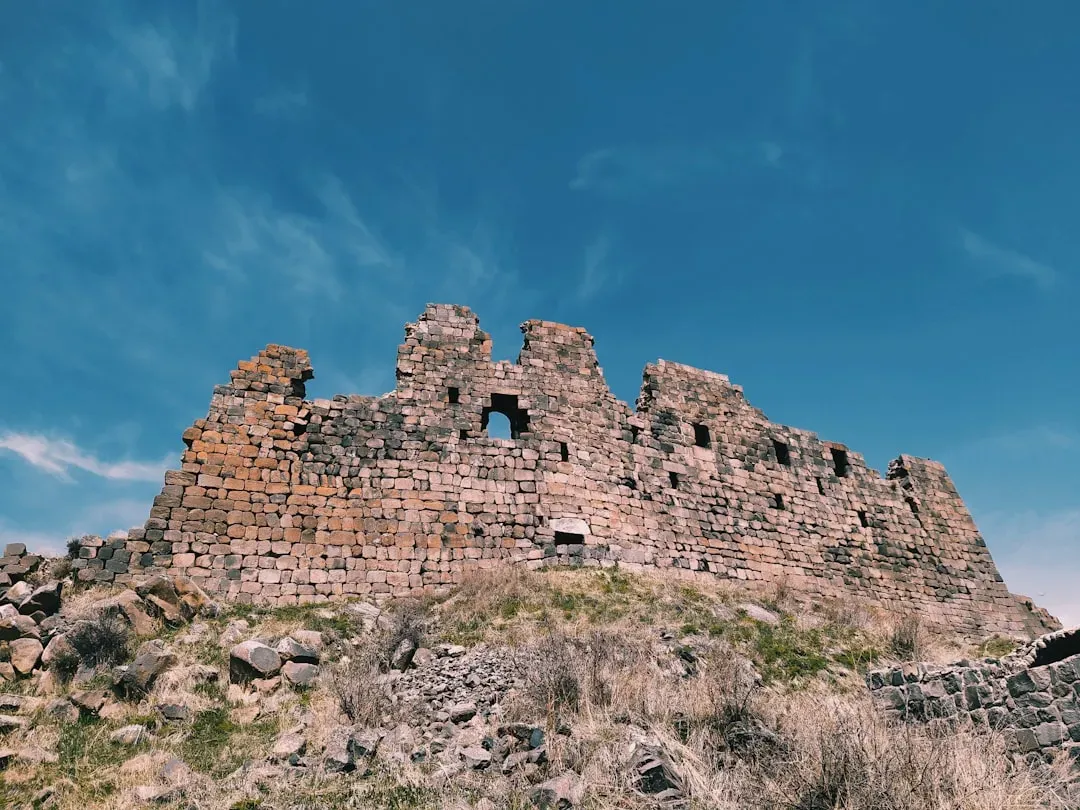
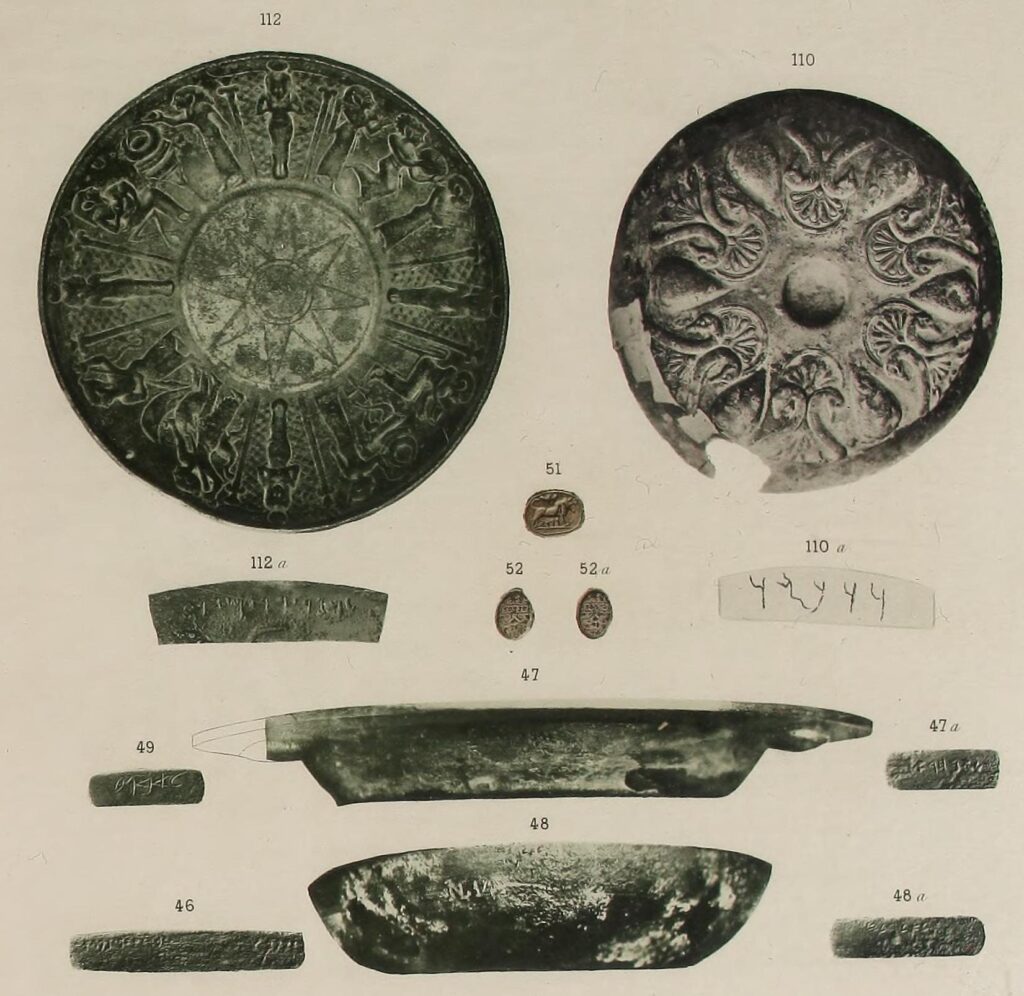
High in the rugged landscapes of eastern Türkiye, the fortress of Çavuştepe sits like a stone bookmark in a chapter many people have never read: the story of the kingdom of Urartu. Flourishing around three thousand years ago around Lake Van, Urartu was once a powerful rival to Assyria, yet it slipped into relative obscurity in popular history. At Çavuştepe, archaeologists have uncovered fortified walls, storerooms, temples, and sophisticated water systems that show an organized, ambitious state.
What’s striking is how much Urartu reveals about the ebb and flow of power in the ancient Near East, a region often painted as dominated by just a few empires. Inscribed stones, storage jars, and architectural features speak of a culture skilled in engineering and administration, not just warfare. For me, sites like Çavuştepe are a reminder that entire kingdoms can rise, shape their world, and then vanish from memory until a shovel hits stone. Every carefully measured wall there quietly corrects the mistaken idea that history was only written by the biggest and loudest empires.
6. Çavuşini and the Subterranean Worlds of Cappadocia
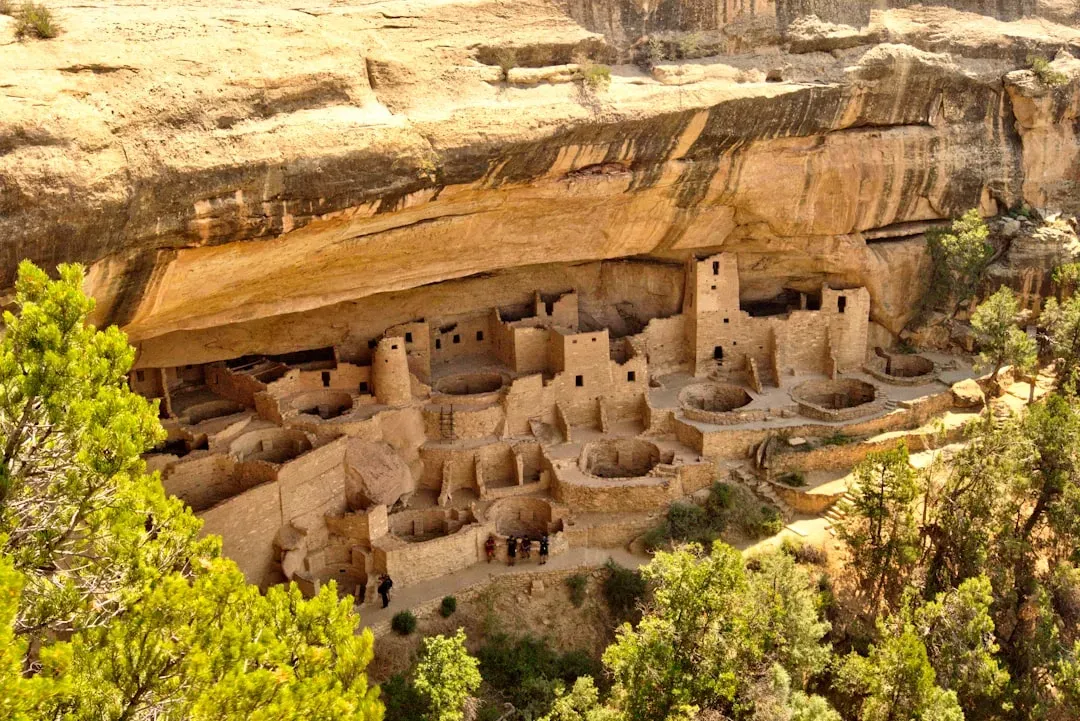
The rock-cut village of Çavuşini in Cappadocia feels like walking into a landscape that decided to become architecture. Carved into soft volcanic rock, homes, churches, and storage rooms cling to cliffs and burrow into hillsides, part of a broader tradition of underground and cave settlements in central Türkiye. Some chambers were adapted and reused across centuries, creating a layered record of shifting communities, faiths, and survival strategies.
While large underground cities in the region often grab the spotlight, places like Çavuşini show how ordinary life could be redefined by geology and threat. Carving into the rock offered insulation, concealment, and stability in a region prone to both political turmoil and harsh seasons. Standing in those spaces, you can almost hear the echoes of cooking, prayer, argument, and laughter that once filled them. It’s a reminder that humans don’t just adapt to environments; we sometimes tunnel straight into them and rewrite what a town even looks like.
7. Çatalhöyük’s Deep Past Echo: The Denisova Cave
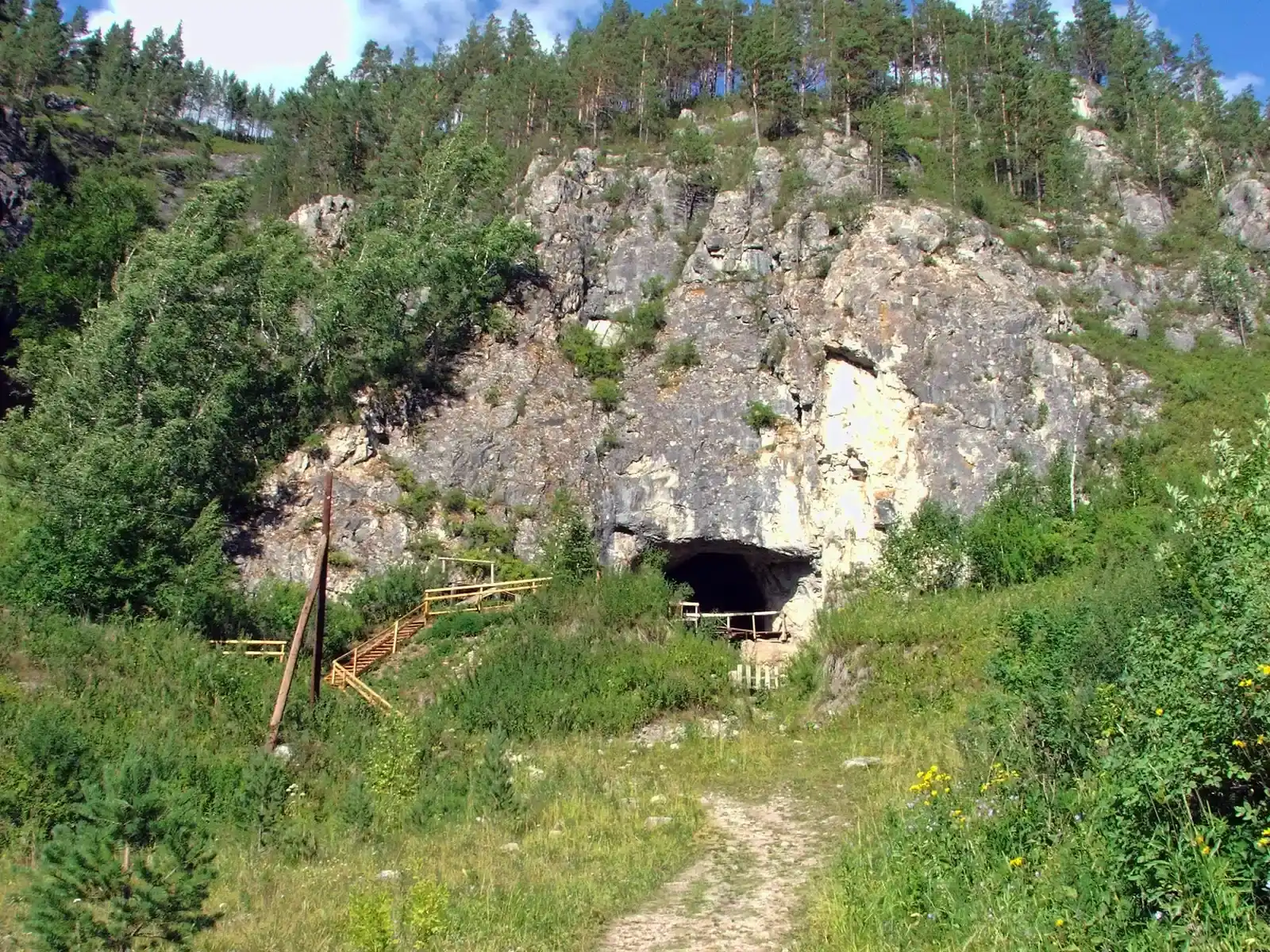
In a chilly valley of the Altai Mountains in Siberia, Denisova Cave looks, at first glance, like just another weathered opening in rock. But inside, tiny fragments of bone and teeth revealed one of the most shocking twists in human prehistory: the existence of the Denisovans, a previously unknown group of archaic humans identified through genetic analysis. This wasn’t just a new chapter; it was discovering an entire missing cast member in the human story long after everyone thought the main characters were set.
DNA from the cave showed that Denisovans interbred with both Neanderthals and modern humans, leaving genetic traces still present in some populations today, especially in parts of Asia and Oceania. A simple finger bone from a young girl ended up rewriting textbooks and reshaping debates about what it means to be “us.” The cave also holds layers of occupation stretching across tens of thousands of years, like a time-lapse of different human groups passing through the same doorway. It’s humble, quiet, and visually unremarkable, yet it may be one of the most important rooms in the world for understanding who we really are.
Listening to the Stones
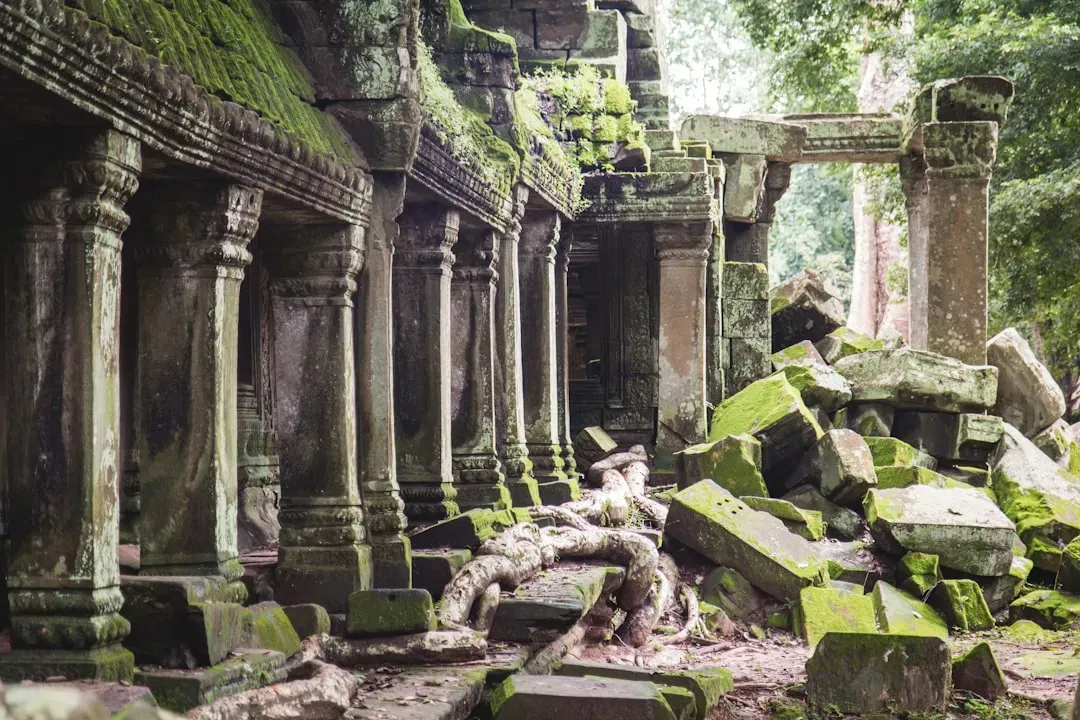
Looking across these seven sites, what strikes me most is how often we’ve underestimated our ancestors. Hunter-gatherers organizing massive temple complexes, early farmers building towers and walls, forgotten kingdoms engineering sophisticated fortresses, and unknown human relatives leaving their genetic footprints behind – none of that fits a neat, linear story. The past turns out to be less like a straight ladder and more like a tangled forest path with side trails we’re only now discovering.
Every time a new pit is opened or a lab reanalyzes an old bone, another hidden chapter peels back, and the picture of humanity grows messier, richer, and more interesting. These places tell us that creativity, belief, fear, cooperation, and experimentation have been part of us for far longer than our modern comforts might suggest. The stones won’t give up all their secrets, but they’ve already revealed enough to make it clear: we are not a simple story, and we never were. Which of these chapters changes your view of our species the most?