Some animals are so strange that, if you drew them as a kid, an adult would’ve told you to stop making things up. Yet they’re out there right now, swimming in inky oceans, climbing misty mountains, or gliding through moonlit forests, quietly rewriting the rules of what life can look like. These are not your standard zoo celebrities; they’re the hidden side characters of the planet, and many of them are hanging on by a thread.
Once you meet them, it’s hard to unsee them. A shark that glows, a bird that looks like a half-plucked dinosaur, a mammal that lays eggs like it got confused halfway through evolution. As you go through this list, you might feel a mix of awe, sadness, and a little bit of “how did I never hear about this?” That’s good. The more we notice them, the harder they are to quietly lose.
1. Saiga Antelope – The Animal With a Built‑In Air Filter
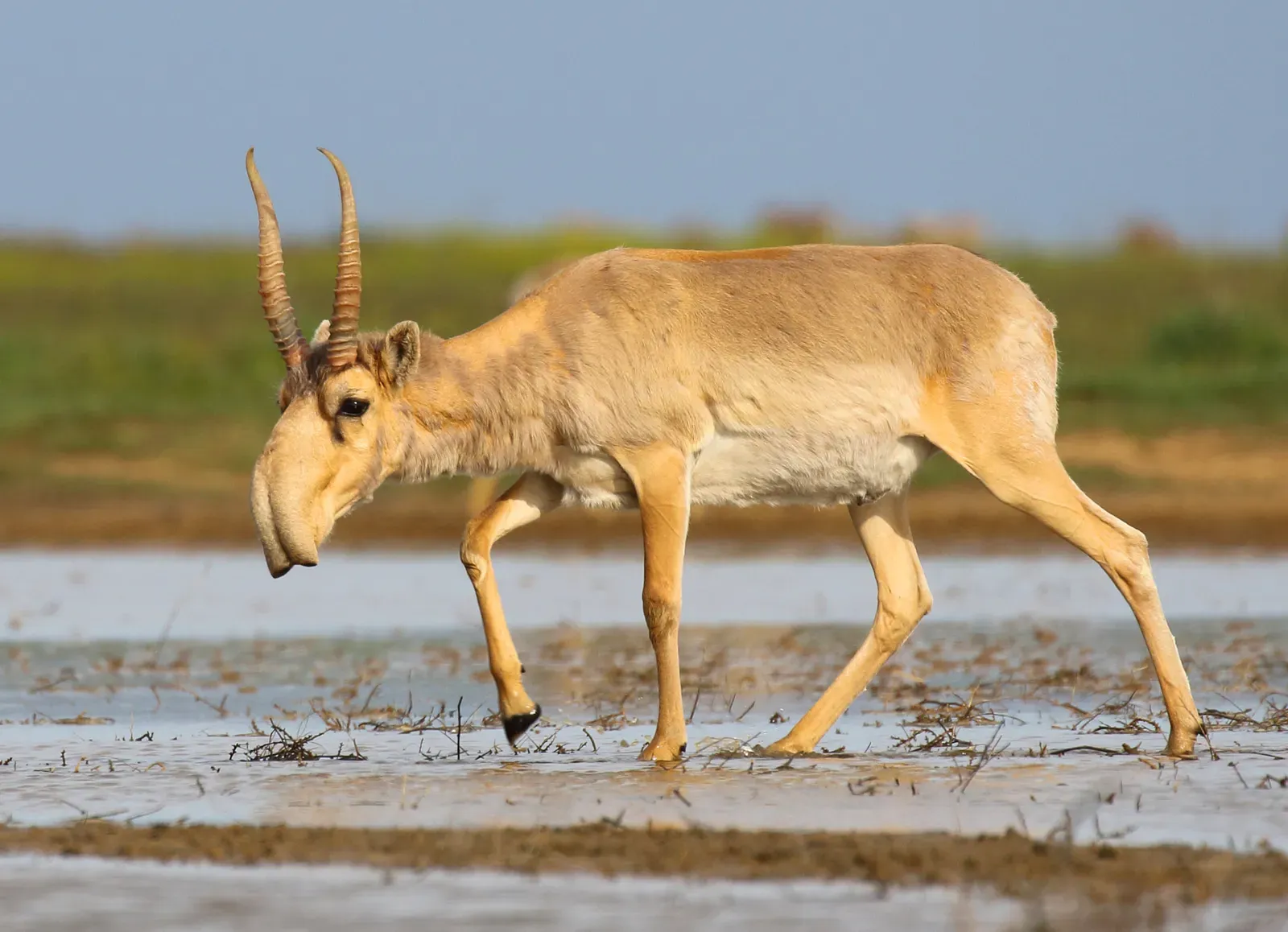
The first time you see a saiga antelope, your brain does a double-take: it looks like a regular antelope wearing a comically oversized, squishy nose mask. That strange, inflatable-looking nose is basically a natural air filter, warming and cleaning the air in winter and straining out dust in the dry, windy summers of the Eurasian steppes. It’s a perfect example of evolution solving a problem in a way no human designer would have dared to sketch. Watching one move across the steppe feels oddly prehistoric, like you’ve stumbled onto a lost scene from an Ice Age landscape.
But that almost-cartoonish face hides a brutal reality. Saiga numbers crashed in the 1990s because of uncontrolled hunting and habitat loss, and then disease outbreaks killed off a huge chunk of the remaining population in just a few weeks. In some regions, people remember seeing massive migrating herds that no longer exist. There are ongoing efforts to protect their habitat and clamp down on illegal hunting, and there have been encouraging signs of recovery in certain areas, but they’re still incredibly vulnerable. If you’ve never heard of the saiga before, in a way, that’s part of the problem.
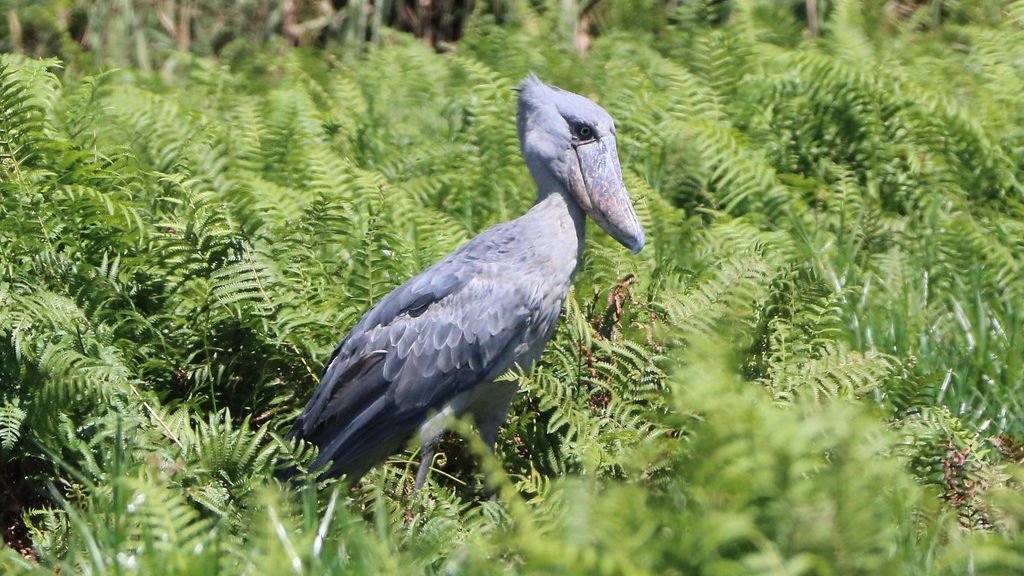
2. Shoebill – The Dinosaur Bird That Stares Into Your Soul
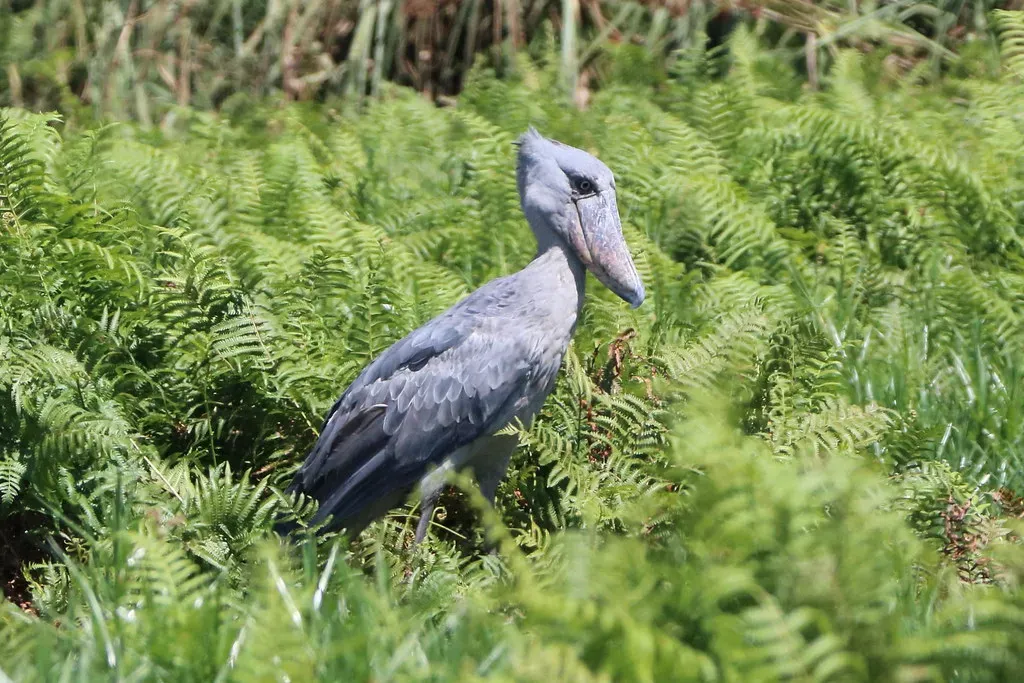
The shoebill is the bird that makes you rethink what a bird even is. It’s tall, gray, and hulking, with a massive shoe-shaped bill that looks like it was bolted on from a different species entirely. When it stands motionless in an African swamp, it has the eerie presence of a statue that might move the second you look away. And when it does move, it does so slowly, deliberately, with the kind of focus that makes you feel like you’re the one being watched.
Part of what makes the shoebill so unforgettable is its hunting style. It waits, dead still, for lungfish or other prey to get close before suddenly striking with shocking force, sometimes scooping up mud and all. It lives in remote wetlands in countries like South Sudan and Uganda, where habitat loss and disturbance are real threats. Tourism can help raise awareness and money for its protection when done carefully, but too much human pressure can stress the birds and damage their nesting areas. Seeing one in person is almost like looking at a living relic from another age – if we lose them, there’s nothing remotely similar to take their place.
3. Aye‑Aye – The Night Creature With the Curse Finger
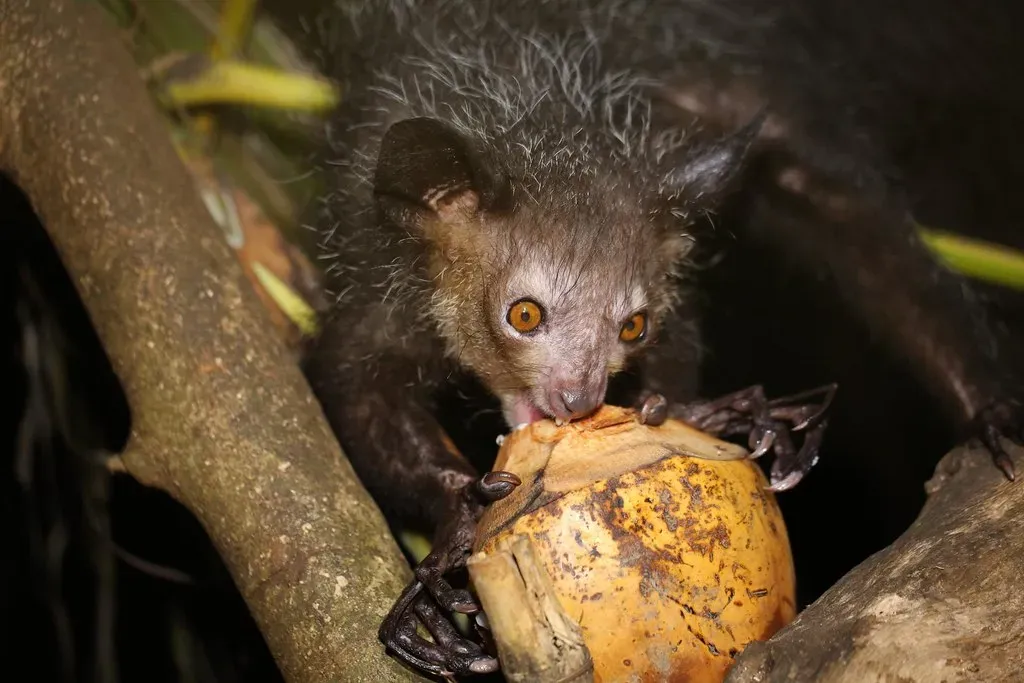
The aye-aye is the kind of animal that would’ve terrified me as a kid if I’d seen it in a storybook: big eyes, scruffy fur, bat-like ears, and that skinny, creepy middle finger. Found only in Madagascar, it lives a life in the treetops, sneaking out at night and tapping along branches to listen for hollow spots that might hide insects. That long, bony finger is its secret tool, fishing out grubs like a living, slightly ominous pair of tweezers. It’s weird, clever, and honestly a bit mesmerizing once you get past the initial “what am I looking at?” reaction.
Tragically, in some local traditions, the aye-aye has been seen as a sign of bad luck, even death, and people have sometimes killed them out of fear. Combine that with deforestation, and this uniquely odd primate is under serious pressure. Conservation groups have been working not just to protect forests but also to shift how people think about the aye-aye, turning a feared omen into a species worth celebrating. I personally think it’s one of the most relatable animals on this list: misunderstood, a little awkward-looking, but secretly brilliant at what it does.
4. Dumbo Octopus – The Deep‑Sea Cartoon That’s Completely Real
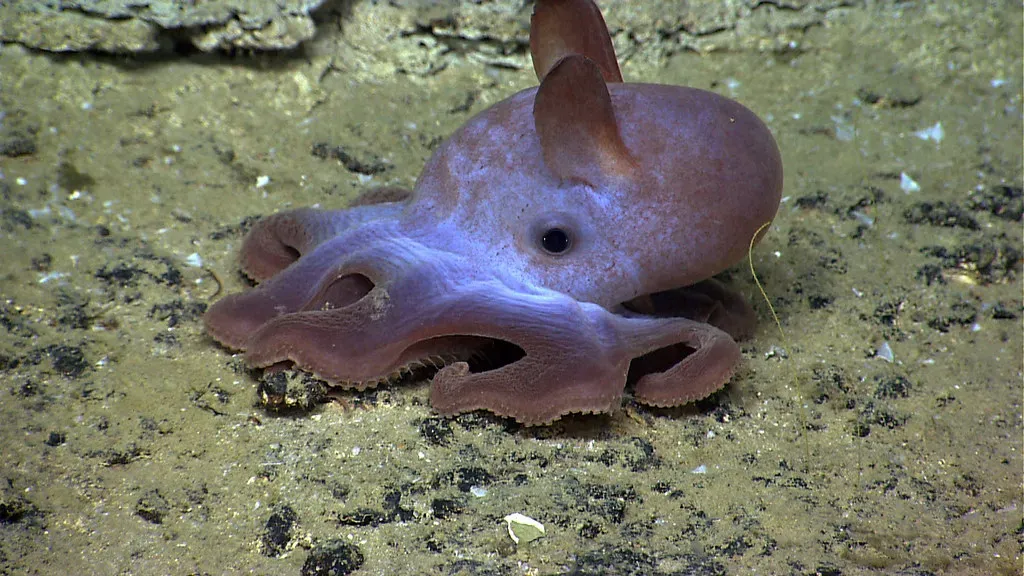
The dumbo octopus looks so soft and unreal that it feels like someone animated it and forgot to turn it off. Its ear-like fins stick out from its head, gently flapping as it hovers in the deep ocean, giving it an almost childlike charm. These animals live thousands of meters below the surface, where sunlight doesn’t reach and pressures are crushing, yet they glide around as if everything’s calm and easy. In videos from deep-sea submersibles, they often seem to float in a sort of slow-motion ballet, arms gathered like a little umbrella.
What makes them especially fascinating is that we still know surprisingly little about their lives. They don’t have an ink sac, which makes sense when you realize there’s not much point in using ink in pitch-black water. They appear to feed on small animals drifting in the water or lying on the seafloor, quietly picking up whatever passes within reach. Because they live so deep, they’re less directly affected by many surface threats, but deep-sea mining and changing oceans could still reshape their world before we truly understand them. Seeing one on camera feels like a gentle reminder that most of Earth is still basically unexplored.
5. Saiga’s Ocean Cousin? Not Quite – Meet the Goblin Shark
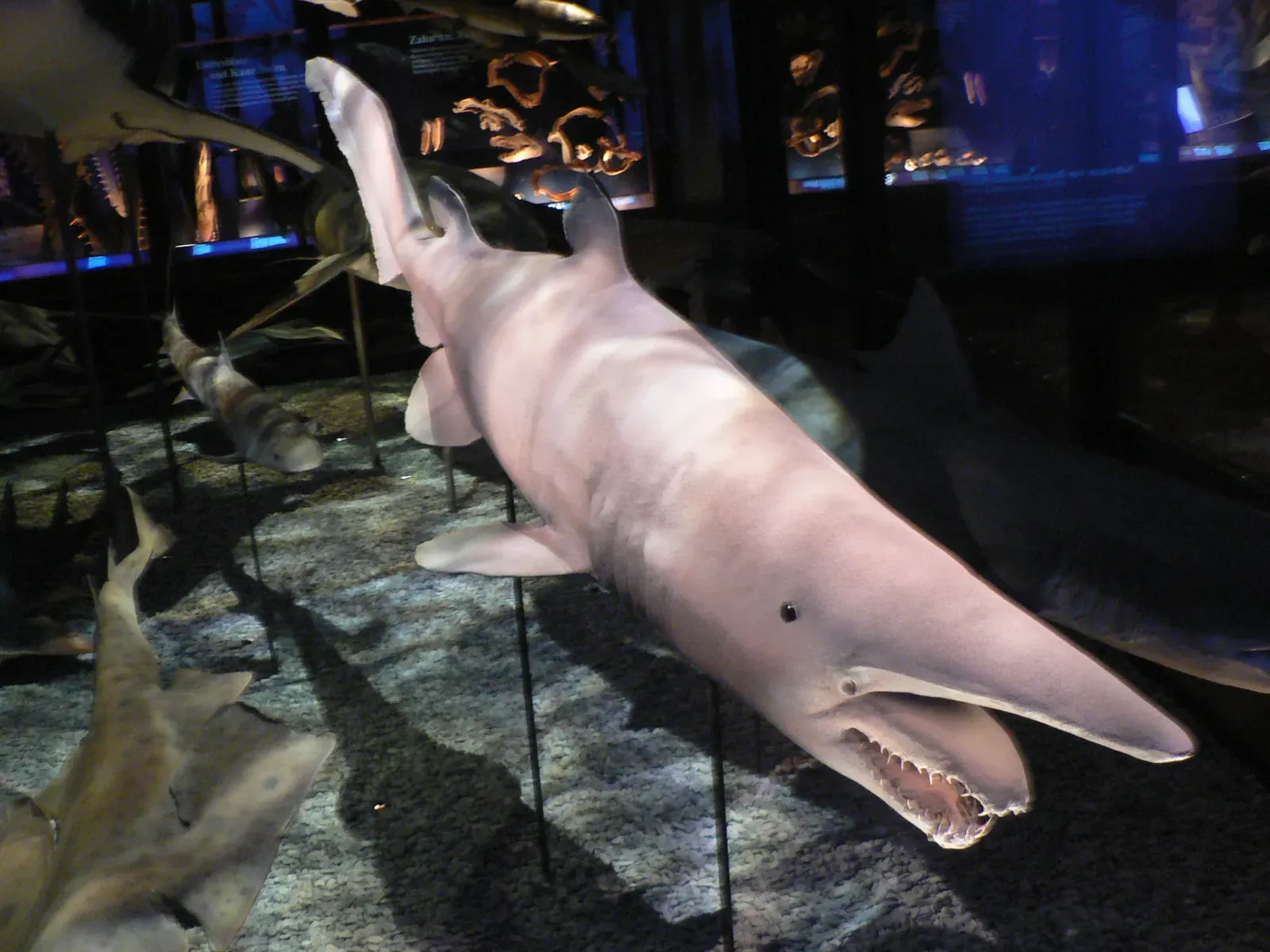
If nightmares had a mascot, it might be the goblin shark. Slimy-looking, pale, with a long blade-like snout and a jaw that can launch forward faster than your eyes can track, it’s the deep sea’s answer to a horror movie monster. But here’s the twist: this shark usually just cruises the dark depths minding its own business, far from swimmers and surfers. It’s an ancient lineage, sometimes called a living fossil because its family line stretches back tens of millions of years, hanging on in the shadows while other lineages came and went.
Most of what we know about goblin sharks comes from chance captures in deep-sea fishing nets or rare camera footage. Their ability to shoot their jaw forward is not just a party trick; it’s how they snap up fish and squid in the dark where quick strikes matter. They’re not commonly caught, but any fishing that scrapes deep habitats can put unusual pressure on them. Seeing a photo of a goblin shark for the first time can be genuinely unsettling, but there’s something almost humbling about an animal that has quietly survived for so long in a world we hardly visit.
6. Kakapo – The Heavyweight Parrot That Forgot How to Fly
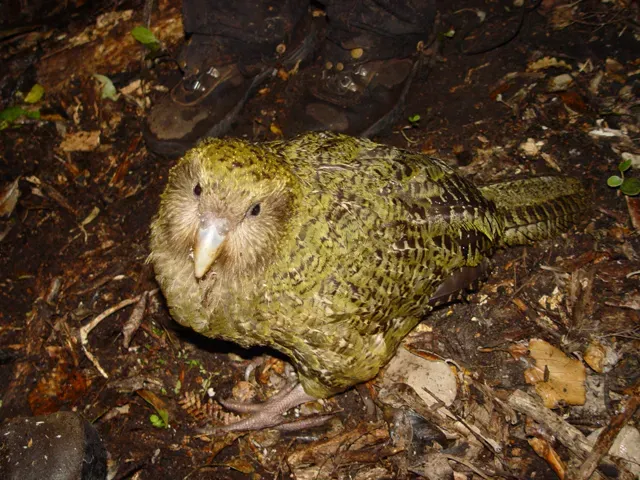
The kakapo might be one of the most unintentionally hilarious and heartbreaking animals on Earth. It’s a huge, moss-green parrot from New Zealand that cannot fly and tends to freeze when frightened, which worked fine when its only real predators were birds of prey. Then humans arrived with cats, rats, and stoats, and that “stand very still and hope for the best” strategy became a disaster. Kakapos are curious, often waddling up to people, and some individuals have become minor celebrities in conservation circles for their quirky behavior.
Today, every single kakapo is known, named, and closely monitored by conservation teams. They live on predator-free islands, with nests watched, eggs checked, and food supplemented in bad seasons. Thanks to this intense effort, their numbers have climbed from the edge of extinction to a small but growing population, though they remain critically endangered. Kakapos breed slowly and irregularly, often tied to the availability of certain tree seeds, so recovery is a long game. It’s one of those species that makes you realize how much effort it can take to fix the damage caused in a relatively short time.
7. Olm – The Blind Cave Dragon of Europe
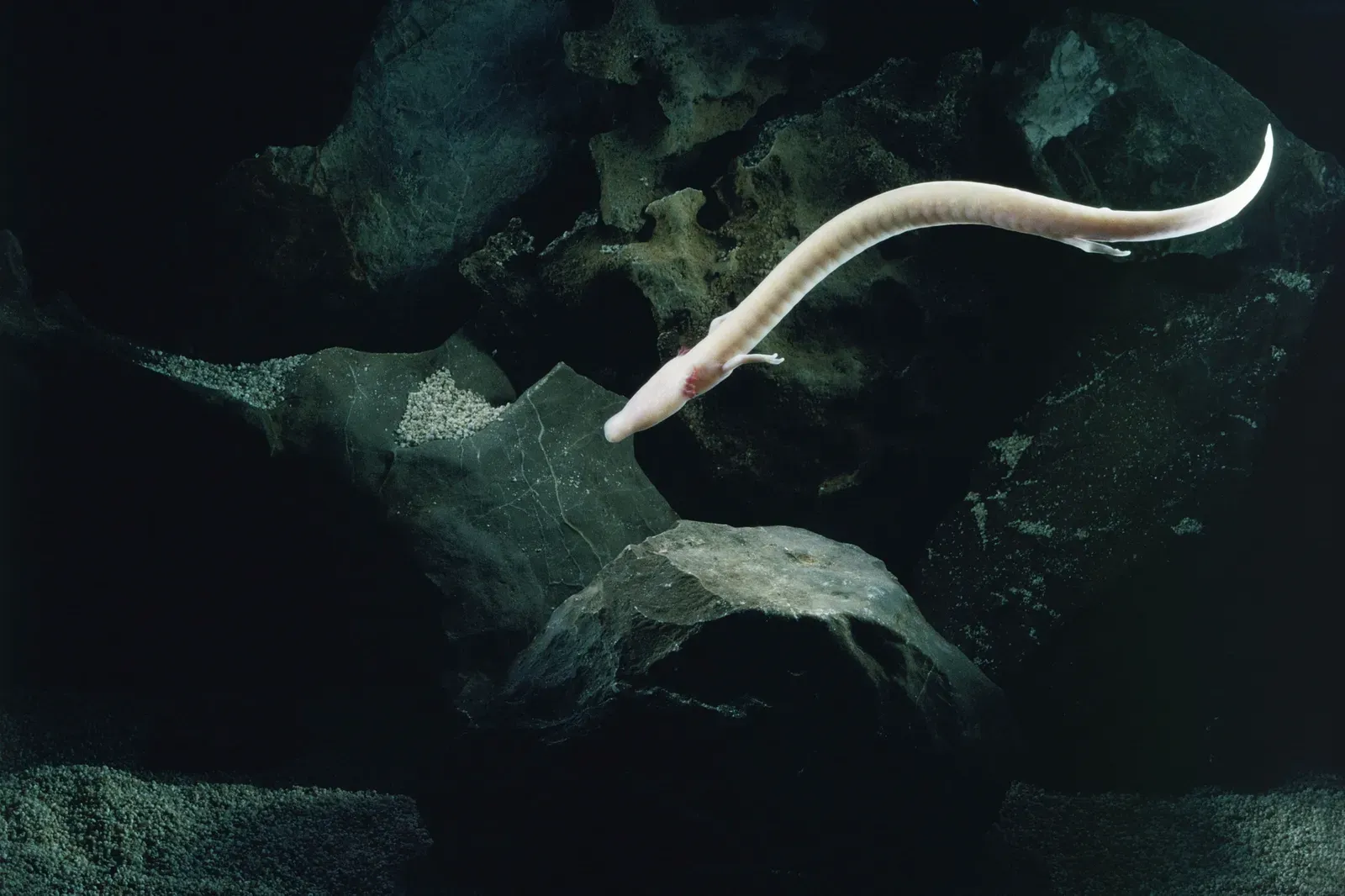
Hidden in the limestone caves of the Balkans, the olm looks like a creature that escaped from a fantasy novel. It’s a pale, elongated salamander with feathery red gills and no functional eyesight, gliding through underground rivers in permanent darkness. Locals once called them baby dragons, especially when floodwaters flushed them out of caves and into the open, and honestly, it’s not hard to see why. They can live for many decades and have incredibly slow metabolisms, sometimes going long stretches without feeding.
The olm’s entire life is tuned to a world without light: its sense of smell and sensitivity to water movement are far more important than vision. It depends on groundwater that is clean and stable, which makes pollution and human alteration of underground water systems a serious threat. Some populations are protected in caves that have become tourist attractions, which is a mixed blessing: visitors bring awareness and funding, but also noise and potential disturbance. As a symbol, the olm quietly reminds us that even the places we almost never see are full of life that depends on our choices at the surface.
8. Sunda Flying Lemur – The “Gliding Blanket” That Isn’t a Lemur
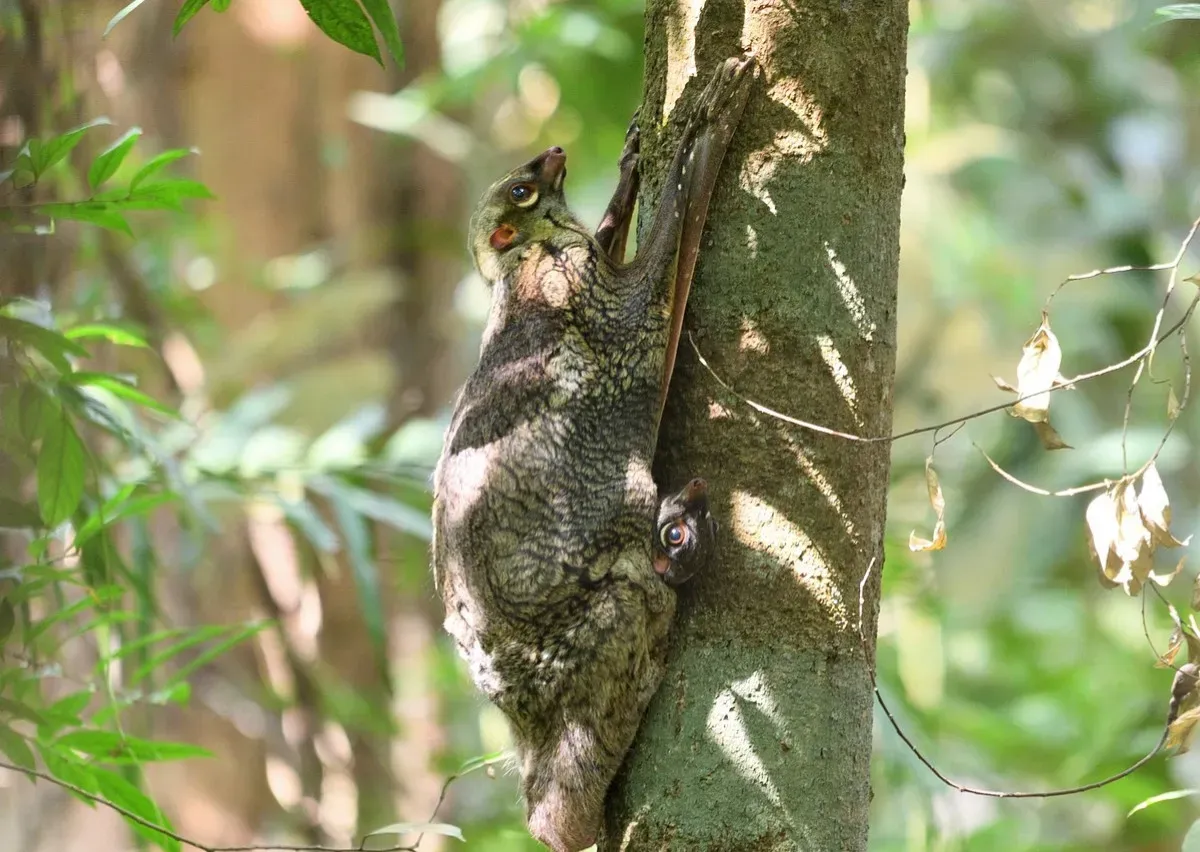
The Sunda flying lemur, more accurately called a colugo, looks like someone wrapped a small animal in a living cape and tossed it gently between trees. It does not actually fly and it’s not a lemur, but it is one of the most impressive gliders in the mammal world, able to soar from tree to tree using a skin membrane that stretches between its limbs and even its tail and neck. When it opens up in midair, it becomes this eerie, silent shape that can cover surprising distances without a flap or sound. During the day, it clings flat against tree trunks, blending into the bark like a patch of lichen or loose bark.
Colugos are found in Southeast Asian forests, and they live a largely quiet, nocturnal life feeding on leaves, flowers, and sap. Their survival is tightly linked to intact forests, so deforestation and fragmentation are major threats to their long-term future. They rarely show up in standard wildlife documentaries, even though they represent a unique branch of the mammal family tree. I still remember the first time I saw a photo of one mid-glide; it looked like someone had unfolded an animal like a parachute. It’s a reminder that evolution tends to reuse the same idea – falling with style – in wildly different ways.
9. Naked Mole‑Rat – The Wrinkled Underground Rule‑Breaker
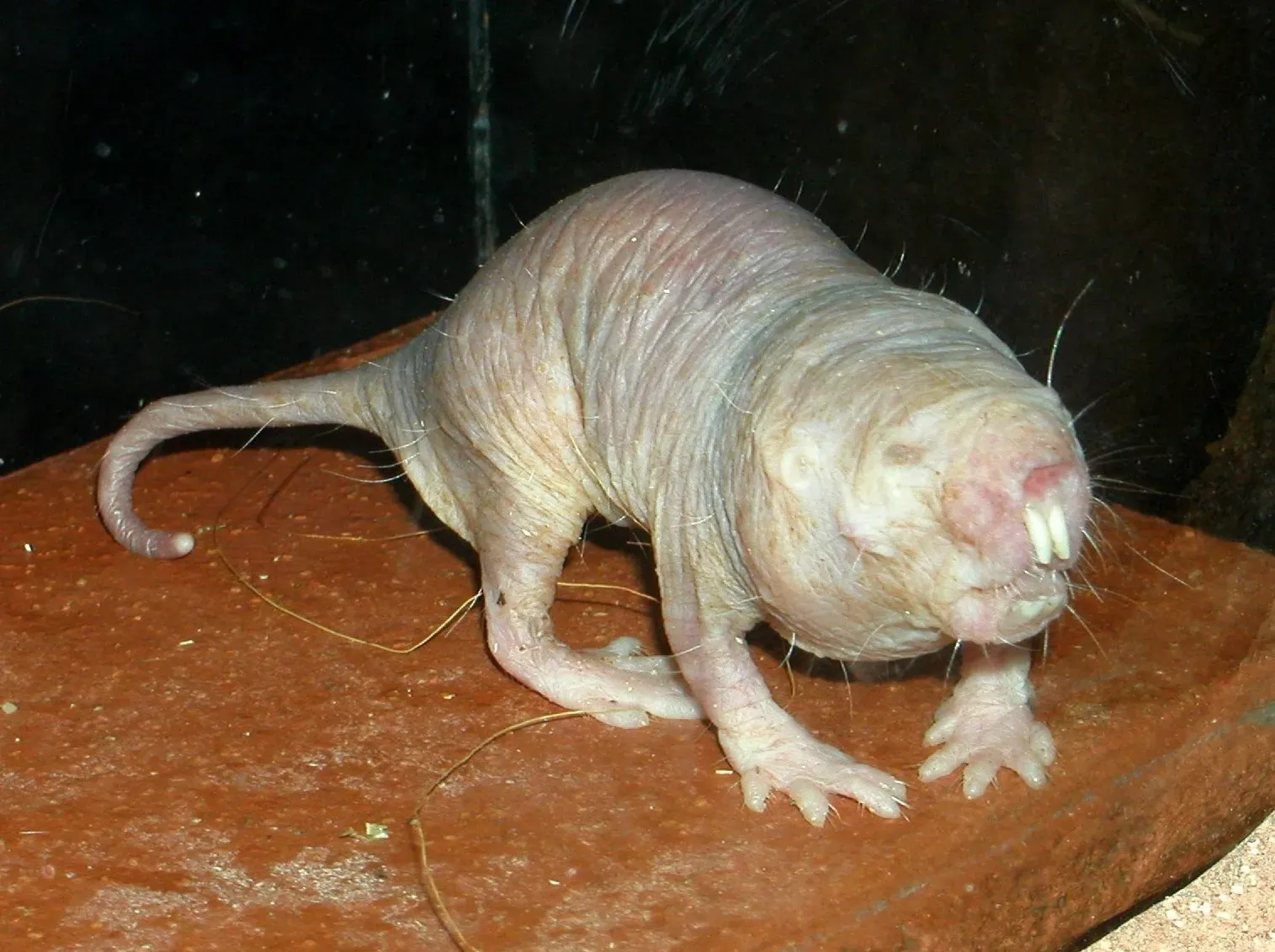
At first glance, the naked mole-rat is not going to win any beauty contests: nearly hairless, wrinkled, with huge teeth that work like tiny shovels. But dig a bit deeper, and it becomes one of the most extraordinary mammals known. Naked mole-rats live in underground colonies with a structure that feels more like an ant nest than a typical mammal society, with a single breeding female and many workers. They navigate pitch-black tunnels, communicating through sounds and scents, in a world that is almost entirely closed off from the surface.
What really grabs scientists’ attention is how they break the rules we thought existed for mammals. They tolerate levels of pain and lack of oxygen that would be dangerous for most animals, and they rarely show the typical age-related diseases seen in other mammals of similar size. Their cells and social behaviors are being studied for clues about aging, cancer resistance, and how animals adapt to extreme environments. They’re not rare in the sense of being few in number, but rare in how bizarrely different they are from what we expect a mammal to be. It’s hard not to respect a creature that ugly and that impressive at the same time.
10. Platypus – The Patchwork Mammal That Shouldn’t Make Sense
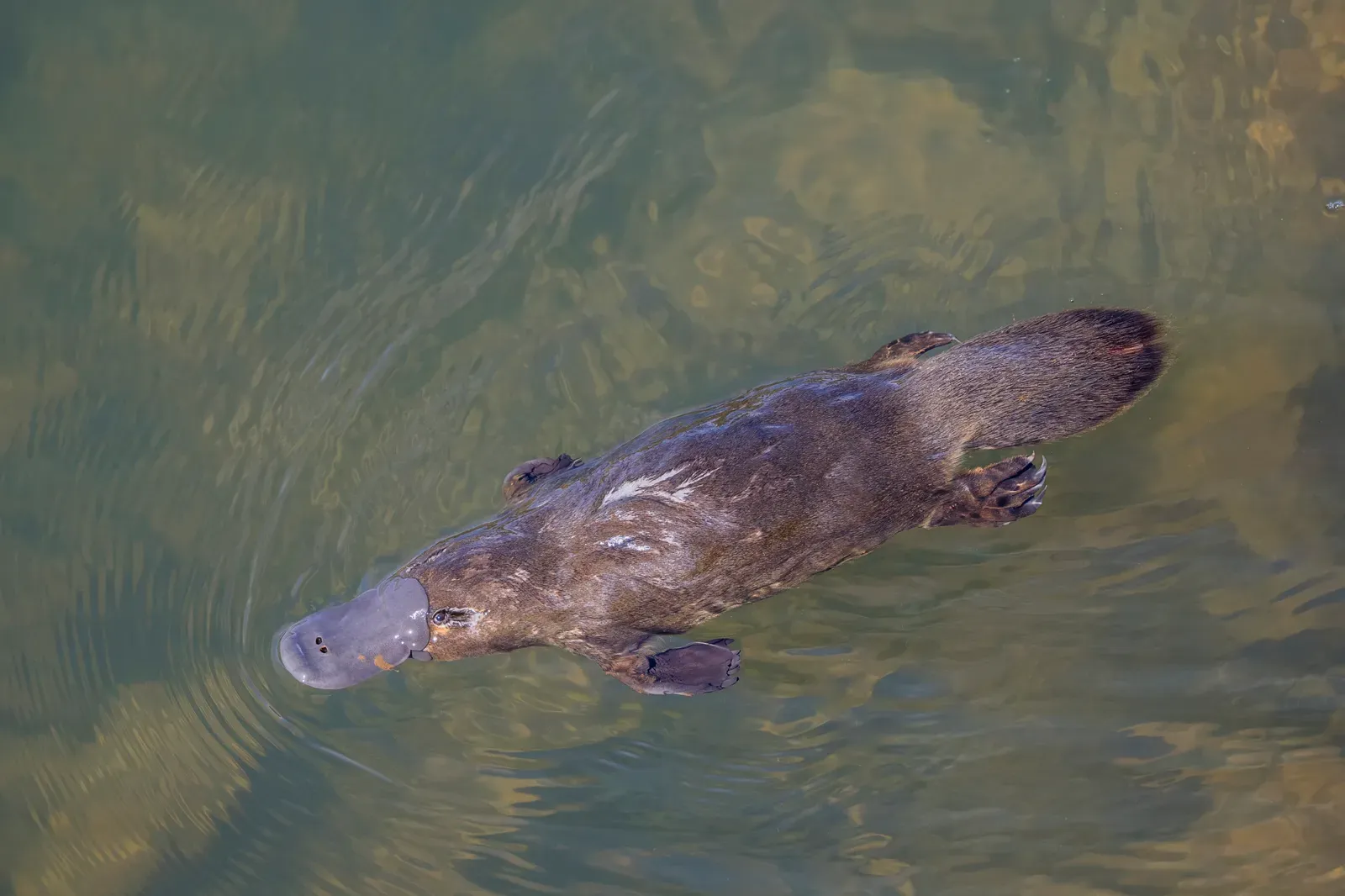
The platypus is the animal that makes you suspect nature has a sense of humor. It has a duck-like bill, beaver-like tail, webbed feet, lays eggs, and the males carry venomous spurs on their hind legs. When European scientists first examined a specimen, some reportedly suspected it was a stitched-together fake, because it simply did not match their idea of what a mammal should be. Yet in eastern Australia and Tasmania, the platypus is just quietly going about its life, paddling along rivers and hunting underwater with its eyes, ears, and nostrils closed, using electroreceptors in its bill to detect prey.
Platypuses are shy and mainly active at night or twilight, which means even people who live near good habitat may never see one in the wild. Their river-dependent lifestyle makes them vulnerable to drought, pollution, dams, and land clearing along waterways. In recent years there has been growing concern that their numbers are declining in some parts of their range, leading to calls for stronger protection of their habitats. Seeing one glide through dark water feels almost unreal, like a glitch in the code of evolution. But they’re real, and their survival depends on very down-to-earth things: clean rivers, intact banks, and space to stay strange.
Once you start looking for animals like these, the world feels a lot less ordinary. You realize that for every familiar lion or dolphin, there are dozens of obscure species quietly living out lives that are just as astonishing, if not more so. Many of them are rare not because they’re naturally scarce, but because we’ve squeezed their habitats, feared their appearance, or simply never bothered to notice they were there. The tragedy is that some might disappear before most of us ever even learn their names.
But there’s something hopeful tucked into that realization: paying attention is a real, practical form of care. The moment a species shows up in our conversations, in our feeds, or in our imaginations, it becomes harder to ignore what happens to it. Maybe the next time you hear about a wetland being drained, a forest being cleared, or a river being dammed, you’ll picture a shoebill, a colugo, or a platypus instead of some vague idea of “wildlife.” Out of these ten rare creatures, which one will stick in your mind the longest?