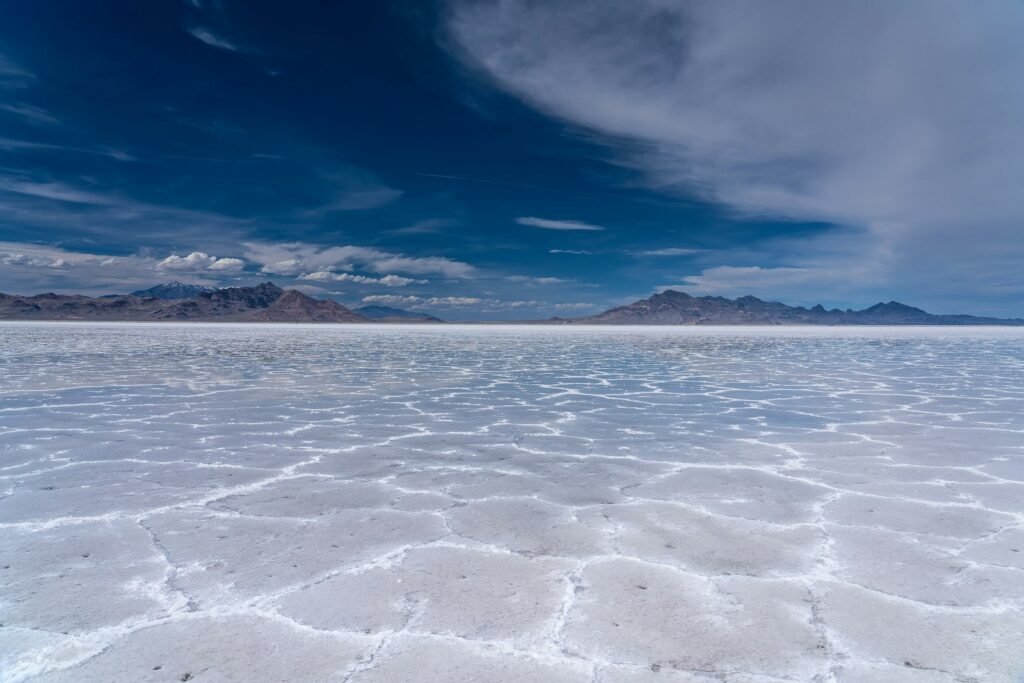
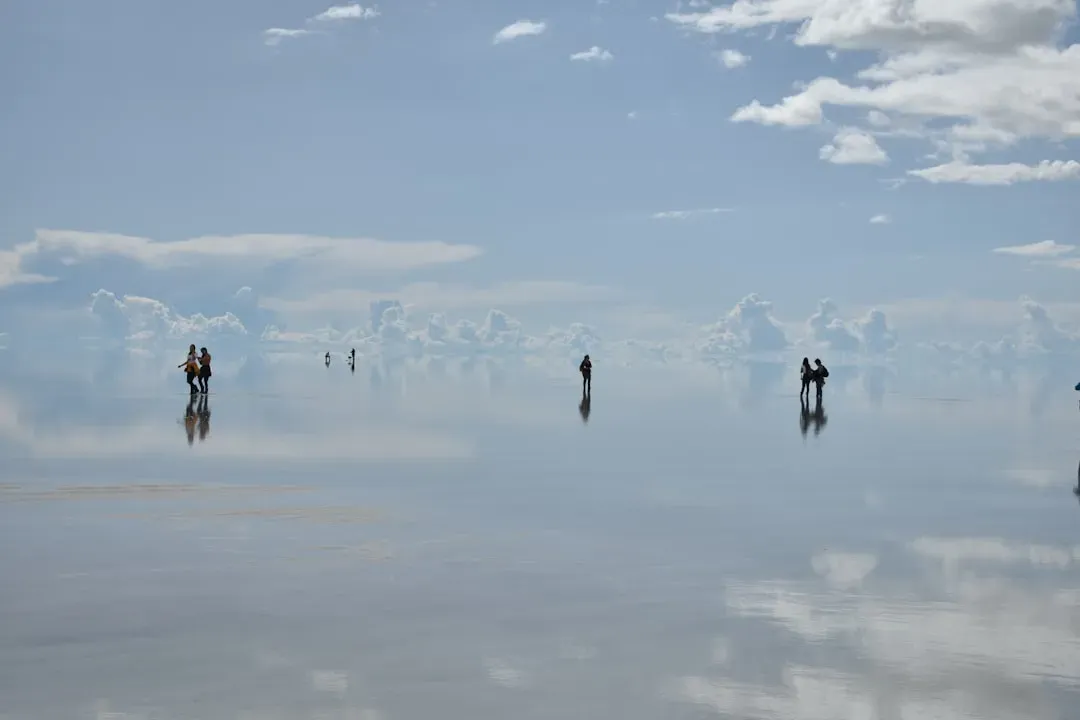
On certain windless mornings high on the Bolivian Altiplano, the ground seems to vanish and the sky doubles in size. People walking across the Salar de Uyuni appear to float between two horizons, as if gravity has briefly forgotten which way is down. This is not a camera trick or a tourist filter but a precise collision of geology, chemistry, and climate that turns an ancient salt lake into the largest natural mirror on Earth. What happens on this plateau, more than three and a half kilometers above sea level, matters far beyond its otherworldly beauty. It is a place where deep time, modern technology, and human vulnerability are all reflected back at us in the same blinding white light.
Where an Inland Sea Turned to Sky-Bright Salt
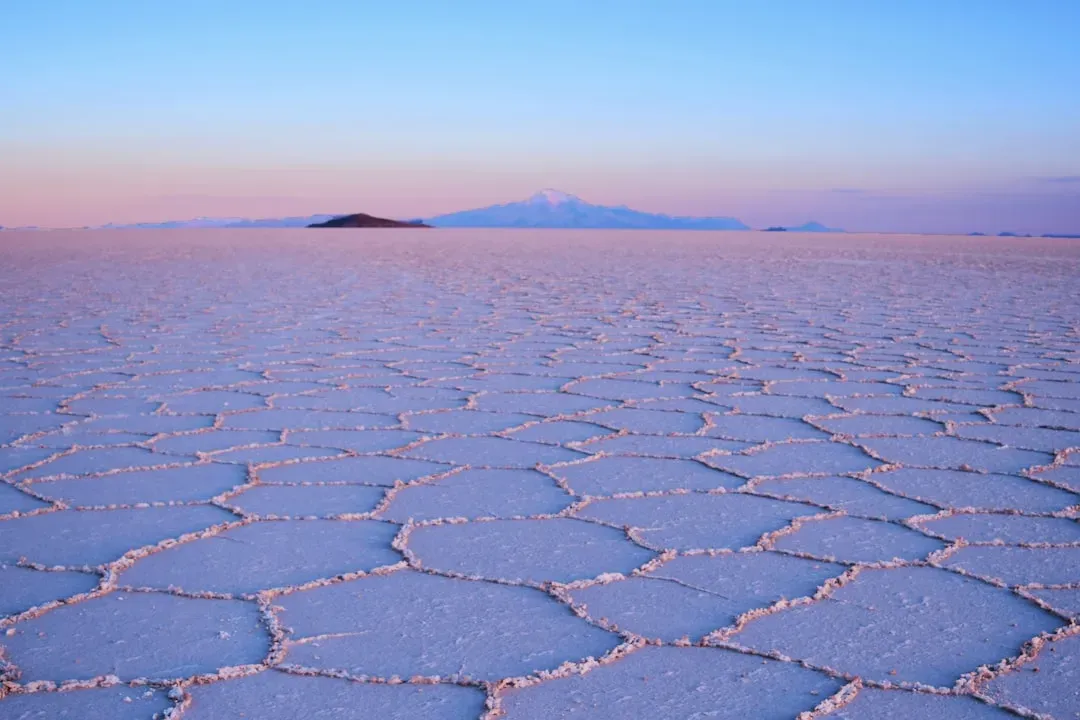
It is hard to grasp when you first step onto the Salar that you are walking on the ghost of a vanished lake. Roughly ten to thirty thousand years ago, this region was covered by a series of massive prehistoric lakes, including Lake Minchin and later Lake Tauca, that filled much of the central Andes plateau with brackish water. As climate patterns shifted and the region became drier, those lakes slowly evaporated, leaving behind thick layers of dissolved minerals that had nowhere else to go. Sodium chloride – ordinary table salt – dominated, but it crystallized into a crust that can reach several meters thick in places.
What is now a nearly featureless white expanse of more than four thousand square miles was once a living basin with shorelines, waves, and aquatic ecosystems. Today only a few remnant lakes and wetlands around the margins hint at that watery past. The stark flatness is not an accident but the result of long-term balancing between crust formation, groundwater circulation, and subtle tectonic uplift that keeps the surface astonishingly level. That levelness sets the stage for the mirror effect; without it, rainfall would simply pool in low spots instead of forming a sheet that behaves like polished glass.
The Physics of a Planet-Sized Mirror
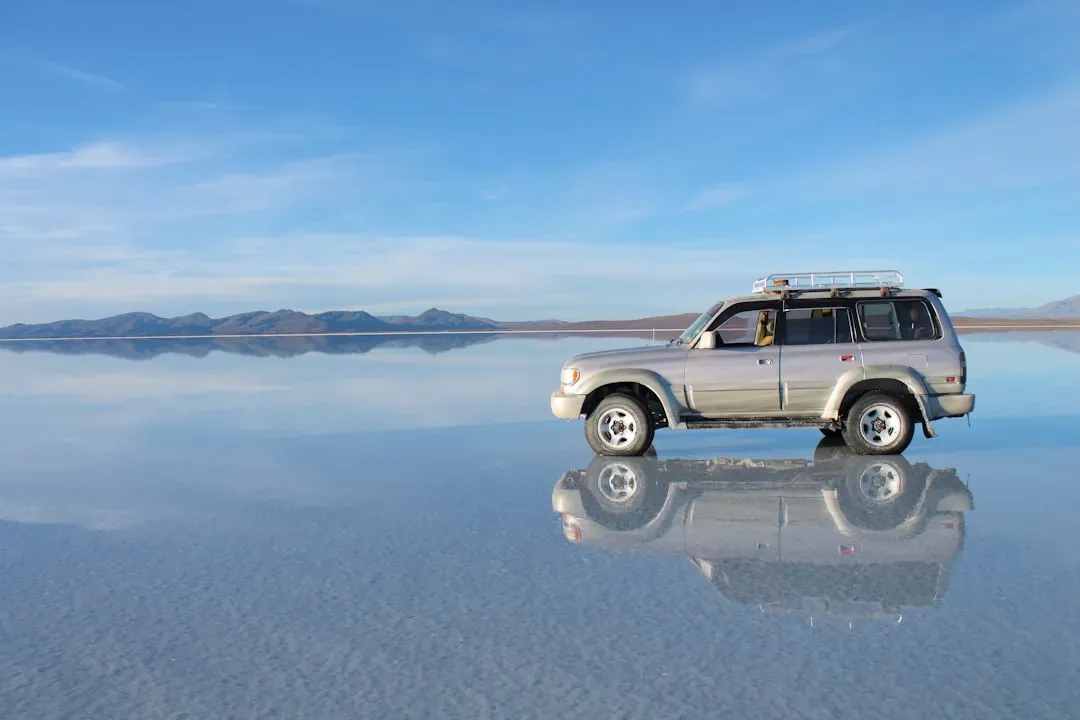
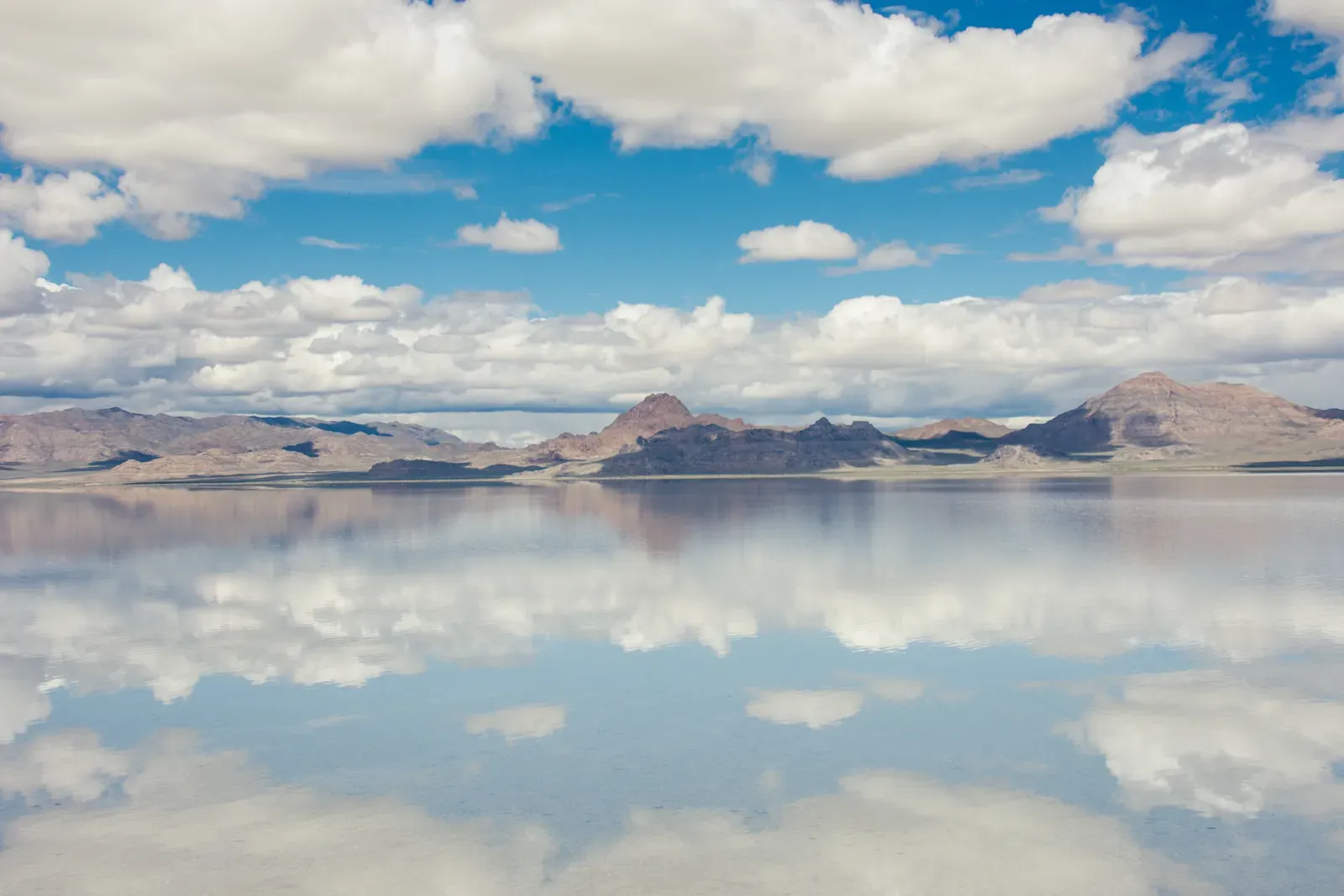
The Salar’s mirror phase depends on something deceptively fragile: just enough water, but not too much. During the rainy season, usually from about December to March, moist air from the Amazon basin drifts west and drops rain over the Altiplano. When a thin film of water – often only a few millimeters deep – spreads evenly across the hard salt crust, it creates what is essentially a vast, shallow optical surface. Light coming down from the sky hits that water layer, refracts, and then reflects off the bright salt below, bouncing back in a way that can be almost perfectly specular when wind is low.
The effect resembles what happens in a precision telescope mirror, just blown up to the size of a small U.S. state. The salt’s whiteness increases the amount of light scattered, while the extremely smooth large-scale topography keeps waves and ripples minimal on calm days. That is why clouds, stars, and even distant volcanoes can appear razor-sharp underfoot, with barely a seam at the horizon. When a breeze picks up or the water depth becomes uneven, those reflections break into ripples and distortions, reminding you that this mirror is a living, changing surface, not a static pane of glass.
Salt Polygons and the Hidden Geometry Underfoot
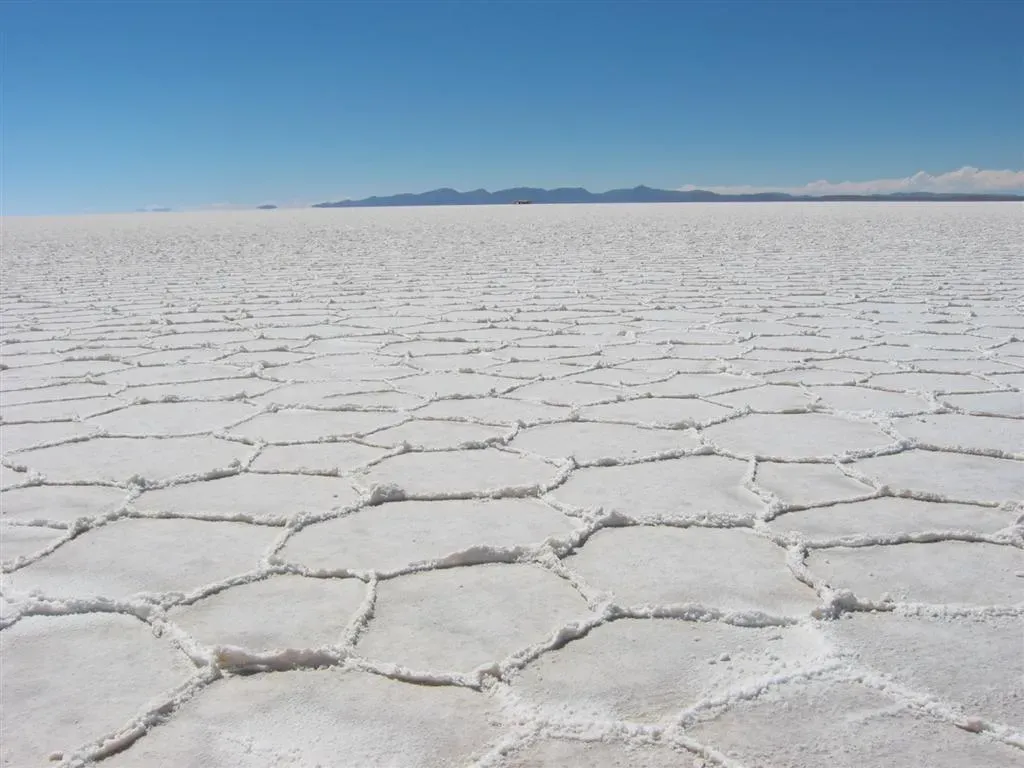
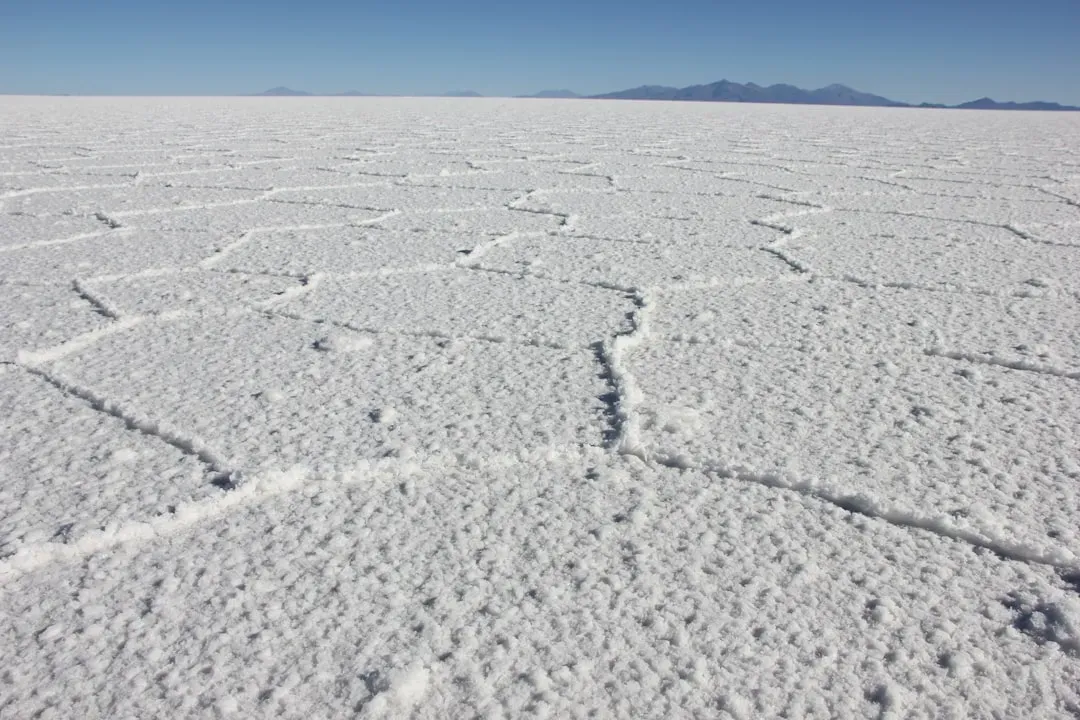
In the dry season, when the water evaporates and the mirror vanishes, a different pattern takes over the eye. The Salar’s surface is covered in a mosaic of polygonal tiles, each outlined by slightly raised ridges of salt that look almost like a frozen honeycomb stretching to the horizon. These polygons form because the salt crust contracts and expands as it dries and rehydrates, creating stress patterns that crack the surface in roughly hexagonal shapes. Over repeated cycles of evaporation and capillary rise of brine from below, those cracks become hardened ridges.
This geometry is not unique to Salar de Uyuni but the scale is. Similar patterns appear in drying mudflats or on frozen lakes, but here the repetition is amplified by the enormous uniformity of the basin. The result is a kind of natural graph paper for the sky, which becomes dramatically visible again when a thin layer of water returns and fills the slight depressions around the polygon edges. From above, whether by drone or satellite, those shapes reveal subtle changes in stress, crust thickness, and fluid movement that geophysicists use to study how the salt body evolves over time.
Extreme Elevation, Extreme Climate, and Life on the Edge
Standing on the Salar, you are already higher than many mountain peaks in Europe or North America, and your body feels it. The plateau lies at roughly twelve thousand feet above sea level, where the air is thin, ultraviolet radiation is intense, and temperature swings between day and night can be brutal. Midday sun reflecting off the salt can be so bright that unprotected eyes and skin are quickly overwhelmed, while nighttime temperatures can plunge close to freezing even in the wetter months. It is an environment that demands careful adaptation from both people and wildlife.
Yet life persists at its edges and, in some forms, within it. Around the margins and in nearby brackish lagoons, flamingos feed on microscopic algae and invertebrates that thrive in saline waters many times saltier than the ocean. Microbial communities inhabit brine pockets beneath the crust, tolerating high salinity and periodic desiccation in ways that interest astrobiologists searching for analogs to life on Mars. Human communities in the nearby town of Uyuni and surrounding villages have long harvested salt blocks manually, combining traditional knowledge with increasing pressure from modern tourism and resource extraction. The Salar is harsh, but it is not empty; it is a place where survival requires a precise negotiation with the elements.
Lithium Beneath the Mirror: A New Global Resource Frontier
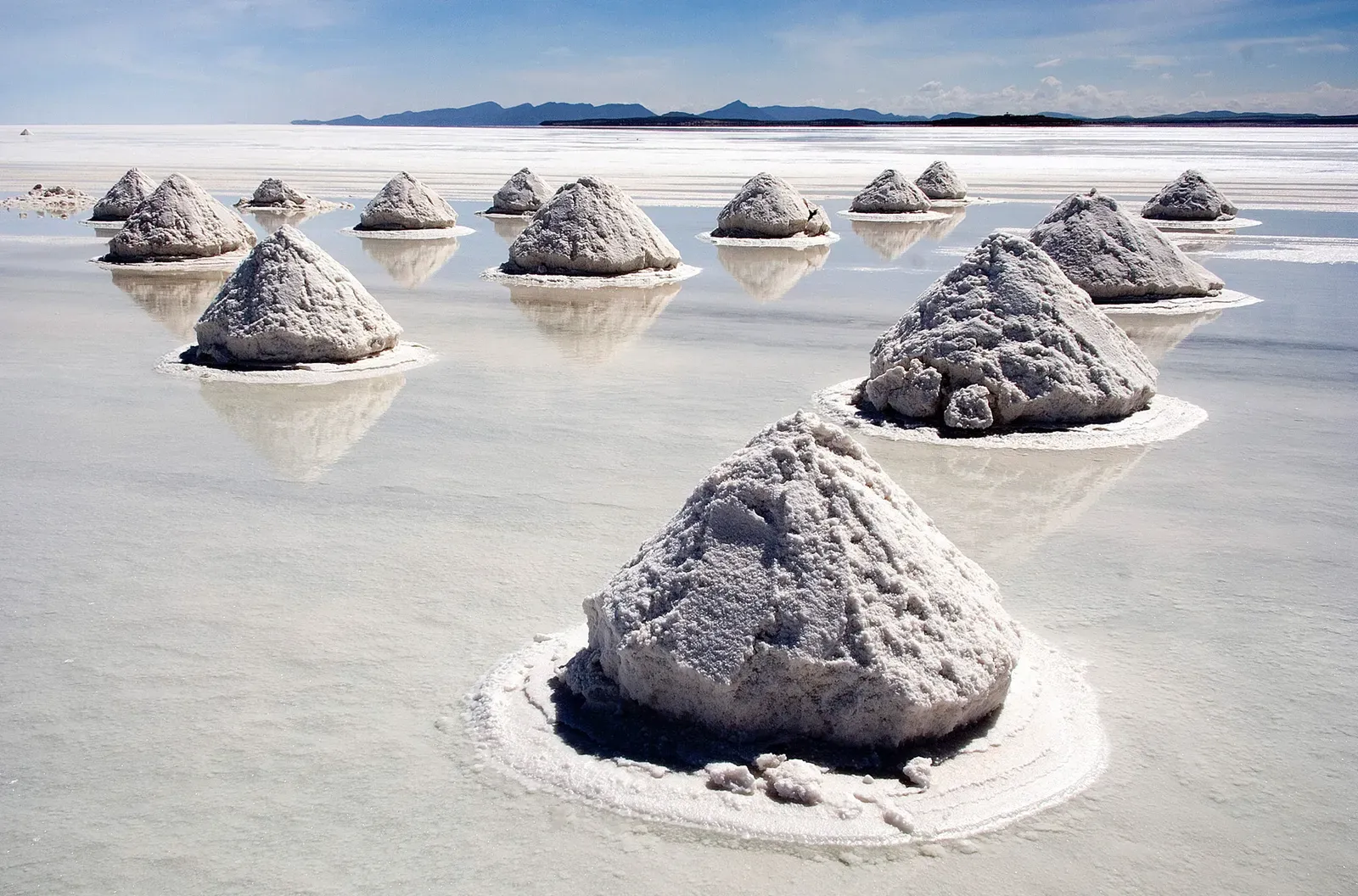
Beneath the deceptive simplicity of the white surface lies a resource that anchors the world’s transition to electric energy: lithium-rich brine. Salar de Uyuni is believed to hold one of the largest single concentrations of lithium in the world, dissolved in ancient groundwater that circulates through the buried sediments and salt layers. That lithium is a critical ingredient in rechargeable batteries used in everything from smartphones to electric cars and grid storage systems. As demand for these technologies grows, attention to the Salar has shifted from its visual spectacle to the chemistry beneath it.
Extracting lithium from brine typically involves pumping the salty water into evaporation ponds, concentrating it over months as water leaves and salts crystallize out. On a fragile plateau that already loses water slowly to the dry air, removing large volumes for industrial processing raises legitimate concerns. Local communities and scientists worry about how intense extraction might alter groundwater flows, affect nearby wetlands, and change the delicate balance that maintains the salt crust. The same geological processes that make the Salar an incredible natural mirror also make it a sensitive hydrological system, one that could be disrupted in ways that are hard to reverse once industrial infrastructure is in place.
Satellite Calibration and the Science of a Nearly Perfect Plane
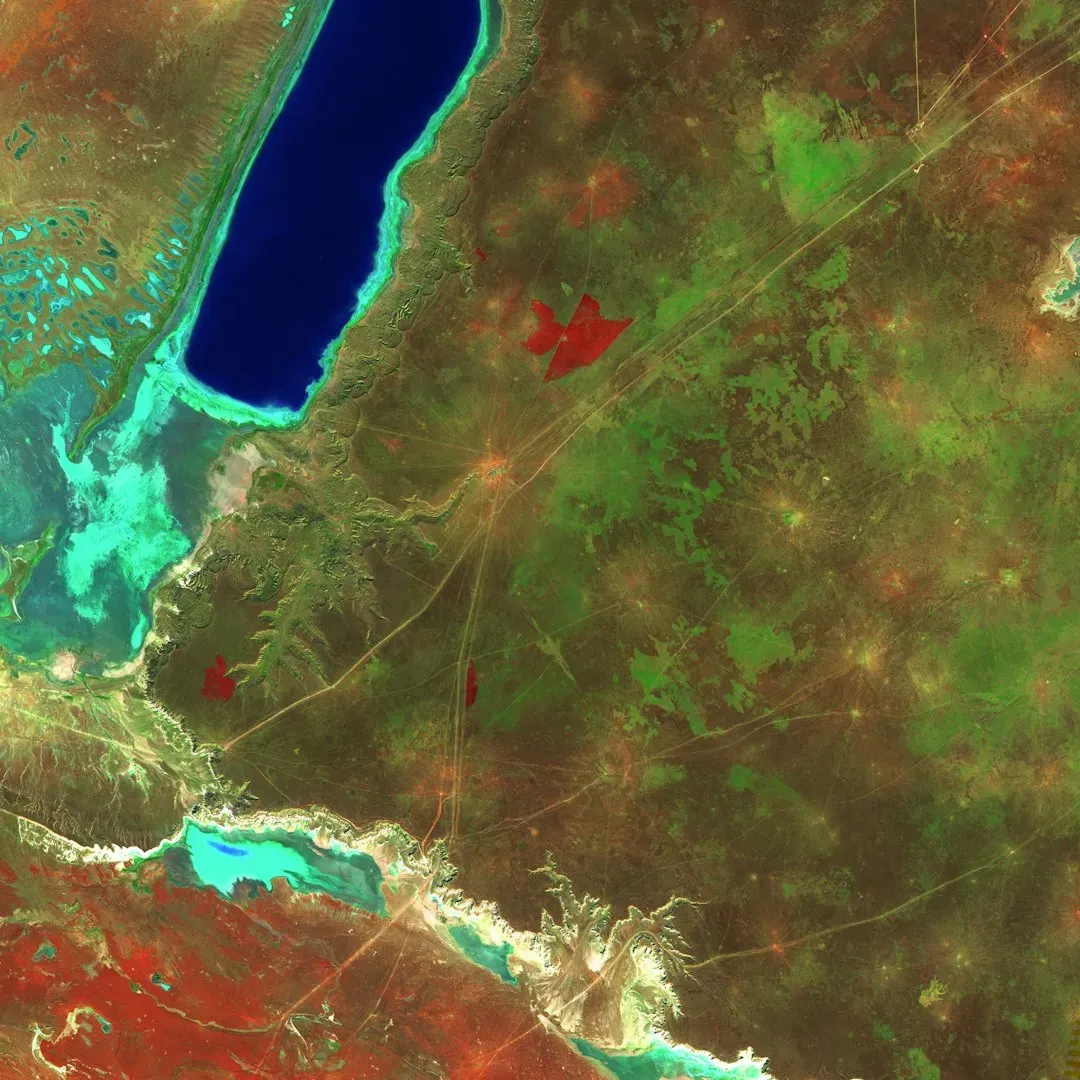
For scientists, the Salar’s otherworldly flatness has turned it into a kind of outdoor laboratory for precision measurement. Over large scales, its surface varies in elevation by only a small fraction of a meter, smoother than many artificial runways. This makes it an ideal target for calibrating instruments on Earth-observing satellites, such as radar altimeters and remote sensing systems that need reliable reference surfaces. Because the salt crust is bright, stable, and mostly devoid of vegetation, it reflects signals in a consistent way that engineers can use to check and fine-tune their readings.
Space agencies have used this giant salt flat to validate data on surface elevation, atmospheric conditions, and even instrument drift over time. The mirror phase during the rainy season also provides a valuable, naturally occurring test pattern for studying how satellites detect shallow water bodies and reflective surfaces. In an era when climate monitoring and precise mapping are central to everything from agriculture to disaster response, having a vast, predictable patch of Earth like Salar de Uyuni becomes more than a curiosity. It is effectively part of the quiet machinery that keeps our global observation systems honest.
What This Mirror Reveals About Planetary Surfaces
Beyond its local importance, Salar de Uyuni has become a touchstone for thinking about how planets reshape their own faces. The combination of evaporated lakes, salt deposits, and extreme climate makes it an analog for saline basins on Mars and other worlds where liquid water once existed but has largely disappeared. Planetary scientists study the Salar’s crust patterns, brine chemistry, and seasonal water films to better interpret satellite images of similar-looking features on Mars. When rovers send back photos of polygonal ground or bright reflective patches, researchers often compare them to what they know from Earth’s largest salt flat.
This mirror also forces a deeper appreciation of how long-term climate shifts sculpt landscapes. The same broad atmospheric changes that dried out the ancient Bolivian lakes are echoed today in concerns about modern climate variability, water availability, and ecosystem resilience. Salar de Uyuni shows how a basin can move from dynamic open water to mineral desert while still storing chemical and hydrological memories of its past. In that sense, walking across its surface is like walking across a time-compressed record of climate history, where each grain of salt once belonged to a drop of vanished water.
Reflecting on Value: Beauty, Extraction, and Cultural Stakes
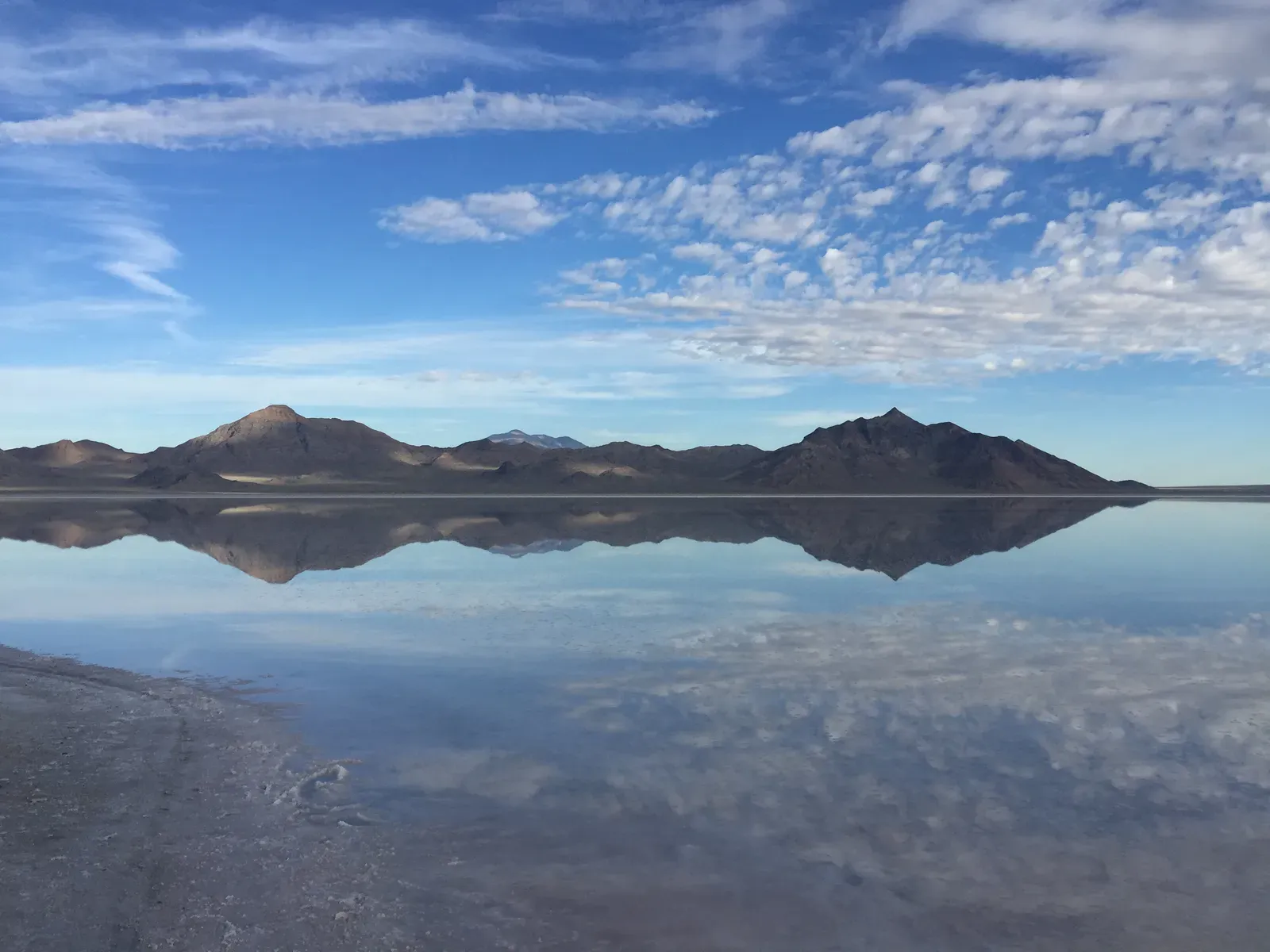
The Salar is not only a geological wonder or a resource bank; it is woven into cultural identity and economic reality for the people who live around it. Local communities depend on seasonal tourism that surges when the mirror appears, bringing visitors who want to stand inside the illusion of an endless sky. At the same time, those same lands sit atop lithium reserves that national and international actors view as a strategic asset. Balancing these competing visions of value – one based on intact landscape and lived experience, the other on industrial extraction – is an ongoing political and social challenge.
There is also a quieter cultural dimension: the sense of awe and otherness that the Salar provokes. Guides often talk about the disorientation visitors feel when the horizon disappears and their own reflections blend with the clouds, a kind of temporary unmooring from everyday environments. That emotional reaction is not trivial; it shapes how people think about what should be preserved and what can be traded away. In debates about development, climate, and indigenous rights on the Altiplano, the mirror surface has become a symbol of both opportunity and fragility, catching in one frame the tension between short-term exploitation and long-term stewardship.
How to Engage with a Landscape Made of Light
You do not need to stand on the Salar to engage with what it represents, though for many that remains a powerful ambition. For those who do travel, choosing operators that respect seasonal conditions, minimize off-track driving, and work with local guides is one concrete way to reduce physical and social impact. Simple decisions – like visiting outside the most crowded days, packing out all waste, and being conscious of water use in a dry region – add up when thousands of visitors pass through each season. Observing the mirror without trampling the crust or driving into fragile wetland edges is part of treating the site as more than just a backdrop for photographs.
From afar, the Salar can be a prompt to dig deeper into how critical materials like lithium are sourced and what costs are attached to the technologies we rely on. Reading scientific work on salt flats, supporting organizations that advocate for transparent and responsible mining practices, and paying attention to indigenous voices in policy debates are all realistic steps. Even something as simple as looking up satellite images of the region can sharpen your sense of how dynamic, and how vulnerable, such landscapes really are. In the end, Salar de Uyuni’s mirror does what the best mirrors always do: it reflects us back to ourselves and asks, quietly but insistently, what kind of mark we are willing to leave on places that feel almost unreal.