
Imagine if the universe were less like an empty stage where matter performs and more like a vast, ancient archive that quietly remembers everything that has ever happened. That is the unsettling implication of a new line of research in quantum information theory that treats space-time itself as a kind of memory medium. Instead of particles merely moving through a passive backdrop, their histories could be written into the fabric of reality in ways we are only starting to glimpse. This idea pushes beyond familiar talk of quantum computers and entanglement, into a realm where prehistoric events, early cosmic processes, and perhaps every fleeting fluctuation leave traces in the structure of space and time. What is emerging is not science fiction, but a serious, mathematically driven attempt to understand whether the universe is, at its core, an information-storing system.
From Quantum Puzzles to a Space-Time That Remembers
The route to this new theory runs straight through one of the strangest corners of physics: the measurement problem in quantum mechanics. For nearly a century, physicists have wrestled with why a quantum system seems to “collapse” into a definite outcome when measured, even though the underlying equations allow for many possibilities. One modern approach reframes this not as a mystical collapse, but as a flow of information between a system and its environment, with the environment effectively “recording” what happened. This way of thinking treats the surroundings as a kind of memory that stabilizes reality.
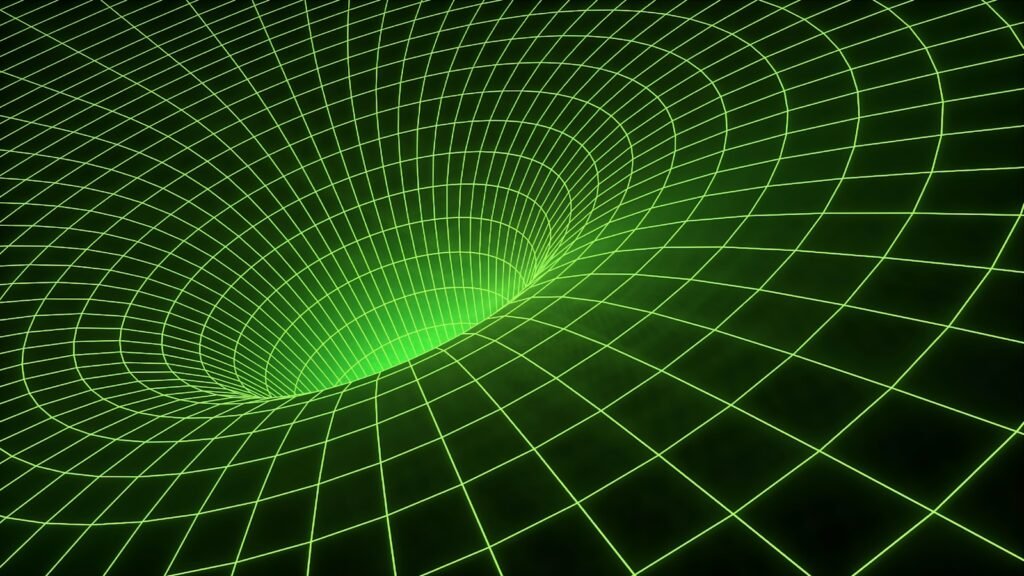
Now theorists are taking a bolder step and asking what happens when that environment is not just air, dust, or detectors, but the very geometry of space-time. In some recent models, the curvature of space-time and the quantum fields that define it are not just passive scenery for particles; they encode who interacted with whom and when. In this view, every interaction leaves an imprint in the correlations woven into space-time itself. The familiar world of solid outcomes may emerge because the universe is continually writing, updating, and preserving these informational imprints.
Unearthing Prehistoric Quantum Secrets in Black Hole Paradoxes
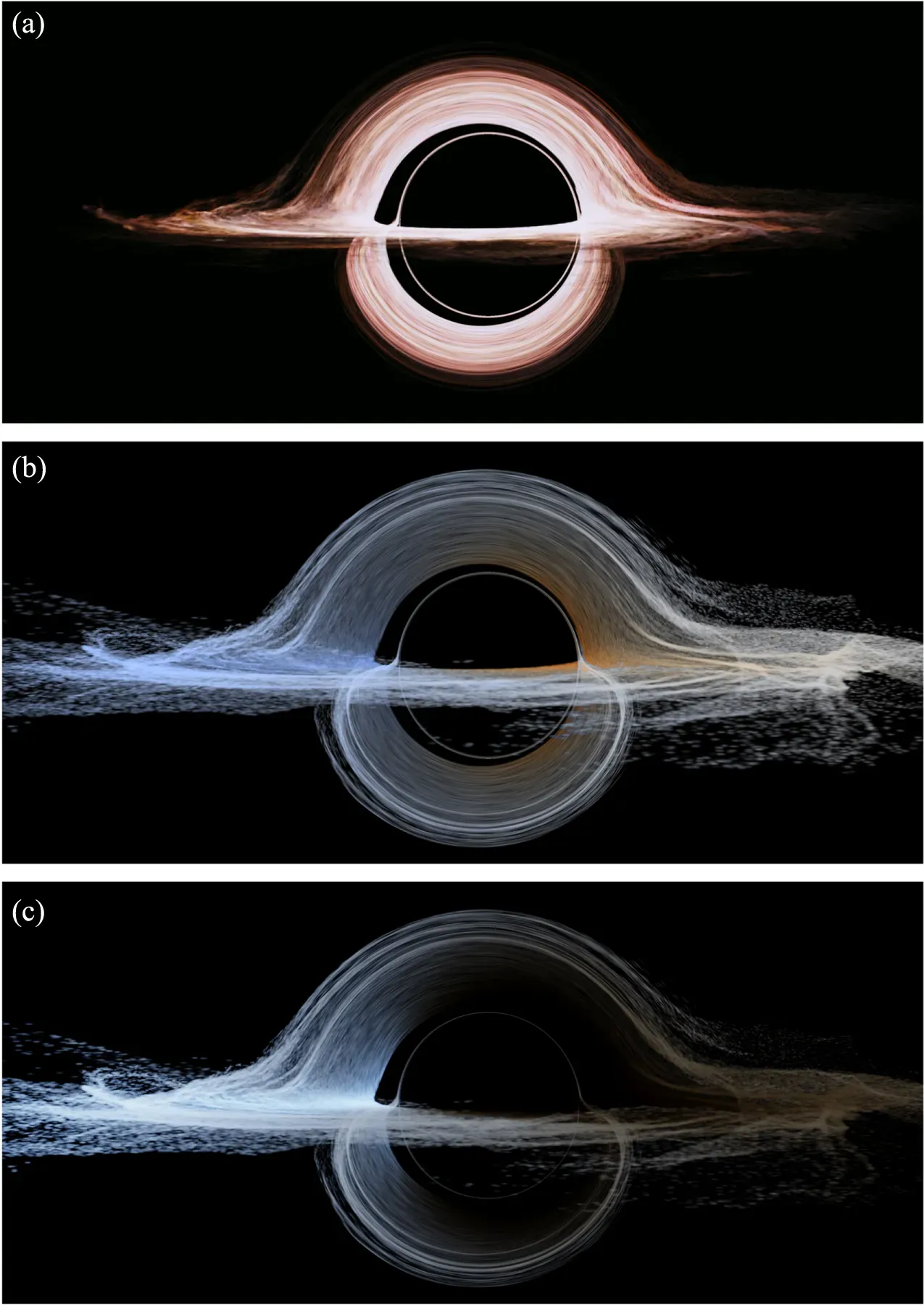
The most dramatic hint that space-time might store information comes from black holes, those cosmic traps that seemed, for decades, to erase whatever fell in. When calculations in the nineteen seventies suggested black holes slowly evaporate, a terrifying conclusion followed: information about what entered them might vanish forever. That clashed with one of quantum theory’s deepest rules, that information cannot be destroyed, only transformed. The resulting “information paradox” has driven generations of physicists to rethink how space, time, and quantum states fit together.
In the last decade, a surprising consensus has started to form around the idea that black holes do not truly forget. Instead, their horizons and the space-time around them encode the swallowed information in exquisitely scrambled form. This led to new mathematical tools connecting the geometry of space-time with quantities like quantum entanglement entropy, effectively tying the shape of a region of space-time to how much information is stored across its boundary. When researchers compute how information can leak back out in the emitted radiation, they are in effect decoding a prehistoric record written into the quantum structure of space-time itself.
Space-Time as a Quantum Hologram, Not an Empty Stage
One of the most startling developments feeding this new memory-centric picture is the holographic principle, explored in detail through models known as AdS/CFT correspondences. In these frameworks, a universe with gravity in a higher-dimensional “bulk” can be exactly equivalent to a universe without gravity living on a lower-dimensional boundary. The physics in the bulk, including its curved space-time, is fully encoded as quantum information in the boundary theory. That boundary then acts like a hard drive whose bits, in some abstract sense, generate the very space-time interior we imagine moving through.
This holographic viewpoint invites a radical reinterpretation: rather than particles traveling inside a preexisting space-time box, what we call “inside” is a way of organizing deeply entangled information. The apparent distances, shapes, even the flow of time are emergent features of how that information is stitched together. If space-time is born from entanglement patterns, then those patterns double as a storage system, meaning that memory is not added on top of the world; it is the world. The new quantum memory theory grows naturally out of this, treating geometry and information not as separate things, but as two faces of the same underlying structure.
Rewriting the Cosmic Fossil Record: From Particles to Patterns
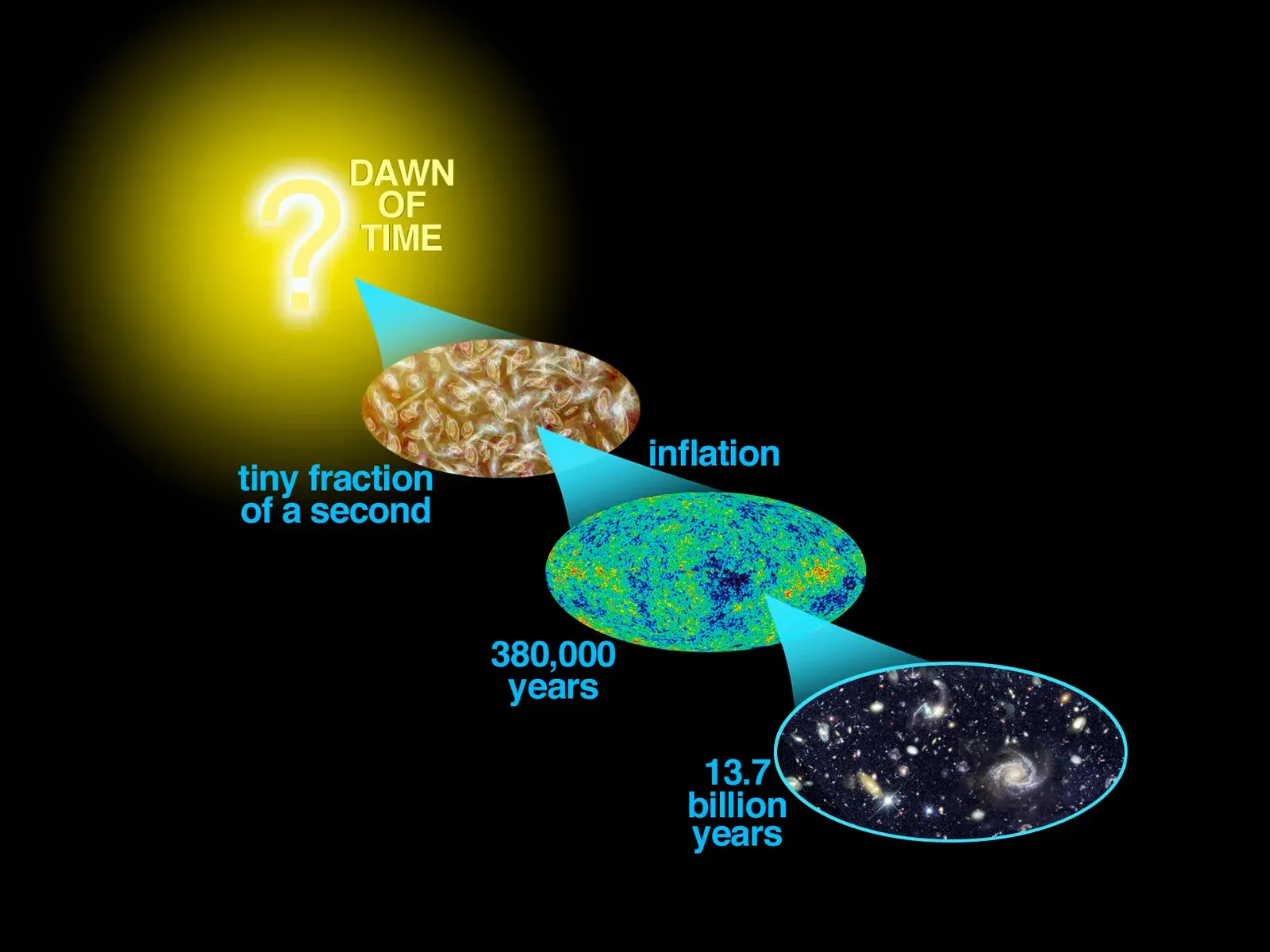
Traditional physics textbooks often talk about initial conditions, like the state of the early universe, as if they were a one-time input we will never truly access again, much like a lost page from deep prehistory. But if the universe’s geometry encodes the full history of interactions, then today’s space-time contains a fossil record of those ancient events, albeit one written in a language of quantum correlations instead of bones and rocks. Tiny fluctuations in the cosmic microwave background already serve as relics of the early universe, a kind of visible scar tissue left from primordial processes. The new theory suggests that this idea could run far deeper and more pervasively than currently appreciated.
In this perspective, the “particles” we are used to thinking about become almost secondary to the pattern of relationships among them. What matters more is where information about their interactions ends up embedded in the universal fabric. The way galaxies cluster, the distribution of dark matter, even the way time flows differently near massive objects could all be understood as manifestations of how information has been stored and processed since the universe was young. Rather than a stage on which cosmic events once unfolded, space-time becomes an ever-updating archive that still carries traces of those ancient dramas.
How a Quantum Memory Universe Differs from Classical Reality
It might be tempting to shrug and say that of course the universe “remembers,” because we see fossils, ruined cities, and the slow buildup of structures over billions of years. But classical memory, in that sense, is fragile and local: a bone can decay, a library can burn, a mountain can erode. The quantum memory view is much more radical. It proposes that even if every classical record were destroyed, the underlying quantum state of space-time would still, in principle, retain the full informational story of what occurred. Forgetting, in a deep sense, would be almost impossible.
This stands in sharp contrast to everyday intuition, where loss and entropy seem to dominate. In standard thermodynamics, disorder grows and usable information appears to fade as systems mix and scatter. Quantum theory quietly insists, however, that if you keep track of the entire closed system, including phases and entanglement, the information is still there, just spread into correlations too complex to access. The new theory applies that same logic at the level of the universe’s geometry, arguing that space-time itself participates in this entanglement bookkeeping. It is as if the cosmos never truly erases its chalkboard; it only layers new calculations on top of the old.
The Deeper Stakes: What It Means If Reality Is Built from Information
If space-time really functions as a quantum memory, the implications go far beyond clever math. It reshapes one of the oldest debates in physics: whether the universe is fundamentally made of stuff, like particles and fields, or whether stuff is a secondary appearance riding on something more abstract. In an information-centric universe, matter and energy become manifestations of how information is arranged and transformed over time. Gravitation, in turn, may reflect the way this information geometry bends, reshuffles, and tries to stay consistent with quantum rules.
Compared with earlier views that treated space and time as a rigid stage, or even as a smooth but mute field to be measured, this is a profound shift. It aligns more with modern quantum information science, where computation, entanglement, and error correction are not just engineering tools but metaphors for how reality keeps itself coherent. Some recent work even interprets certain space-time features in terms of quantum error-correcting codes, the same logic that protects data in cutting-edge quantum hardware. If that analogy continues to hold, the universe may be running its own colossal error-correction protocol, preserving its prehistoric and ongoing story against the noise of chaos.
Unanswered Questions and the Risk of Pushing the Metaphor Too Far
For all its allure, the idea of space-time as a quantum memory comes with sharp warnings from many physicists. One concern is that it is dangerously easy to turn a careful mathematical framework into a loose metaphor that sounds profound but explains little. Phrases like “the universe is a computer” or “reality is information” can obscure more than they reveal if you do not specify how that information is encoded, manipulated, and measured. Right now, many of the most concrete results exist in highly idealized models, such as universes with symmetries quite unlike our own.
There are also technical puzzles that remain wide open. Extending holographic and information-theoretic tools to more realistic cosmologies, like our expanding universe with dark energy, is an active and challenging frontier. The interplay between quantum gravity, the arrow of time, and cosmological initial conditions is still far from settled. And even if the theory is right in principle, the practical ability to probe these deep informational structures may remain forever limited, much like trying to reconstruct every grain of sand in a long-vanished desert. The risk is not that the idea is wrong, but that it may be right in ways we can only glimpse at the edges.
How Readers Can Engage with a Universe That Remembers
For non-physicists, it is easy to feel overwhelmed by talk of entanglement entropy, holography, and quantum memory, but there are concrete, grounded ways to connect with these ideas. One is to follow how they filter into experiments that you can actually read about and understand, such as quantum computing platforms that rely on preserving delicate information in hardware. Another is to pay attention to how cosmology missions map the sky and hunt for subtle patterns in cosmic microwave background radiation or galaxy surveys, which are real-world attempts to read the universe’s long-term record. These projects offer glimpses of how abstract theory anchors to measurable traces.
On a more personal level, there is something quietly humbling in the suggestion that every interaction, from colliding galaxies to the faintest photon exchange, may leave an imprint in the fabric of reality. It challenges the sense that the past is simply gone and the present floats on an empty backdrop. Supporting science literacy, from local lectures and university outreach to well-vetted books and articles, is one of the simplest ways to stay in touch with these unfolding ideas. The more we collectively understand the questions physicists are asking, the better we can appreciate just how strange and rich the universe’s hidden memory might be.
Suhail Ahmed is a passionate digital professional and nature enthusiast with over 8 years of experience in content strategy, SEO, web development, and digital operations. Alongside his freelance journey, Suhail actively contributes to nature and wildlife platforms like Discover Wildlife, where he channels his curiosity for the planet into engaging, educational storytelling.
With a strong background in managing digital ecosystems — from ecommerce stores and WordPress websites to social media and automation — Suhail merges technical precision with creative insight. His content reflects a rare balance: SEO-friendly yet deeply human, data-informed yet emotionally resonant.
Driven by a love for discovery and storytelling, Suhail believes in using digital platforms to amplify causes that matter — especially those protecting Earth’s biodiversity and inspiring sustainable living. Whether he’s managing online projects or crafting wildlife content, his goal remains the same: to inform, inspire, and leave a positive digital footprint.