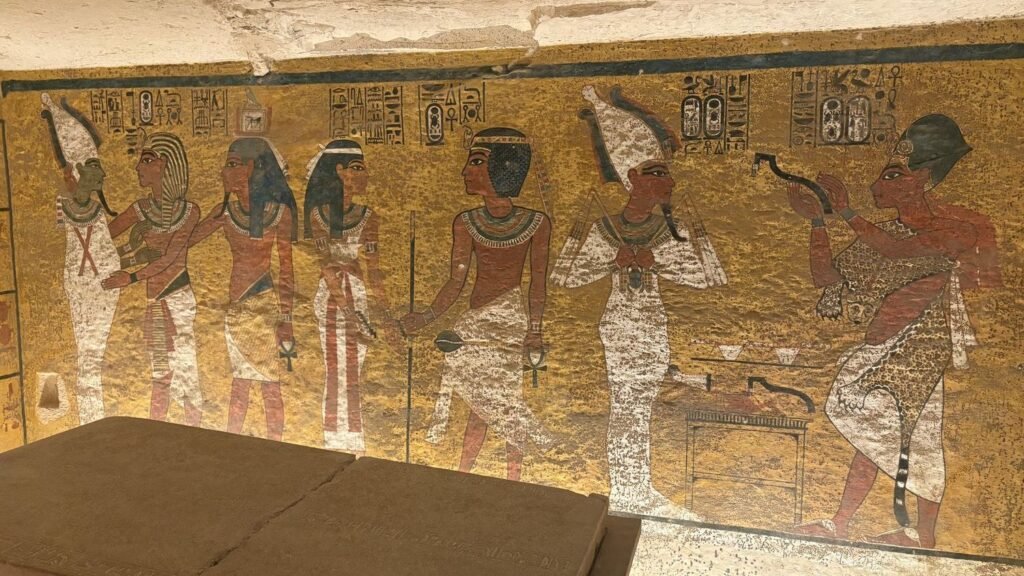
Pythagoras tends to show up in our lives as a single neat formula from school, but the real person behind that right triangle was messier, stranger, and far more ambitious than most textbooks admit. He led a semi-secret community, mixed mathematics with mysticism, and helped spark ways of thinking that still ripple through modern science. When you peel back the legend, you find a man whose ideas about harmony, number, and the structure of reality feel oddly familiar to anyone who has ever stared at a data set or listened to a whale song. Looking at Pythagoras with fresh eyes is a reminder that breakthroughs are rarely just about numbers; they are about how those numbers change the way we see the world.
1. Pythagoras turned numbers into a key to understanding reality
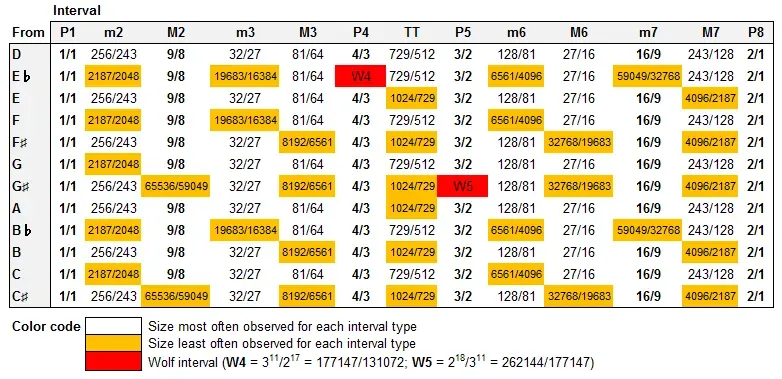
For Pythagoras and his followers, numbers were not just tools for counting sheep or measuring land; they were the building blocks of everything that exists. This sounds grandiose, but it underpins an idea that modern science quietly relies on every day: you can describe the world, from planetary motion to neuron firing, using mathematical relationships. The Pythagoreans believed that the patterns of numbers revealed a hidden order behind the chaos of daily life, almost like a secret script written into the universe. In a world still full of myth and oral tradition, the claim that reality could be decoded through abstract ratios was radical.
Today, when biologists model population changes with equations or ecologists analyze how animal migration follows predictable cycles, they are leaning on that same conviction that nature is fundamentally quantifiable. In animal behavior research, for example, scientists track how often a dolphin uses a particular call or how ants distribute themselves along a trail, and they uncover startlingly clean patterns. Pythagoras would likely have seen those patterns as proof that numbers do not just describe reality; they reveal its deep structure. The difference is that modern science strips away the mysticism and keeps the testable core.
2. The right triangle theorem probably was not “his,” but he changed how it lived
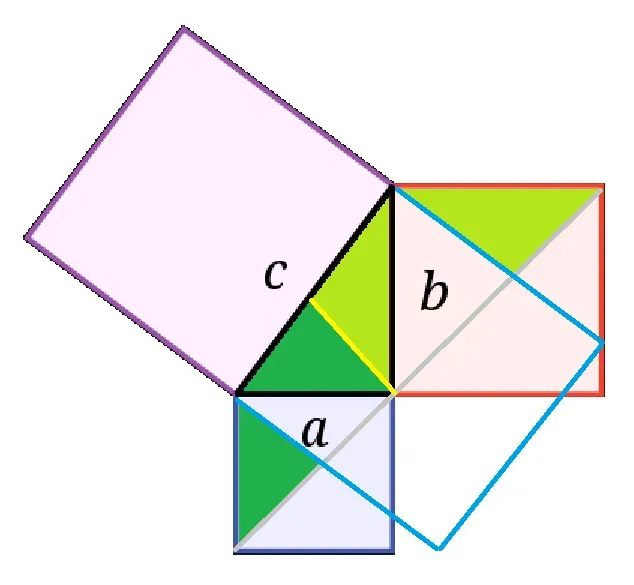
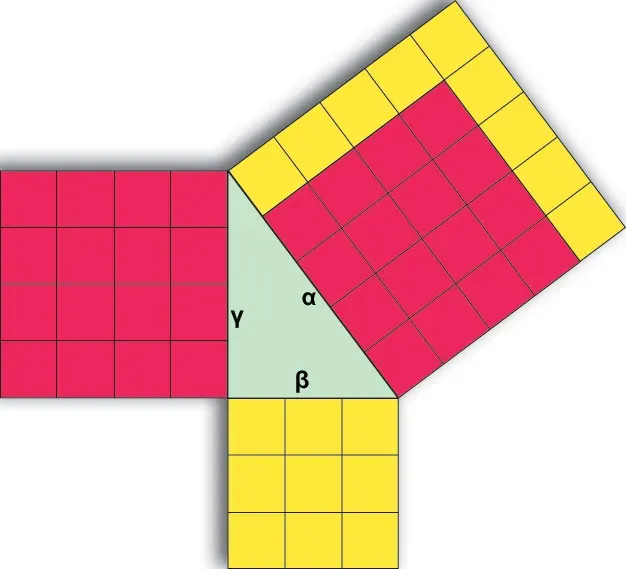
Almost every student learns the Pythagorean theorem long before they learn anything about the man whose name it carries, but the relationship between the sides of a right triangle was known to Babylonian and Egyptian surveyors long before Pythagoras was born. Clay tablets and ancient construction techniques show that earlier cultures used the same geometric insight to lay out fields, temples, and even boundary stones. What appears to be Pythagoras’s contribution is not raw discovery, but rigorous proof and integration into a broader system of thought. He helped move geometry from a bag of useful tricks into a logically connected framework.
That shift, from rule-of-thumb know-how to demonstrable certainty, is central to all later science. When animal cognition researchers test whether crows can solve multi-step puzzles, they design controlled experiments instead of relying on anecdotes. In a similar way, turning the triangle rule into a provable theorem transformed it from clever craft knowledge into abstract, shareable truth. It is a quiet but crucial distinction: you are no longer just trusting that something works, you know why it must work every single time. That mindset would slowly evolve into what we now call scientific method.
3. He founded a community that looked more like a research lab than a school

Pythagoras did not simply teach wandering students and send them back home with a few tricks; he created a tight-knit community in the city of Croton in southern Italy that resembled a mix of philosophical sect, research institute, and strict lifestyle experiment. Members shared property, lived under rules that governed everything from diet to dress, and treated mathematical work as a kind of sacred duty. Entry was not easy, and novices reportedly had to pass through a probationary period where they listened in silence, absorbing teachings without speaking.
That kind of structured environment can sound controlling, but it also created space for sustained, collaborative inquiry far beyond what a single person could achieve. In that sense, it feels like a precursor to modern scientific teams who share labs, field sites, funding, and long-running projects. When biologists spend years on a remote island tracking the calls, nesting locations, and social bonds of seabirds, they are joining a similar kind of intellectual community, defined by shared methods and values. Pythagoras’s circle shows how scientific discovery is rarely a solo act; it thrives on shared discipline and constant conversation.
4. His theory of musical harmony foreshadowed the math of animal communication
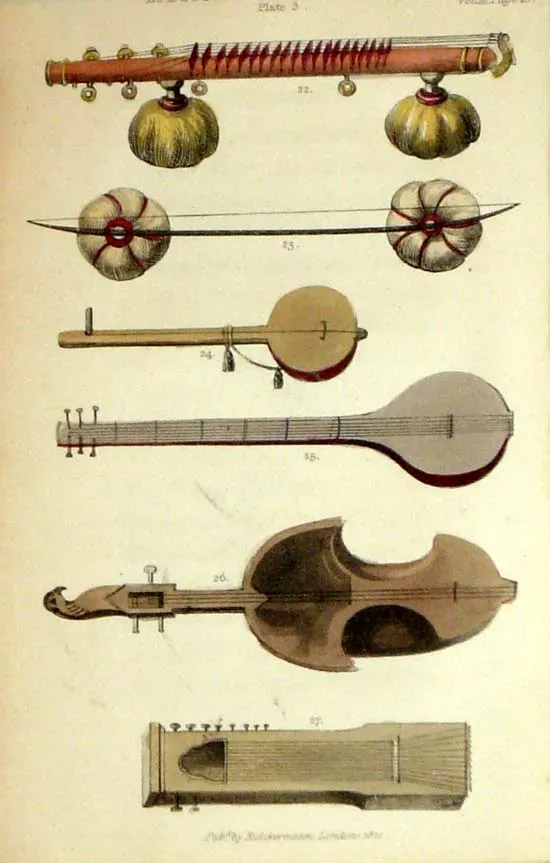
One of Pythagoras’s most famous insights came not from triangles but from music. By experimenting with strings of different lengths on instruments, he noticed that simple numerical ratios, like two to one or three to two, produced notes that humans consistently heard as pleasant and harmonious. In other words, our ears were responding to mathematical relationships in sound waves long before anyone knew what a frequency was. This connection between number and sound convinced him that harmony was not just a human preference, but a principle built into nature itself.
Modern animal acoustics research echoes this idea, though with far better tools and far less mysticism. Scientists analyzing bird songs, primate calls, or the eerie low notes of baleen whales often find that certain stable patterns and intervals carry key information about identity, emotion, or intent. The fact that both humans and other animals can be so sensitive to structure in sound points back to that same basic discovery: vibrations obey rules, and nervous systems learn to use those rules. Pythagoras did not know anything about neurons, but his string experiments hinted that sound is more than noise; it is organized data.
5. He linked the motion of celestial bodies to hidden harmonies
Pythagoras and later thinkers inspired by him imagined that the movements of the planets and stars followed mathematical relationships akin to musical ratios, giving rise to the poetic idea of a “harmony of the spheres.” They did not mean that you could literally hear the planets singing, but rather that the cosmos itself might be governed by the same kind of elegant proportions discovered on a lyre string. In their view, the universe was not a random scattering of bodies, but a vast, ordered system whose regularities could be expressed in numbers.
Centuries later, astronomers like Johannes Kepler actually found precise mathematical rules in planetary orbits, and modern physics has gone even further by describing forces and particles with compact equations. This long arc from speculative harmony to tested law started with the intuition that nature prefers patterns over chaos. Even now, when researchers chart migration routes of birds using satellite tags or track how sea turtles navigate across oceans, they search for underlying regularities in movement. In a way, they are still looking for harmonies, just with data instead of mystical imagery.
6. His strict lifestyle rules blended science, ethics, and odd taboos
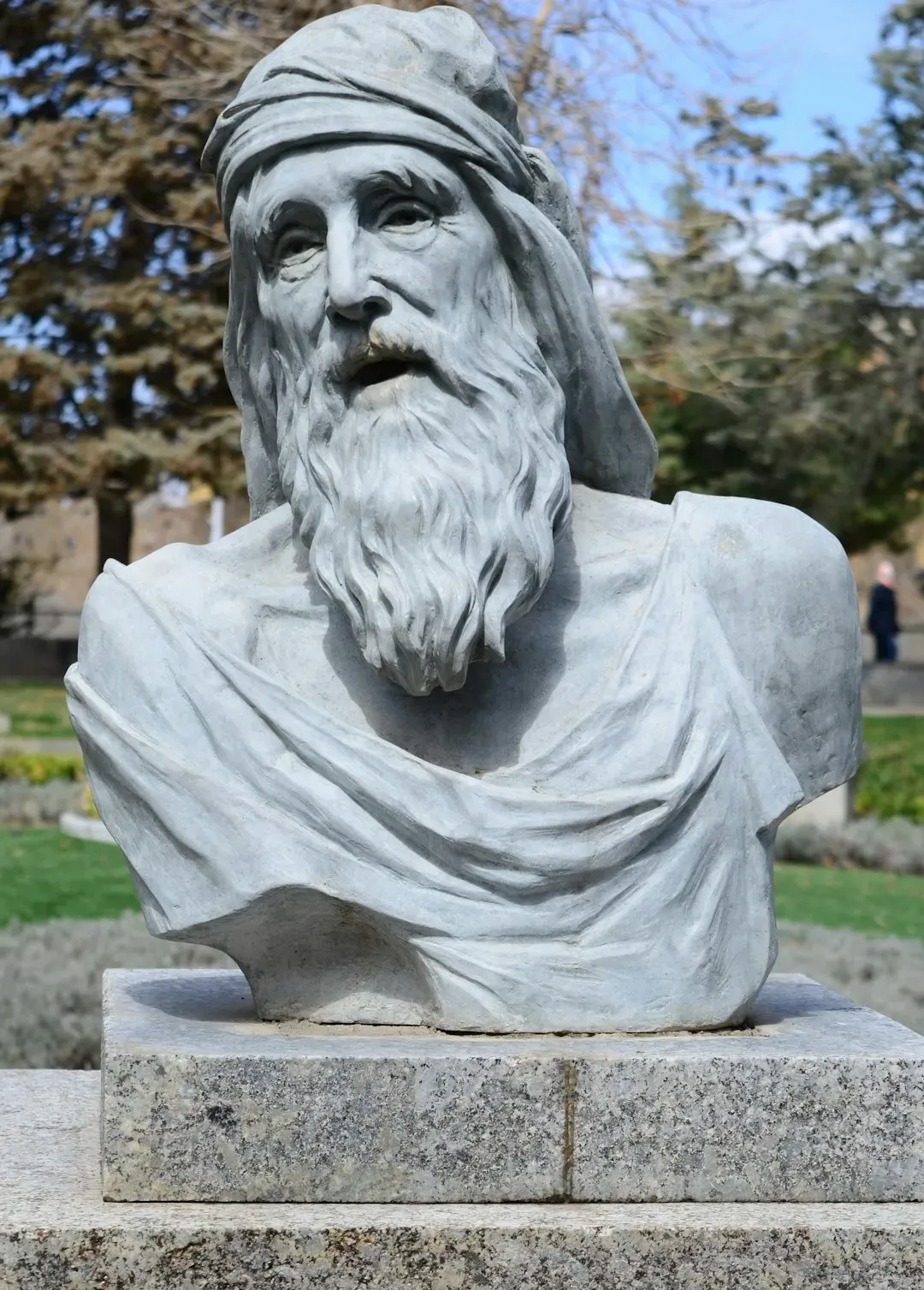
Pythagoras’s community was as much a way of life as a center of learning, and some of its rules look downright strange to modern eyes. Members followed a form of vegetarianism, used periods of silence for self-discipline, and obeyed a collection of taboos that could include avoiding certain foods or objects, with explanations that were more symbolic than scientific. The idea seemed to be that cleansing one’s habits and senses would make the mind more capable of grasping mathematical truths. Knowledge and character were not separated; they were treated as mutually reinforcing.
This fusion of ethics and inquiry can feel alien, but echoes of it show up whenever field biologists talk about respecting the animals they study or minimizing stress during capture and tagging. Good data and good conduct go hand in hand, especially when living creatures are involved. While some Pythagorean rules now read as superstition, the broader instinct – that how we live shapes how well we can understand the world – still fuels debates about scientific responsibility. It is an early, imperfect attempt to recognize that research does not happen in a moral vacuum.
7. He helped shift geometry from measuring land to mapping ideas
Before thinkers like Pythagoras, geometry was largely a practical craft tied to surveying, architecture, and taxation. You used it to mark out farmland after a flood or to plan a stable building, not to explore invisible relationships for their own sake. The Pythagorean school treated geometric figures as objects of pure thought, not just tools, and they pursued properties and theorems even when there was no obvious application. That move toward abstraction is easy to take for granted now, but it represented a major leap in intellectual freedom.
Abstract geometry later became vital for understanding how animals move through space, how they navigate, and how ecosystems fit together. When researchers map the territories of wolves, model the branching structure of blood vessels, or study how schooling fish maintain spacing, they rely on geometric ideas far removed from simple land measurement. Pythagoras helped launch that journey by insisting that shapes and lines were worth studying on their own terms. In doing so, he turned geometry into a language that could eventually describe structures as diverse as honeycomb cells and neural networks.
8. The discovery of irrational numbers shook his worldview

One of the most unsettling episodes in the Pythagorean story centers on lengths that cannot be expressed as neat ratios of whole numbers, such as the diagonal of a square whose sides are one unit long. Within the Pythagorean framework, where everything important was supposed to be built from whole numbers and their ratios, such quantities were deeply troubling. The realization that some lengths were inexpressible in their sacred numerical system challenged a core belief about the universe’s perfect order. Later traditions even claim this discovery was treated as dangerous knowledge within the group.
In hindsight, that moment looks like an early confrontation with the idea that nature resists being fully captured by the first simple models we impose on it. Modern science faces similar reckonings whenever a new observation refuses to fit a beloved theory, from quantum weirdness to the chaotic dynamics of ecosystems. Behavioral ecologists, for instance, once tried to explain animal actions with very simple “optimal” strategies, only to discover messy deviations driven by learning, context, and individuality. Pythagoras’s discomfort with irrational numbers is a reminder that being ahead of your time does not mean you escape the shock of new complexity.
9. His legacy helped shape how we study patterns in animal life
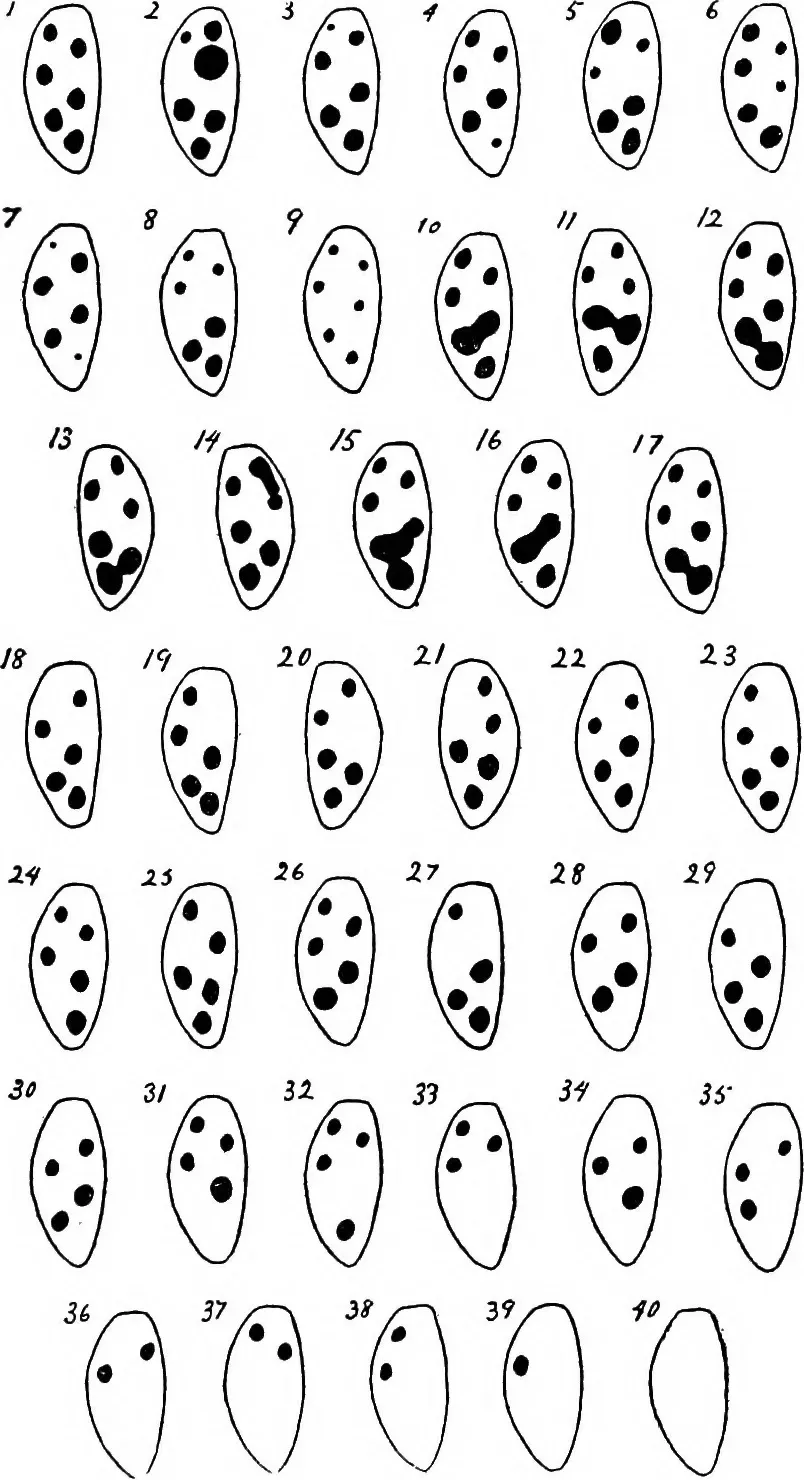
Pythagoras himself did not study animal behavior in anything like a modern sense, yet his insistence on pattern, ratio, and underlying order helped lay groundwork for fields that came much later. When ethologists chart how often a bird repeats a call, or quantify the spacing of calls in a bat’s echolocation sequence, they are treating behavior as something you can measure, compare, and model. That step – turning action into data – rests on the conviction that living systems obey discoverable regularities rather than mere whim. Pythagorean thinking nudged the Western tradition firmly in that direction.
Even the idea that animal communication might have a kind of grammar or structure, as some songbird and whale studies suggest, mirrors the old search for harmony in motion and sound. We now know that many species use combinatorial rules, timing patterns, and graded signals that can be analyzed statistically. The tools are far more precise, but the heartbeat of the project is familiar: listen carefully, count rigorously, and assume that beneath the noise there is a logic waiting to be uncovered. In that sense, every clean graph of a repetitive animal signal is a quiet tribute to a man who saw meaning in ratios.
10. Modern science embraces his methods while discarding his mysticism

If you lifted Pythagoras out of his century and dropped him into a modern lab, he might be delighted by the omnipresence of mathematics and the constant search for hidden order. At the same time, he would find that his mystical overlay – the belief that numbers were divine entities and that certain patterns had sacred status – has largely been stripped away. What remains is a practice of modeling, testing, and revising that treats mathematical structures as tools, not deities. This shift from reverence to rigor is what allows contemporary researchers to abandon models that fail while keeping the habit of looking for structure.
In fields that probe animal minds and societies, this balance is especially visible. Scientists build intricate models of ant foraging, fish schooling, or primate social networks, then pit those models against real data collected in forests, oceans, and urban parks. When the models fall short, they adjust them without assuming that reality must bend to human preference for elegance. Pythagoras set the stage by arguing that the world is intelligible through number; modern science carries that torch by insisting that the numbers must continually answer to observation.
Keeping Pythagoras in mind when we watch the living world
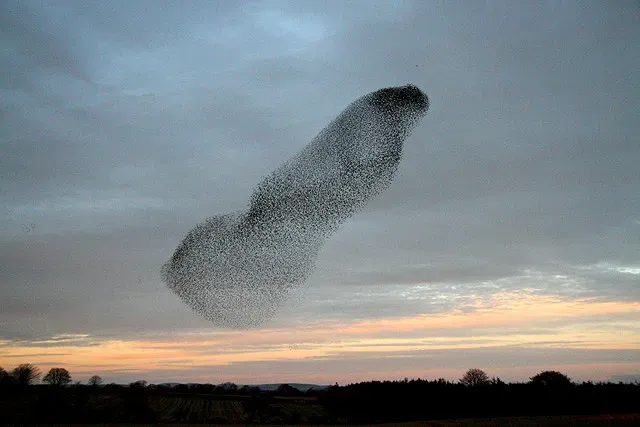
Remembering Pythagoras as more than a name in a formula changes how we look at both history and the animals around us. He represents a turning point where curiosity about pattern and proportion was pushed far beyond practical needs, into a full-blown attempt to decode reality with numbers. When you watch a flock of starlings wheel in the sky, or listen to a chorus of frogs at night, you are seeing the kind of complex regularity that once inspired talk of cosmic harmony. The difference now is that we have the tools to measure, model, and test, instead of only wonder.
You do not need to be a mathematician to take part in this search. Paying closer attention to the rhythms of birds in your neighborhood, the timing of insect activity through the seasons, or even the ways your own pets repeat certain behaviors is already a small act of scientific noticing. From there, curiosity can lead to citizen science projects, nature recordings, or simply more patient listening. Pythagoras might have wrapped his insights in secrecy, but today the invitation is open: the patterns are out there, and they reward anyone willing to look and listen carefully.
Suhail Ahmed is a passionate digital professional and nature enthusiast with over 8 years of experience in content strategy, SEO, web development, and digital operations. Alongside his freelance journey, Suhail actively contributes to nature and wildlife platforms like Discover Wildlife, where he channels his curiosity for the planet into engaging, educational storytelling.
With a strong background in managing digital ecosystems — from ecommerce stores and WordPress websites to social media and automation — Suhail merges technical precision with creative insight. His content reflects a rare balance: SEO-friendly yet deeply human, data-informed yet emotionally resonant.
Driven by a love for discovery and storytelling, Suhail believes in using digital platforms to amplify causes that matter — especially those protecting Earth’s biodiversity and inspiring sustainable living. Whether he’s managing online projects or crafting wildlife content, his goal remains the same: to inform, inspire, and leave a positive digital footprint.