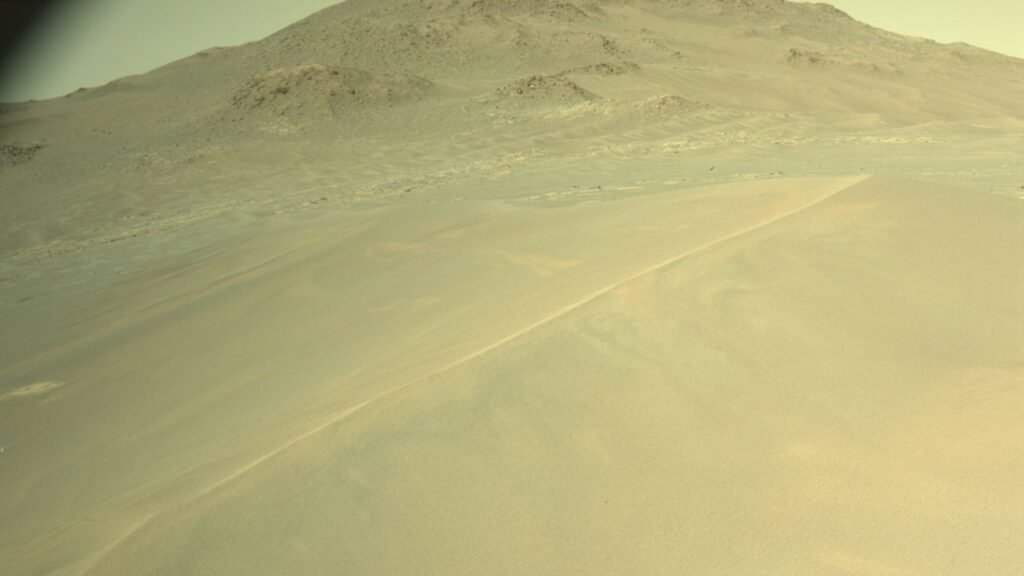
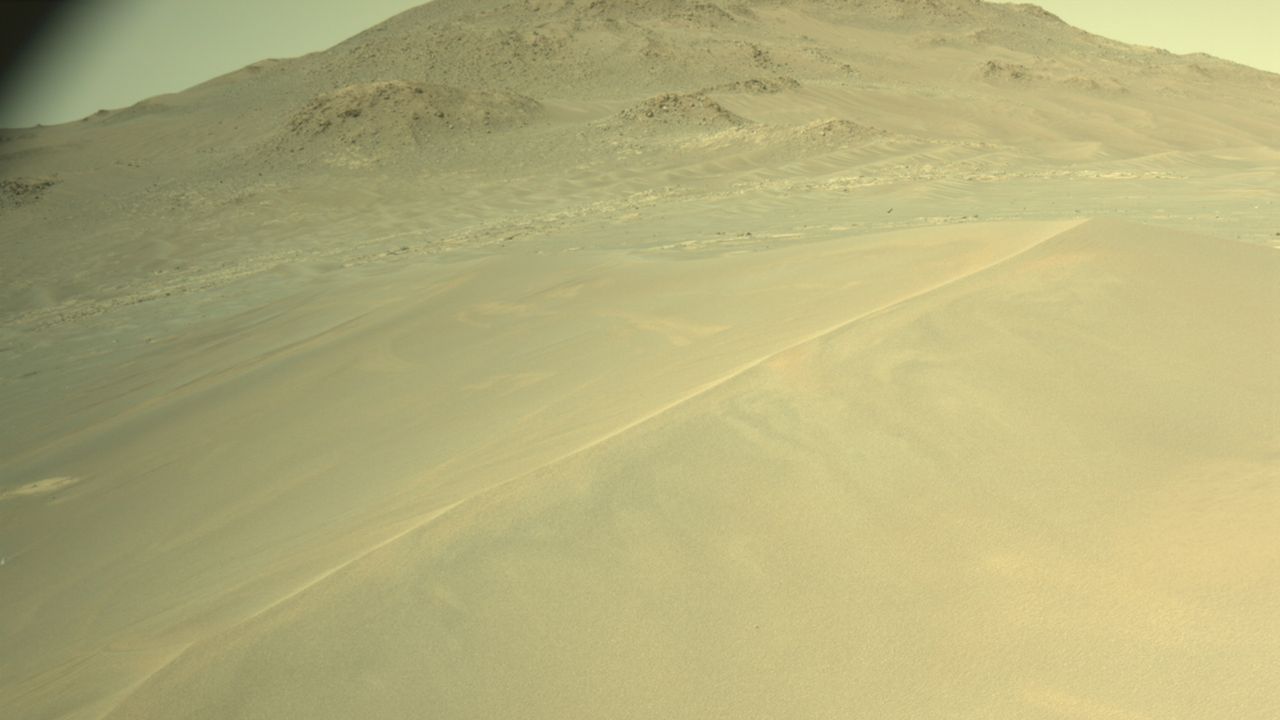
A Closer Look at the Hazyview Megaripple (Image Credits: Cdn.mos.cms.futurecdn.net)
Mars continues to reveal its dynamic geological history through the lens of NASA’s Perseverance rover, which recently documented striking wind-formed features on the planet’s surface.
A Closer Look at the Hazyview Megaripple
The Perseverance rover turned its cameras toward a prominent formation known as the Hazyview megaripple during its latest exploration activities. This image, captured in early January 2026, highlights the intricate patterns etched into the Martian terrain by ancient winds. Scientists noted the feature’s scale immediately, as it dwarfs similar structures found on Earth. The rover’s high-resolution imagery allows researchers to study these ripples in unprecedented detail, offering clues about Mars’ atmospheric past.
Positioned within Jezero Crater, the site where Perseverance has been operating since 2021, the Hazyview megaripple stands out against the crater’s rugged floor. The formation measures several meters across, a testament to the persistent erosive forces that have shaped the landscape over billions of years. Mission team members described the discovery as a highlight in the rover’s ongoing survey of the region. Such observations underscore the rover’s role in piecing together Mars’ environmental evolution.
Understanding Megaripples on the Red Planet
Megaripples represent some of the largest wind-sculpted features on Mars, formed under conditions of sustained, powerful gusts that differ from Earth’s typical dune-building processes. These structures emerge from the interaction of wind with loose sediments, creating undulating patterns that can persist for millennia. Unlike smaller ripples, megaripples require intense and prolonged wind activity, suggesting Mars once experienced more vigorous atmospheric circulation. The Perseverance images reveal their sinuous crests and troughs, providing data on sediment transport and surface stability.
Experts compare these Martian megaripples to those in extreme Earth environments, such as deserts or coastal areas, but emphasize their exaggerated size due to the planet’s thinner atmosphere and lower gravity. The rover’s documentation aids in modeling how winds have redistributed materials across the planet’s surface. This knowledge helps refine predictions about current weather patterns on Mars. Ongoing analysis of the Hazyview site promises further insights into these geological processes.
Perseverance’s Endurance and Discoveries
After nearly five years on Mars, the Perseverance rover has traversed almost 25 miles, demonstrating remarkable durability through a series of rigorous tests. Engineers at NASA’s Jet Propulsion Laboratory enhanced the rover’s navigation systems, enabling it to cover greater distances while avoiding obstacles. Recent updates highlight its success in collecting rock samples and analyzing the crater’s ancient lakebed remnants. The megaripple observation fits into this broader effort to explore Jezero Crater’s diverse geology.
The mission team continues to push the rover’s capabilities, preparing it for extended operations in the years ahead. Perseverance has abraded rocks to expose fresh surfaces and captured panoramic views that reveal the crater’s layered history. These activities not only document wind features but also search for signs of past microbial life. The rover’s progress ensures a steady flow of data back to Earth, fueling scientific debates about Mars’ habitability.
Broader Implications for Martian Science
The discovery of megaripples like Hazyview contributes to a growing body of evidence about Mars’ shifting climate, from a wetter era to its current arid state. Researchers use such findings to reconstruct atmospheric conditions that may have supported liquid water billions of years ago. The features indicate that wind remains a dominant force in shaping the planet today, influencing dust storms and surface erosion. This information supports planning for future human missions by highlighting potential hazards and resources.
Integration of rover data with orbital imagery provides a comprehensive view of regional wind patterns. Scientists anticipate that studying these ripples will refine models of Mars’ global circulation. The Perseverance mission’s emphasis on geologic diversity enriches our understanding of planetary formation processes. As the rover advances, each new image like the Hazyview megaripple adds layers to the story of the Red Planet.
Key Takeaways
- Megaripples on Mars, such as the Hazyview formation, form under powerful winds and reveal ancient atmospheric dynamics.
- Perseverance has traveled nearly 25 miles in five years, enhancing navigation for deeper exploration of Jezero Crater.
- These discoveries inform Mars’ climate history and aid preparations for future robotic and human endeavors.
The Perseverance rover’s capture of the Hazyview megaripple serves as a vivid reminder of Mars’ enduring geological activity, bridging the gap between its watery past and dusty present. As scientists delve deeper into these wind-sculpted relics, the Red Planet’s secrets unfold one image at a time. What aspects of Mars’ surface features intrigue you most? Share your thoughts in the comments.