

Pick up a coffee mug, unlock your phone, or walk across your kitchen floor, and you are quietly running experiments that would have baffled some of history’s greatest scientists. The things we touch a dozen times before breakfast are saturated with physics, chemistry, and even cutting‑edge materials science that researchers still actively study. Yet we tend to wave them away as “just” a mug, “just” a phone, “just” glass. This article peels back that illusion of simplicity and shows how much advanced science is hiding in plain sight. Once you see what is really going on under your fingertips, it becomes surprisingly hard to treat the ordinary as ordinary ever again.
The Ceramic Coffee Mug: A Precision Device for Taming Heat

The average ceramic mug looks reassuringly simple, but it is the product of tightly controlled high‑temperature chemistry. The clay mixture is chosen and refined so that, when fired in a kiln at temperatures often above the point where aluminum melts, its microscopic structure partially melts and then locks into a glass‑ceramic network. That network is engineered to have a low thermal conductivity, which is why you can hold hot coffee without burning your fingers while the liquid inside stays warm for a useful length of time. The glaze on top is not just decorative; it is a thin glassy layer that seals pores, prevents leaching of ions into acidic drinks, and makes the surface smoother and easier to clean.
What experts still study is how small tweaks in composition and firing schedule change crack formation, toughness, and heat resistance in ways you can feel as a user. A mug that “rings” when tapped, rather than thudding, is quietly telling you about its internal structure and the way it transmits vibrations through its ceramic lattice. The same underlying materials science governs tiles on spacecraft and the ceramics in solid‑state batteries, but the coffee mug is your handheld laboratory in everyday thermal management. Once you realize that, the dull morning ritual starts to look a lot like an informal seminar in high‑temperature engineering.
Stainless Steel Cutlery: Corrosion Chemistry on a Razor’s Edge
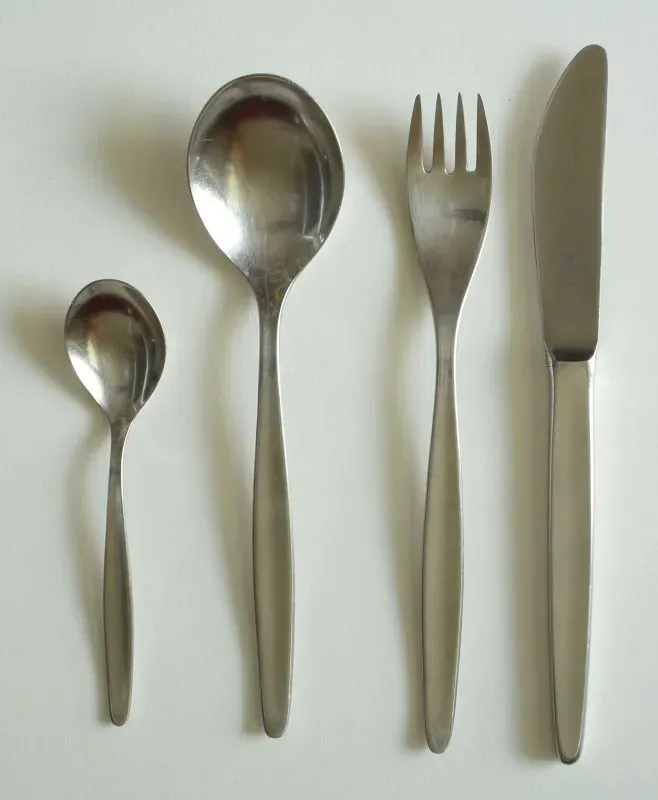
Your fork is performing a quiet chemical trick that nineteenth‑century metallurgists chased for decades: it resists rust while still being hard enough to keep an edge. Stainless steel is a carefully balanced alloy, usually built around iron mixed with chromium and often nickel, molybdenum, or other elements in precisely controlled proportions. When exposed to oxygen in air or water, chromium at the surface forms an extremely thin, tightly adherent oxide layer that blocks further corrosion, a process called passivation. The layer is so thin that you can see through it, yet it constantly repairs itself when scratched during cutting or washing.
The balance is delicate: too much carbon or the wrong heat treatment can create carbides that deplete chromium at the grain boundaries, making even “stainless” steel vulnerable to pitting in salty dishwater. That is why experts still run detailed microscopy and electrochemical tests on steels that consumers think of as interchangeable spoons. The same principles that let your knife survive a decade of tomato juice and detergent also underpin surgical tools and chemical plant piping. Every time you see a faint rainbow sheen on a well‑used pan, you are looking at interference patterns in nanometer‑scale oxide films, not unlike the colors of a soap bubble, but baked into steel.
Toothpaste and Toothbrushes: Micro‑Scale Engineering in Your Mouth
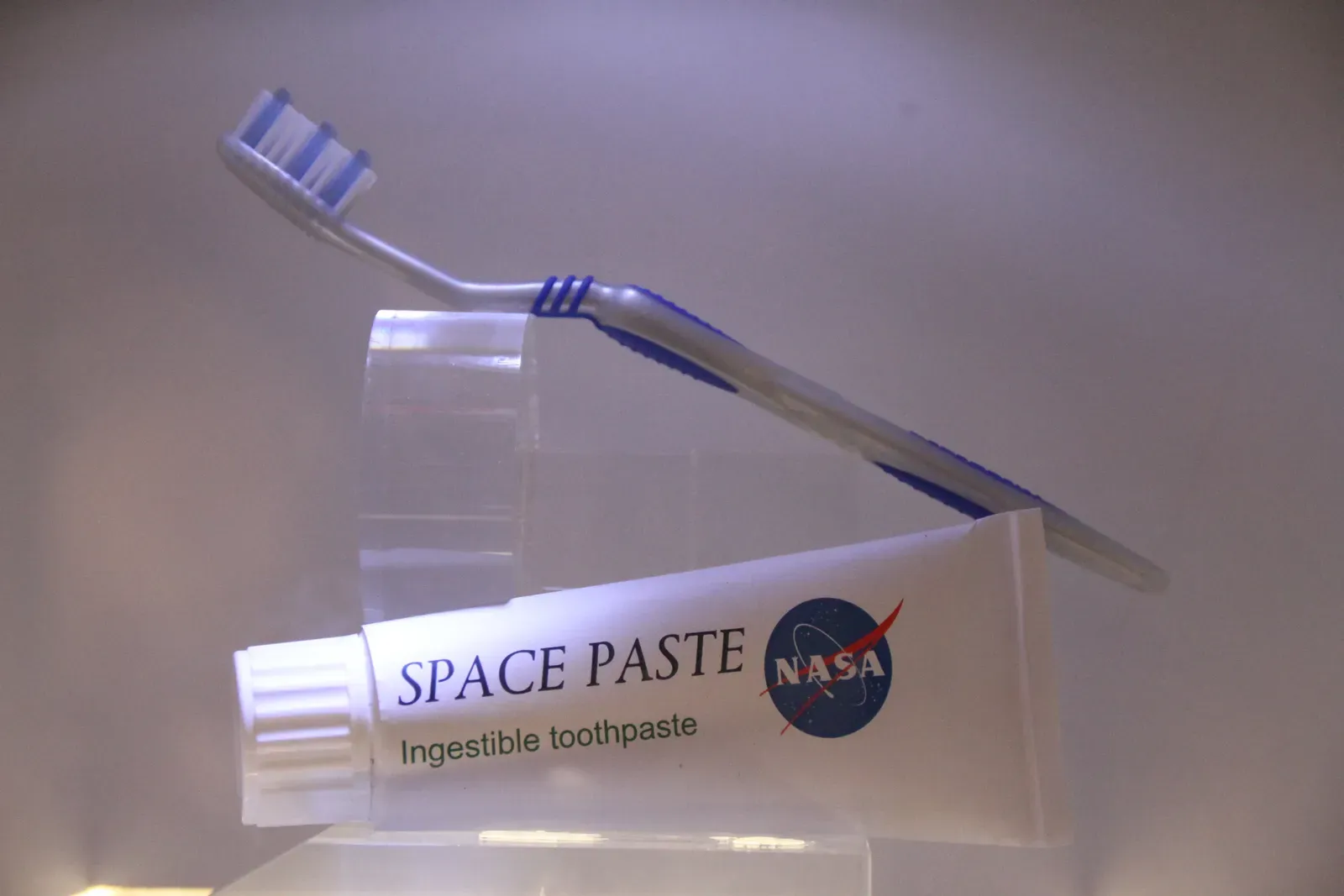
Brushing your teeth feels like the opposite of high tech, but the combination of toothbrush and toothpaste is a carefully tuned abrasive system operating on the scale of micrometers. The bristles are typically made from nylon with controlled stiffness, diameter, and tip shape so they flex enough to reach between teeth without slicing into gums. Meanwhile, the toothpaste contains fine particles of silica or similar minerals chosen to be just hard enough to scour softened plaque and stain molecules while leaving enamel largely untouched. That trade‑off is quantified in standardized abrasion indices that dental materials researchers still debate and refine.
Add to that the chemistry of fluoride ions, which can help remineralize weak enamel by integrating into the hydroxyapatite crystal structure that makes up your teeth. Surfactants lower surface tension so the paste can wet microscopic crevices, and polymers thicken the mixture so it stays on the brush instead of sliding off into the sink. From a scientist’s point of view, you are performing a carefully controlled surface treatment twice a day, akin to polishing a precision lens but using saliva as a solvent and living tissue as the substrate. It is one of the most widespread examples of materials engineering being carried out, quite literally, by hand.
Smartphone Screens: A Battle Between Fragility and Strength
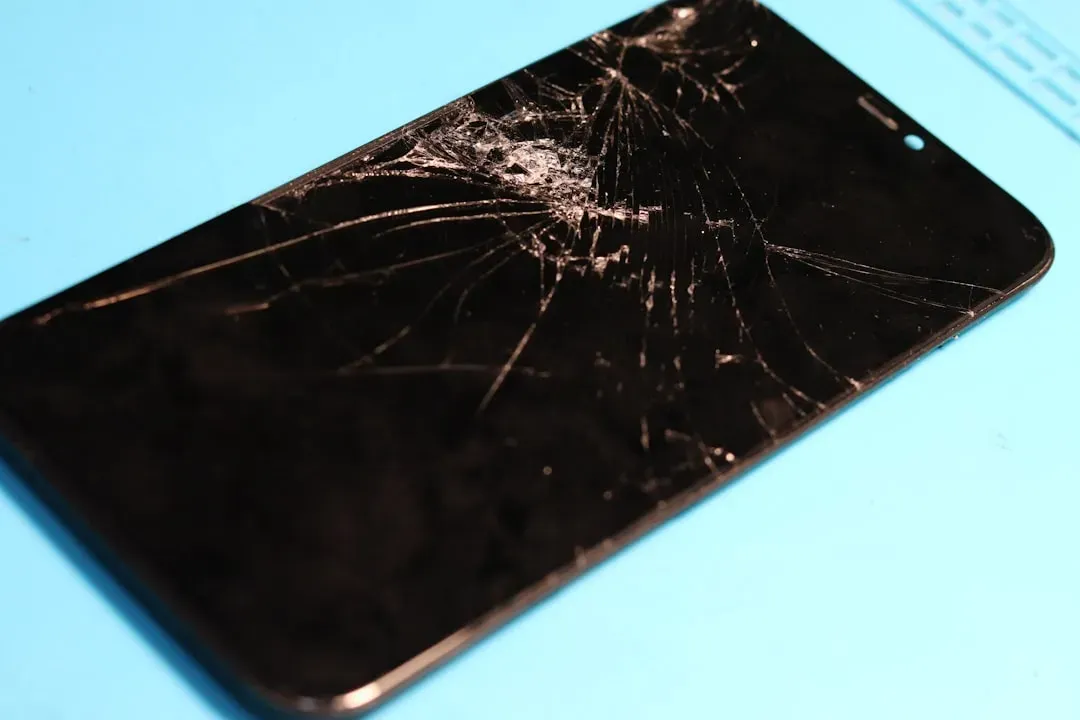
The pane of glass on the front of your phone is nothing like the window glass used a century ago, even though it looks the same to the naked eye. It is usually a chemically strengthened aluminosilicate glass, where larger potassium ions are forced into the surface by ion exchange in a molten salt bath, putting the outer layer into compression. That compressive layer makes it much harder for small cracks to grow, which is why a modern phone can survive falls that would have shattered older glass long ago. At the same time, the glass must remain thin enough to transmit light clearly and respond to the faint electrical fields used by the touchscreen sensors underneath.
When a screen finally does crack, the jagged web pattern you see is a fingerprint of fracture mechanics acting on invisible flaws seeded during manufacture or impacts. Researchers still run high‑speed imaging and computational models on seemingly simple glass breaking events to extract better understanding of how cracks start and branch. The oleophobic coating that helps fingerprints wipe away easily is only a few nanometers thick, yet it alters surface energy and contact angles in ways you experience with each swipe. Your absent‑minded scrolling is happening on a layered stack of optics, electronics, and solid‑state physics dense enough to power entire graduate courses.
Refrigerator Magnets: Quantum Spins on the Fridge Door

That cheerful souvenir magnet holding up a school photo is anchored by quantum mechanics, not glue. In a ferromagnetic material, millions of atomic‑scale magnetic moments, tied to electron spins, line up in regions called domains, producing a macroscopic magnetic field. When the magnet is brought near the steel door, it induces a rearrangement of domains in the door’s surface, creating an attractive force that feels effortless when you stick it on. The strength and pattern of that force depend on the material’s composition, grain structure, and the way it was magnetized in the factory.
Experts still probe these same materials with neutron scattering and synchrotron X‑rays to unravel how domain walls move and pin in response to fields and temperature. The fridge magnet is the friendly cousin of the powerful rare‑earth magnets that enable wind turbines, MRI scanners, and electric vehicle motors, technologies that depend on subtle tweaks in crystal chemistry and processing. When a magnet slowly slides down a glossy fridge, it is quietly advertising the balance between magnetic forces and friction, another everyday playground of physics. You can think of that slow drift as a visible compromise between quantum order and kitchen‑level chaos.
LED Light Bulbs: Turning Quantum Jumps Into Living Room Light
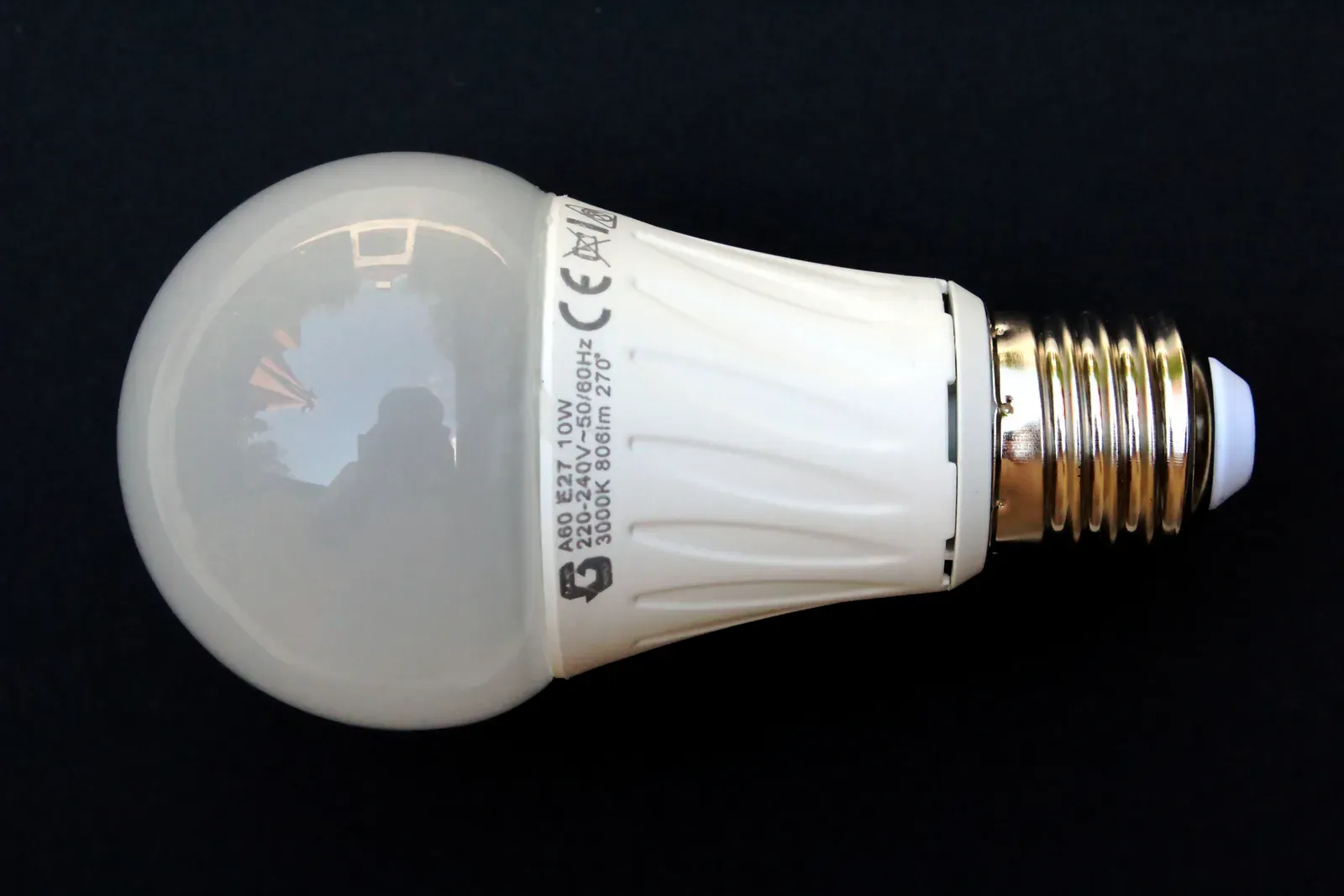
Flip a light switch in a modern home and you are more likely than not activating an array of light‑emitting diodes rather than a glowing filament. Each LED is a semiconductor junction engineered so that when electrons and holes recombine, they release energy as photons of a particular color. The exact wavelength, and thus the shade of white or colored light you see, depends sensitively on the band gap of the materials used and on how impurities, or dopants, have been introduced. Inside a familiar bulb shell, there is also often a phosphor coating that absorbs some of the LED’s blue or ultraviolet light and re‑emits it at longer wavelengths to create a balanced white.
Designing an LED that is efficient, long‑lived, and pleasant to the human eye is still an active research frontier, especially for warm white light reminiscent of older incandescent bulbs. Engineers have to connect quantum‑level processes in tiny chips with heat management, driver electronics, and human color perception. The faint flicker that some people notice with cheap bulbs comes from how the electronics convert household alternating current into a form the LEDs can use, a trade‑off between cost and electrical smoothing. That little plastic‑and‑metal capsule in your lamp is a compact summary of decades of semiconductor physics and perception psychology wrapped into something you buy in multi‑packs.
Kitchen Nonstick Pans: Slippery Surfaces and Molecular Friction

Watching an egg slide across a nonstick pan can feel almost like a magic trick, but it is the result of extremely low surface energy fluoropolymer coatings. The carbon‑fluorine bonds in common nonstick materials are among the strongest in organic chemistry, and the outer surface presents fluorine atoms that interact only weakly with other molecules. That makes it difficult for proteins and fats in food to form tight, adhesive contact, reducing the microscopic “grip” that usually makes cleaning a pan so tedious. The coating is thin, often applied in multiple layers and then cured at high heat so it bonds firmly to the metal substrate underneath.
Scientists who study friction, a field known as tribology, still investigate how these coatings wear over time and how they interact with oils and detergents at the molecular level. There is ongoing work to create new nonstick surfaces using ceramic, diamond‑like carbon, or textured metals that trap tiny air pockets, mimicking the way water beads and rolls off lotus leaves. When you tilt a pan and watch droplets race across it, you are seeing gravity, surface tension, and contact angle all competing in real time. The pan is less a passive tool and more a stage where force and chemistry negotiate every sizzle and slide.
Elevator Doors and Sensors: Everyday Encounters With Control Systems Theory

Stepping through an elevator door feels so routine that it is easy to forget how much sensing and feedback is keeping you safe. The doors typically use infrared light curtains or capacitive sensors to detect obstructions, scanning an invisible grid that resets every time they start to close. Behind the scenes, a controller interprets that data and adjusts motor torque, braking, and timing using algorithms descended from classic control systems theory. Those algorithms have to handle a range of conditions: different passenger loads, building vibrations, and even tricks like someone waving a hand in at the last second.
Engineers test and certify these systems under strict safety codes because even small errors in the logic or sensor placement can have serious consequences. The elevator as a whole is a multi‑layered network of mechanical, electrical, and software components juggling inputs and outputs many times per minute. Riding one turns you into an unwitting participant in a continuous loop of data collection and automated decision‑making. In an era obsessed with autonomous vehicles and smart devices, the humble elevator door is a long‑standing, quietly reliable example of cyber‑physical systems at work.
Why the Hidden Science of the Ordinary Matters More Than It Seems

When you realize how much science is embedded in familiar objects, it becomes harder to maintain the comforting illusion that advanced technology is something distant and rarefied. The same physical laws and design principles that govern spacecraft, quantum computers, or cutting‑edge medical devices are at play in mugs, magnets, and light bulbs; only the scale and stakes differ. Historically, many breakthroughs have traveled in both directions, with ideas first explored in heavy industry or defense eventually reshaping consumer goods, and surprising insights from mundane failures feeding back into high‑end engineering. Understanding that continuum cuts against the old story that there is “pure science” in one world and “everyday life” in another.
There is a cultural consequence, too: when people see the objects around them as engineered, contingent solutions rather than inevitable facts of nature, they become more capable critics and better citizens in a technologically saturated society. It changes how you interpret a product recall, a patent dispute, or a new energy policy, because you know, instinctively, that design is always a series of trade‑offs. For me, the moment this really sank in was noticing how differently hot tea cooled in a thick ceramic mug versus a double‑walled steel tumbler, and realizing I could roughly predict the behavior from basic heat transfer ideas. That tiny act of prediction, in turn, made other objects feel less like black boxes and more like conversations between human intent and physical reality.
From Noticing to Experimenting: How Readers Can Engage With the Science Around Them

Once you start to look for scientific principles in everyday objects, small habits can turn the world into a kind of informal laboratory. You might pay attention to which mug keeps coffee warm the longest, then guess why based on thickness and material before checking your hunch with a thermometer. You could compare how different phone screen protectors affect glare and fingerprint smudging, linking what you see to ideas about refraction and surface energy. Even simple acts like observing how water beads on a new pan versus an old one can sharpen your feel for how coatings age and wear.
None of this requires special equipment, only a bit of curiosity and the willingness to treat ordinary experiences as data worth noticing. Visiting science museums, reading accessible materials on materials science or physics, or following reputable university outreach channels can provide language and context for what you are already seeing. Over time, those small acts of attention add up to a quiet but meaningful shift: the world stops being a backdrop and becomes a puzzle you are actively, playfully solving. The next time you pick up a familiar object, will you still see it as simple, or as the tip of an iceberg of hidden science?
Suhail Ahmed is a passionate digital professional and nature enthusiast with over 8 years of experience in content strategy, SEO, web development, and digital operations. Alongside his freelance journey, Suhail actively contributes to nature and wildlife platforms like Discover Wildlife, where he channels his curiosity for the planet into engaging, educational storytelling.
With a strong background in managing digital ecosystems — from ecommerce stores and WordPress websites to social media and automation — Suhail merges technical precision with creative insight. His content reflects a rare balance: SEO-friendly yet deeply human, data-informed yet emotionally resonant.
Driven by a love for discovery and storytelling, Suhail believes in using digital platforms to amplify causes that matter — especially those protecting Earth’s biodiversity and inspiring sustainable living. Whether he’s managing online projects or crafting wildlife content, his goal remains the same: to inform, inspire, and leave a positive digital footprint.