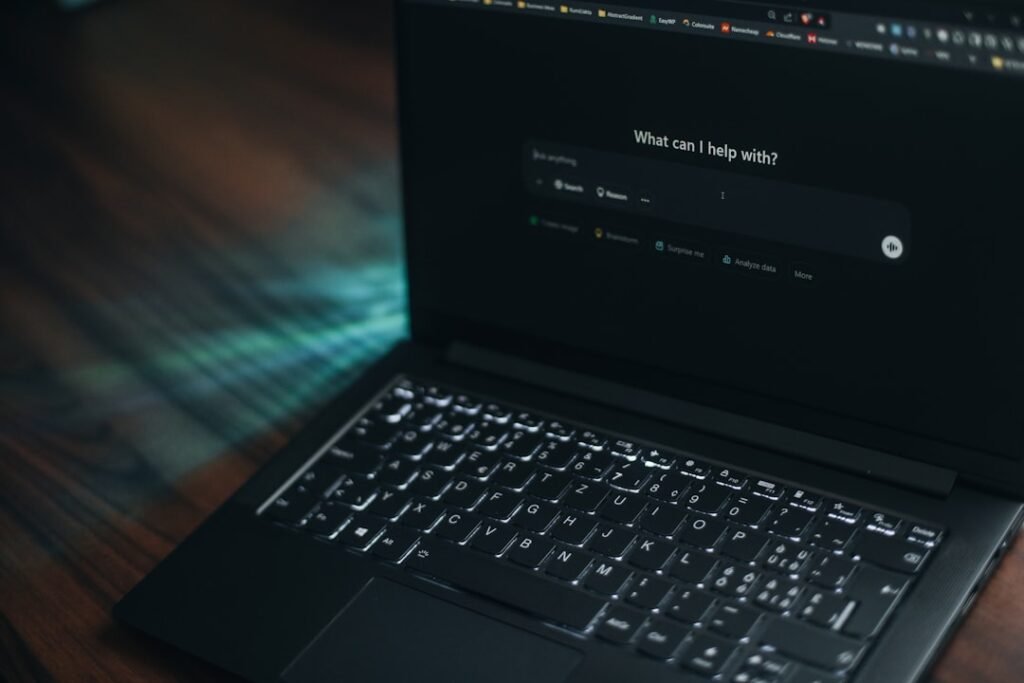
As artificial intelligence becomes better at writing text that sounds human, the tools we use to detect AI-authored writing are struggling to keep up — even when those detection tools are powered by AI themselves. Despite widespread interest from educators, journalists and platforms seeking to flag or label automated content, researchers say that distinguishing AI-generated text from human writing is both technically complex and fundamentally limited, leaving schools, companies and regulators juggling tools that can be useful but are far from perfect.
The challenge comes from the fact that modern language models — built to mimic human language — produce patterns similar to human writing, while detectors must grapple with evolving models, outdated training examples and even proprietary systems that are not transparent to analysts. As AI tools become more advanced, the detection arms race only gets harder, and experts suggest that society may need to adjust expectations around what AI detection can realistically achieve.
How AI Detection Tools Are Supposed to Work
AI-text detection tools typically fall into a few broad categories. One approach is classification models trained on labelled examples — a corpus of writing known to be human or AI-generated — so the detector learns patterns associated with each category. It then compares new text against these learned patterns to estimate the likelihood it was generated by AI.
Another method uses statistical signals tied to how specific AI models generate language, such as the probabilities a model assigns to given word sequences. If a detector finds unusually high likelihoods for a specific text under one model’s probability distribution, that can be a clue — but only if the detector has access to that model or similar ones.
Watermarks and Verification Tools
Some researchers have proposed watermarking AI outputs — embedding subtle, hidden markers into the text at generation time that can later be checked with the right key to confirm AI authorship. This shifts the problem from detection to verification, but it depends on cooperation from AI developers and isn’t available for many popular models or platforms.
Watermark-based verification is potentially powerful, but also limited: without the secret key or if the watermark isn’t widely adopted, the method becomes effectively unavailable, and users still face uncertainty about how a given piece of text was produced.
Why Even AI Detectors Fall Short
Even the learning-based detection tools that are themselves AI systems face serious hurdles. Detectors work best when the text they examine closely resembles the datasets they were trained on — but AI models evolve rapidly, and writing from new or proprietary systems may differ enough to elude older detectors. This means detectors often lag behind the systems they’re trying to identify.
Statistical detection methods also suffer when the underlying model is unknown, frequently updated or has its training data proprietary — a common case with commercial AI systems. When assumptions about the text generation process break down, the detector’s reliability plunges.
Human and Hybrid Challenges
It’s not just automated tools that struggle — humans aren’t reliable judges of AI-generated text either. Text that reads fluently and logically can easily be mistaken for human writing, and conversely, relatively mechanical but real human text might be flagged as AI. Editors and educators have found that experience with AI tools can improve detection, but even experts often get it wrong.
Hybrid texts — where humans tweak AI output or lightly polish drafts with the help of AI — present another thorny problem: detectors may misclassify these as fully AI-generated, or fail to recognize subtle AI influence altogether. This blurs the line between purely human and AI-assisted authorship, complicating enforcement and analysis.
The Arms Race Between Generation and Detection
As generative AI improves, detection tools — both learning-based and statistical — face a never-ending task of catching up. Newer models keep changing the linguistic landscape, and without constant retraining or access to proprietary systems, detectors can’t keep pace. Even watermarking is not a panacea if it’s not widely implemented.
This has led experts to describe the situation as an escalating arms race: each advance in generation quality triggers a need for more sophisticated detection, but the sheer speed of innovation makes it difficult for detectors to ever maintain a reliable lead.
Broader Impacts on Society and Policy
The inability to perfectly detect AI-authored text has real consequences. In education, it challenges academic honesty policies; in journalism, it complicates content verification; and in law and policy, it raises questions about disclosure and transparency. Institutions hoping to enforce AI-use policies can’t rely on detection alone.
Instead, experts suggest focusing on clearer norms and expectations around AI usage, combined with evolving detection methods as one of many tools — not the sole arbiter of authorship. Society may have to adapt to a future where knowing whether AI wrote something is less important than knowing how and why it was used.
Embrace Reality Over Certainty
The quest to detect AI-generated text reveals a deeper truth: as machines become adept at using language, the boundary between human and machine writing blurs in ways detection tools alone cannot resolve. Rather than pinning hopes on perfect detectors — a goal that may be theoretically impossible in the long term — we should shift to ethical standards, transparent disclosure and literacy about AI’s capabilities.
Expecting absolute certainty about authorship ignores the reality that language itself is fluid, and that well-trained models reflect human patterns they were built from. Upholding integrity in writing must come from context, intent and education, not from a badge slapped onto a text by a tool chasing its own tail.