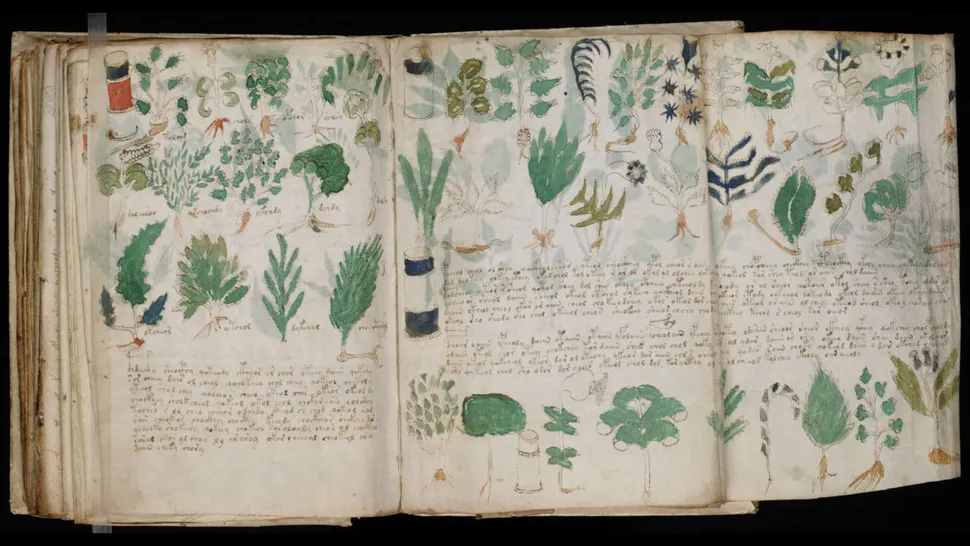
For more than a century, scholars, cryptologists and history buffs have been captivated by the Voynich Manuscript — a hand-drawn, illustrated codex written in an undeciphered script that has defied translation since its modern discovery. Radiocarbon dating places its vellum in the early 15th century, and its pages depict bizarre plants, astrological signs and enigmatic figures alongside text that looks like language but remains inscrutable.
A new study adds fresh depth to this centuries-old puzzle by proposing a medieval-era cipher mechanism that could explain how the mysterious text was generated — though it does not yet decode the manuscript itself. By simulating a historically plausible encryption inspired by Renaissance games and tools, researchers hope to uncover patterns that resemble the statistical structure of Voynichese, offering an important benchmark for future breakthroughs.
The Manuscript That Refuses to Yield Its Secrets
The Voynich Manuscript is a roughly 240-page illustrated codex penned in an unknown script often dubbed Voynichese, filled with drawings of unfamiliar plants, astronomical diagrams and peculiar human figures. Despite extensive study, the content remains undeciphered and its creator and purpose unknown.
Since its acquisition in 1912 by rare book dealer Wilfrid Voynich, the manuscript has been subject to cryptographic analysis by professionals and amateurs alike — from World War II codebreakers to modern AI models — yet none have produced a generally accepted translation. This enduring enigma has made it one of history’s most famous unread texts.
A New Cipher Theory Emerges
In a study published late in 2025, journalist and researcher Michael Greshko proposed a new medieval-inspired cipher called Naibbe as a model for how the Voynich Manuscript might have been constructed. This system uses dice throws to break words into letter groupings and playing cards to choose encoding tables, generating glyph patterns closely resembling the manuscript’s text.
Although Naibbe doesn’t decode the Voynich text, its output mimics key features of Voynichese: the frequency of glyphs, the length distribution of words and certain structural regularities. The researchers suggest that if a similar method were used historically, it could explain many of the manuscript’s linguistic patterns, even if the original meaning remains elusive.
Authentic Code or Elaborate Hoax?
The manuscript’s origins and purpose have been debated for decades. While some experts propose it’s a ciphered text written in a real language, others argue it could be a constructed language, an elaborate hoax or an experimental linguistic artifact from the Renaissance.
Earlier statistical studies have shown that the structure and distribution of its tokens share traits with natural languages, lending weight to the idea that it encodes meaningful content beneath its alien exterior. Nonetheless, without a clear decipherment, the possibility of it being a clever yet meaningless creation — or a sophisticated medieval encryption exercise — remains alive.
Why Naibbe Matters to Decipherment Efforts
What makes the Naibbe approach noteworthy isn’t that it solves the manuscript’s code, but that it offers a plausible historical framework that matches many quantitative properties of Voynichese. By demonstrating how a period-appropriate cipher could produce text with the manuscript’s statistical signatures, the study gives researchers a tangible model to test against the actual Voynich text.
This benchmarking could help filter out spurious decryption claims and focus attention on methods that genuinely replicate key structural elements of the Voynich script, bringing the field closer to a breakthrough even if the final key remains undiscovered.
The Manuscript’s Legacy in Cryptology and Culture
Despite the lack of a definitive translation, the Voynich Manuscript has transcended academia to become a cultural icon — a symbol of deep historical mystery that has inspired cryptographers, historians, artists and the public alike. Its bizarre illustrations and undeciphered text continue to spark speculation ranging from alchemical treatises to secret medical codices.
Efforts to understand it span centuries and methods, from early cryptologists’ pencil-and-paper attempts to modern AI and computational cryptography. Each new theory — including Naibbe — adds layers to how we understand not just the manuscript, but the limits and possibilities of historical communication.
Mystery Is the Manuscript’s Power
The Voynich Manuscript remains one of history’s most enthralling puzzles precisely because it resists easy explanation. While the Naibbe cipher doesn’t crack the code, it injects fresh, historically grounded thinking into a field long dominated by speculation and ad hoc decoding claims. In doing so, it elevates the conversation from “what does it say?” to “how might it have been produced?” — a vital, if indirect, step toward eventual understanding.
Yet the manuscript challenges more than cryptographers; it challenges our assumptions about medieval literacy, encryption and the transmission of knowledge. Its continued elusiveness is not a failure of scholarship but a testament to the complexity of human expression across time. As long as it remains unread, the Voynich Manuscript will both frustrate and inspire — reminding us that some mysteries are eternal and worth pursuing not just for answers, but for what they reveal about the limits of our curiosity.