
If you think modern science has an answer for everything, these mysteries are about to shake that belief a little. Even with supercomputers, satellites, and labs that can probe the tiniest particles, our planet still pulls off tricks that leave researchers scratching their heads.
Some of these phenomena are beautiful, some are eerie, and some are just downright strange. A few have working theories but no final proof, others seem to break the rules we thought nature followed. I still remember the first time I read about lightning that can travel upward and sideways for hundreds of kilometers – it felt less like science and more like a plot twist in a fantasy novel.
1. Ball lightning: glowing orbs that appear during storms
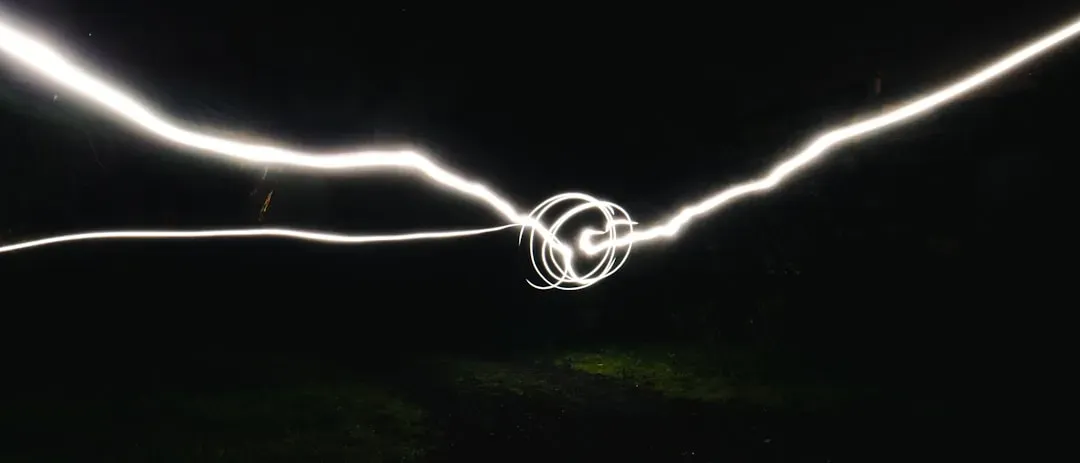
Imagine a thunderstorm rolling overhead, a flash of lightning – and then a glowing sphere of light drifting silently across a room or floating above a field. That’s ball lightning, one of the most puzzling atmospheric mysteries ever recorded. People have described it as anything from a tennis ball to a beach ball in size, sometimes white, sometimes bluish or orange, often lasting several seconds before fading or exploding.
The strangest part is how inconsistent it is. There are hundreds of eyewitness reports over the past few centuries, some even from trained observers like pilots and scientists, yet it almost never appears on command or in controlled experiments. Researchers have proposed ideas ranging from vaporized silicon in soil to plasma bubbles shaped by electromagnetic fields, but none of these explanations has nailed all the observed details, like how it sometimes seems to pass through windows or walls without shattering them.
2. Fast radio bursts: cosmic signals that blink and vanish
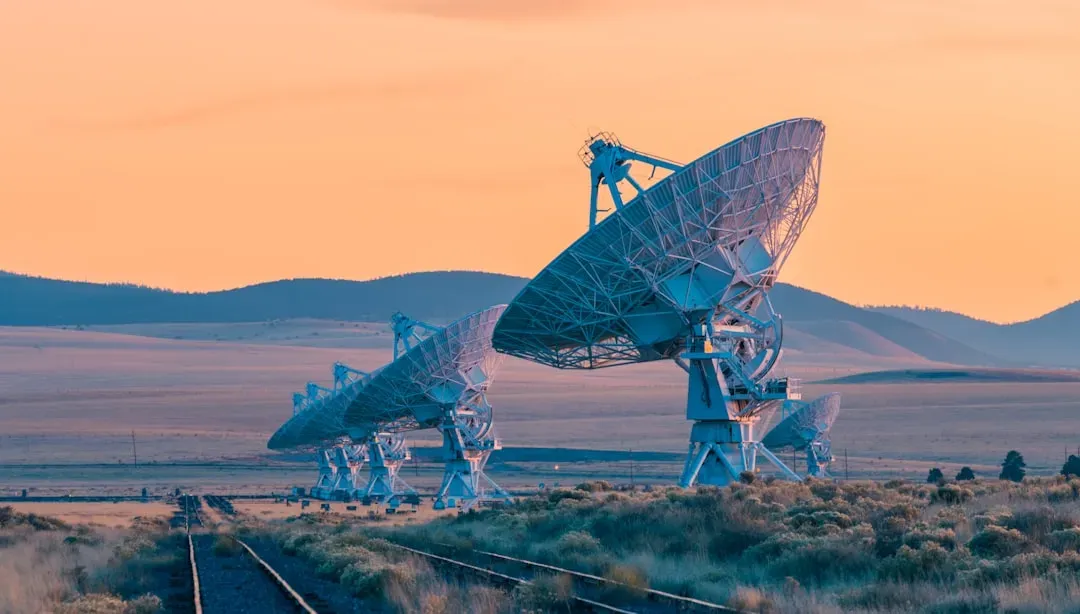
Every now and then, radio telescopes pick up a sudden, intense flash of radio waves from deep space – a fast radio burst, or FRB. Each one lasts less than the blink of an eye, but in that instant, it can release as much energy as our sun emits over days or weeks. Some are one-off events; others repeat occasionally, like a distant lighthouse whose timing we don’t fully understand.
Scientists suspect many FRBs come from extreme objects like magnetars – neutron stars with magnetic fields so strong they would rip apart anything that came close. Still, even with that working theory, we don’t yet know why some FRBs repeat, why their patterns vary, or exactly what mechanism triggers them. Every new set of observations from big radio arrays adds pieces to the puzzle, but it feels a bit like listening to a broken Morse code signal from the universe without having the translation key.
3. Dark matter and dark energy: the invisible rulers of the universe
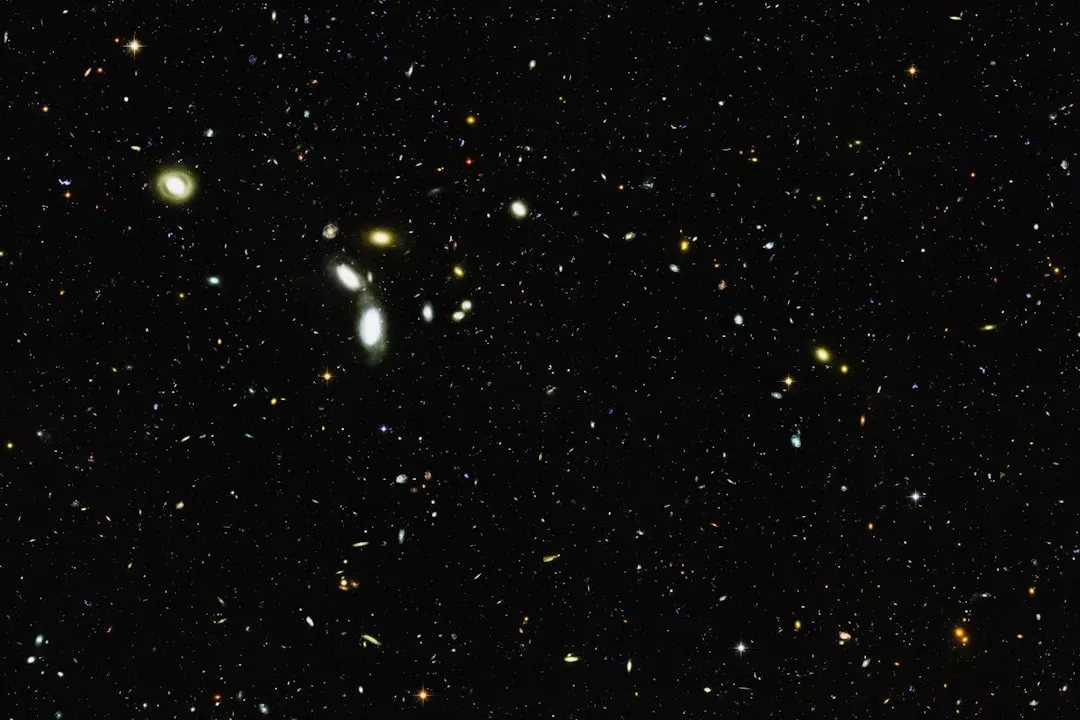
When astronomers carefully measure how galaxies move and how the universe expands, the math points to something unnerving: most of what’s out there is invisible and unknown. Dark matter seems to act like a hidden scaffolding, providing extra gravity that keeps galaxies from flying apart, even though we can’t see it or detect it directly with our instruments. Dark energy appears even stranger, pushing the universe to expand faster and faster instead of slowing down.
Put together, dark matter and dark energy make up the vast majority of the cosmos, while all the stars, gas, dust, and planets we see are just a small fraction. There are plenty of theories – exotic particles, tweaks to gravity, fields that fill space – but so far, no smoking gun. I sometimes think of it like walking into a room where the furniture is clearly there because everything moves around it, but the light is off and nothing reflects; we feel the effects but have no idea what the furniture actually looks like.
4. The Taos hum and other unexplained low-frequency sounds
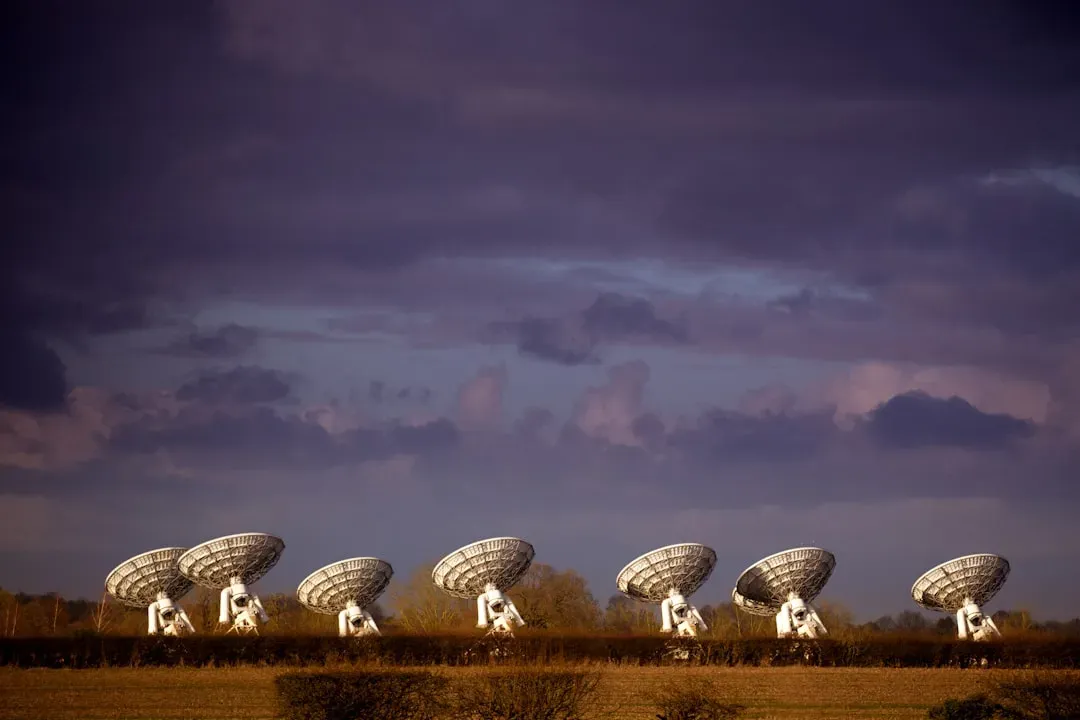
In a handful of places around the world, people report hearing a low, persistent hum – like a distant engine idling or a truck that never arrives. One of the most famous cases is the so-called Taos hum in New Mexico. Not everyone hears it, and those who do often describe it as maddening: too faint to record easily with microphones, but loud enough to keep them awake at night.
Scientists have investigated traffic noise, industrial machinery, ocean waves, and even inner ear issues as possible causes, yet in many locations, no clear source has been proven. Some measurements do pick up low-frequency vibrations, while others come up empty, which only deepens the mystery. There’s a real emotional layer to this one, too – people who hear the hum sometimes feel dismissed or doubted, which turns a physics puzzle into a very human story of frustration and uncertainty.
5. Sprite lightning and gigantic jets: storms reaching into space

High above thunderstorms, far beyond the familiar jagged lightning bolts we see from the ground, there are ghostly red and blue flashes called sprites, elves, and gigantic jets. Sprites can look like jellyfish or tendrils hanging from the sky, while gigantic jets are lightning bolts that shoot upward from storm tops toward the edge of space. Pilots used to report seeing strange lights above storms and were often ignored – until cameras finally captured them in detail.
Scientists now know these are forms of transient luminous events, triggered by complex electrical imbalances between storms and the upper atmosphere. But the exact chain of events, and why some storms produce them while others don’t, is still being pieced together. Their shapes, colors, and heights hint at intricate interactions between charged particles and thin air that we’re only beginning to model. It’s as if thunderstorms have a secret, towering life above the clouds that most people never see.
6. Rogue waves: “freak” walls of water at sea

For centuries, sailors told stories of giant, solitary walls of water rising seemingly out of nowhere – waves far taller than surrounding swells, capable of slamming into ships and oil platforms with devastating force. These rogue waves were often dismissed as exaggerations or legend, until modern instruments and satellites finally confirmed they are very real. Some of these waves can reach heights that dwarf nearby waves, arriving without warning on otherwise moderate seas.
Physics does provide some tools here: wave interference, currents, and wind can combine to focus energy into a single monstrous wave. Still, predicting exactly when and where a rogue wave will form remains extremely difficult. Models can flag conditions that make them more likely, but not pinpoint individual events. If you’ve ever watched small ripples cross each other in a pond and suddenly create a spike of water, that’s the same basic idea – only scaled up to something that can weigh as much as a skyscraper made of water.
7. The placebo effect: healing powered by belief

In medical trials, people sometimes improve even when they receive a sugar pill or a treatment that does nothing active. Their pain decreases, symptoms lessen, and measurable changes show up in their brain and body. This is the placebo effect, and it’s powerful enough that every serious drug study has to account for it, often revealing that belief itself has real physical consequences.
We know that expectations can alter brain chemistry, hormone levels, and immune responses, but we still don’t fully understand the limits or mechanisms. Why do some people respond strongly while others barely at all? How does the color, size, or ritual around a fake treatment change its impact? Personally, I find this one almost unsettling, because it blurs the line between mind and body in a way that makes our usual categories feel too simple. It also raises big questions about how much of healing is chemistry and how much is meaning.
8. Earth’s magnetic field flips and mysterious anomalies
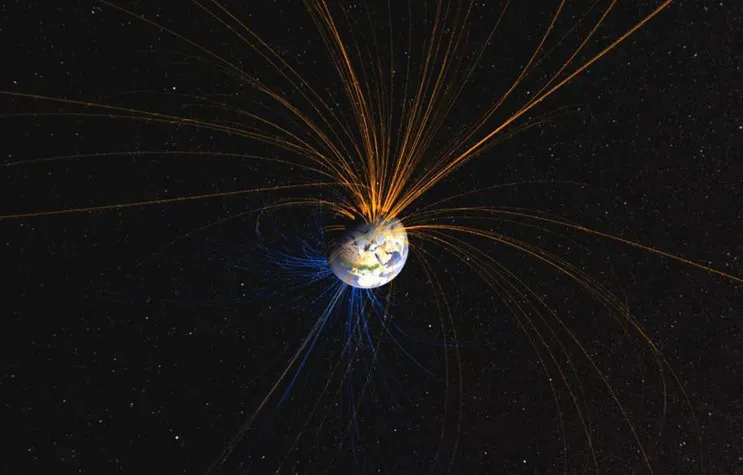
Our planet is wrapped in a magnetic field generated by molten metal churning in the outer core, and it acts like a shield against charged particles from space. Over long stretches of time, though, this field doesn’t stay fixed. Geological records in rocks and seafloor show that the magnetic poles have flipped many times, with north becoming south and vice versa. The flips don’t follow a neat schedule, and the process itself seems messy and irregular.
Right now, scientists are watching a large weak spot called the South Atlantic Anomaly, where the magnetic field is noticeably weaker than elsewhere, affecting some satellites. We have decent models of how moving liquid iron can create magnetism, but not a precise understanding of why reversals start, how long they take, or whether current changes are signs of something bigger. It’s a bit like listening to the low rumble of a giant machine deep underground – you know it’s running, you can guess what it does, but you can’t quite see the gears turning.
For all the progress humanity has made, these mysteries are a good reminder that we’re still very much students of nature, not its masters. From glowing spheres in thunderstorms to signals from distant galaxies and the invisible forces shaping the universe, each phenomenon stretches what we think we know. They sit at that edge where curiosity wrestles with uncertainty, which is exactly where some of the most exciting discoveries tend to begin.