
Imagine discovering that everything you see, touch, and feel is more like a cosmic projection than a solid, three-dimensional reality. It sounds like the plot of a sci‑fi movie, the kind you watch late at night and then question for days. Yet, for decades, some of the world’s sharpest minds in physics have taken this idea very seriously: that our universe might actually be a hologram.
When I first dug into this topic years ago, I honestly thought it was just a fancy metaphor. But the deeper you go, the more you realize something unsettling: the math that describes our universe starts to behave as if reality is written on a distant, lower‑dimensional surface. It doesn’t mean we’re living in a video game, but it does suggest that our intuitive picture of space, time, and matter might be radically incomplete.
The Shocking Idea Behind a Holographic Universe
At its core, the hologram idea says that the three‑dimensional world we experience could be a kind of projection of information encoded on a two‑dimensional boundary. Think of a regular hologram on a credit card: the image looks 3D, but the information is stored on a flat surface. In a similar spirit, the universe we move through every day might be the 3D “image,” while the true physical description lives on a distant cosmic boundary we can’t see directly.
This is not just philosophical hand‑waving; it emerged from serious attempts to solve some of the hardest puzzles in physics. When physicists tried to understand black holes, they ran into an unsettling paradox about what happens to information that falls inside. The solution that began to make sense was that the information doesn’t vanish in the way you’d expect but gets encoded on the surface area of the black hole, not its volume. That is a profoundly holographic way for nature to behave.
Black Holes: Where the Hologram Theory Was Born
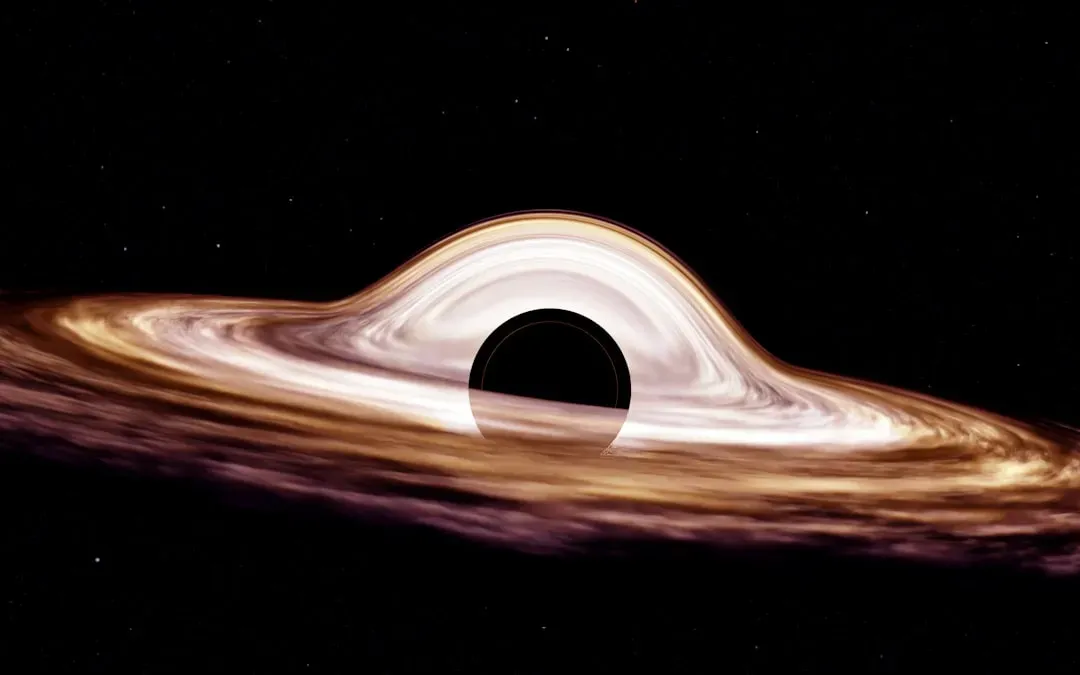
Black holes are cosmic monsters, regions where gravity is so intense that not even light can escape. For a long time, it seemed like anything falling inside a black hole was erased from the universe forever. But this clashed with a central principle of physics, which says that information about a system cannot simply disappear. When Stephen Hawking showed that black holes emit radiation and can slowly evaporate, the conflict became painfully clear: where does the information go?
Physicists found an astonishing clue by calculating how much information a black hole can store. Instead of scaling with its volume, the capacity seemed to scale with its surface area. That’s like saying the amount of stuff you could store in a warehouse is determined not by how big the warehouse is inside, but by the size of its walls. This area‑based rule is one of the strongest hints that nature itself might be fundamentally holographic, not volumetric, and it pushed the holographic universe idea from speculation into serious discussion.
The Holographic Principle: When Space Becomes Information
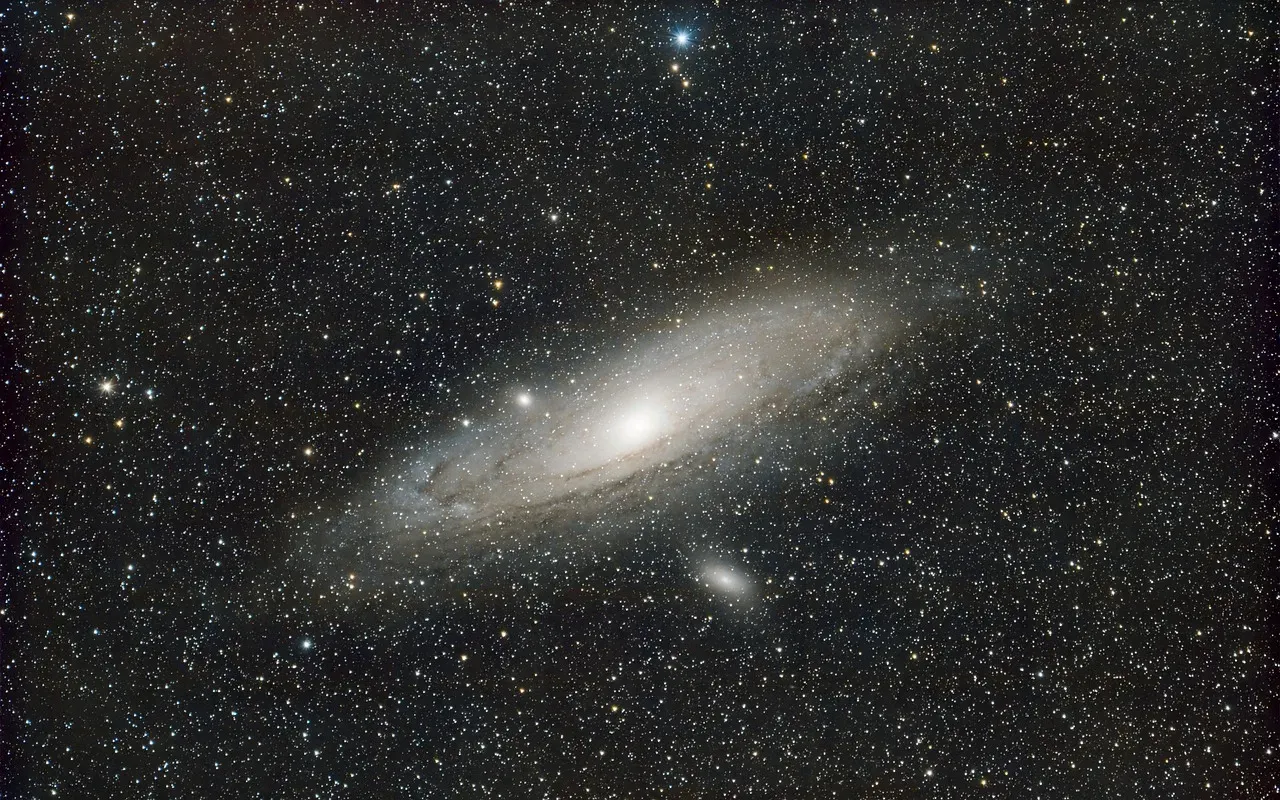
From these black hole insights emerged what’s now called the holographic principle. It claims that everything that happens in a region of space can be described by information encoded on its boundary. In other words, the total amount of information in any part of the universe is limited by the area surrounding it, not the space inside it. This flips our everyday intuition on its head and treats space more like a kind of storage medium for bits of information than an empty container.
In practice, this means that the basic building blocks of reality might not be tiny particles bouncing around inside space, but underlying units of information from which space and particles emerge. It’s like saying the pixels on your TV screen are the true reality, while the characters and landscapes you see are higher‑level illusions created by patterns in those pixels. The difference here is that the “screen” might be a cosmic boundary, and the “pixels” are abstract quantum bits we’ll probably never touch directly.
From Theory to Math: The Breakthrough That Changed Everything
The holographic principle became far more than a clever idea in the late nineteen‑nineties, when physicists found a powerful mathematical realization of it. They discovered that a particular kind of universe with gravity could be exactly equivalent to a lower‑dimensional universe without gravity living on its boundary. This is often described as a duality: two descriptions that look completely different on the surface but encode the same physical reality underneath.
Think of it as having two languages for the same story: one written as a drama, one written as a poem, but both capturing the same events. In the holographic duality, what appears as gravitational warping of spacetime in the higher‑dimensional world can be rewritten as interactions of quantum fields in a lower‑dimensional world. This gave physicists a concrete toolbox to test holographic ideas and explore scenarios that are impossible to study directly in a lab, like the very early universe or the interior of black holes.
How Experiments Are Quietly Closing In
A natural question is: if this is more than a fancy mathematical trick, where’s the evidence? No one has “taken a picture” of the holographic boundary of the universe, and they probably never will. But researchers have been hunting for subtle fingerprints of holography in the behavior of quantum systems, high‑energy particle collisions, and even the structure of cosmic signals from the early universe. The progress is quiet and technical, but it’s very real.
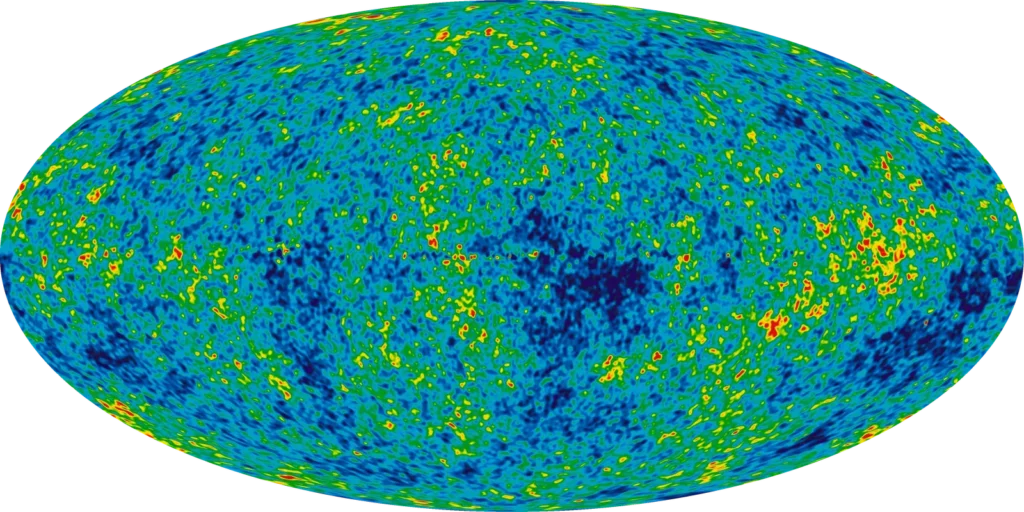
In particle physics, for example, data from powerful colliders has been compared against predictions derived from holographic models, particularly in situations where ordinary calculations break down. In condensed matter physics, some exotic materials that behave in strongly quantum ways seem to be better described using holographic tools than traditional methods. Even in cosmology, scientists are testing whether tiny irregularities in the cosmic microwave background could be consistent with a holographic origin story. None of this is a final proof, but together it’s like a set of faint footprints leading in the same direction.
What a Holographic Universe Means for Reality

If our universe really is holographic at a deep level, it forces us to rethink what we mean by “real.” The chair you’re sitting on still holds your weight, your coffee is still hot, your bills are still due, so nothing changes in day‑to‑day life. But on the deepest level, the three‑dimensional world might be more like a vivid, self‑consistent pattern in a vast informational system. The solidity you experience could be similar to how a character in a video game experiences their world as solid, even though it all comes from bits of data underneath.
For me, the wildest part is what it does to our sense of place. Instead of living “in” a universe made of stuff floating in empty space, we might be living inside an unfolding computation written on a distant cosmic surface. It doesn’t mean there’s a programmer or that we’re trapped in some cheesy simulation story; it simply means that information, not matter, could be the most fundamental ingredient. That’s a hard idea to shake once it sinks in, and it makes ordinary experiences feel strangely more precious, like detailed brushstrokes in a painting whose canvas you’ll never see.
Why Scientists Still Argue (And Why That’s Healthy)
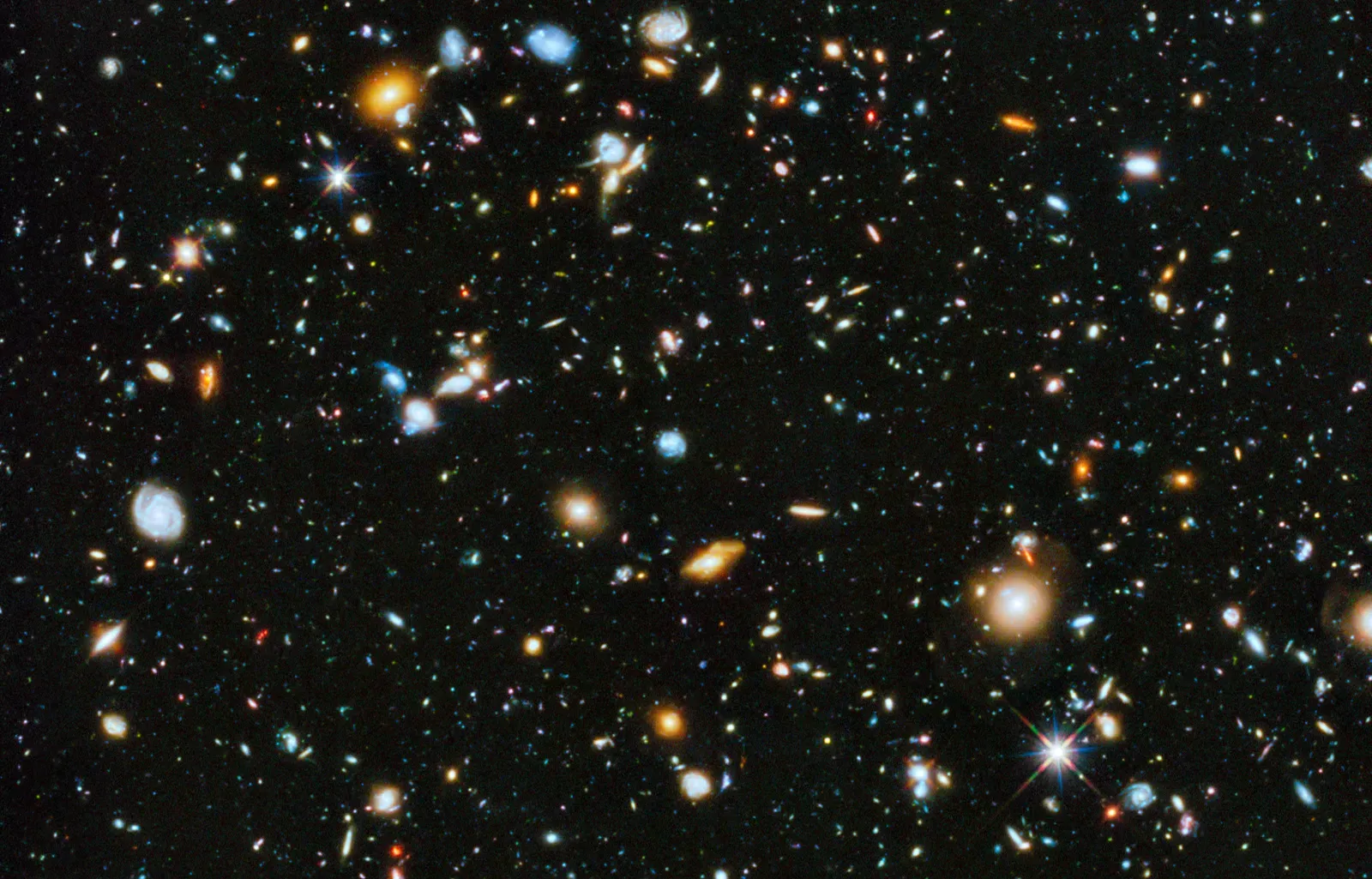
Despite all the excitement, the holographic universe is not a settled fact, and plenty of physicists are skeptical. Some see it as a brilliant set of tools and metaphors that work well in specific situations, like black holes or specially curved universes, but may not apply cleanly to our real, messy cosmos. Others worry that calling the universe a “hologram” can be misleading, because it suggests something fake or illusory, when in fact the question is about different but equivalent ways of describing the same underlying physics.
This tension is actually a good sign; it means the idea is being stressed, tested, and pushed to its breaking point. If holography survives these tests, it could become a cornerstone of a future theory that finally unites gravity and quantum mechanics. If it fails, the process of trying to make it work will still have revealed new insights, much like how trying to climb a cliff, even if you don’t reach the top, teaches you a lot about the rock. Either way, the argument itself is a crucial part of how science slowly crawls toward a clearer picture of reality.
The Future of the Hologram Hunt
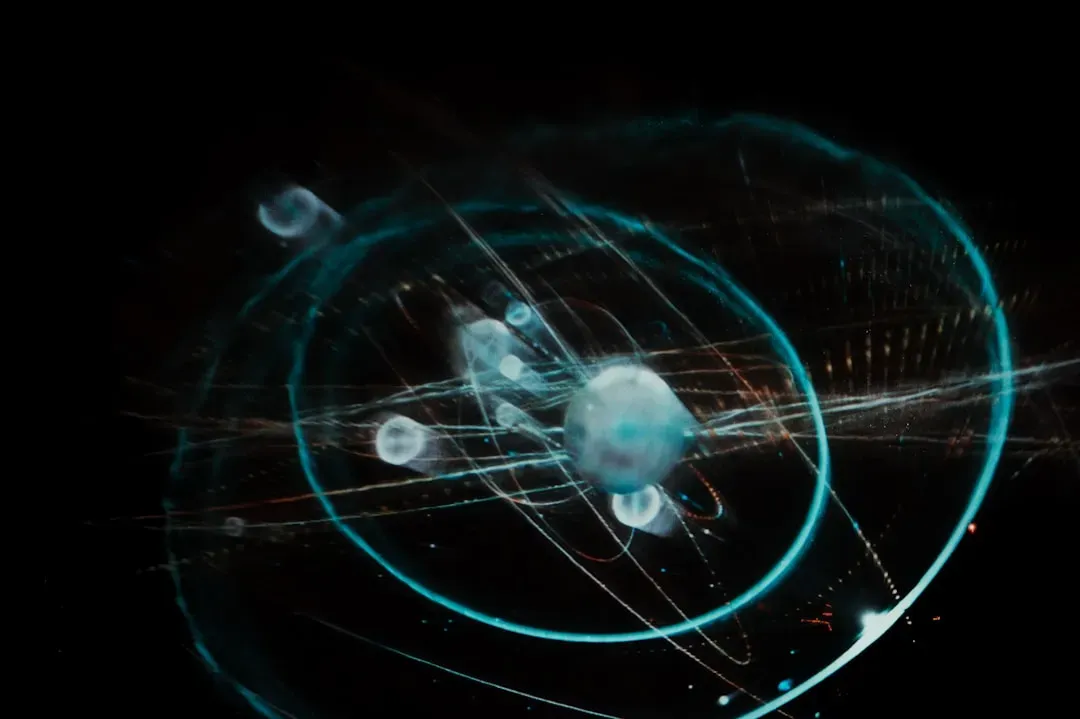
In the coming years, several fronts are converging on the hologram question from different angles. New telescopes and cosmic surveys will refine our picture of the early universe, possibly revealing whether its structure hints at an underlying holographic description. On Earth, upgrades to particle accelerators and quantum experiments might expose behaviors that line up more cleanly with holographic models than with traditional approaches. At the same time, advances in quantum computing and information theory are giving physicists new ways to think about how reality could be built from bits.
There’s also a quieter revolution happening in the math that connects spacetime geometry and quantum entanglement. Some of the most intriguing recent results suggest that the very fabric of space could emerge from deep networks of quantum correlations, which fits naturally with a holographic worldview. No one can guarantee where this will lead, but there’s a real sense that something big is being circled, like explorers mapping the edges of a continent before they know its full shape.
Living Inside a Cosmic Projection
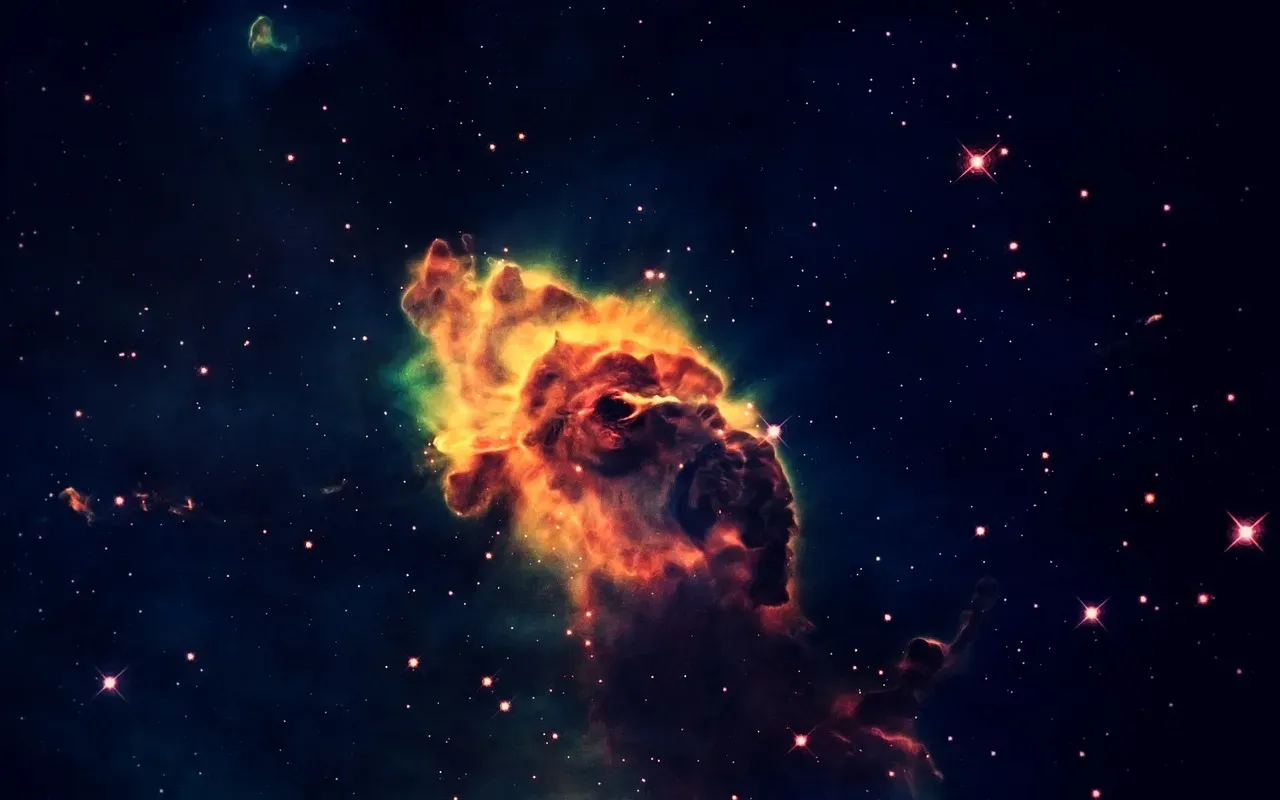
Whether or not the holographic picture turns out to be the final word, it has already changed how many scientists think about the universe. It suggests that the boundary between “what is” and “how we describe what is” might be thinner than we assumed, and that information could be the deepest currency of reality. Even if the universe is a hologram, that doesn’t make it less real; it just means reality may be stranger and more layered than our senses reveal.
In a way, this perspective can be oddly grounding. You, reading these words, are part of an unimaginably complex pattern of information, briefly aware of itself and wondering what it’s made of. That curiosity might be the most remarkable feature of the whole hologram. If our universe really is a projection written on some distant boundary, what kind of story do you think it’s trying to tell?