
You probably trust your memories more than you trust most people, yet neuroscience has spent the past few decades quietly showing how slippery they really are. In labs and hospital wards, researchers have watched people lose decades of their past in seconds, only to discover that much of what makes them “them” stubbornly remains. Others remember every birthday, every street corner, every argument – and are haunted rather than anchored by that flood of detail. This article follows a deceptively simple question into some of the strangest corners of brain science: if memory is supposed to define identity, what happens when it fractures, distorts, or disappears? The answer is far less straightforward – and far more unsettling and hopeful – than the familiar phrase “we are our memories” suggests.
The Strange Case of Being You Without Your Past
Few stories have reshaped how scientists think about memory and identity like those of patients who wake up without their autobiographical past yet still seem uncannily themselves. People with dense retrograde amnesia can forget their childhood, their wedding, even the city they grew up in, while preserving their sense of humor, their impatience with waiting in lines, or their instinct to comfort a crying child. To family members, it can feel like talking to a twin of the person they knew: familiar mannerisms and expressions without the shared history that once gave them context. These cases force an uncomfortable question on everyone involved – if your loved one remembers almost nothing about their life but reacts to the world in the same way, are they still the same person?
What emerges from years of clinical observation is that memory loss does not erase personality in a clean, all-or-nothing way. Instead, identity splinters along different dimensions: narrative, emotional, social, and bodily. The narrative – the remembered story you tell about your life – may vanish or be heavily damaged, but your emotional temperament and unconscious habits often survive. That gap between how someone feels from the inside and what they can recall from the outside is precisely where the question “who am I now?” becomes more than philosophy; it becomes a daily, practical problem to be solved.
Multiple Memory Systems: Your Brain’s Hidden Backup Plans
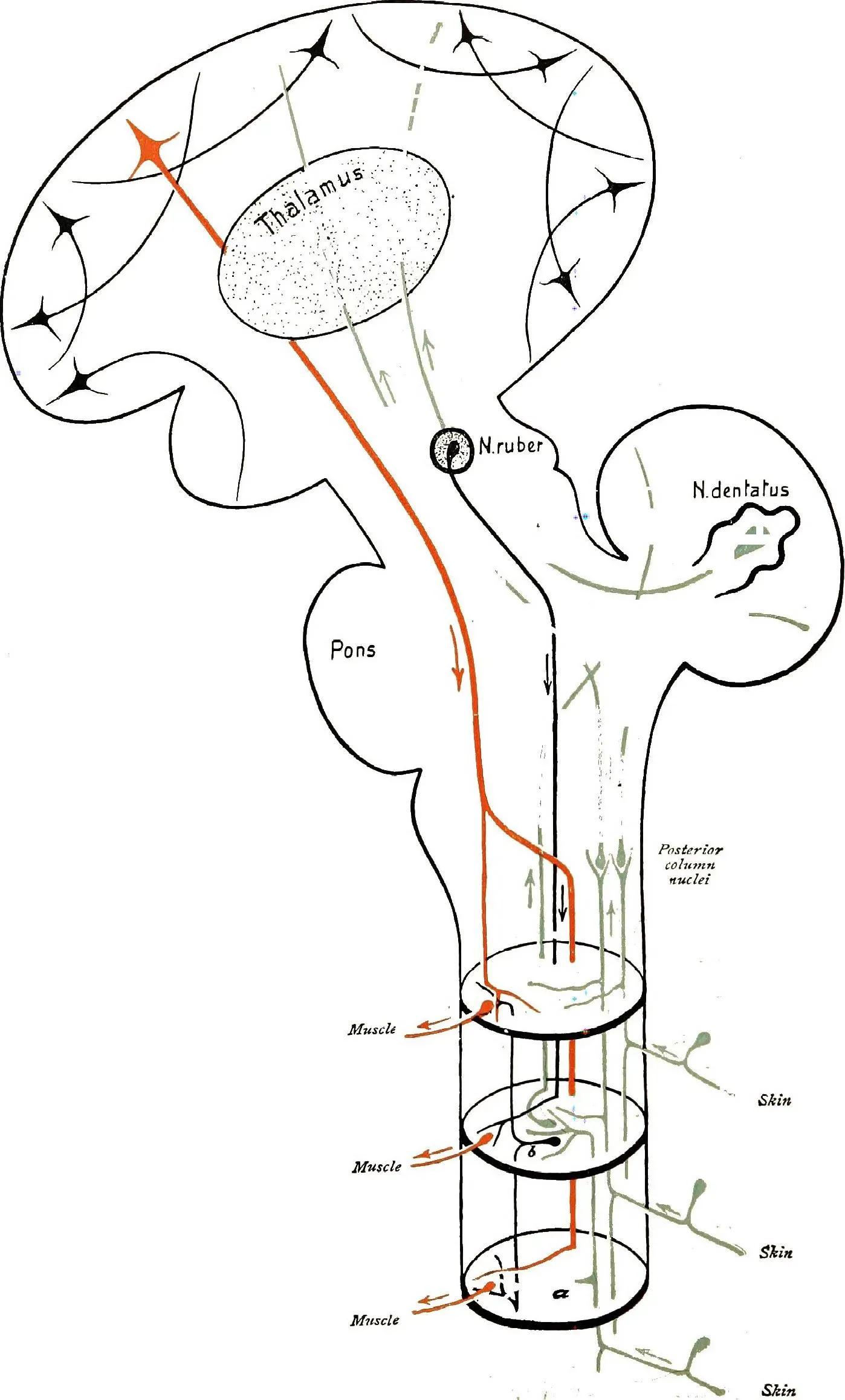
Modern neuroscience has abandoned the idea of a single, monolithic “memory” in favor of a network of systems that store different kinds of information. One major division is between explicit memory, the conscious recall of facts and life events, and implicit memory, the skills, habits, and emotional patterns that operate automatically. A person with profound amnesia might not remember ever learning the piano yet sit down and play pieces their hands have not forgotten, because procedural memory is handled by brain regions like the basal ganglia and cerebellum rather than the hippocampus. In that sense, your body and your reflexes hold a version of you that can persist even when your autobiographical scrapbook burns.
Another important divide lies between semantic memory – general knowledge about the world – and episodic memory, which stores personal experiences anchored in time and place. Someone may know that Paris is the capital of France and that weddings involve vows and rings while having no recollection of their own honeymoon or ceremony. This patchwork preservation explains why identity can feel both intact and shattered at once: the scaffolding of how the world works and who you are in it may remain, while the vivid, time-stamped scenes that once gave your life texture and continuity fade into blankness. The existence of these multiple systems is the first strong hint that “you” are not located in any single type of memory.
When Time Breaks: Living Only in the Present Moment
Perhaps the most disorienting form of memory loss is anterograde amnesia, the inability to reliably form new long-term memories. People with this condition can carry on a conversation, understand a joke, or follow a short story, but minutes later the interaction vanishes, leaving them stranded in a perpetual present. Famous clinical cases have documented patients who meet the same nurse or researcher dozens of times, yet each greeting feels like the first. From the outside, these individuals can appear surprisingly capable; from the inside, many describe a strange sense of waking up repeatedly into a life that will not quite stick.
This continuous present challenges the idea that identity is a smooth line drawn across time. Patients often rely on external scaffolding – notes, timers, family members gently reintroducing themselves – to construct a sense of continuity they can no longer generate internally. Some become experts at reading social cues to fill in the missing context, learning to fake familiarity to avoid the embarrassment of asking who someone is for the tenth time. Intriguingly, even in the absence of solid new memories, emotional learning can still occur; people with severe anterograde amnesia may come to trust one caregiver more than another without remembering specific interactions. The brain, it seems, can carve a path forward through feelings even when explicit recollection fails.
False Memories and the Unreliable Autobiography
If losing memories is unsettling, realizing that some of the ones you still cherish are partly invented can be even more disturbing. Laboratory experiments have repeatedly shown how easy it is to distort or implant details in people’s recollections, especially for events from childhood or emotionally charged situations. Under suggestive questioning or repeated retellings, individuals may come to recall being lost in a mall, seeing broken glass at a car accident, or meeting a person who was never actually there. These constructed memories are not lies in the usual sense; the person sincerely experiences them as real, complete with sensory detail and emotion.
This malleability reveals that autobiographical memory is less like a fixed recording and more like a story the brain rewrites each time it is told. Traumatic experiences, social pressures, and even casual conversations can nudge that story toward different interpretations of the same underlying events. In courtrooms, this has profound consequences for eyewitness testimony and the weight we give to confident recollections. In everyday life, it raises a quieter but equally powerful question: if your remembered past can be edited without your awareness, how solid is the idea of a stable “you” built upon it? The answer seems to be that identity is not anchored in perfect recall but in the patterns of meaning you consistently draw from what you think happened.
Memory, Emotion, and the Feeling of Being the Same Person
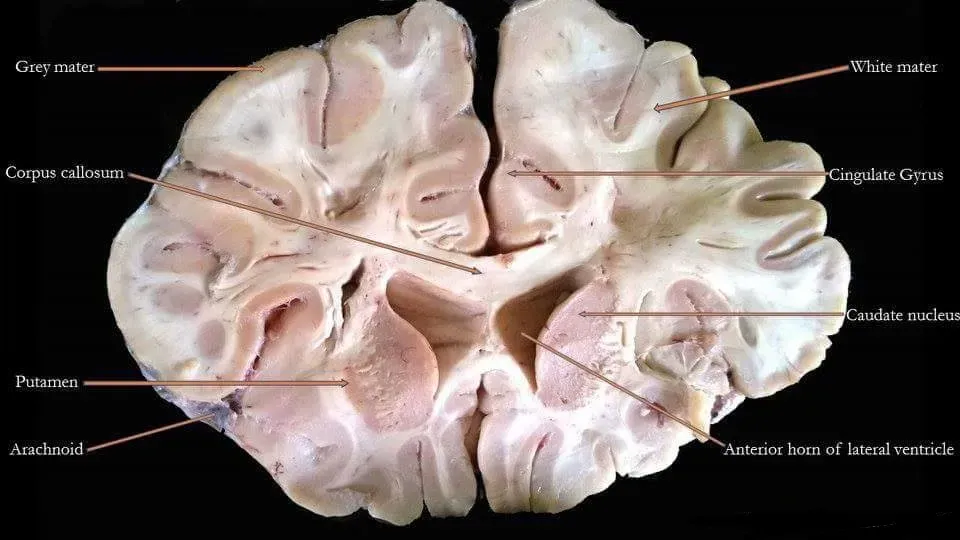
Even when specific memories fade or warp, the emotional tone tied to them often lingers, shaping identity in ways people may not consciously recognize. A person who cannot recall a particular betrayal may still carry a vague mistrust in similar situations, stepping back from certain kinds of intimacy without knowing exactly why. Brain imaging studies show that structures such as the amygdala and ventromedial prefrontal cortex help encode the emotional significance of events, sometimes independently of the detailed narrative. That means you can lose the storyline but keep the gut reaction, like remembering the feeling of flinching without remembering the blow.
This emotional continuity acts as a kind of glue for identity when memories fall apart, for better or worse. On the hopeful side, enduring attachments can survive even in advanced dementia, where a familiar song or the sight of a loved one can spark joy or calm despite minimal factual recall. On the painful side, persistent fear or shame rooted in forgotten episodes can shape a life in ways that feel irrational or unchangeable to the person experiencing them. When people say they “feel like the same person inside,” they are often pointing more to this emotional signature than to a flawless internal archive of dates and events.
What Memory Science Reveals About the Nature of the Self
Pulling these strands together, a more nuanced picture of the self starts to emerge from decades of memory research. Rather than a single, continuous tape of experiences, identity looks more like a dynamic model built from multiple, partially independent systems: explicit autobiographical memory, skills and habits, emotional histories, social roles, and bodily sensation. Damage to the hippocampus may erase the ability to lay down new episodes, yet leave humor, musicality, or kindness untouched. Degeneration in frontal regions may spare memory for facts and events while eroding judgment, impulse control, or empathy, changing a person’s moral character more than their recollections.
From this perspective, the question “who are you without memory?” becomes less about absolute loss and more about which layers of the self are altered. You can think of identity as a braided rope: autobiographical memories form one thick strand, but personality traits, long-practiced skills, values, and relationships form others. Remove or weaken one strand, and the rope changes but does not necessarily snap. Clinicians working with patients who have memory disorders often see families struggle with this complexity – grieving the version of the person anchored in shared stories while gradually learning to recognize what remains continuous underneath. The science suggests that the self is both more fragile and more robust than the folk wisdom about memory would have us believe.
Unfinished Business: Open Questions About Memory and Personhood
Despite enormous advances, many of the deepest questions about memory and identity remain stubbornly open. Researchers are still untangling how exactly the brain knits scattered fragments of experience into the feeling of a coherent self across time. It is not yet clear why some people with significant memory damage seem to adjust and reconstruct meaningful lives while others experience a profound collapse of purpose and agency. Cultural factors complicate the picture further; societies that emphasize collective identity over individual autobiography may cushion the impact of memory loss differently than those that prioritize personal narrative.
Emerging technologies also raise new ethical dilemmas about editing or enhancing memory. Experimental therapies that dampen the emotional sting of traumatic memories, for instance, could offer relief but might also alter how people understand themselves and their past choices. At the same time, there is growing recognition that obsessively preserving every detail – through lifelogging devices or constant digital documentation – does not necessarily produce a healthier or more grounded sense of self. The central mystery persists: how much forgetting, reshaping, and selective recall can a person undergo before we say they are no longer the same “someone,” and who gets to decide where that line lies?
Living With Fragile Memories: A Human Response
For all its philosophical weight, the science of memory ultimately collides with very practical human concerns: how to care for relatives with dementia, how to heal from trauma, how to accept our own eventual cognitive decline. Families facing Alzheimer’s disease often learn, sometimes painfully, that clinging to the exact shared past can be less helpful than connecting to the person’s remaining emotional world – meeting them where they are rather than where they used to be. Therapists working with trauma survivors help clients reshape the meaning of painful memories rather than trying to erase them entirely, acknowledging that changing the story can change who you become next. In my own life, watching a grandparent slowly forget names but light up at the sound of an old melody drove home how much of a person can still be present in a moment stripped of context.
For readers living with their own memory concerns or supporting someone who is, engaging with this science is more than an intellectual exercise; it is a way of loosening the tight grip of fear around what might be lost. You can support brain health through ordinary habits – regular exercise, social connection, sleep, and learning new skills – even as you accept that some amount of forgetting is inevitable. Just as importantly, you can start to see identity as something woven and rewoven in relationships, choices, and values, not just a vault of perfectly preserved scenes. If memory shapes you, then every day’s small acts of attention and care are also sculpting who you are becoming, whether you remember them in perfect detail or not.
Suhail Ahmed is a passionate digital professional and nature enthusiast with over 8 years of experience in content strategy, SEO, web development, and digital operations. Alongside his freelance journey, Suhail actively contributes to nature and wildlife platforms like Discover Wildlife, where he channels his curiosity for the planet into engaging, educational storytelling.
With a strong background in managing digital ecosystems — from ecommerce stores and WordPress websites to social media and automation — Suhail merges technical precision with creative insight. His content reflects a rare balance: SEO-friendly yet deeply human, data-informed yet emotionally resonant.
Driven by a love for discovery and storytelling, Suhail believes in using digital platforms to amplify causes that matter — especially those protecting Earth’s biodiversity and inspiring sustainable living. Whether he’s managing online projects or crafting wildlife content, his goal remains the same: to inform, inspire, and leave a positive digital footprint.