
Stand on a beach at night and everything feels still, but above your head an invisible force field is flexing, drifting, and sometimes lurching in ways that can scramble satellites and rewrite navigation charts. That force field is Earth’s magnetic field, and despite how permanent it seems on a classroom globe, it is anything but fixed. In the last few decades alone, scientists have watched its strength waver and its poles wander at a pace that would have shocked geophysicists a century ago. This is not just academic curiosity: those changes ripple through power grids, aviation routes, animal migrations, and even how we keep time. Understanding this restless shield has quietly become one of the most important scientific efforts of our era.
An Invisible Armor Forged in a Planetary Dynamo

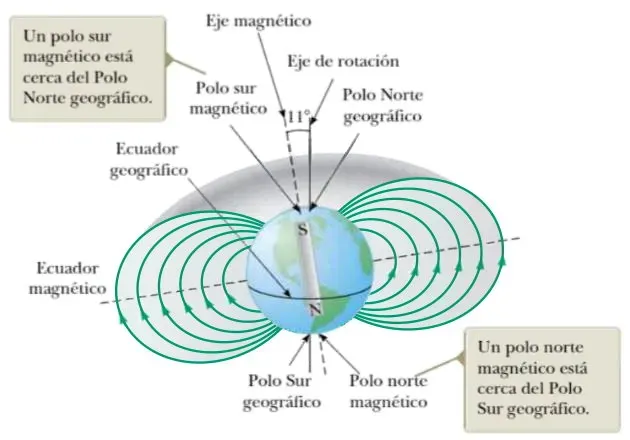
Earth’s magnetic field starts deep below our feet, in a realm we will never see directly: the molten outer core. Roughly halfway to the center of the planet, liquid iron and nickel churn in vast, convective currents, driven by heat escaping from the inner core and the slow cooling of the planet. Because those metals conduct electricity, their motion generates electric currents, and those currents in turn produce a magnetic field, in a self-sustaining loop known as the geodynamo. It is messy, turbulent physics, more like a pot of boiling soup than a smoothly spinning bar magnet.
What emerges from that chaos is a magnetic field that extends tens of thousands of miles into space, forming a protective bubble called the magnetosphere. The solar wind – a constant stream of charged particles from the Sun – slams into this bubble and is mostly deflected around it, sparing our atmosphere from being stripped away. Without that invisible armor, the history of life on Earth would likely look very different, and some scientists argue that a long-lived magnetic field may be one reason our planet stayed habitable while others did not. We are, quite literally, alive inside a magnetic compromise between a fiery core and a stormy star.
From North on a Compass to Space Weather: What the Field Actually Does
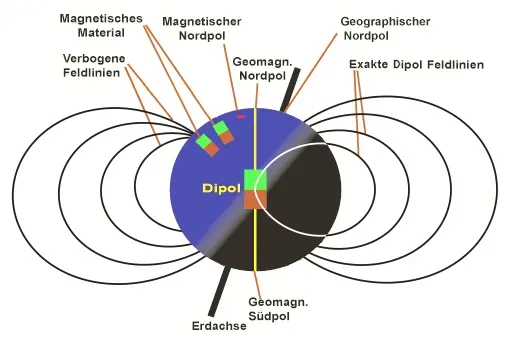
Most of us first meet Earth’s magnetism through the simplest of tools: a compass needle aligning itself with magnetic north. That quiet pivot hides a huge amount of structure in the field, which bends outward from the Southern Hemisphere, loops around the planet, and re-enters in the north in a pattern more like a lopsided donut than a neat bar. Human culture has depended on that pattern for centuries, from early ocean exploration to modern smartphone navigation and commercial shipping routes. Even small changes in the field can force pilots and harbor authorities to update runway designations and navigation charts to keep directional references accurate.
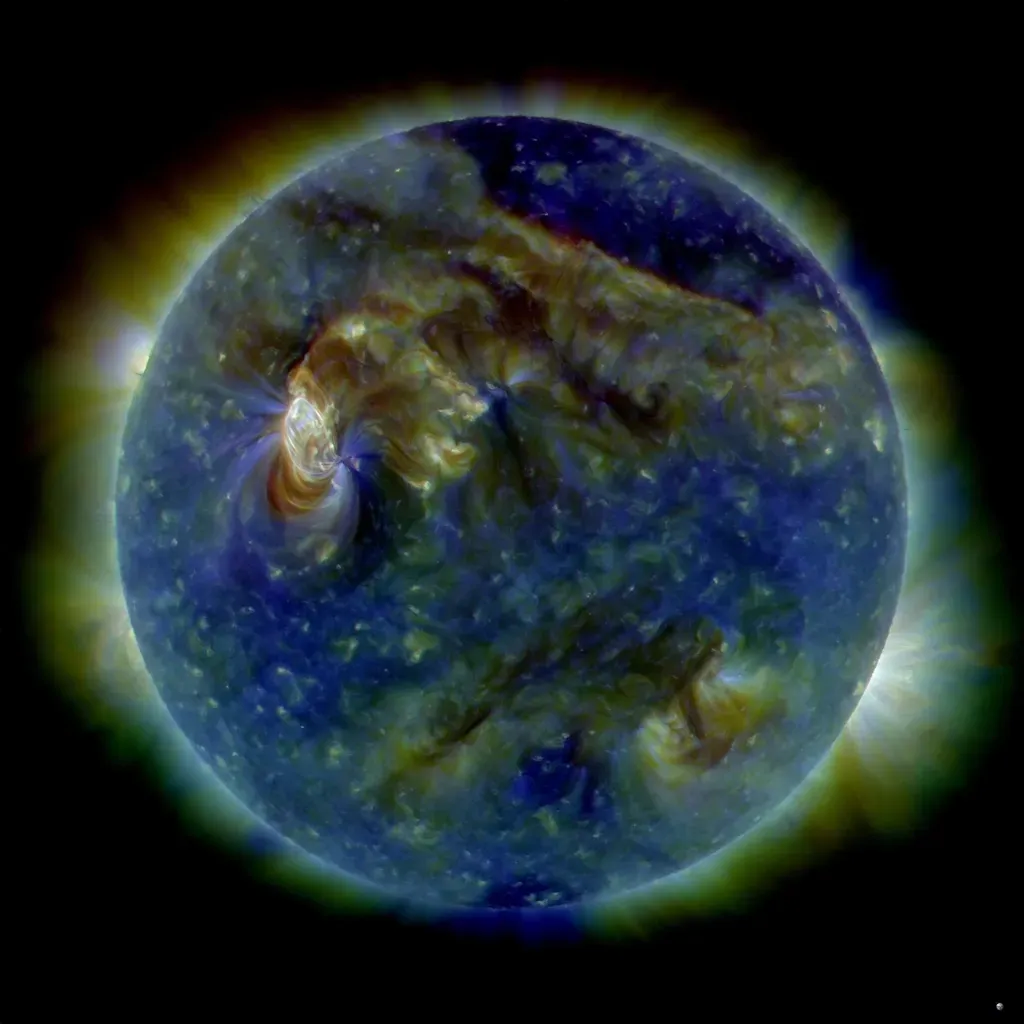
Far above those compasses, the magnetic field guides high-energy particles into looping paths around Earth, forming radiation belts that satellites must be carefully engineered to survive. During intense solar storms, when eruptions on the Sun hurl extra charged particles toward us, the field acts like a flexing shield: it can divert much of the blast, but some energy leaks through, inducing currents in power lines and undersea cables. That is why utilities now monitor space weather in much the same way coastal communities watch hurricane forecasts. The same magnetic funnels that light up the auroras also set the stage for potential technological disruptions on the ground.
A Restless North Pole On the Move
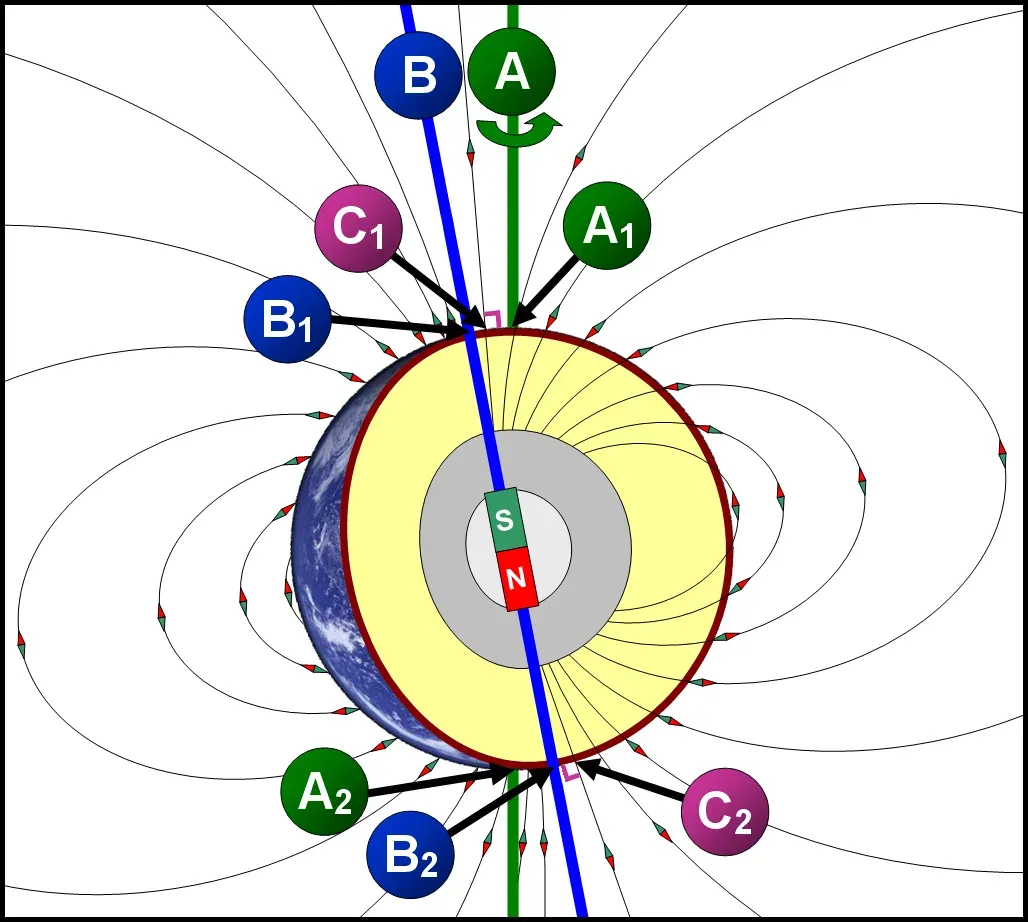
If you picture the magnetic north pole as a fixed point at the top of the world, you are relying more on textbook simplification than reality. For centuries, explorers and surveyors have known that the point where a compass needle aims straight down – magnetic north – does not line up exactly with geographic north and slowly drifts over time. In the twentieth century that drift was sedate, shifting at the scale of a few miles each year, something that could be corrected with periodic map updates. Then, in the late twentieth and early twenty-first centuries, the pace picked up dramatically, and the pole began racing from northern Canada toward Siberia at tens of miles per year.
This accelerated drift forced scientists and navigation agencies to update the World Magnetic Model, the standard used by everything from smartphone mapping apps to NATO navigation systems, earlier and more often than expected. Under the ice and rock, the cause appears to be changes in the balance of magnetic flux in the liquid core, where patches of stronger and weaker field jockey for dominance. For the average person hiking in a national park, the shift is subtle, a slight tweak in compass bearings. For long-distance aviation and shipping, though, a few degrees of magnetic change can mean recalibrating flight paths, approach headings, and safety margins.
Weak Spots, Anomalies, and the South Atlantic Puzzle
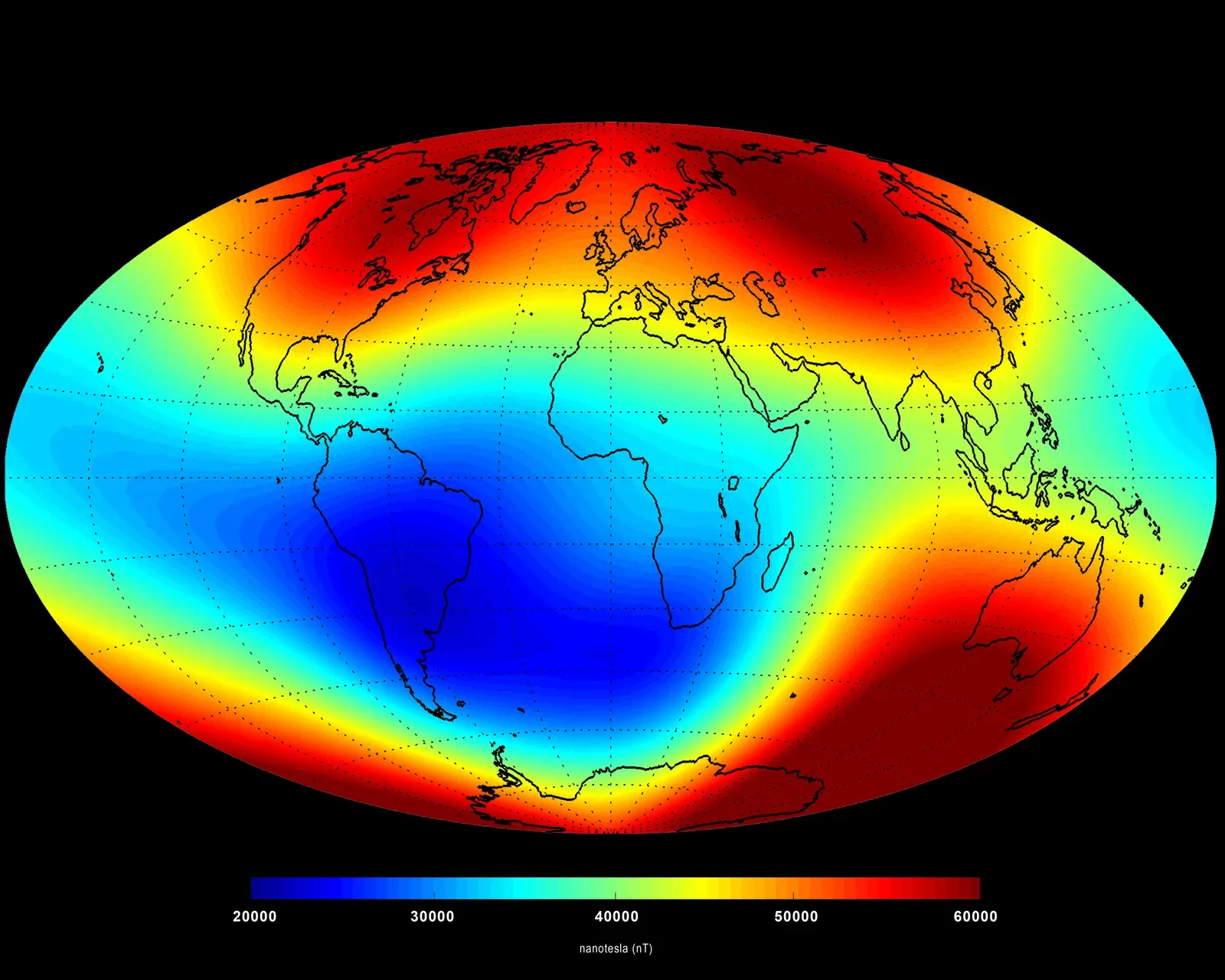
Earth’s field is not an even shell; it has bruises and soft spots, and one of the most intriguing is the South Atlantic Anomaly. Over parts of South America and the South Atlantic Ocean, the field is significantly weaker than the global average, allowing more energetic particles from space to dip closer to Earth. Satellites and the International Space Station passing through this region experience higher radiation levels and must be designed and operated with that additional risk in mind. Instruments sometimes glitch more frequently there, and mission planners factor the anomaly into how they schedule sensitive observations and maneuvering.
Geophysicists suspect this weak patch is linked to complex magnetic structures deep in the core, perhaps associated with reversed or competing magnetic flux beneath southern Africa. What makes the anomaly especially interesting is that it appears to have changed in size and shape over the last few decades, hinting that it might be part of a larger rearrangement inside the core. There is no evidence that this poses any direct threat to people at the surface, but for the satellite ecosystem we now rely on for communications, weather, and navigation, it is a slow-moving challenge that engineers cannot ignore. Watching how that puzzle piece evolves has become a key test of how well we understand the dynamo itself.
Flips, Reversals, and the Fear of a Failing Shield
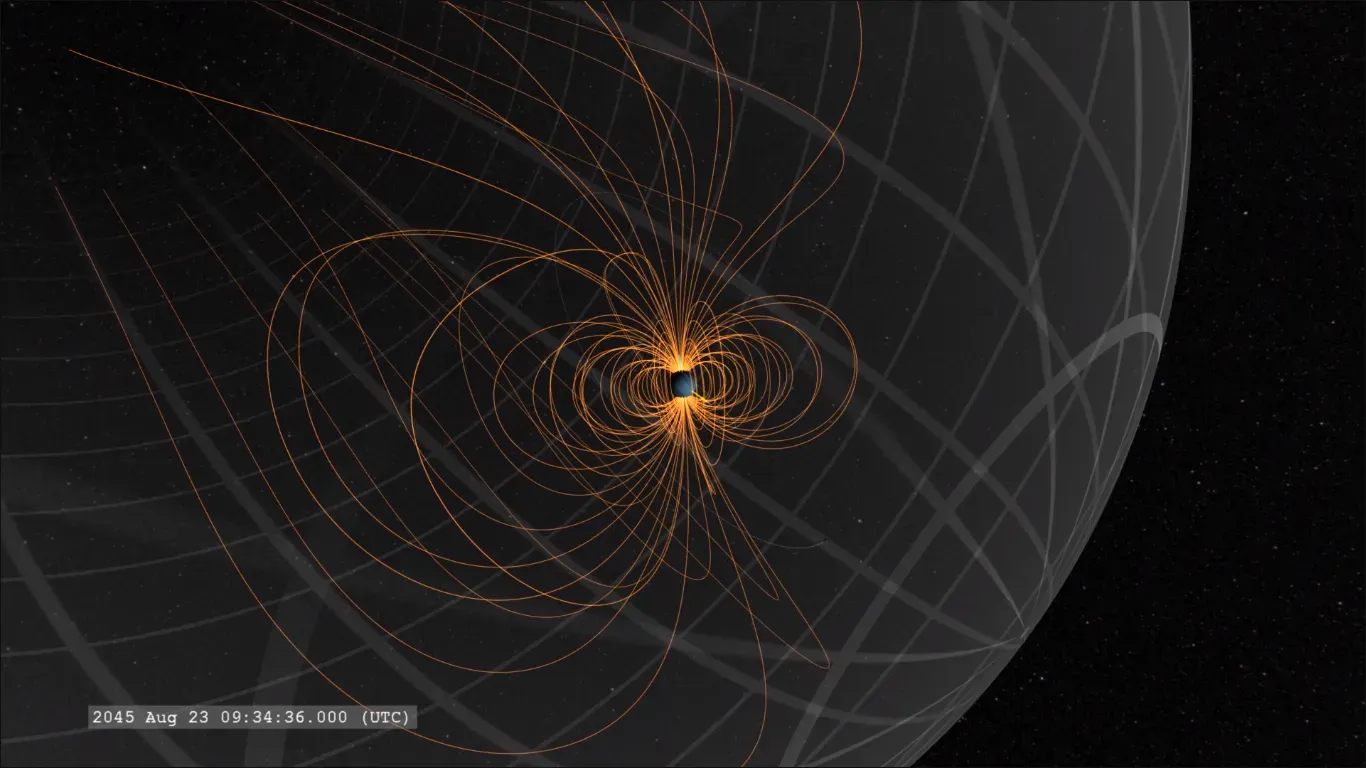
The idea that Earth’s magnetic poles could flip – north becoming south and vice versa – sounds like disaster-movie fiction, but the rocks say it is a normal part of planetary life. Lava that cools and locks in the direction of the field has recorded hundreds of reversals over the last many millions of years, with no clear connection to mass extinctions or global biological collapse. These flips unfold over thousands of years rather than overnight, and the field never fully disappears; it becomes more tangled and patchy before re-emerging with opposite polarity. That tangled period might produce more weak regions and auroras at unusual latitudes, but it is a far cry from a planet stripped bare of its atmosphere.
More subtle than full reversals are excursions, shorter-lived deviations when the field’s strength drops and the poles wander far from their usual spots before snapping back. Some researchers have speculated about whether our current pattern of weakening in certain regions hints at the early stages of such an event, but the data so far support a wide range of possible futures. Importantly, the Sun, the atmosphere, and the complex chemistry that shields us from radiation are not switched off if the magnetic field becomes more complex. The real stakes lie in how such changes would affect the technological systems we have wrapped around the planet in recent decades.
What Satellite Swarms and Rock Cores Reveal About a Changing Shield

For most of human history, our knowledge of the magnetic field came from surface measurements and hints buried in baked clay, volcanic flows, and seafloor rocks. In the last few decades, a fleet of satellites has radically sharpened that picture by mapping the field from orbit with exquisite sensitivity. Missions led by space agencies have flown spacecraft in carefully chosen orbits to isolate the core field from the tangle of magnetic signatures produced by the crust, oceans, and ionosphere. When those space-based data are combined with readings from ground observatories and seafloor surveys, scientists can build time-lapse models of how the field evolves year by year.
At the same time, paleomagnetists drill into ancient lava flows, lake sediments, and even archaeological kilns to reconstruct how strong the field was, and what direction it pointed, tens of thousands to millions of years ago. These deep-time records show that the field’s strength has waxed and waned substantially, sometimes dropping to a fraction of today’s value and then recovering. Comparing that natural variability with the changes we see in the satellite era helps calibrate our sense of what is unusual. The uncomfortable realization is that the field we grew up with in the twentieth century may have been relatively calm by geological standards, and we are now watching it shift into a more restless mode.
Why Constant Change in the Field Is Not a Problem but a Feature
Seen from a human perspective, with power grids and airplanes to worry about, a shifting magnetic field feels like a potential hazard, something to control or at least predict. But from the planet’s perspective, that constant reorganization is simply how a convecting, cooling metal core behaves as it sheds heat to space. If the field were completely rigid and unchanging, that might actually signal that the core had frozen or the dynamo had stalled, an ominous step toward a geologically dead world. Movement and fluctuation mean the engine is still running, still transporting heat, and still supporting the plate tectonics and volcanism that recycle materials between surface and interior.
This is where the deeper scientific significance comes into focus: tracking the twists and pulses of the magnetic field is one of the few direct ways we have to study the core, a realm far beyond the reach of drilling. Changes in the field serve as a diagnostic of processes we cannot see, much like variations in a heartbeat reveal what the heart muscle is doing. By comparing the latest satellite data with numerical simulations of the geodynamo running on supercomputers, researchers can test ideas about how the core flows, how quickly it cools, and how long it will keep generating a field. The changing shield is not just protecting us; it is silently broadcasting the story of Earth’s internal life.
Modern Vulnerabilities: When a Natural System Meets a Wired World
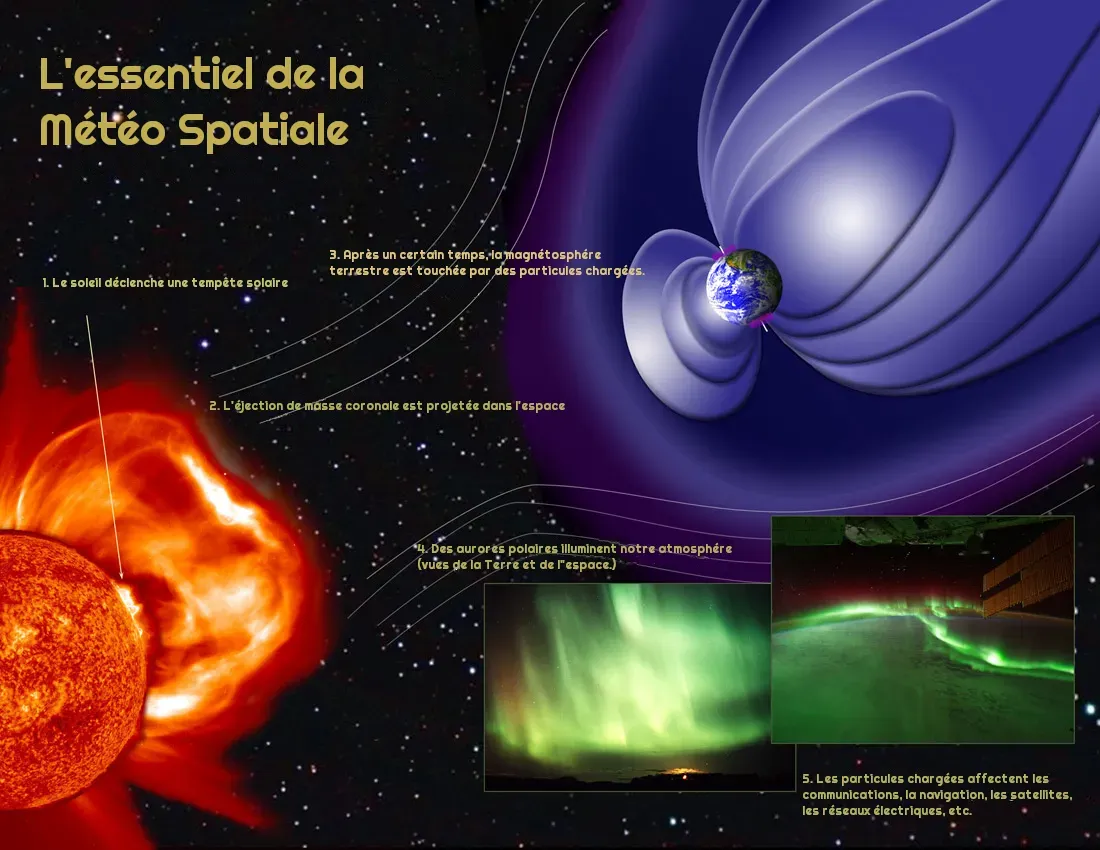
In a world without electronics, a magnetic storm would mostly be an impressive light show near the poles, but our wired civilization has turned field fluctuations into a practical concern. When the magnetic field is jostled by space weather, it can induce electric currents in long conductors like power lines, pipelines, and undersea cables, a side effect that has contributed to blackouts during major solar storms. Airlines reroute some polar flights during intense events to reduce radiation exposure for crew and protect high-frequency communications used over remote regions. Even precision systems like GPS can experience temporary degradation when the upper atmosphere roils in response to geomagnetic activity.
The tension is that the same satellites and networks that are vulnerable also give us the tools to monitor and respond. Power companies now work with space weather agencies to adjust load and temporarily reconfigure grids ahead of predicted storms, much as coastal cities brace for incoming hurricanes. Engineers design satellites with radiation-hardened components and fail-safe modes that can withstand passes through weak-field regions like the South Atlantic Anomaly. Instead of trying to pretend the field is static, planners are slowly adopting the mindset that it is a living, changing background condition that must be woven into long-term infrastructure choices.
Looking Ahead: Questions That Keep Geophysicists Up at Night
Even with better satellites, models, and paleomagnetic records, some of the most basic questions about our shield remain unsettled. How quickly can the field’s large-scale structure realistically change, and what early warning signs, if any, would mark the onset of a true geomagnetic reversal or a major excursion? Are features like the South Atlantic Anomaly short-lived quirks or the surface expression of deeper, long-term reorganization in the core? These questions shape how often we update global magnetic models, how conservatively we design critical satellites, and how we educate industries about long-term risk.
There is also a broader comparative question as we study magnetic fields on other planets and even exoplanets orbiting distant stars. Mars, for example, appears to have lost its global magnetic field early in its history, and today it bears scars from having its atmosphere eroded by the solar wind over billions of years. By contrast, gas giants like Jupiter wield immense magnetic fields that produce stunning auroral displays and harsh radiation belts. Placing Earth’s changing field within that planetary spectrum helps refine our understanding of what makes a world resilient and potentially habitable in the long run.
How Ordinary Readers Can Stay Curious About an Extraordinary Shield
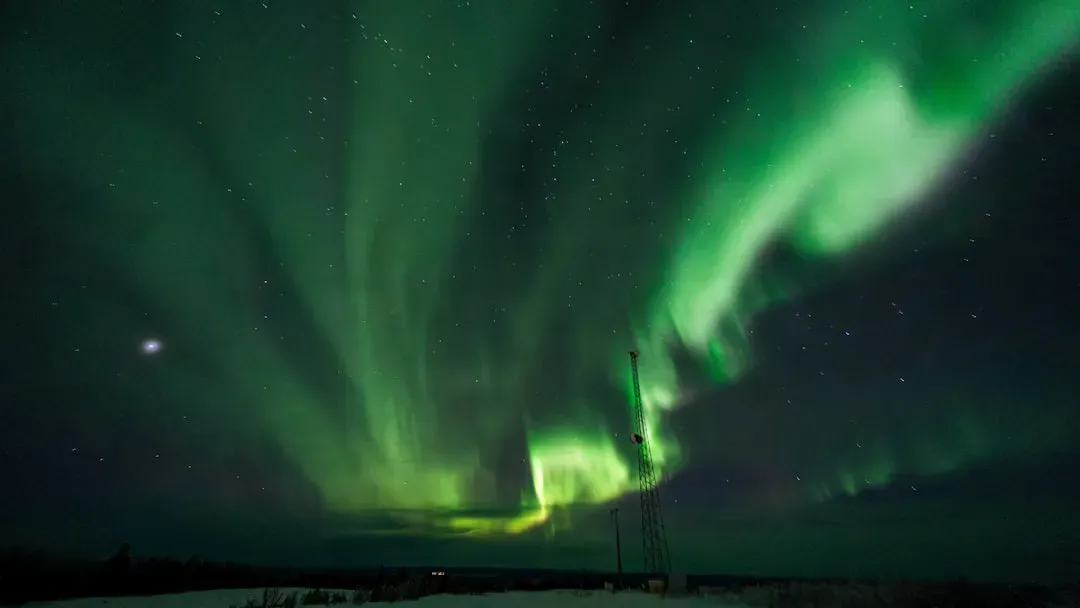
Earth’s magnetic field might feel abstract compared with a nearby storm or wildfire, but staying aware of it is surprisingly easy in daily life. Space weather forecasts are now public and free, and they can tell you when a solar storm might bring brighter auroras, minor GPS hiccups, or, in rare cases, grid operators quietly shifting into a higher alert posture. Many science museums and geological surveys share accessible maps showing how magnetic declination shifts over time in different regions, a reminder that even the direction of “north” on a compass is not truly fixed. If you enjoy stargazing, tracking aurora alerts can transform a cold, clear night into a chance to witness the field at work with your own eyes.
On a more reflective level, there is value in simply remembering that our sense of a stable world rests on dynamic processes we rarely see. Teaching children that the planet’s shield is not a static dome but a living, changing system can make Earth science feel less like memorizing facts and more like following an unfolding story. Supporting public research missions, from satellite swarms to ground observatories, is one concrete way societies can invest in understanding that story. The next time your phone quietly recalibrates its compass, it is adjusting to a shield that has been dancing for billions of years – how often do we get to notice that kind of magic hiding in plain sight?
Suhail Ahmed is a passionate digital professional and nature enthusiast with over 8 years of experience in content strategy, SEO, web development, and digital operations. Alongside his freelance journey, Suhail actively contributes to nature and wildlife platforms like Discover Wildlife, where he channels his curiosity for the planet into engaging, educational storytelling.
With a strong background in managing digital ecosystems — from ecommerce stores and WordPress websites to social media and automation — Suhail merges technical precision with creative insight. His content reflects a rare balance: SEO-friendly yet deeply human, data-informed yet emotionally resonant.
Driven by a love for discovery and storytelling, Suhail believes in using digital platforms to amplify causes that matter — especially those protecting Earth’s biodiversity and inspiring sustainable living. Whether he’s managing online projects or crafting wildlife content, his goal remains the same: to inform, inspire, and leave a positive digital footprint.