
Shocked Quartz Points to an Otherworldly Force (Image Credits: Unsplash)
Thirteen thousand years ago, a dramatic shift gripped North America as warming trends reversed into a sudden chill, reshaping ecosystems and human societies overnight.
Shocked Quartz Points to an Otherworldly Force
Archaeologists and geologists recently unearthed a striking clue at prominent sites linked to the Clovis people, who roamed the continent during the late Pleistocene. Tiny grains of quartz, fractured in patterns that demand extreme conditions, appeared in sediment layers dated to around 12,900 years ago. These deformations, known as shocked quartz, form only under the immense pressures and temperatures of a high-velocity impact or explosion – far beyond what volcanic eruptions or human tools could produce.
Researchers examined these findings across multiple locations, from the plains of the Midwest to the edges of the Great Lakes. The consistent presence of this material in a thin black layer suggested a widespread event, not a localized disturbance. This discovery challenged earlier explanations for the abrupt environmental changes that followed. Instead of gradual climate shifts or overhunting, the evidence leaned toward a extraterrestrial trigger. Teams analyzed the quartz using advanced microscopy, confirming the signatures matched those from known cosmic impacts. Such revelations have reignited debates in scientific circles about cataclysmic events in prehistory.
The Mechanics of a Comet’s Fiery Descent
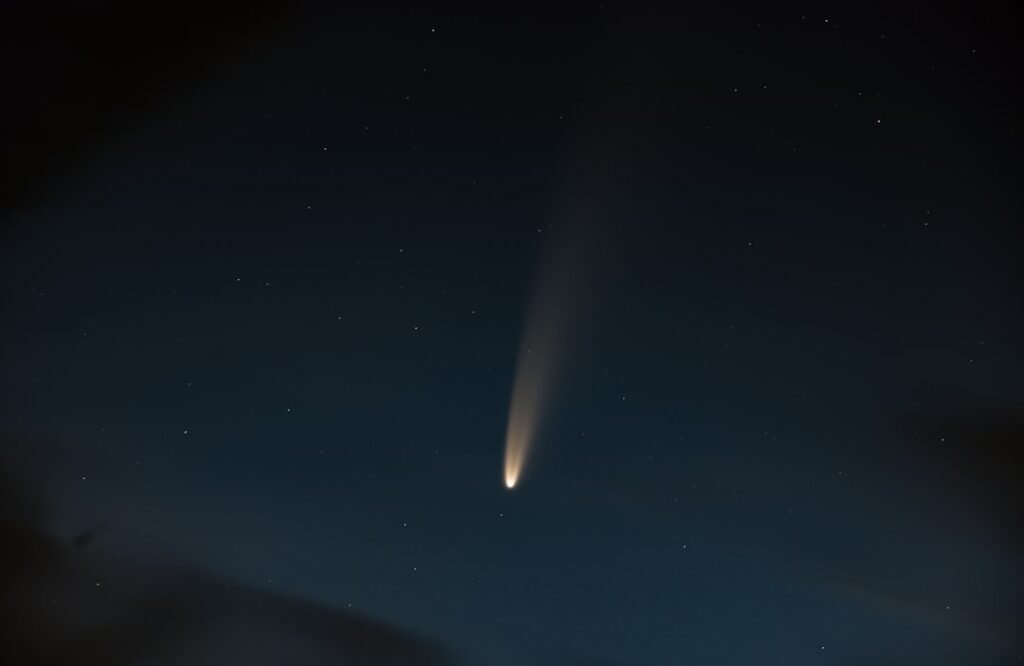
When a fragmented comet streaked into Earth’s atmosphere, it likely detonated as an airburst high above the surface, releasing energy equivalent to thousands of nuclear blasts. This explosion, proponents argue, scattered debris across a vast region, igniting wildfires that consumed forests and grasslands alike. The heat generated would have been intense enough to melt surface materials while the ensuing dust cloud blocked sunlight for months or years.
Models of the event depict a fragmented body, perhaps 100 meters wide, breaking apart and exploding over North America rather than striking the ground directly. This airburst avoided a massive crater but amplified the regional devastation. Sediments from the period show elevated levels of carbon, hinting at the scale of those infernos. The blast’s shockwave alone could have flattened vegetation and disoriented wildlife. As temperatures plummeted, the planet slipped back into glacial conditions, marking the onset of the Younger Dryas – a 1,200-year cold snap that defied the era’s warming trajectory.
Ripples Through Ecosystems and Human Worlds
The aftermath proved devastating for the megafauna that dominated the landscape, including woolly mammoths, mastodons, and giant ground sloths. These creatures, adapted to a stable cold environment, faced starvation as food sources vanished amid the fires and frost. Populations plummeted rapidly, with fossil records showing a sharp decline precisely at the boundary layer’s date. Smaller animals fared little better, as the disrupted food chains led to cascading extinctions across the continent.
For the Clovis culture, skilled hunters who thrived for centuries with distinctive stone tools, the changes spelled an end. Their settlements and tool-making sites abruptly ceased, correlating with the cosmic event’s timeline. Evidence suggests survivors may have migrated or adapted, but the once-vibrant network of communities faded from the archaeological record. This disappearance puzzled experts for decades, often attributed to climate alone, but the new findings offer a more explosive narrative. The interplay of fire, cold, and scarcity likely overwhelmed both beasts and people.
- Shocked quartz grains in black sediment layers at Clovis sites.
- Carbon-rich deposits indicating widespread biomass burning.
- Sudden temperature drop ushering in Younger Dryas cooling.
- Synchronized extinction of over 30 megafauna species.
- Termination of Clovis tool technology and settlements.
Building the Case Amid Scientific Scrutiny
While the hypothesis gains support from interdisciplinary studies, skeptics call for more data to rule out terrestrial causes. Proponents point to similar evidence in Europe and South America, suggesting a global comet swarm rather than an isolated incident. Ongoing excavations at additional sites aim to map the debris field’s extent. Advanced dating techniques, like radiocarbon analysis, continue to align the quartz layers with the Younger Dryas onset. International teams collaborate to simulate the airburst’s effects, refining predictions about its reach.
These efforts underscore how cosmic events can intersect with Earth’s history in profound ways. The research not only rewrites chapters on prehistoric extinctions but also highlights vulnerabilities in ancient ecosystems. As climate models incorporate such scenarios, they provide lessons for understanding rapid environmental shifts today.
Key Takeaways
- A comet airburst around 12,900 years ago likely triggered massive wildfires and cooling.
- Shocked quartz serves as a key marker, distinguishing cosmic from earthly forces.
- The event aligns with megafauna losses and the Clovis culture’s sudden end.
In piecing together this cosmic puzzle, scientists reveal how a single skyfall reshaped an entire epoch, reminding us of nature’s capacity for sudden upheaval. What implications might this hold for our own era of environmental change? Share your thoughts in the comments below.