Imagine swimming in warm, shallow seas, feeling something shift in the water around you, and realizing – too late – that the shadow above you is not a cloud but a colossal shark longer than a city bus. That was the reality of the oceans millions of years ago when megalodon ruled as one of the largest predators ever to exist on Earth. For a long time, we thought we had a decent picture of this animal: big, sharky, scary. But recent research has revealed a creature far more extreme than the monster we grew up seeing in documentaries and movie posters.
Over the last couple of decades, scientists have revisited old fossils with new tools, from 3D scans to biomechanical modeling, and what they’ve found has forced them to rewrite almost everything about this animal – its size, bite, behavior, and even its role in shaping entire ocean ecosystems. I still remember the first time I saw a reconstructed megalodon jaw in a museum; I thought it was a bit theatrical. Now, after reading the latest research, it feels like the display was actually underselling it. Let’s dive into what made this prehistoric shark so terrifying – and so much stranger than we imagined.
Its True Size Was Beyond Our Oldest Nightmares
For years, school books and TV shows confidently claimed megalodon reached around fifteen to eighteen meters in length, already more than enough to plaster it across our nightmares. Then, more careful studies of its teeth and comparisons with modern sharks suggested that some earlier estimates were exaggerated, placing it closer to fifteen meters on average. That alone still makes it about three times the length of a great white shark, which is horrifying enough if you’ve ever seen how big a great white already looks in the water.
What’s more unsettling is not just how long megalodon was, but how massive. This wasn’t a long, sleek, torpedo-like fish; it was thick, heavy-bodied, more like a living freight train than a streamlined missile. Some estimates put its weight in the range of many tens of tons, making it comparable to mid-sized whales today. Picture an animal with the length of a public bus but the bulk and presence of a moving building – if you were in the water near one, it wouldn’t just pass by; you’d feel it in the water like a passing storm.
Its Bite Force Turned Whales Into Soft Fruit
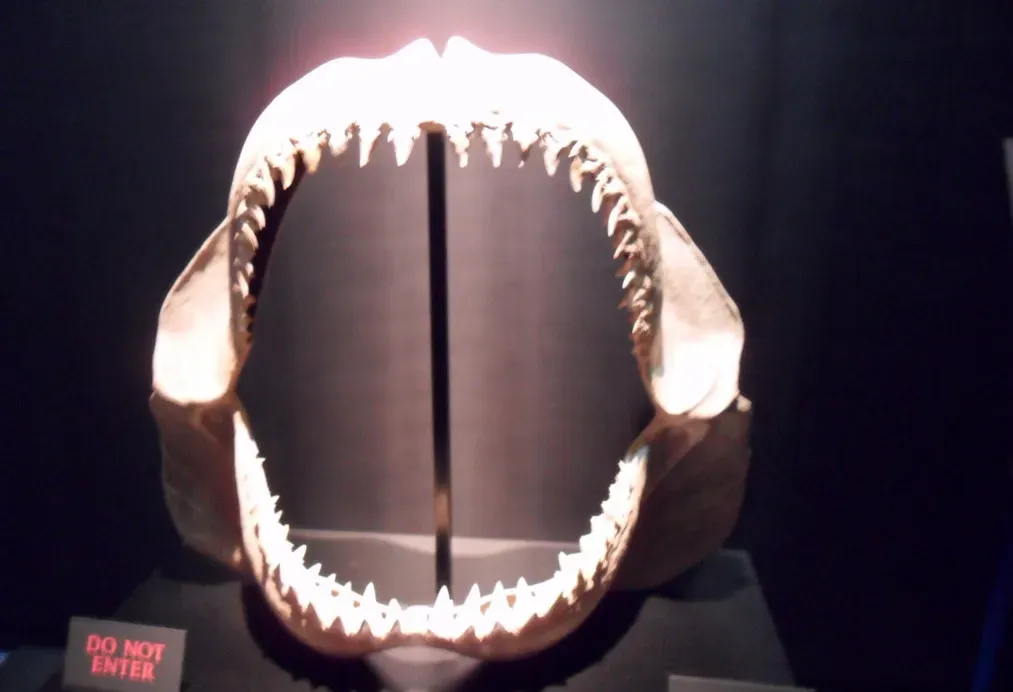
Scientists have used computer models based on jaw size and muscle reconstructions to estimate megalodon’s bite force, and the numbers are almost cartoonishly high. Modern great white sharks already have a powerful bite capable of cracking bone, but megalodon’s jaws were in a different league, with a bite force far beyond anything alive today. Some models suggest it could crush bone and cartilage with a force that makes even the bite of a large crocodile look modest in comparison.
That kind of power meant megalodon didn’t have to be delicate or precise when it attacked. It could slam into a whale and bite through ribs, vertebrae, and thick blubber like a person biting into a ripe peach. Fossil whale bones from the same era often show deep, clean bite marks that match megalodon teeth, suggesting this shark was biting into the hardest parts of its prey on purpose. It wasn’t nibbling around the edges; it was built to break the entire animal open in a single catastrophic attack.
It Hunted Whales Like an Apex Ocean Serial Killer
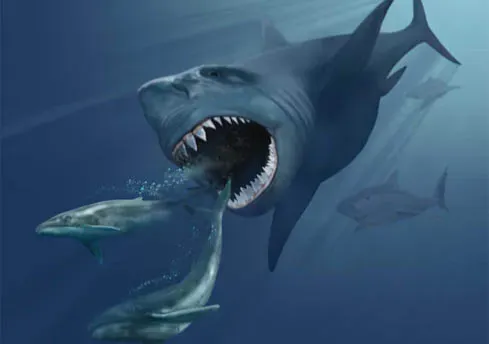
For a long time, people pictured megalodon as a scaled-up great white, chasing things from behind and taking opportunistic bites. Evidence from fossils tells a darker and more tactical story. Many whale bones from the Miocene and Pliocene periods show bite marks exactly where it hurts most: at the chest, the spine, and the fins. This suggests megalodon didn’t just randomly chomp; it went straight for critical areas to immobilize its prey as fast as possible.
Think of it like an underwater ambush expert. By attacking from below or from the side and targeting the chest cavity or backbone, megalodon could cripple a whale in a single move, stopping it from swimming away or fighting back. Once the whale was disabled, the shark could circle and feed at its leisure, likely attracting other scavengers but remaining dominant. The idea that this animal was actively hunting and disabling whales the way a big cat goes for the throat adds a chilling precision to its brutality.
Its Teeth Worked Like Industrial-Grade Saw Blades
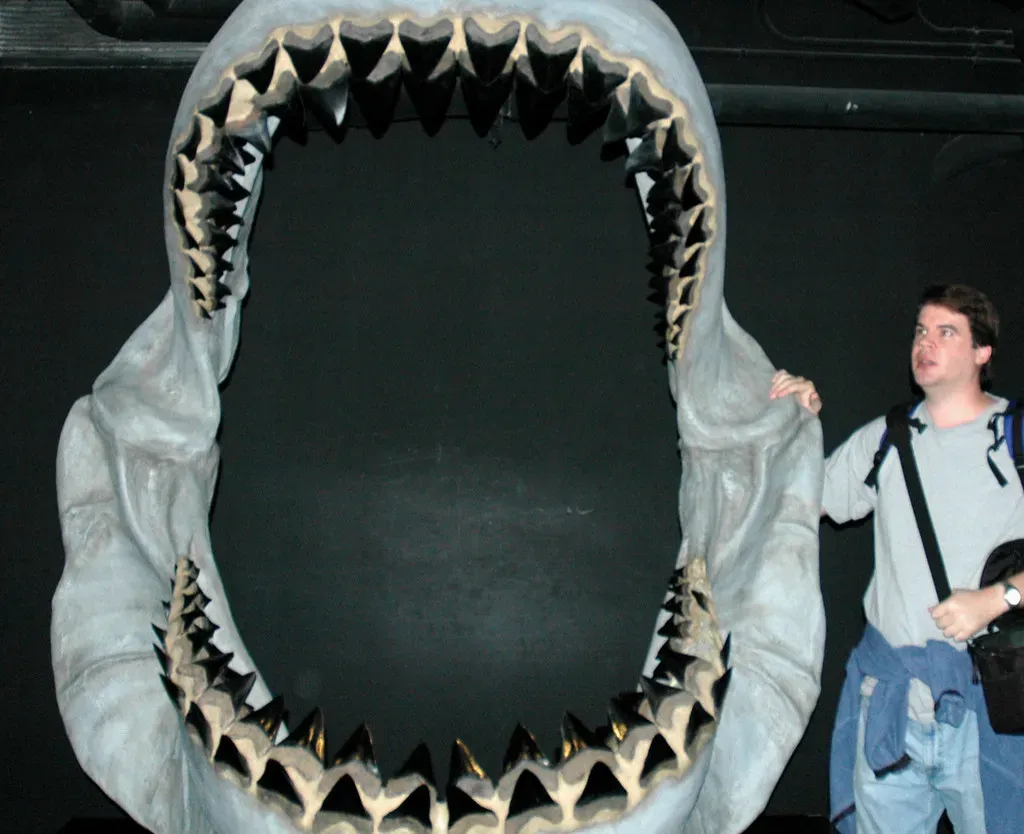
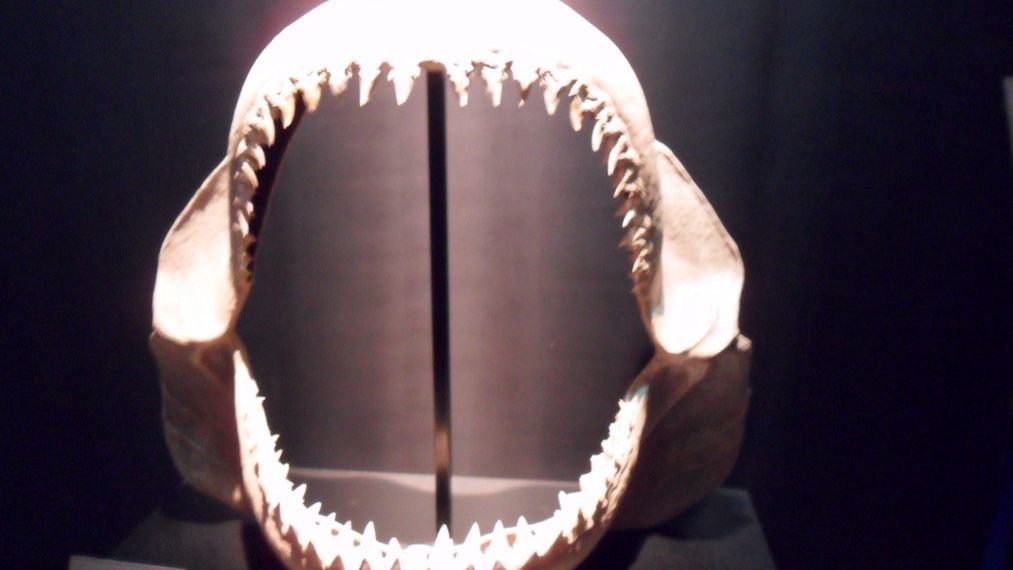
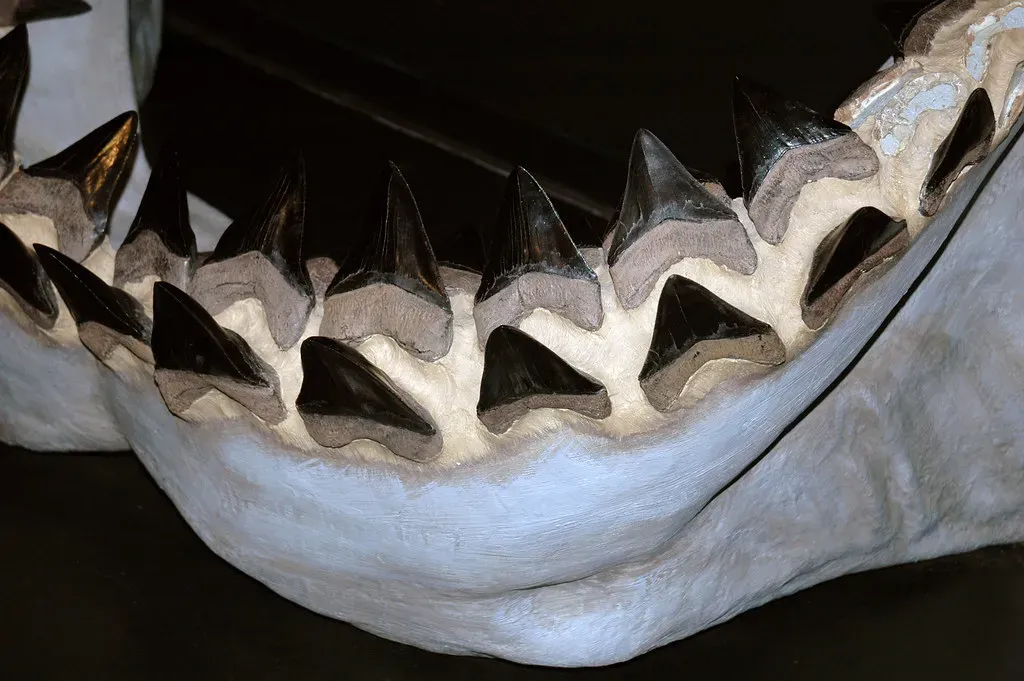
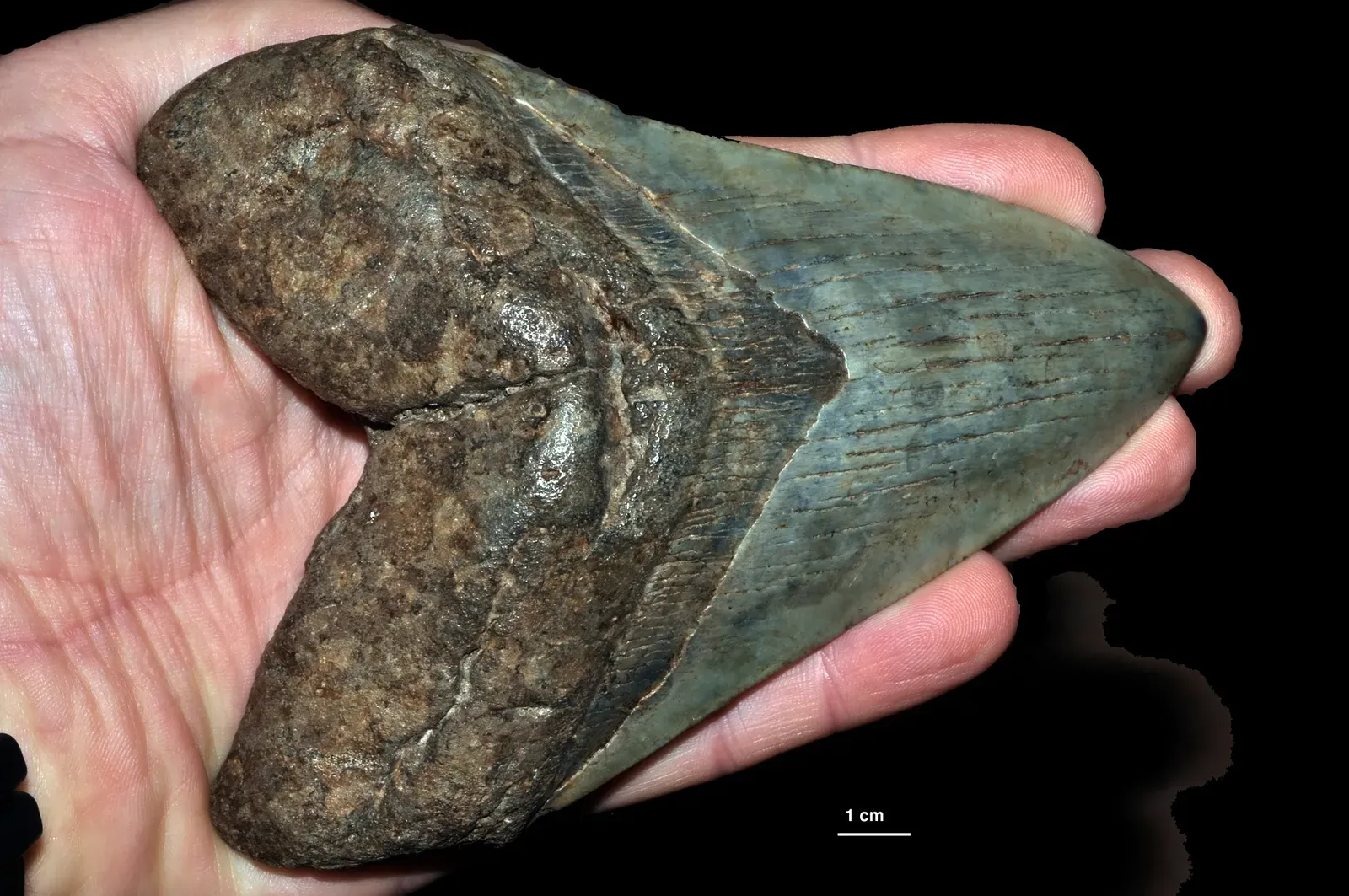
Megalodon teeth are famous museum pieces: huge, triangular, serrated, and often surprisingly beautiful when polished. But in the animal’s mouth, they were less like decorative fossils and more like rows of industrial tools built for shredding meat and bone. Each tooth could be as big as an adult human hand, and the serrations along the edges acted like the teeth on a saw, helping the shark slice through flesh with every bite. Imagine a chainsaw made of bone and enamel, powered by muscle, not electricity.
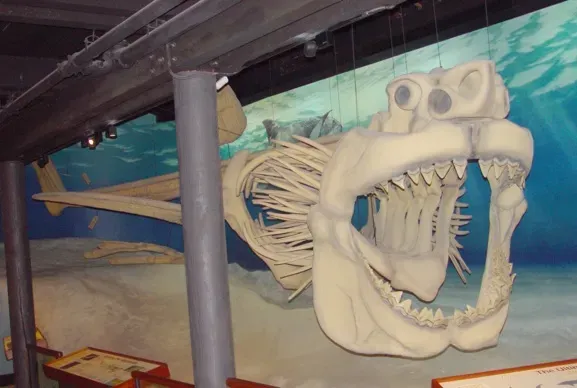
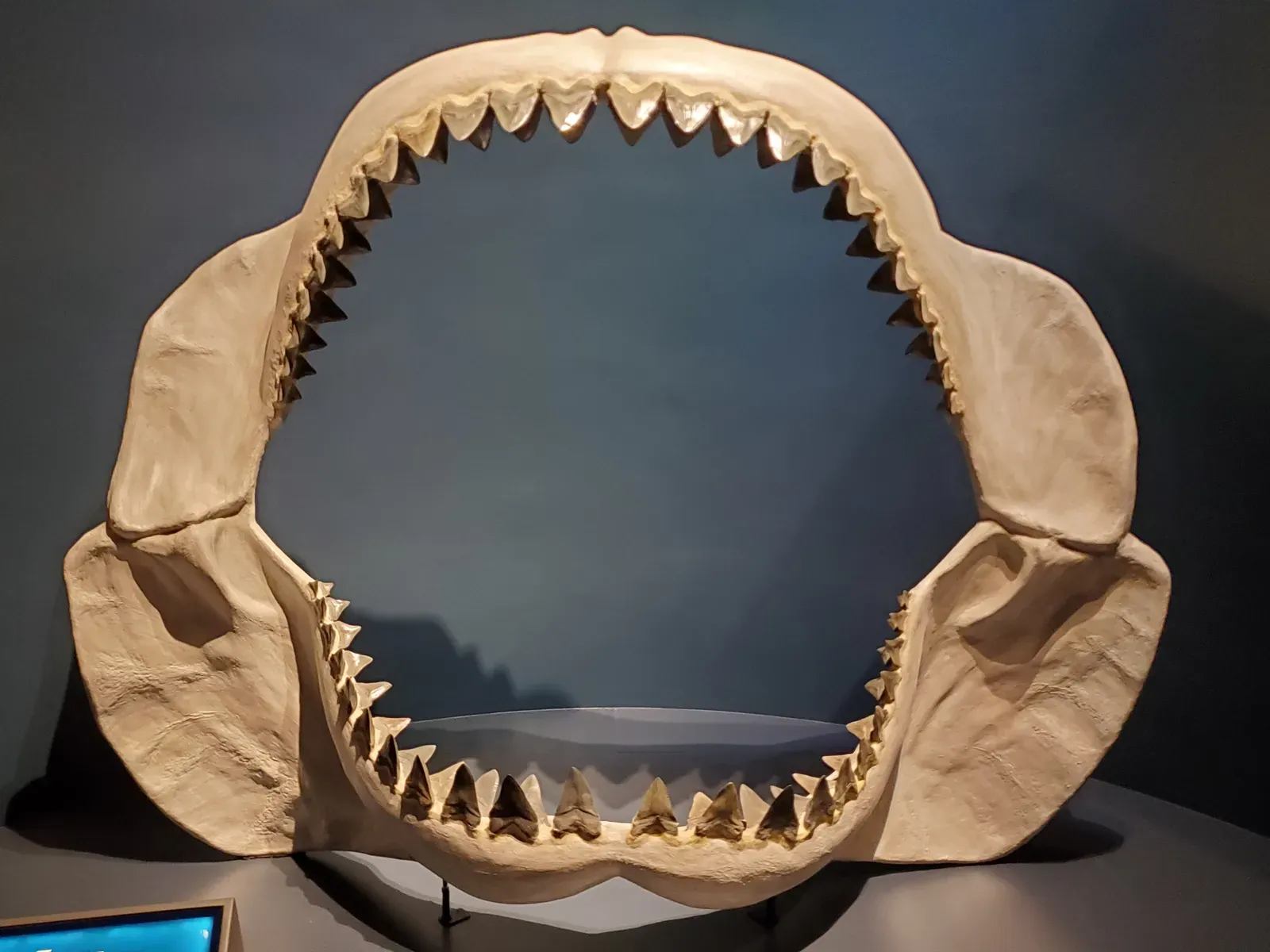
Scientists believe megalodon had multiple rows of these teeth – like modern sharks – and could have had more than two hundred in its mouth at a time, constantly replacing ones that broke or fell out. Tooth fossils are found all over the world, which makes sense if you imagine this animal shedding them regularly throughout its life. Each tooth represents one more step in an endless cycle of growing, hunting, breaking, and replacing, like an ocean factory where the main product was terror and the raw material was whale.
It Ruled Warm Coastal Seas, Not the Deep Dark Abyss
Pop culture often places megalodon in the deepest, blackest parts of the ocean, lurking beneath tiny submarines and devouring anything that sparkles. The fossil record tells a different story: this shark preferred warm, relatively shallow seas closer to coasts and continental shelves. Its teeth have been found on almost every continent, especially in areas that were once covered by warm, productive waters full of marine mammals. It wasn’t a deep-sea recluse; it was a sunlit coastal terror.
That makes it more frightening in a very real way. If megalodon were around today, we wouldn’t be worrying about it only in the far-off abyss but off popular beaches, shipping lanes, and rich fishing grounds. It likely followed migratory routes of whales, lurking near areas where young or weakened animals gathered. Picture the most postcard-perfect tropical bay you’ve ever seen, turquoise water and all – and then imagine a predator the size of a bus cruising just offshore, unseen under the surface.
It May Have Warmed Its Own Body to Hunt More Efficiently
Recent studies of geochemical signatures in megalodon teeth suggest its body temperature was higher than that of the surrounding water, hinting at at least partial warm-bloodedness. That doesn’t mean it was warm-blooded in the same way mammals are, but more like some modern sharks and tunas that can keep key muscles and organs warmer than the water around them. This ability would have given megalodon faster, more sustained swimming power and better performance in a range of temperatures.
That edge matters when you’re hunting whales. A shark that can stay warmer can burst into speed quickly, chase for longer, and operate across more of the ocean without being slowed too much by colder waters. It would have been like giving a race car a finely tuned engine in a field of clunky trucks. This suggests megalodon was not just big and strong but also energetically advanced, a high-performance predator built to dominate, not just survive.
Its Disappearance May Have Reshaped the Whole Ocean
Megalodon went extinct a few million years ago, and its disappearance still puzzles scientists. The leading ideas point to a brutal combination of cooling oceans, shifting habitats, and increasing competition from other predators like early great white sharks and killer-whale-like marine mammals. As waters cooled and prey distributions changed, megalodon likely struggled to keep up, especially if it needed large quantities of calorie-heavy whales to sustain its enormous body. Being the biggest can sometimes make you the most vulnerable when the menu changes.
What’s striking is how its extinction may have opened space for entirely new ocean dynamics. Without a giant shark controlling whale populations from the top down, marine mammals were free to diversify and expand in new ways, eventually giving rise to the complex communities we see today. In a strange way, the gentle giants people pay to see on whale-watching tours may owe their existence to the fall of a far more lethal ancestor. The ocean we know now is, in part, a world built in the shadow of a predator so terrifying that even its absence reshaped life on Earth.
A Predator That Still Haunts Our Imagination
The more scientists learn about megalodon, the less it feels like the exaggerated monster of B-movies and the more it resembles something even more unsettling: a perfectly tuned, scientifically terrifying apex predator that really did exist. Its immense size, devastating bite, strategic hunting style, and global reach made it one of the most formidable animals to ever patrol Earth’s oceans. Knowing that this wasn’t a myth but a former reality gives every calm blue horizon a slightly haunted feeling, like we’re walking on a stage long after the star actor has left.
In a way, megalodon lives on not just in fossils but in our collective imagination every time we feel a flicker of unease looking into deep water. It forces us to admit that nature can produce creatures that make even our wildest monsters feel tame by comparison. Next time you see a peaceful whale breach or watch a great white glide past on a nature show, it’s worth remembering there was once something out there that hunted those animals for a living. When you picture the ancient ocean now, does it look anything like what you once imagined?