
Building on Decades of Robotic Legacy (Image Credits: Unsplash)
NASA’s ongoing efforts to deploy advanced robotic systems on Mars signal a critical step toward enabling the first human missions to the Red Planet.
Building on Decades of Robotic Legacy
The journey to Mars has relied heavily on uncrewed probes since the dawn of space exploration. Early missions, such as the Viking landers in the 1970s, provided initial glimpses of the Martian surface, while later rovers like Spirit and Opportunity revolutionized our understanding in the early 2000s. These twin vehicles, launched in 2003, far exceeded their planned lifespans, confirming evidence of past liquid water on the planet.
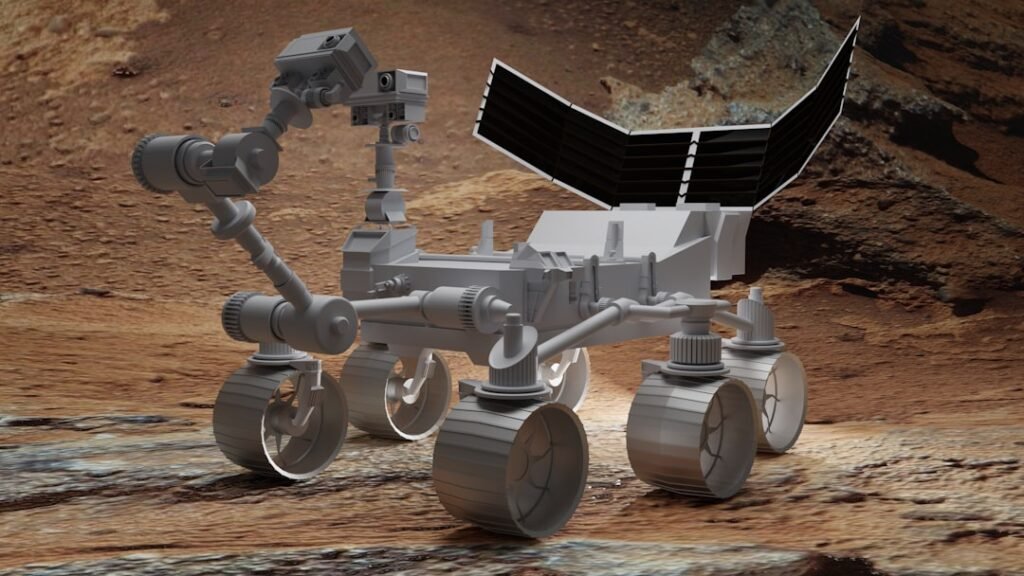
More recent explorers, including Curiosity and Perseverance, continue this tradition. Perseverance, which touched down in 2021, not only searches for signs of ancient life but also tests technologies essential for human presence. Scientists designed these rovers to gather data on habitability, collect samples, and demonstrate resource utilization, all while enduring the harsh Martian environment of extreme cold, dust storms, and radiation.
This legacy informs current preparations, where robots evolve from mere scouts to active supporters of human crews. Engineers at NASA focus on enhancing autonomy, allowing machines to operate independently over the vast distances that delay communications from Earth.
Enhancing Robotic Capabilities for Teamwork
A new emphasis emerges on human-robot collaboration for future missions. Reports from the National Academy of Sciences highlight the need for integrated systems where astronauts and machines work in tandem. Robotic explorers will handle hazardous tasks, such as scouting terrain or extracting resources, freeing humans to focus on scientific discovery.
Key advancements include improved mobility and sensing technologies. Upcoming missions incorporate AI-driven navigation to avoid obstacles in real-time, drawing from lessons learned during Perseverance’s operations in Jezero Crater. These robots will also test in-situ resource utilization, like producing oxygen from the thin carbon dioxide atmosphere – a process demonstrated successfully by Perseverance’s MOXIE instrument.
Experts advocate for a “Mars Human-Agent Teaming Summit” to optimize these interactions. Such planning ensures that robots complement human efforts, from setting up habitats to conducting preliminary surveys for safe landing sites rich in subsurface water ice.
Targeting Life Detection as a Core Objective
The primary science goal for initial human landings centers on searching for signs of life. A recent report urges NASA to prioritize astrobiology, equipping missions with surface laboratories to analyze samples on-site. This approach builds on robotic precursors that have already cached rocks and soils for potential return to Earth.
Robotic systems play a pivotal role here, as they can access remote or dangerous areas without risking human lives. For instance, orbiters like Mars Reconnaissance Orbiter provide high-resolution imagery to identify promising locations, while ground-based rovers drill and collect specimens. These efforts align with planetary protection guidelines, minimizing contamination risks during exploration.
- Deploy autonomous drills to extract ice for water and fuel production.
- Conduct spectral analysis to detect organic molecules indicative of past biology.
- Map radiation levels to guide habitat placement for crew safety.
- Assemble modular structures as precursors to permanent bases.
- Monitor atmospheric conditions to support greenhouse farming experiments.
By integrating these functions, robots will transform Mars from a distant target into a viable outpost.
Overcoming Challenges in the Martian Frontier
Despite progress, significant hurdles remain in preparing robotic aides for human missions. The planet’s dust can clog mechanisms, and solar power wanes during global storms, as seen when Opportunity fell silent in 2018. Engineers address this through hybrid power systems and dust-repelling coatings tested on current rovers.
Communication lags of up to 20 minutes pose another issue, necessitating robust AI for decision-making. NASA’s MAVEN orbiter relays data efficiently, but future networks will expand relay capabilities for seamless human-robot coordination.
International collaboration, including contributions from ESA and CNSA, accelerates these developments. Missions like Tianwen-1 demonstrate global commitment, sharing data to refine strategies for crewed voyages projected in the 2030s.
Key Takeaways:
- Robots will lead by producing essential resources like oxygen and fuel on Mars.
- Life detection remains the top priority, supported by on-site labs and sample returns.
- Human-robot teaming summits will ensure efficient collaboration for safe exploration.
As robotic explorers evolve into indispensable partners, they bridge the gap between current uncrewed ventures and humanity’s bold leap to Mars. This synergy promises not just survival, but thriving scientific progress on another world. What role do you envision for robots in our solar system adventures? Share your thoughts in the comments.