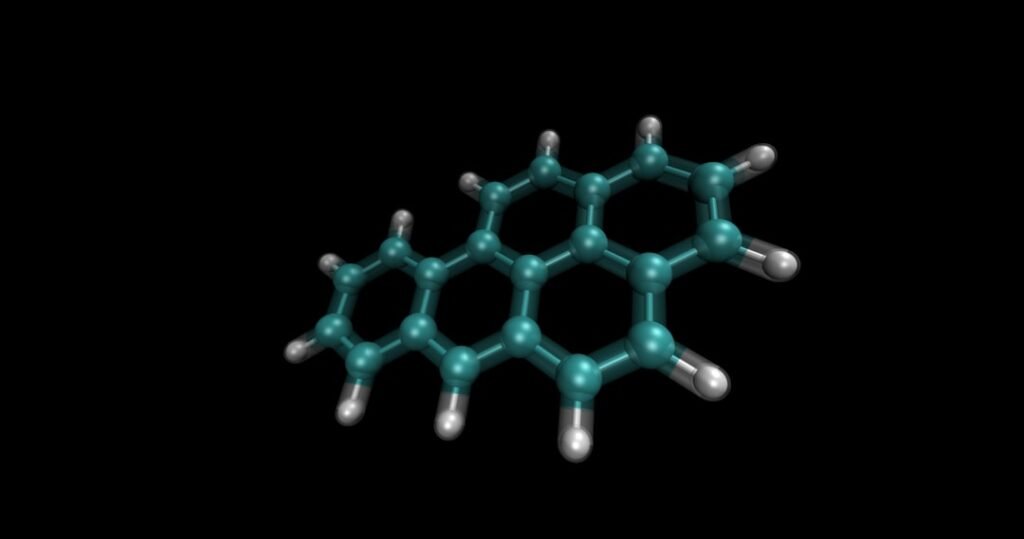

The Power of Generative AI in Molecular Innovation (Image Credits: Unsplash)
Researchers have turned to advanced computational tools to accelerate the search for new medications, blending artificial intelligence with principles from quantum physics to generate promising drug candidates more swiftly and economically.
The Power of Generative AI in Molecular Innovation
Generative models have emerged as a cornerstone in modern drug discovery, allowing scientists to design novel molecules that target specific diseases. These AI-driven systems learn from vast datasets of chemical structures and predict new compounds with desired properties, such as binding affinity to proteins involved in illnesses like cancer or diabetes.
In traditional approaches, drug hunters screened millions of compounds manually, a process that consumed years and billions of dollars. Generative models, however, simulate this exploration digitally, producing diverse molecular structures in hours rather than months. Recent studies highlighted how autoregressive models excel at de novo generation, creating “hit-like” molecules for targets like GSK-3, an enzyme linked to neurological disorders.
This shift not only speeds up initial screening but also incorporates multi-stage filtering to prioritize viable candidates based on bioactivity predictions and docking scores.
Quantum Physics Enters the Equation
Quantum computing principles have infused these generative frameworks with unprecedented efficiency, tackling the curse of dimensionality that plagues classical methods. By leveraging quantum machine learning, researchers explore exponentially larger chemical spaces using fewer resources, as demonstrated in hybrid quantum-classical workflows.
For instance, quantum generative adversarial networks (QGANs) require far fewer qubits than anticipated – often under 90 for small molecules – yet they uncover patterns invisible to traditional AI. A 2021 arXiv preprint outlined how such models generate structures adhering to chemical rules while optimizing for therapeutic potential, reducing the need for exhaustive physical testing.
Physics-based active learning further refines this process, merging generative AI with quantum-informed simulations to predict molecular behaviors accurately outside trained datasets. This integration has proven vital for complex targets, like the KRAS protein in cancer, where quantum-enhanced algorithms recently unveiled novel inhibitors.
Practical Impacts on Pharmaceutical Research
Pharmaceutical companies now deploy these tools to cut development costs by 30 to 80 percent in early phases, transforming resource-intensive pipelines into streamlined operations. Virtual screening powered by generative models identifies leads that advance to lab validation, minimizing wet-lab expenses.
Key benefits include:
- Accelerated timelines, shrinking discovery from years to weeks for certain targets.
- Enhanced precision in predicting ADMET profiles – absorption, distribution, metabolism, excretion, and toxicity.
- Broader exploration of chemical diversity, aiding rare disease treatments affecting millions worldwide.
- Integration with diffusion models for protein design, enabling custom therapeutics like enzyme inhibitors.
- Hybrid approaches that combine AI with quantum simulations for reliable conformational sampling.
One notable application involved a workflow that iteratively loops generative predictions with physics evaluations, yielding compounds with high synthetic accessibility and target engagement.
| Approach | Traditional Method | Quantum-Generative Model |
|---|---|---|
| Resource Use | High (years, billions) | Low (weeks, reduced costs) |
| Chemical Space Explored | Limited | Exponential |
| Accuracy for Complex Targets | Moderate | High (physics-informed) |
Overcoming Hurdles in Adoption
Despite the promise, challenges persist in scaling quantum-enhanced models to industrial levels. Current quantum hardware limitations demand hybrid systems, where classical computers handle most computations while quantum elements optimize specific tasks like energy landscape mapping.
Experts emphasize the need for robust validation, as generative outputs must align with experimental data to avoid false positives. Ongoing research addresses this through explainable AI frameworks, such as graph-based models for rare diseases, which provide interpretable pathways for drug repurposing.
Key Takeaways
- Generative models powered by quantum physics drastically reduce drug discovery timelines and costs.
- Hybrid workflows enable precise targeting of “undruggable” proteins like KRAS.
- Future advancements will likely focus on integrating more quantum simulations for broader therapeutic applications.
As these technologies mature, they hold the potential to democratize drug development, making life-saving treatments more accessible. What innovations in quantum AI for medicine excite you most? Share your thoughts in the comments.