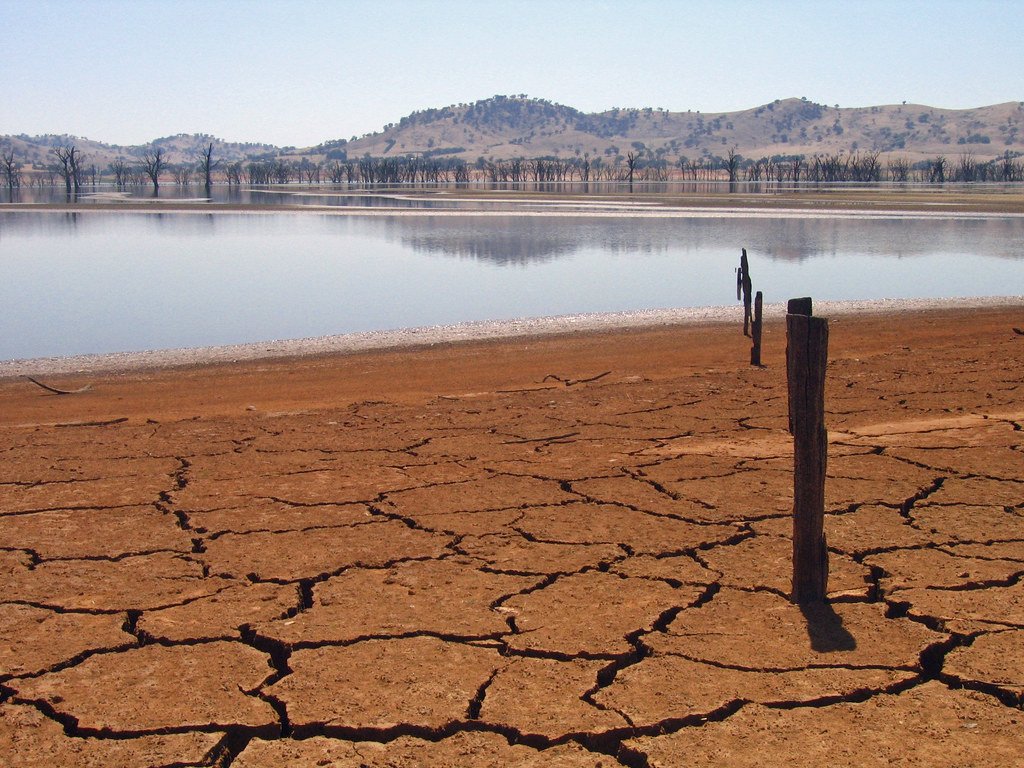


Natural Fluctuations in Earth’s Climate Record (Image Credits: Flickr)
Throughout Earth’s long history, periods of warming and cooling have shaped the planet’s climate long before human influence became a factor.
Natural Fluctuations in Earth’s Climate Record
The Earth’s climate has never remained static. Over 4.6 billion years, natural forces drove significant shifts in temperature and weather patterns. Internal fluctuations in the atmosphere and oceans redistributed energy, water, and carbon, while external factors like solar variations and volcanic activity added layers of change.
Evidence from geological records shows that warming cycles, much like the current one, followed predictable patterns. These cycles often reversed without any human intervention, highlighting the dominance of natural processes. For instance, the end of the last ice age saw carbon dioxide levels rise naturally, contributing to gradual warming over millennia.
Scientists have documented how such reversals occurred repeatedly, from medieval warm periods to little ice ages. This historical context challenges simplistic views that attribute all recent changes solely to human activity.
Greenhouse Gases: A Modest Influence Amid Natural Drivers
Human emissions of greenhouse gases undoubtedly play a role in modern climate dynamics. However, historical data suggests they act more as a secondary adjustment rather than the main force behind global temperature trends.
Over the past two centuries, emissions have accelerated the rise in atmospheric carbon dioxide, increasing it far faster than during natural transitions like the end of ice ages. Yet, this acceleration occurs against a backdrop of larger natural oscillations. Studies indicate that even as cumulative emissions grew, periods of cooling followed intense warming phases in the 20th century.
The overwhelming evidence points to an eventual reversal of the current warming cycle, driven by these inherent natural mechanisms. While emissions contribute, they do not override the primary drivers rooted in the planet’s long-term variability.
Global Scale vs. Local Efforts: The Reality of Emissions
Individual regions, no matter their commitment to reductions, contribute only a fraction to worldwide greenhouse gas output. For example, emissions from a single state like New York represent a tiny portion of the global total.
This disparity underscores the limitations of localized policies aimed at curbing emissions for climate stabilization. Global emissions continue to rise due to broader industrial and economic activities elsewhere, rendering isolated efforts insufficient to alter the planetary trajectory.
Policymakers must weigh this against the historical precedent of natural cycles, where human-scale interventions proved negligible. Focusing solely on reductions overlooks the bigger picture of inevitable climatic shifts.
Shifting Public Perceptions on Climate Change
Public understanding of climate change often draws from recent experiences, such as milder winters or shifting seasons, which can fuel perceptions of a perpetual crisis. Yet, these observations align more closely with natural atmospheric and oceanic patterns than with emissions alone.
Social media and discussions highlight skepticism, with many pointing to historical data showing no net negative impact on human well-being from modest warming. Posts on platforms like X emphasize that the current changes pale in comparison to past natural swings, urging a more balanced view.
Experts note that while consensus exists on human contributions, the scale of natural variability demands nuance. This evolving dialogue encourages perceptions grounded in the full historical context rather than alarmist narratives.
- Earth’s climate has fluctuated naturally for billions of years, driven by solar, volcanic, and oceanic forces.
- Current warming mirrors past cycles that eventually reversed without human input.
- Greenhouse gas emissions accelerate changes but remain a tweak to dominant natural drivers.
- Local reductions, like those in New York, hold minimal sway over global totals.
- Perceptions should incorporate historical evidence to avoid overemphasizing human control.
- Policy must balance emissions efforts with recognition of inevitable climatic cycles.
Key Takeaways
- Natural cycles have always dictated climate reversals, outpacing human emissions in scale.
- Global emissions dwarf local contributions, limiting the impact of regional policies.
- A historical lens reveals that current warming fits within Earth’s variable patterns, not an unprecedented crisis.
As history demonstrates, climate’s cyclical nature offers reassurance amid concerns over emissions. While responsible stewardship remains essential, acknowledging the limits of human influence fosters more realistic strategies for adaptation. What aspects of climate history intrigue you most? Share your thoughts in the comments.