
Have you ever wondered how our vast cosmos might eventually meet its end? For decades, scientists believed the universe would simply expand forever, cooling into a lonely, frozen void. Yet recent discoveries from powerful observatories have challenged this long-held view, suggesting something far more dramatic could await. Think about everything around you collapsing back into a single point. It sounds like the plot of a sci-fi thriller, right? Yet this scenario, known as the Big Crunch, might actually be how reality concludes its story.
The idea that our universe could reverse its expansion and collapse in on itself isn’t just wild speculation anymore. Fresh data from cutting-edge instruments has breathed new life into this once-dismissed theory, forcing cosmologists to reconsider what they thought they knew about the fate of everything.
The Battle Between Gravity and Expansion
The Big Crunch scenario hypothesizes that the density of matter throughout the universe is sufficiently high that gravitational attraction will overcome the expansion that began with the Big Bang. Think of it like throwing a ball into the air. If you don’t toss it hard enough to escape Earth’s gravity, it eventually stops rising and falls back down.
Everything in the universe exerts a gravitational pull on everything else, and this slows down the universal expansion. The ultimate fate of the universe depends on the amount of mass contained within it, that is, the mean density of the universe. Essentially, it’s a cosmic tug-of-war between the outward momentum from the Big Bang and the inward pull of gravity trying to bring everything back together. Scientists call this threshold the critical density, and whether we’re above or below it determines whether the universe expands forever or eventually contracts.
Dark Energy’s Mysterious Role
Here’s where things get really interesting. The Universe has been expanding at an accelerating pace since the Big Bang over 13.8 billion years ago, and cosmologists have long believed this expansion was enabled by the Universe’s most mysterious quantity – dark energy. Dark energy’s pull could be weakening over time, according to results from the Dark Energy Spectroscopic Instrument (DESI) collaboration. Let’s be real, that’s a game-changer.
If dark energy continues to significantly weaken with time, it may become not only “less pushy,” but perhaps even “sucky,” causing the Universe to contract rather than expand. Imagine a force that’s been pushing galaxies apart suddenly losing its strength or even reversing direction. Dark energy is there, but the present universe has already entered a decelerating phase, today. So the fate of the universe could change. It’s hard to say for sure, but if these findings hold up, we’re witnessing something profound.
Recent Observations Challenging the Standard Model
The new data seem to indicate that the cosmological constant is negative, and that the universe will end in a big crunch. This stunning conclusion came from physicist Henry Tye at Cornell University and his collaborators.
The big crunch will happen about 20 billion years from now. Based on several recent dark energy results, a new model finds that the Universe has a lifespan of just 33.3 billion years. Since we are now 13.8 billion years after the Big Bang, this suggests that we have a smidge less than 20 billion years left. What’s remarkable is that these calculations stem from analyzing massive datasets from observatories in both the southern and northern hemispheres. After including the supernova age-related bias in the calculations, the result becomes much more dramatic: deceleration would already be underway, with a statistical significance exceeding 9 sigma.
The Apocalyptic Final Moments
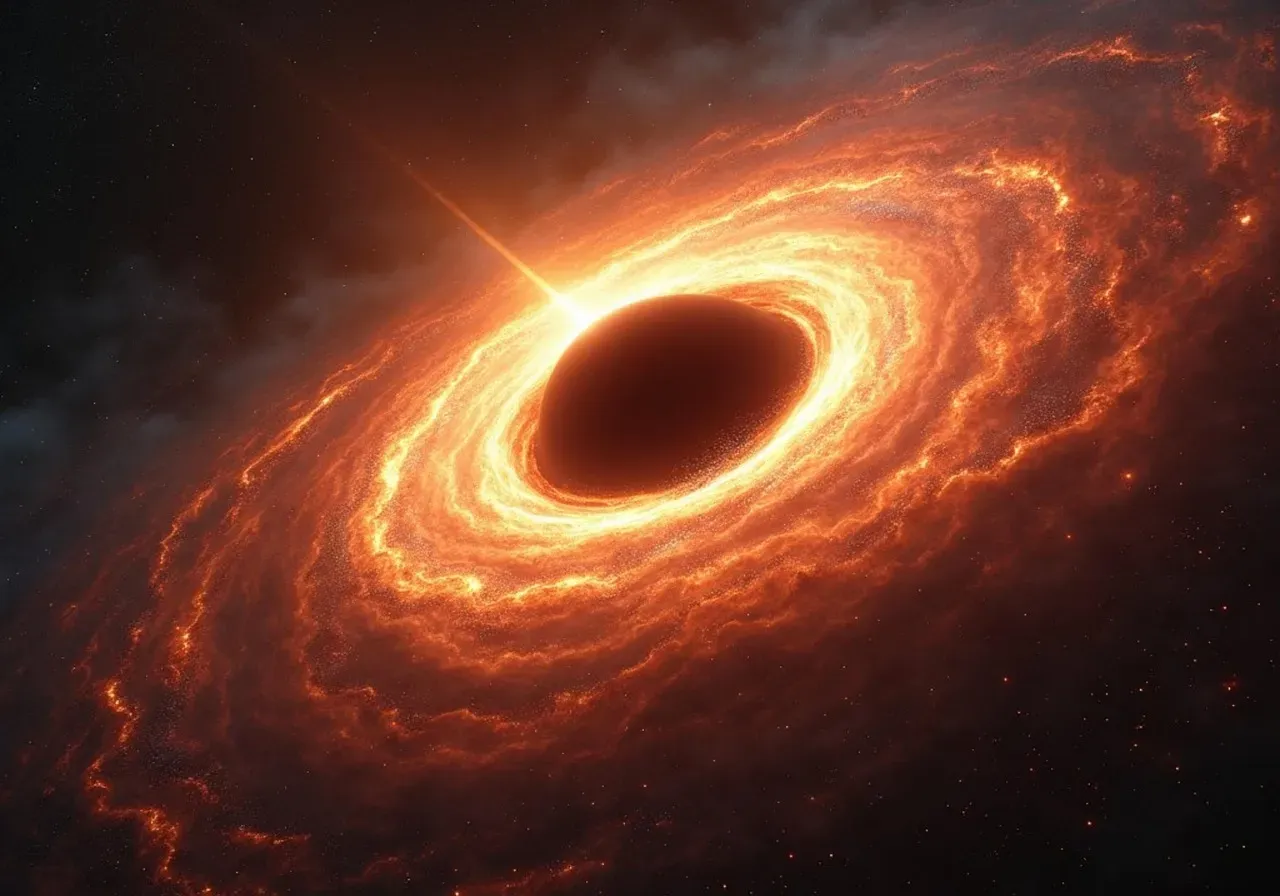
So what would the Big Crunch actually look like? Honestly, it sounds terrifying. As the universe collapses in on itself, it would get filled with radiation from stars and high-energy particles; when this is condensed and blueshifted to higher energy, it would be intense enough to ignite the surface of stars before they collide.
In the final moments, the universe would be one large fireball with a near-infinite temperature, and at the absolute end, neither time, nor space would remain. Everything we know would be squeezed back into an infinitely dense point, a singularity similar to what existed before the Big Bang. As it does, the universe will become denser and hotter until it ends in an infinitely hot, infinitely dense singularity. It’s like watching the entire history of the cosmos played in reverse, compressing billions of years of expansion back to nothing.
The Big Bounce Possibility

Yet there’s a fascinating twist to this apocalyptic scenario. The Big Crunch hypothesis also leads into another hypothesis known as the Big Bounce, in which after the big crunch destroys the universe, it begins a new expansionary epoch, causing another big bang. This could potentially repeat forever in a phenomenon known as a cyclic universe.
Think of the universe as breathing in and out eternally. Nothing would remain but a super-hot, super-dense singularity – the seed of another universe. Many astronomers think the seed would germinate in a “big bounce,” starting the whole process over again. Some physicists find this idea appealing because it removes the need for a definitive beginning or end. However, there are problems with this model, particularly regarding entropy buildup across cycles. Still, newer versions of the cyclic model attempt to address these issues through mechanisms involving extra dimensions and exotic physics.
Why Scientists Remained Skeptical for Decades
Experimental evidence in the late 1990s and early 2000s led to the conclusion that the expansion of the universe is not being slowed by gravity but is instead accelerating. The 2011 Nobel Prize in Physics was awarded to researchers who contributed to this discovery. This finding essentially killed the Big Crunch theory for roughly about a quarter century.
This idea fell out of favors in the late 1990s with the discovery of dark matter and what scientists at the time believed was proof of the accelerating expansion of the universe. The Big Crunch theory died for a quarter century. Yet, new research using a massive amount of data has revived the possibility of the Big Crunch theory. Scientists became convinced that a “Big Freeze” was far more likely, where the universe would expand forever, eventually cooling to the point where no stars could form and everything drifted apart into eternal darkness. The evidence seemed overwhelming. Dark energy appeared constant and positive, pushing everything apart faster and faster.
Conclusion: A Universe in Flux
Tye finds it encouraging that the lifespan of the universe can be quantitatively determined. Knowing both the beginning and the end of the universe provides greater understanding of the universe, the goal of cosmology. We’re living through a remarkable moment in scientific history when our understanding of cosmic destiny hangs in the balance.
Dark energy is getting weirder and weirder. There is no good theory that can explain this very weird behavior. So I think we are missing something. The truth is, we might be on the cusp of rewriting the final chapter of cosmic history. New telescopes and observatories coming online in the next few years will provide unprecedented data that could settle this debate once and for all.
Whether the universe ends in fire or ice, crunch or freeze, remains one of the most profound questions facing humanity. Did you expect that our understanding of the cosmos could shift so dramatically? What’s your take on how everything might end?