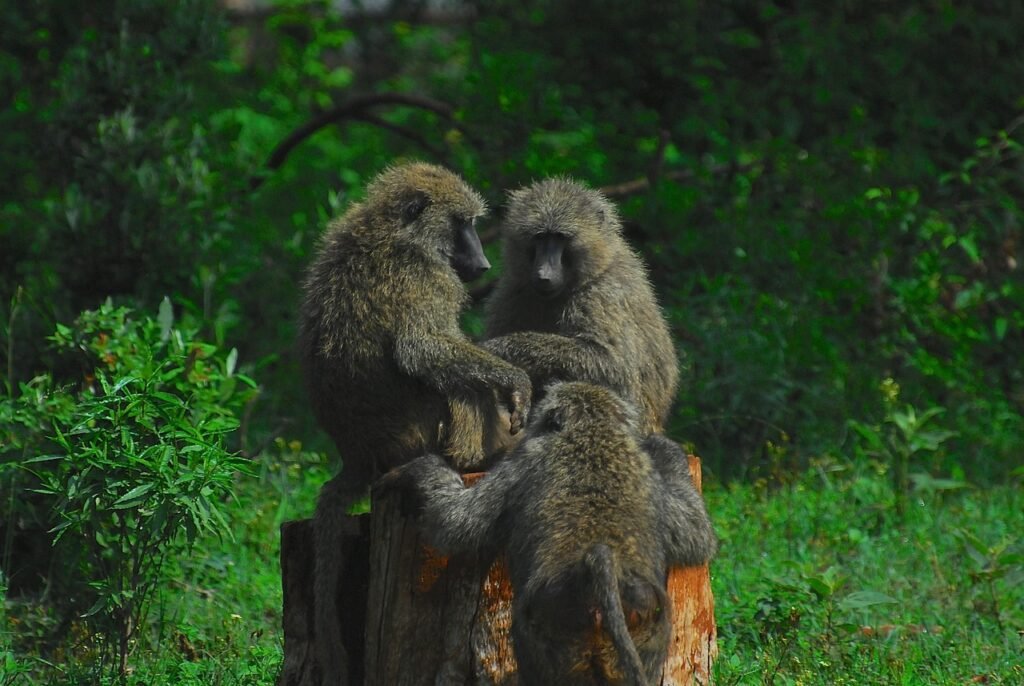

The Relentless Pressure of Environmental Variability (Image Credits: Pixabay)
Burlington, Vermont – Recent research from the University of Vermont demonstrates that fluctuating environments and a species’ historical background can propel populations toward markedly different evolutionary outcomes.
The Relentless Pressure of Environmental Variability
Life on Earth constantly navigates a world in flux, where seasonal transitions from warmth to chill alternate with cycles of drought and deluge. Such changes test the resilience of every organism, forcing adaptations that determine survival. Scientists long assumed that evolution followed a more predictable course, with populations converging on similar solutions under parallel pressures. Yet, this view overlooked the subtle ways in which variability disrupts those expectations.
A team led by Csenge Petak at the University of Vermont delved into this complexity through computational models simulating microbial populations. These models exposed virtual organisms to repeated environmental shifts, revealing how initial conditions set the stage for divergent paths. The work challenged the notion that a single adaptive event suffices for long-term success. Instead, ongoing fluctuations demanded continuous adjustment, often leading to unexpected results.
Historical Context as an Evolutionary Compass
What sets one population apart from another of the same species often traces back to its origins. Petak’s study emphasized that starting points – such as genetic makeup or prior adaptations – act like invisible guides steering responses to change. In one scenario, a population with a history of stability might falter under rapid shifts, while another, shaped by prior volatility, thrives by drawing on built-in flexibility.
This historical influence extended beyond mere genetics to how traits expressed themselves over time. The research showed that early successes in adaptation could lock populations into trajectories that later proved disadvantageous. For instance, a beneficial mutation in a stable phase might become a liability when conditions reversed. Such dynamics underscored the study’s core insight: evolution rarely repeats itself exactly, even within the same lineage.
Divergent Outcomes in Simulated Worlds
The simulations produced striking variations, even when populations faced identical environmental patterns. Some groups evolved enhanced performance in fluctuating conditions, improving their overall fitness. Others stagnated or declined, trapped by early choices that no longer aligned with new realities. Petak noted that the type of variability – whether gradual or abrupt – amplified these differences, sending evolution in directions that defied traditional predictions.
To illustrate the breadth of these findings, consider the following key factors influencing evolutionary divergence:
- Initial genetic diversity, which provides a broader toolkit for adaptation.
- Frequency of environmental shifts, determining whether traits have time to fixate.
- Past exposure to stress, building resilience or rigidity in responses.
- Interaction between traits, where one adaptation inadvertently constrains another.
- Scale of change, from minor seasonal variations to extreme climate events.
These elements combined to create a landscape where no two paths mirrored each other precisely, highlighting the limitations of studying isolated populations.
Broader Implications for Biological Diversity
The study’s revelations carry weight for understanding real-world biodiversity amid accelerating climate change. Traditional evolutionary models, which often focused on steady adaptation to static environments, fall short in capturing these nuances. Petak’s work suggested that species might respond to global warming not with uniform progress, but with a mosaic of successes and failures shaped by local histories and regional variability.
Conservation efforts could benefit from this perspective, prioritizing habitats that preserve genetic diversity as a buffer against unpredictability. The research also prompted questions about how human-induced changes, like habitat fragmentation, might exacerbate evolutionary divides. By integrating historical context into models, scientists gain a clearer view of resilience in an era of rapid transformation.
Key Takeaways
- Environmental fluctuations prevent evolution from settling into a single, optimal state.
- Historical backgrounds create unique adaptive pathways, even among similar species.
- Studying multiple populations reveals the full spectrum of evolutionary potential.
As environmental pressures intensify, this research reminds us that adaptation is less a straight line than a branching journey influenced by both inheritance and circumstance. What strategies might species develop next in our changing world? Share your thoughts in the comments.