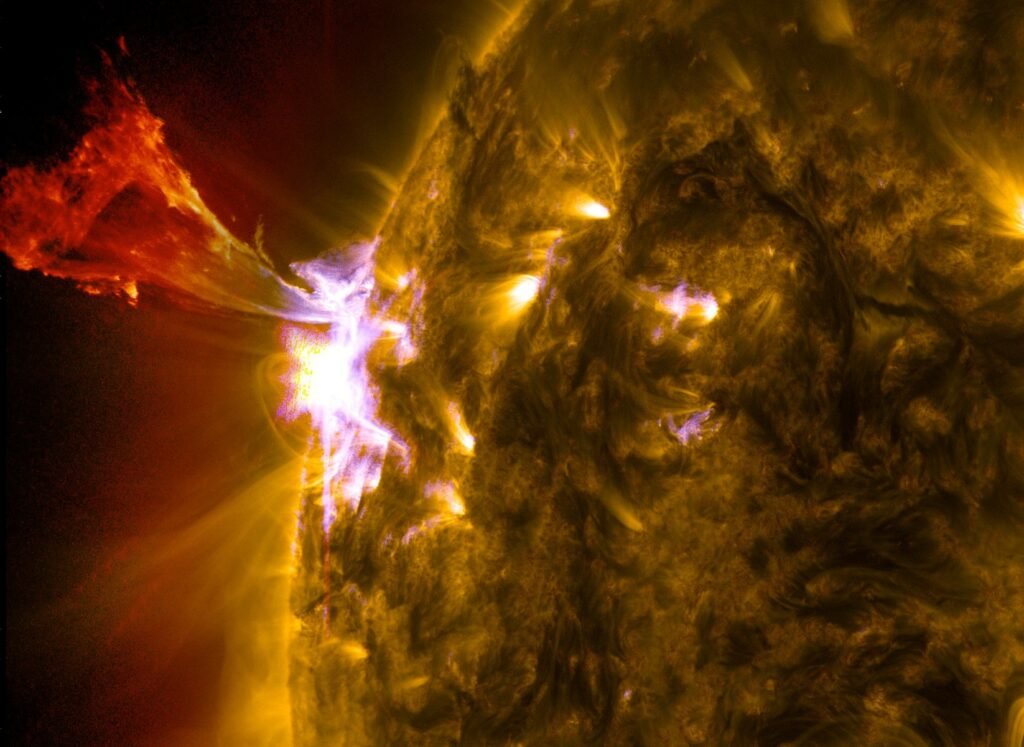

A Powerful Eruption Emerges (Image Credits: Upload.wikimedia.org)
On December 27, 2025, the Sun unleashed a potent M5 solar flare, underscoring a period of elevated activity that has captivated space weather experts.
A Powerful Eruption Emerges
The M5.1 flare peaked early that morning at around 01:50 UTC, originating from a newly identified active region near the Sun’s northwest limb. This event marked one of the stronger outbursts in recent days, following a pattern of increasing solar dynamism. Observers noted its impulsive nature, which produced a coronal mass ejection directed away from Earth. Such flares release bursts of X-ray and ultraviolet radiation, often disrupting radio communications on our planet’s dayside.
Earlier in the month, the Sun had already demonstrated its volatile side. An X1.9 flare on December 1 triggered widespread radio blackouts across Australia and other regions. Just a week later, another strong X-class event peaked on December 8, captured by NASA’s Solar Dynamics Observatory. These incidents highlighted the Sun’s progression through Solar Cycle 25, where magnetic complexities in sunspot regions fuel explosive releases of energy.
Prominences Signal Hidden Dynamics
Beyond the visible solar disk, far-side activity revealed towering prominences – massive loops of plasma suspended in the Sun’s magnetic field. These structures, observed on December 27, indicated ongoing eruptions just out of direct view from Earth. Prominences can span hundreds of thousands of kilometers and, when they erupt, contribute to the broader space weather environment. The presence of such features suggests that additional sunspot regions may rotate into view soon, potentially escalating flare risks.
Space weather monitors, including those from NASA and NOAA, track these developments closely. The beta-gamma-delta configuration in emerging regions like AR4321, spotted earlier in the month, has shown potential for even more intense X-class flares. As the Sun rotates, these far-side events provide early warnings of what might impact Earth in the coming days.
Impacts on Technology and Skywatchers
Solar flares like the recent M5 event can lead to shortwave radio blackouts and navigation signal degradations, particularly in polar regions. While this flare’s associated ejection missed Earth, previous ones have sparked geomagnetic storms and vivid auroral displays. For instance, the December 1 flare’s effects rippled through communication systems, reminding operators of the Sun’s influence on modern infrastructure.
Aurora enthusiasts have benefited from heightened activity throughout December. Strong solar wind streams, combined with coronal mass ejections from earlier flares, have extended northern lights visibility to lower latitudes. Satellite operators and power grids remain vigilant, as prolonged solar storms could strain technological defenses.
Looking Ahead to Solar Trends
Forecasts for the remainder of December point to moderate to high solar activity, with sunspot region AR4323 under close scrutiny after the M5 flare. Experts anticipate possible M-class events persisting, though X-class flares depend on magnetic field alignments. NASA’s ongoing observations via instruments like the Helioseismic and Magnetic Imager continue to provide real-time data, aiding predictions.
The broader context of Solar Cycle 25, now past its peak, suggests that 2026 could still deliver surprises. Regions with complex magnetic structures, such as those seen in AR4321, rotate into Earth’s view periodically, keeping space weather dynamic.
In summary, the Sun’s recent outbursts serve as a reminder of its profound role in shaping our cosmic neighborhood. As activity levels fluctuate, staying informed helps mitigate risks and enhances opportunities for stargazing. What effects have you noticed from these solar events? Share your observations in the comments.
Key Takeaways
- The M5.1 flare on December 27 highlighted far-side solar vigor, with prominences signaling potential future eruptions.
- December’s X-class flares caused radio disruptions but also fueled spectacular auroras visible at mid-latitudes.
- Ongoing monitoring by NASA and NOAA underscores the need for preparedness amid Solar Cycle 25’s tail end.
For more details on solar updates, visit EarthSky’s solar news page.