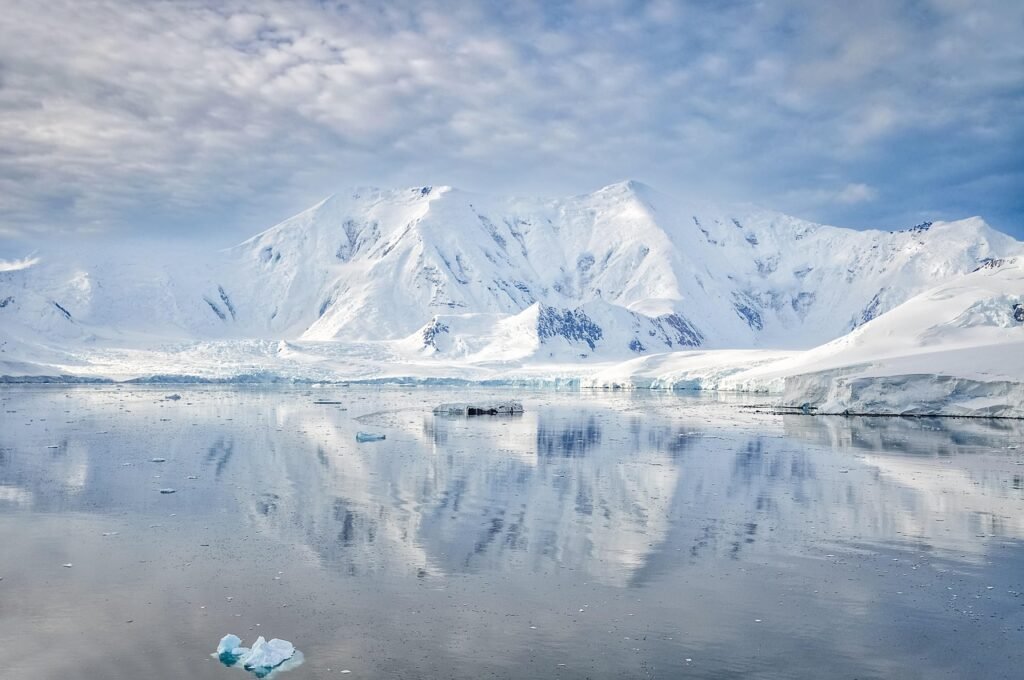

The Critical Role of Thwaites in Global Climate (Image Credits: Pixabay)
Antarctica – Researchers embarked on a two-month journey across treacherous Southern Ocean waters to investigate the Thwaites Glacier, a massive ice sheet destabilizing at an alarming rate.
The Critical Role of Thwaites in Global Climate
Thwaites Glacier stands out as one of the most vulnerable features of the Antarctic ice sheet. Scientists have long monitored its retreat, which accelerated dramatically in recent decades. Warm ocean currents now erode its base, releasing vast amounts of freshwater into the sea. This process not only weakens the glacier but also influences broader atmospheric patterns. Experts describe Thwaites as a linchpin; its potential collapse could unleash cascading effects across the West Antarctic Ice Sheet.
The glacier’s nickname, the “Doomsday Glacier,” underscores the stakes involved. Covering an area comparable to Florida, it holds enough ice to raise global sea levels by more than two feet if fully lost. Observations from satellites and prior expeditions revealed cracks expanding and warm water intruding farther inland than expected. These developments prompted international collaboration to gather on-site data. The current mission builds on 15 years of research in the region, aiming to refine models of ice dynamics.
Aboard the Icebreaker: Challenges of Polar Exploration
The Araon, a sturdy icebreaker operated by South Korea’s Polar Research Institute, serves as the expedition’s base. Nearly 40 scientists from various nations boarded the vessel in New Zealand, navigating through ice floes and stormy seas. Crew members conducted survival drills, including scenarios for ship abandonment and fire response, to prepare for the harsh environment. Temperatures often plunge below freezing, and high winds complicate operations. Yet, the team’s resolve remains firm, driven by the need for firsthand measurements.
Daily routines blend scientific work with practical demands. Researchers deploy instruments from the ship’s deck to sample ocean temperatures and salinity. Helicopters ferry teams to ice shelves for direct sampling, where they drill cores and map seafloor topography. Communication with the outside world relies on satellite links, as the remote location isolates the group. Such expeditions demand versatility; participants shift between lab analysis and fieldwork amid unpredictable weather.
Unveiling Ocean-Ice Interactions
At the heart of the investigation lies the interplay between warming seawater and glacial ice. Prior studies indicated that undersea channels deliver heat deep into Thwaites’ grounding zone, accelerating melt rates. This season’s team plans to deploy advanced sensors to track current flows in real time. Autonomous underwater vehicles will probe beneath the ice shelf, capturing data on turbulence and sediment movement. These insights could explain why the glacier thins faster than models predicted.
Understanding these mechanisms proves essential for long-term forecasts. The expedition focuses on how freshwater influx alters ocean circulation, potentially amplifying global warming. Biologists also examine microbial life in subglacial environments, which might influence carbon cycles. By integrating physical, chemical, and biological data, scientists aim to construct a clearer picture of Thwaites’ stability. Early findings from the voyage already highlight the urgency, with melt rates exceeding previous estimates in some areas.
Broader Implications for Coastal Communities
Thwaites’ behavior carries direct consequences for populations worldwide. Rising seas threaten cities from Miami to Mumbai, displacing millions and damaging infrastructure. Projections suggest that even partial collapse could add inches to coastal water levels within decades. Policymakers rely on accurate data to plan defenses, such as seawalls and relocation strategies. The expedition’s results will inform updates to international climate assessments.
- Ocean warming erodes glacier bases at rates up to half a mile per year in vulnerable spots.
- Thwaites contributes significantly to Antarctica’s overall ice loss, averaging 150 billion tons annually across the continent from 2002 to 2023.
- Cracks in the eastern ice shelf signal potential disintegration, hastening inland retreat.
- International efforts, including this voyage, emphasize collaborative monitoring to mitigate risks.
- Subglacial water flows could trigger sudden surges, complicating sea level predictions.
Key Takeaways
- Thwaites Glacier’s melt drives a substantial portion of global sea level rise, with centuries-long impacts possible.
- Warm ocean intrusions extend miles inland, far beyond earlier models.
- Expeditions like this provide vital data for refining climate projections and adaptation plans.
As the Araon presses toward Thwaites, the expedition reminds us that Antarctica’s ice holds keys to humanity’s shared future – fragile, dynamic, and in need of urgent protection. What steps should nations take next to address these findings? Share your thoughts in the comments.