
They stream through your body by the trillion every second, yet you will never see one, touch one, or feel one. For most of the history of physics, these “ghost particles” were little more than a mathematical whisper, a speculative fix to a puzzle about missing energy. Now, in the early twenty–first century, scientists are not only sure these particles exist, they are beginning to map where they come from and what they can reveal about the deepest workings of the universe. Neutrinos, as they are formally known, are transforming from obscure oddities into powerful probes of black holes, exploding stars, and perhaps even the quantum fabric of space itself. The mystery is slowly shifting: it is no longer whether these ghosts are real, but what, exactly, they are trying to tell us.
The Hidden Clues: Ghost Particles Everywhere, All the Time
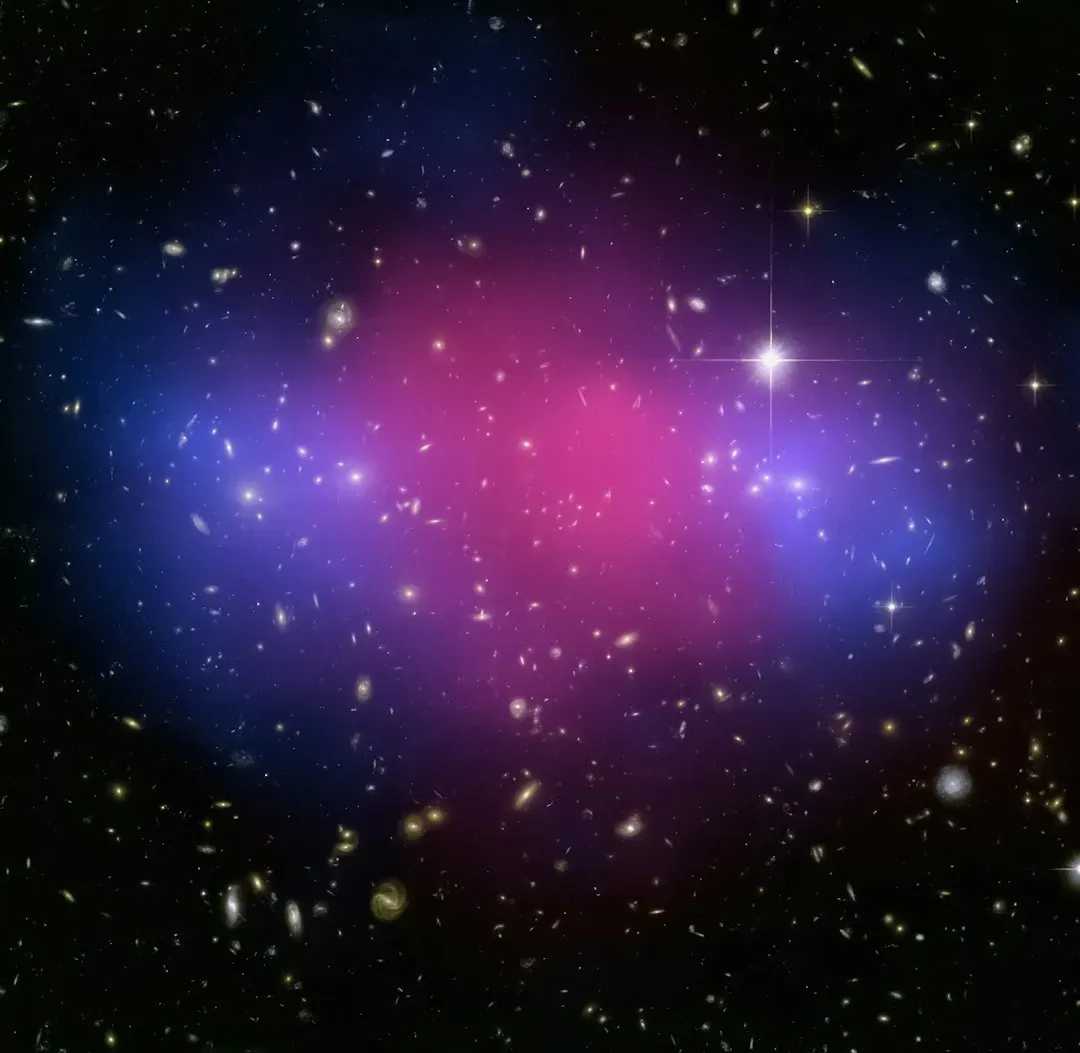
If you could suddenly see neutrinos, the night sky would look nothing like the tranquil dome of stars you know. It would blaze like a cosmic storm, lit by storms of particles racing through you from the Sun, distant galaxies, and violent events scattered across the cosmos. Every second, roughly about a hundred billion solar neutrinos pass through a space the size of your thumbnail, and almost all of them slide straight through Earth as if it were smoke. They barely interact with matter because they carry no electric charge and have an almost unimaginably small mass, making them nearly perfect cosmic phantoms.
For scientists, that near-invisibility is both curse and blessing. It makes neutrinos incredibly hard to catch, demanding enormous detectors buried deep underground or in Antarctic ice just to see a handful of interactions. At the same time, because they barely touch anything, they escape directly from the hearts of stars and other extreme environments long before light can. That turns them into pristine messengers, carrying uncorrupted information from places we could never otherwise reach. The hidden clues they carry are now at the center of some of the boldest questions in modern physics and cosmology.
From Missing Energy to a New Kind of Matter
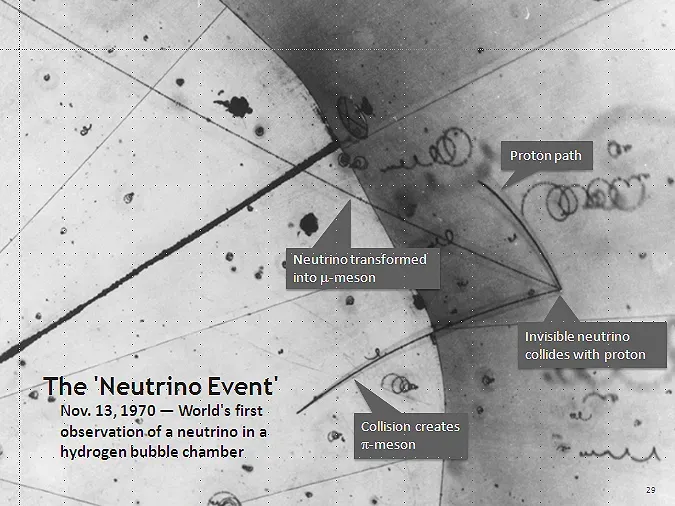
The story of ghost particles began not with awe, but with a bookkeeping problem in the 1930s. Physicists studying radioactive beta decay noticed that energy and momentum did not seem to balance, as if nature were quietly cheating at its own rules. To rescue conservation laws, Wolfgang Pauli proposed an unseen particle that would slip away with the missing energy, so shy it would rarely if ever be detected. At first, even he worried the idea was too far-fetched, more desperate patch than physical reality.
Reality, however, turned out to be stranger than anyone expected. By the mid–1950s, clever experiments using nuclear reactors finally caught the first neutrinos, confirming that these invisible actors were not just mathematical tricks. Over the following decades, researchers discovered that there are three known “flavors” of neutrinos – electron, muon, and tau – and, even more bizarrely, that they can transform from one type to another as they travel. This behavior, called neutrino oscillation, proved that neutrinos must have mass, overturning the long-standing assumption that they were massless. That one detail alone forced physicists to extend the Standard Model, the otherwise wildly successful theory describing the known particles and forces.
Cosmic Beacons: Neutrinos from Exploding Stars and Distant Galaxies
The truly ghostly nature of neutrinos becomes obvious when you look at where they come from. In 1987, detectors in Japan and the United States picked up a tiny burst of neutrinos from a supernova in the Large Magellanic Cloud, a satellite galaxy of the Milky Way. Only a few dozen events were recorded, but they arrived hours before the visible light from the explosion, effectively serving as an early cosmic alarm bell. That brief signal confirmed long-held theories about how massive stars die, collapsing into neutron stars or black holes and blasting their outer layers into space.
Fast forward to the last decade, and the story becomes even more ambitious. IceCube, a gigantic neutrino observatory embedded in the Antarctic ice, has detected neutrinos with energies millions or even billions of times higher than those produced in nuclear reactors. Some of these ultra-high-energy neutrinos have been traced back to active galaxies where supermassive black holes launch powerful jets of particles across intergalactic space. In effect, neutrino astronomy is emerging as a new way to look at the universe, complementing traditional telescopes and even gravitational-wave detectors. These cosmic beacons hint that the most extreme corners of the cosmos are much more dynamic, and far more connected to our own planet, than they appear through light alone.
Quantum Whispers: Neutrinos, Fields, and the Nature of Reality
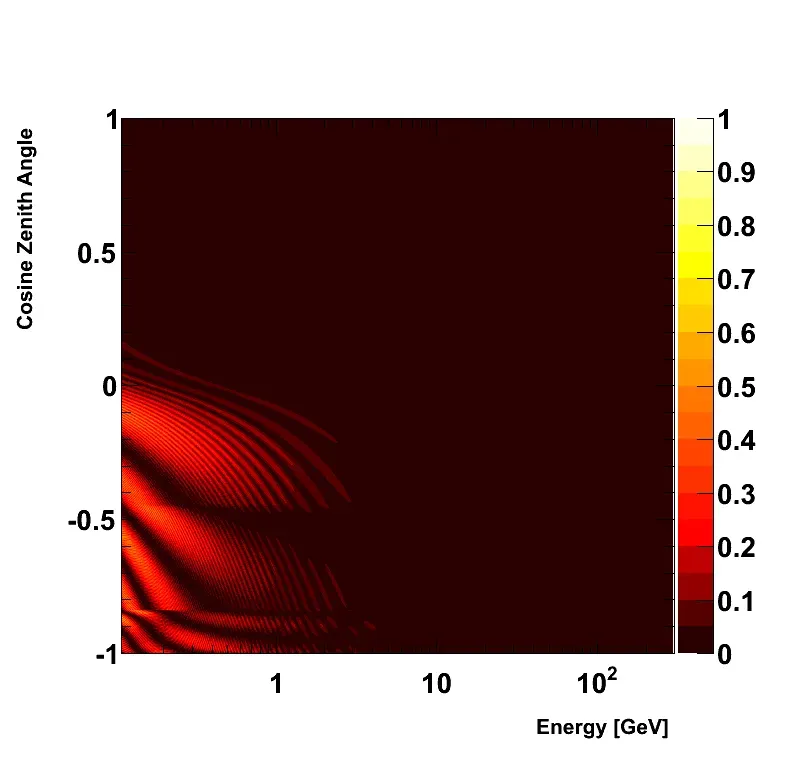
At the quantum level, neutrinos look less like particles and more like ripples on an invisible sea of fields. In quantum field theory, every type of particle is an excitation of an underlying field that fills all of space, and neutrinos are no exception. But their odd behavior – oscillating between flavors, moving almost at light speed, and interacting only through the weak nuclear force and gravity – makes them some of the most elusive waves in that sea. When physicists track how neutrinos change identity over long distances, they are effectively eavesdropping on subtle quantum interference patterns stretched across entire planets.
This is where neutrinos start brushing up against some of the more speculative ideas about the universe. Their tiny masses are not easily explained by the same mechanisms that give mass to other particles, suggesting that new physics is hiding in the background. Some theories propose the existence of “sterile” neutrinos that interact even less than the known types, potentially connecting to dark matter or hidden sectors of reality. Others explore how neutrinos might violate deep symmetries between matter and antimatter, helping explain why our universe contains something instead of canceling itself out into pure energy. In this way, ghost particles become quiet but powerful probes of the quantum structure beneath the everyday world.
Why It Matters: Ghost Particles vs. Traditional Cosmic Probes
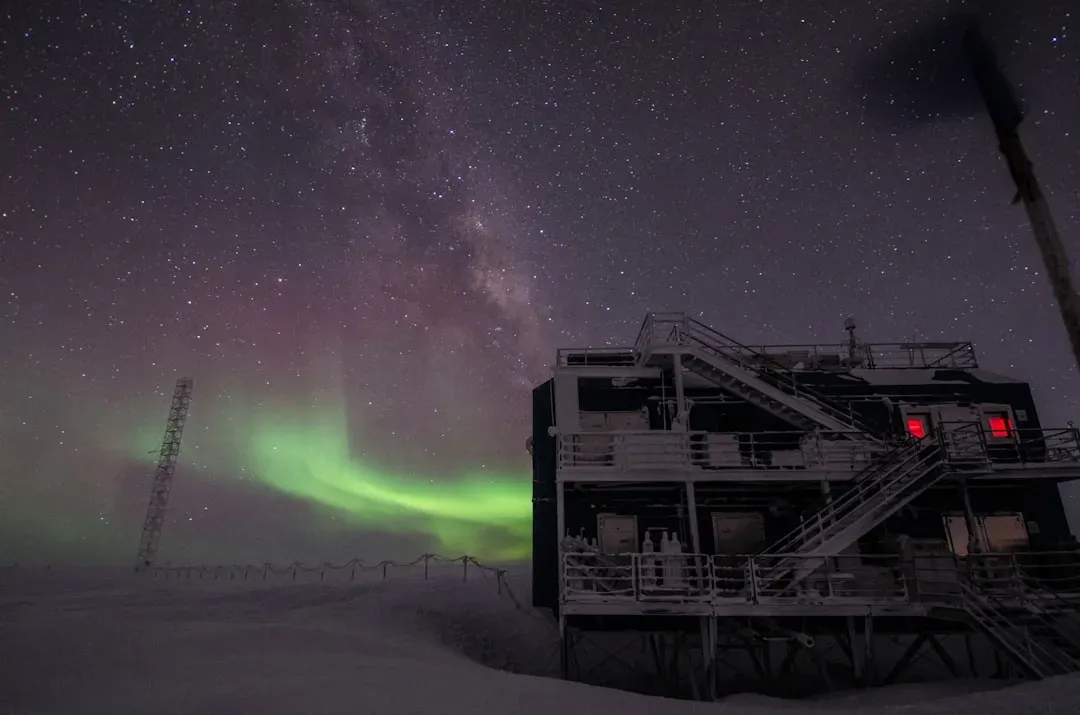
For most of modern astronomy, light has been the main way we learn about the universe. Telescopes tuned to radio waves, visible light, X-rays, and gamma rays have painted astonishingly detailed portraits of galaxies, nebulae, and black holes. But light has one major limitation: it can be absorbed, scattered, or blocked entirely by gas, dust, and dense matter. Traditional cosmic messengers are like postcards that have been smudged, torn, or lost before they reach us.
Neutrinos, by contrast, punch straight through almost everything, preserving information that light often cannot. That makes them invaluable for studying the inner engines of supernovae, the cores of active galaxies, and maybe even the earliest moments after the Big Bang. When combined with gravitational waves – ripples in spacetime detected from colliding black holes and neutron stars – neutrinos turn astronomy into a genuinely multi-messenger enterprise. Instead of relying on a single sense, science now has something like sight, hearing, and touch for the cosmos. The payoff is not just academic: understanding where the most energetic particles come from, and how they move through space, feeds directly into questions about radiation hazards for astronauts, the behavior of space weather, and the overall evolution of cosmic structure.
The New Tools: Gigantic Detectors and Global Collaborations
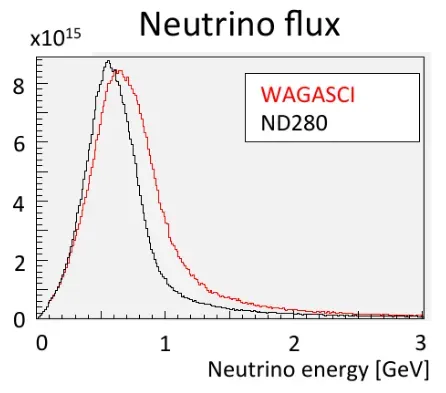
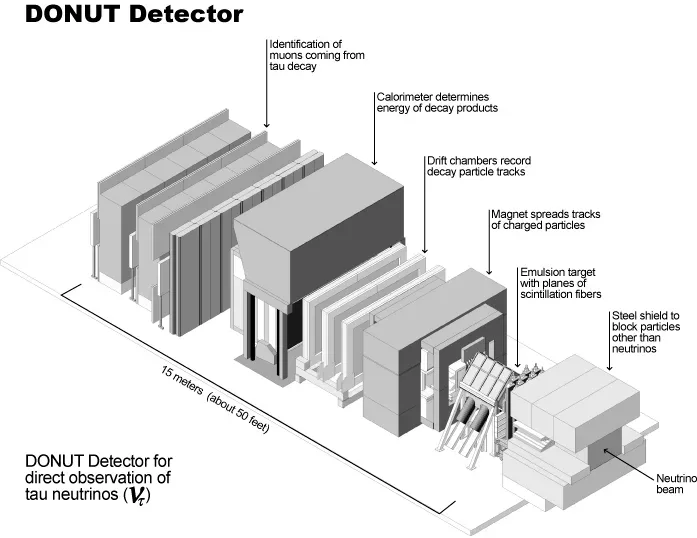
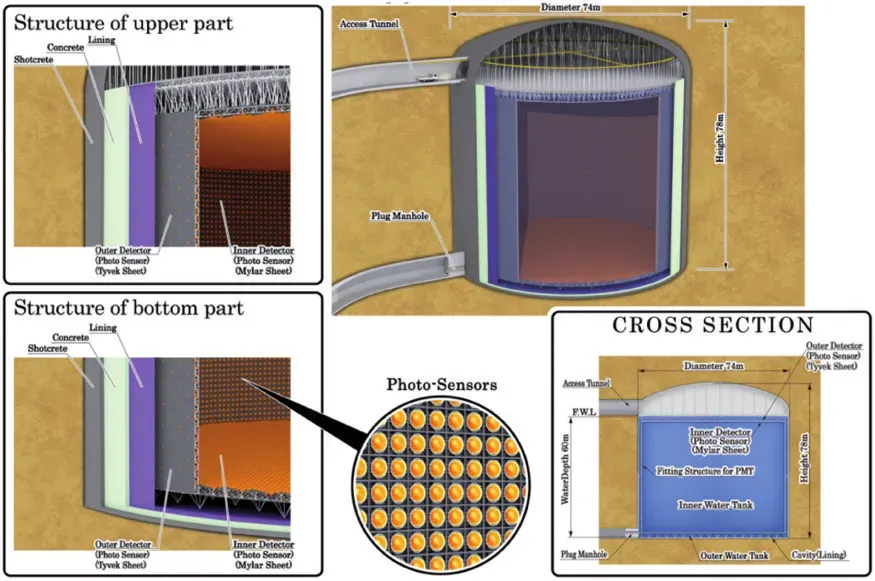
Catching ghost particles requires absurdly ambitious hardware. Because neutrinos interact so rarely, scientists build detectors out of enormous volumes of material – water, heavy water, liquid scintillator, or ice – and then wrap them in hundreds or thousands of sensitive light detectors. When a neutrino finally does bump into an atom, it can produce a faint flash of light that these instruments record. Facilities in Japan, Italy, Canada, China, the United States, and Antarctica all contribute to this global effort, turning Earth itself into a kind of sprawling neutrino observatory.
The design of these detectors reflects a mixture of brute force and subtlety. By burying them deep underground or under ice, researchers shield out the rain of cosmic rays and background radiation that would otherwise swamp the delicate signals. Sophisticated data analysis pipelines then sift through vast amounts of noise to extract a tiny number of genuine neutrino events. International collaborations, often involving hundreds or even thousands of scientists, engineers, and students, share data and cross-check results. That cooperative structure means that discoveries about neutrinos – such as refined measurements of their oscillation patterns or potential hints of new flavors – are rarely the work of a lone genius and more often the outcome of a tightly interconnected global community.
Beyond the Horizon: The Future Landscape of Neutrino Science
The coming decades are poised to turn neutrino physics from a niche specialty into a central pillar of high-energy and astrophysical research. Next-generation experiments like the Deep Underground Neutrino Experiment (DUNE) in the United States and Hyper-Kamiokande in Japan are designed to fire intense beams of neutrinos over hundreds of miles and watch how they morph in flight. By measuring those transformations with exquisite precision, scientists hope to pin down whether neutrinos and antineutrinos behave differently, a possible clue to why the universe is dominated by matter rather than antimatter. That, in turn, circles back to one of the deepest existential questions in cosmology: why anything exists at all.
On the astrophysical front, upgraded detectors like IceCube-Gen2 and new arrays in the ocean and lakes aim to capture far more high-energy neutrinos from distant cosmic accelerators. This expanded reach could help identify the sources of the most energetic cosmic rays and test ideas about how black holes feed and grow. There are also speculative possibilities that sound almost like science fiction, such as using neutrinos to peer through entire planets or monitor nuclear reactors for nonproliferation in near real time. The challenges are nontrivial – massive costs, complex engineering, and demanding data analysis – but the potential payoffs reach across fundamental physics, planetary science, and even global security.
Ghost Particles and Us: Human Stories in a Subatomic Mystery
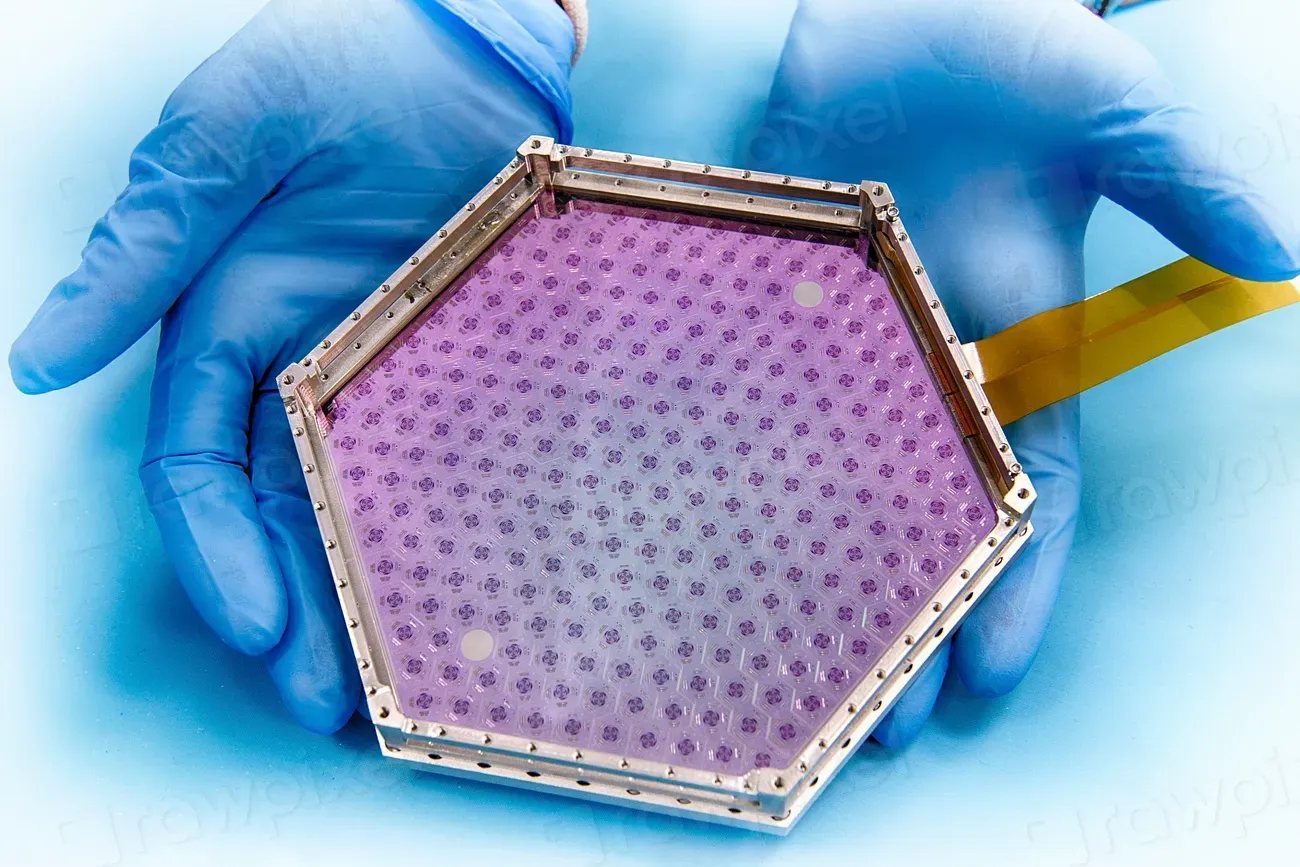
For all their abstraction, neutrinos are surprisingly personal. They pour out of the Sun and power the nuclear reactions that ultimately make life on Earth possible. They race through your body while you drink coffee, sit in traffic, or stare up at the night sky, silently connecting you to supernovae that exploded long before humans existed. Many of the people who work on neutrino experiments describe a strange intimacy with events happening millions or billions of light-years away, revealed through a handful of bright pixels on a monitor in a quiet control room.
On a more grounded level, neutrino science is also a human enterprise of patience, frustration, and occasional joy. Experiments take years to design and build, and often years more before they deliver clear answers. I still remember standing in a dim underground hall, surrounded by tanks of ultra-pure water and tangled cables, and feeling an odd mix of claustrophobia and awe. Above us was a mountain; around us was concrete and steel; but what everyone was really watching for was a message from deep space. That feeling – that the universe is whispering, and that with enough care we can learn to listen – is part of what keeps researchers going through the long stretches when nothing obvious seems to be happening.
What You Can Do: Staying Curious in a Ghost-Filled Universe
Most of us will never help calibrate a neutrino detector or analyze petabytes of data from Antarctic ice, and that is perfectly fine. Engaging with this ghost-filled universe starts with something much simpler: staying curious. When you read about new neutrino discoveries, gravitational waves, or black hole images, you are taking part in a global conversation about what reality is made of. Sharing those stories with friends, teachers, or kids helps keep both public interest and public funding alive for long-term, high-risk experiments that rarely make quick headlines.
There are also practical ways to connect, even from a distance. Many large physics collaborations run open days, online talks, and outreach programs that anyone can join. Supporting science education initiatives, museums, and public observatories in your community strengthens the ecosystem that produces the next generation of researchers and innovators. In the end, ghost particles are a reminder that the universe is more intricate and surprising than our everyday senses suggest. Paying attention to that fact – even for a few minutes at a time – is a quiet but meaningful way to live in a cosmos humming with invisible motion.
Suhail Ahmed is a passionate digital professional and nature enthusiast with over 8 years of experience in content strategy, SEO, web development, and digital operations. Alongside his freelance journey, Suhail actively contributes to nature and wildlife platforms like Discover Wildlife, where he channels his curiosity for the planet into engaging, educational storytelling.
With a strong background in managing digital ecosystems — from ecommerce stores and WordPress websites to social media and automation — Suhail merges technical precision with creative insight. His content reflects a rare balance: SEO-friendly yet deeply human, data-informed yet emotionally resonant.
Driven by a love for discovery and storytelling, Suhail believes in using digital platforms to amplify causes that matter — especially those protecting Earth’s biodiversity and inspiring sustainable living. Whether he’s managing online projects or crafting wildlife content, his goal remains the same: to inform, inspire, and leave a positive digital footprint.