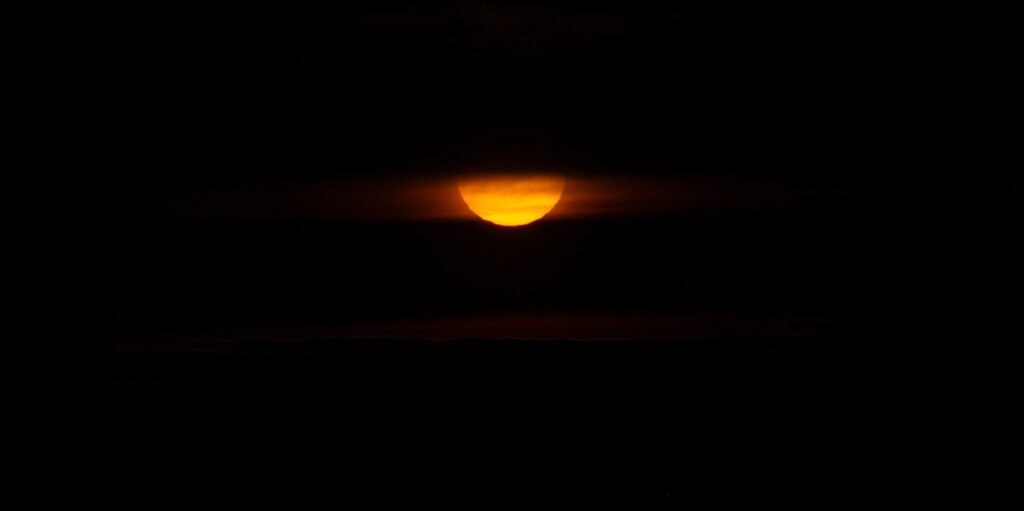

Every time we think we’ve finally mapped the rules of nature, the planet throws us a curveball. A sky that glows in ghostly colors with no storm in sight, a stone that seems to turn light into darkness, a desert that sings when the wind is just right – these are not scenes from science fiction, but real puzzles that researchers are still struggling to decode. For every equation and satellite we deploy, there are wild corners of reality that refuse to line up neatly. That tension between what we know and what we keep discovering is exactly where science gets exciting. These ten natural mysteries sit right at that edge, reminding us that the world is stranger – and more wonderful – than our current theories can comfortably handle.
The Hidden Clues: Earthquake Lights That Flare Before Disaster
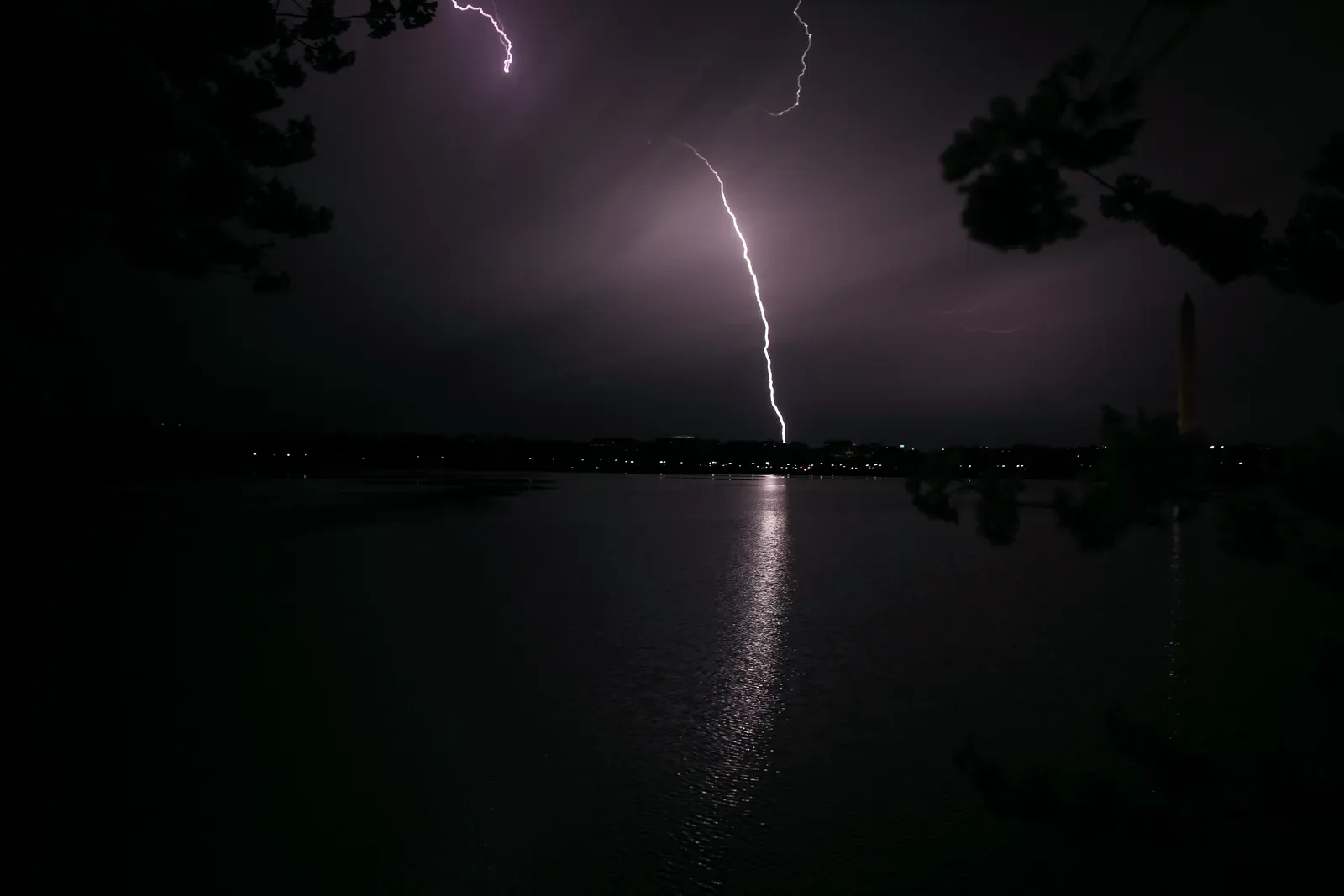
Imagine stepping outside just before a major earthquake and seeing the sky pulsing with eerie blue or green glows, like a silent, upside-down aurora. Reports of these so‑called “earthquake lights” stretch back centuries, from Japan to Italy to the Americas, often dismissed as folklore or misremembered lightning. In the last couple of decades, though, videos and eyewitness accounts captured around large quakes have convinced many seismologists that something real is happening in the atmosphere. The leading ideas involve electrical charges building in stressed rocks and shooting up through the ground, or tiny fractures releasing charged particles that ionize the air. Yet no single model consistently explains why these lights appear before some earthquakes and not others, or why the shapes range from brief flashes to glowing domes.
Scientists are now combing satellite data and ground-based cameras, trying to pin down patterns in timing, color, and location. They suspect that subtle factors – rock type, fault geometry, humidity – may all matter more than anyone realized. A few researchers hope that, one day, earthquake lights could join the toolbox for early warning, but the evidence is still scattered and incomplete. It is a bit like trying to solve a crime when your security cameras only work once in a while and never at the same angle. For now, the lights are both tantalizing clue and maddening tease, illuminating the sky while leaving the underlying physics frustratingly dim.
From Ancient Shores to Modern Satellites: Rogue Waves That Appear from Nowhere

Sailors have told stories for generations about monstrous waves that rise twice as high as anything around them, smashing ships that should have been safe by all known rules. For a long time, oceanographers assumed these were exaggerations, until satellite measurements and offshore platforms started recording single waves towering as high as a multi‑story building in otherwise moderate seas. Today, so‑called rogue waves are accepted as real: huge, steep walls of water that can be roughly about twice as tall as the surrounding waves, appearing with almost no warning. Some can hit with forces strong enough to crumple steel, even on modern vessels built to strict safety standards. The mystery is not that they exist, but how and when they form.
Models suggest several mechanisms: waves merging in just the wrong way, underwater currents focusing energy, or nonlinear effects that cause a few waves to “steal” height from their neighbors. In practice, the ocean is a chaotic mixing bowl, and it is very hard to track all those interacting swells in real time. That leaves ship captains, offshore workers, and coastal engineers living with an invisible dice roll every time a storm brews at sea. New radar systems and AI‑driven forecasting tools are being tested to spot the early signatures of rogue wave formation, but the predictions are still far from reliable. The ocean, it turns out, keeps more secrets under its surface than our most advanced models like to admit.
Why It Matters: The Strange Glow of Ball Lightning
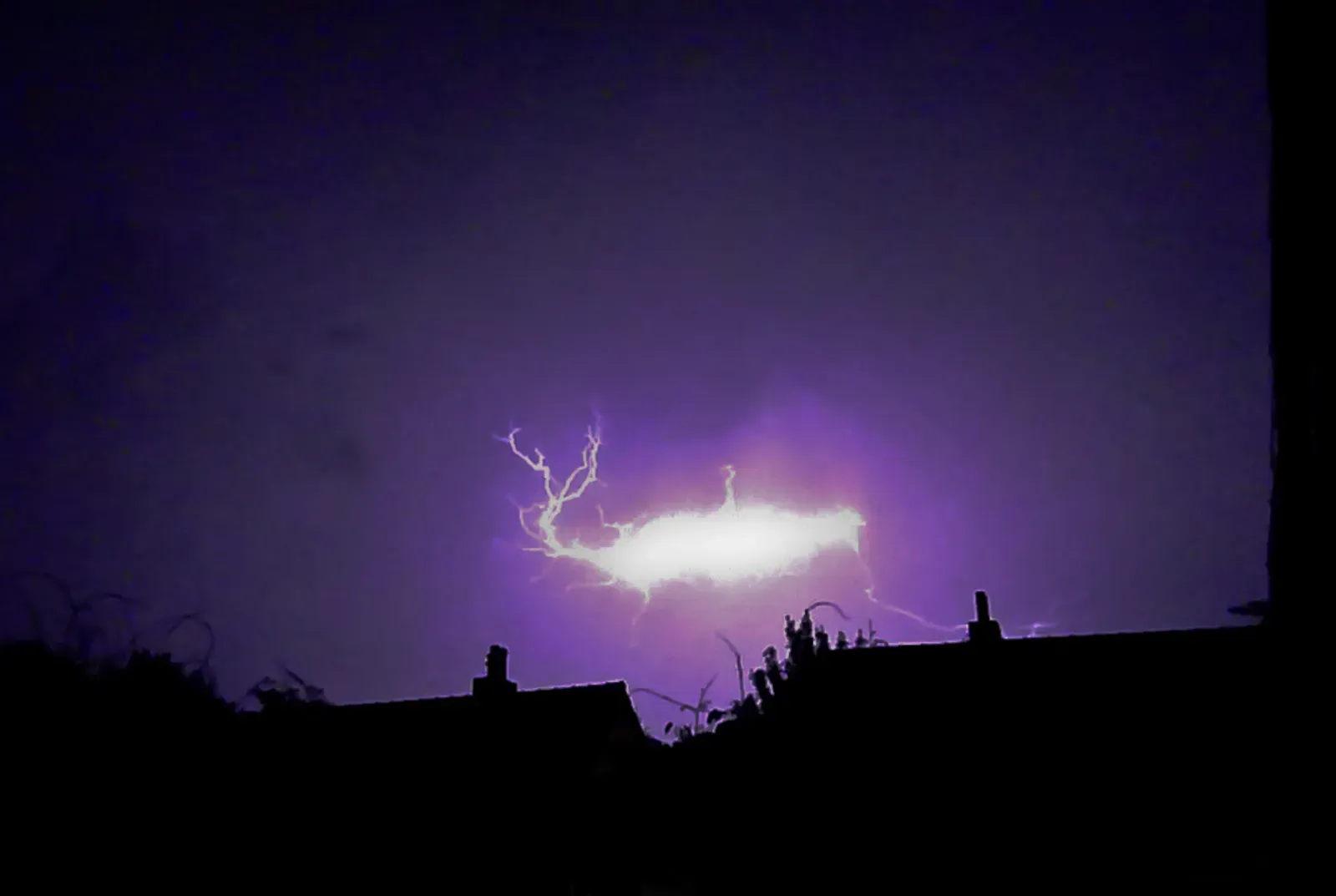
Picture a thunderstorm where, instead of a brief fork of lightning, you see a hovering, glowing orb drifting through the air – or, in some reports, right into a house or down an airplane aisle. This is the unsettling phenomenon known as ball lightning, a floating, luminous sphere that can last several seconds, change direction, and sometimes vanish with a pop. For centuries it lived in the same category as ghost stories and omens because there was no solid proof beyond anecdotes. In recent decades, though, a handful of instrumented observations and high-resolution videos have convinced many physicists that something unusual is genuinely occurring during certain storms. The trouble is that the event is so rare and unpredictable that getting good data is like trying to study a firefly that only appears once every decade.
Dozens of theories compete: spinning plasma held together by magnetic fields, vaporized soil forming a glowing cloud, even microwave radiation trapped in a kind of electromagnetic bubble. None of these fully matches all of the reported behaviors, especially the way ball lightning sometimes seems to pass through closed windows or move against the wind. Understanding ball lightning is not just a matter of curiosity; it may reveal new corners of plasma physics and high-energy processes in the atmosphere. It also highlights how even familiar weather, which we often treat as well-understood, still harbors corners that border on the uncanny. When a storm rolls in, we think we know the rules – rain, thunder, lightning – but somewhere out there, a wandering sphere of light occasionally rewrites the script.
Global Perspectives: The Ocean’s Low-Frequency “Hum” and Mysterious Sky Sounds

Even on perfectly calm days, the Earth is never truly quiet. Sensitive instruments record a constant low-frequency “hum” in the oceans and crust, a background vibration that persists independently of earthquakes and storms. Some of it arises from ordinary wave action and atmospheric pressure changes, but parts of the signal do not cleanly match any known source. At the same time, people across the world report strange sky sounds – deep rumbles, trumpet‑like tones, or mechanical hums – that are not linked to obvious human activity. A few can be tracked back to industrial noise or distant thunder, but others remain stubbornly unexplained despite careful investigations.
Researchers are trying to untangle how much of this global noise comes from subtle ocean‑floor processes, shifting sea ice, volcanic plumbing, or interactions between the atmosphere and the ionosphere. In some places, long-term residents have learned to live with a persistent unexplained hum that feels almost like an unwanted neighbor. For scientists, these sounds and vibrations are not just curiosities; they are data streams that might reveal hidden circulation patterns, deep magma movement, or emerging tectonic stresses. Yet the sheer complexity of overlapping signals makes it hard to separate one source from another. Listening to the planet is a bit like standing in a crowded train station and trying to follow a single conversation through the roar.
Deserts That Sing and Sands That Move Like Living Things

Walk across certain dunes in places like the Sahara or the Gobi, and the sand itself can start to sing – a deep, resonant drone that can last for minutes after a single slide or footstep. These “booming dunes” have fascinated explorers and locals for centuries, inspiring myths of hidden dragons or buried drums. Laboratory experiments show that dry, well-sorted grains can vibrate together in just the right way, amplifying sound like a giant speaker. Yet no single equation captures why only certain dunes, with particular grain sizes and slopes, produce that almost musical voice. Even more puzzling, the same dune field can boom one season and fall silent the next, with no obvious change to the casual eye.
Nearby, you may find “walking” boulders, rippling dune waves, and sand patterns that look eerily like biological structures, all driven by wind and gravity. Geophysicists are still teasing apart how microscopic friction between grains scales up into such large and organized movements. These processes matter for more than poetic desert hikes; they affect how dust storms form, how infrastructure survives in arid regions, and even how we interpret landscapes on Mars and other planets. Still, there is something humbling about the fact that we struggle to fully explain the behavior of grains of sand, one of the simplest materials imaginable. Under the right conditions, a desert can feel less like a static wasteland and more like a slow, alien orchestra tuning up.
Dark Lightning and the Invisible Storm Above Our Heads
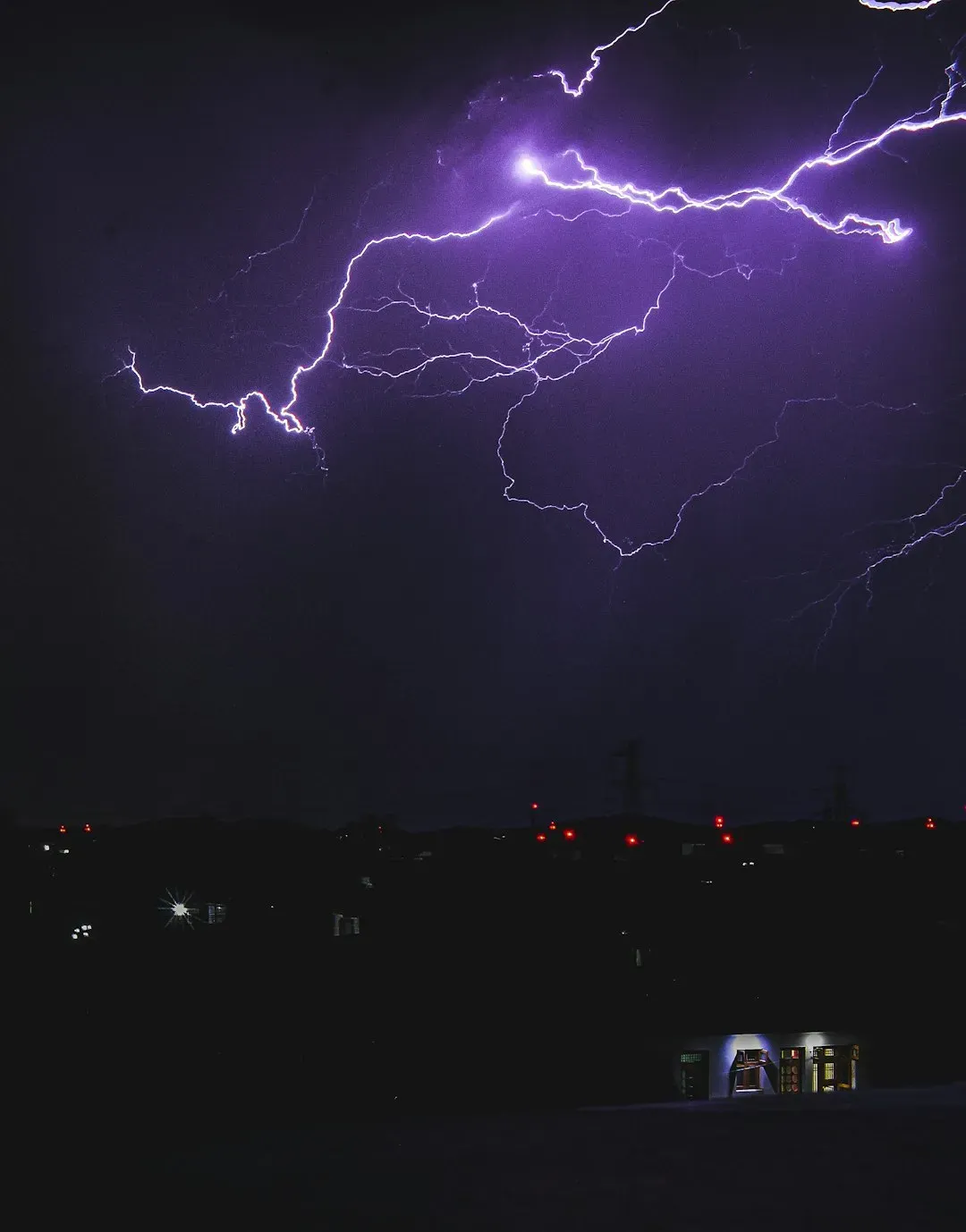
When you picture lightning, you probably imagine a bright, jagged bolt slashing through the clouds. High above those bolts, though, storms are also throwing invisible tantrums in the form of gamma-ray flashes and intense radiation bursts known as “dark lightning.” Satellites have detected these flashes coming from thunderclouds, producing energies usually associated with space phenomena, not everyday weather. In some cases, dark lightning seems to occur milliseconds before or during a regular lightning strike, as if an unseen high‑energy shadow is cast first. The mechanisms behind these bursts – how exactly electrons are accelerated to such extreme energies in such a short distance – remain an active and unsettled field of research.
There are practical stakes here, not just scientific curiosity. Aircraft sometimes fly through these regions, and while current evidence suggests the radiation doses are limited, the risks to crew and passengers are still being studied. These gamma-ray flashes also tie into a broader puzzle: sprites, jets, and other exotic lightning forms that stretch up toward space instead of down toward the ground. Each new observation chips away at the idea that thunderstorms are simple, well-understood engines of rain and thunder. Instead, they look more like multi-layered laboratories of extreme physics, stacked right on top of us. The more precisely we look, the stranger a summer storm becomes.
Black Sand, Shimmering Rocks, and the Optical Illusions of Light

Not all mysteries flash in the sky; some sit quietly in your hand, bending light in ways that still push the limits of our models. Certain volcanic glasses and mineral formations create baffling optical effects, such as stones that seem to swallow light or sands that give off shifting iridescent sheens under different angles. Materials like so‑called “super black” rocks in some lava fields absorb nearly all visible light, far more efficiently than typical surfaces. While scientists can describe absorption and reflection in general terms, the fine-grained microstructures that create these extreme effects can be surprisingly complex and difficult to characterize. In some cases, a single grain can behave almost like an engineered metamaterial, even though no human designed it.
These natural optical tricks do more than delight hikers and photographers. They offer blueprints for better solar cells, stealth coatings, and imaging technologies, if we can learn to reproduce or improve on what geology accidentally built. But fully reverse-engineering them demands a deep understanding of how mineral growth, cooling rates, and tiny impurities combine over vast timescales. That is a puzzle where chemistry, physics, and geology have to collaborate closely, and they do not always speak the same language. Every unusual reflection or unexpectedly dark patch of stone becomes a tiny riddle – one that might illuminate the path to new technologies as much as it reflects the wild creativity of Earth’s interior.
The Future Landscape: From Mystery Lists to Research Roadmaps

One of the strangest things about these phenomena is how unevenly they are studied. A dramatic rogue wave that crushes an offshore platform will attract intense funding, while a booming dune in a remote desert might be observed by only a handful of researchers in a decade. As instruments become cheaper and more automated, scientists are trying to turn these once‑in‑a‑lifetime stories into systematic data. Networks of cameras, infrasound microphones, satellites, drones, and ocean buoys are increasingly linked together, turning the planet into a kind of giant, shared observatory. The hope is that, over time, rare events like earthquake lights or ball lightning will be captured often enough to move from rumor to reproducible physics.
There are challenges, of course: limited budgets, hard‑to‑reach locations, and the sheer unpredictability of many of these events. Climate change adds another layer of complexity, subtly reshaping storm patterns, ocean behavior, and even desert dynamics in ways that might make some mysteries more common and others rarer. At the same time, new data-analysis tools, including advanced pattern-recognition algorithms, are helping scientists comb through mountains of noisy signals to find the faint fingerprints of exotic phenomena. What once depended on a lucky eyewitness with a camera now increasingly depends on global sensor webs and patient computation. The next big breakthrough may not come from a single spectacular event, but from quietly stitching together thousands of small, strange moments into a larger picture.
How You Can Engage: Staying Curious in a World of Unfinished Explanations

You do not need a lab coat or a satellite to be part of this story. Many of the mysteries that still puzzle researchers – unusual lights in the sky, rare wave patterns, strange sounds – are first noticed by ordinary people who bother to look up, listen, and report carefully. Citizen science platforms and local observation projects often rely on residents sending in photos, audio recordings, and precise details when they see something odd. Simple actions like noting the time, weather conditions, and location can turn a weird moment into a data point that scientists can actually use. Instead of brushing off something strange as impossible, you can treat it as a small clue in a much bigger investigation.
There are also quieter ways to engage, from supporting conservation efforts that protect fragile landscapes to backing institutions that fund basic research into seemingly obscure topics. A desert dune that sings or a remote coastline prone to rogue waves may not dominate the headlines, but they hold keys to understanding how our planet really works. Even choosing to stay informed, ask better questions, and resist the urge to demand simple answers from a complicated world is a kind of participation. Science moves forward not just on certainty, but on well‑documented confusion and honest curiosity. The next time nature does something that does not make sense, the most powerful thing you can do might be the simplest: pay attention and keep wondering.
Suhail Ahmed is a passionate digital professional and nature enthusiast with over 8 years of experience in content strategy, SEO, web development, and digital operations. Alongside his freelance journey, Suhail actively contributes to nature and wildlife platforms like Discover Wildlife, where he channels his curiosity for the planet into engaging, educational storytelling.
With a strong background in managing digital ecosystems — from ecommerce stores and WordPress websites to social media and automation — Suhail merges technical precision with creative insight. His content reflects a rare balance: SEO-friendly yet deeply human, data-informed yet emotionally resonant.
Driven by a love for discovery and storytelling, Suhail believes in using digital platforms to amplify causes that matter — especially those protecting Earth’s biodiversity and inspiring sustainable living. Whether he’s managing online projects or crafting wildlife content, his goal remains the same: to inform, inspire, and leave a positive digital footprint.