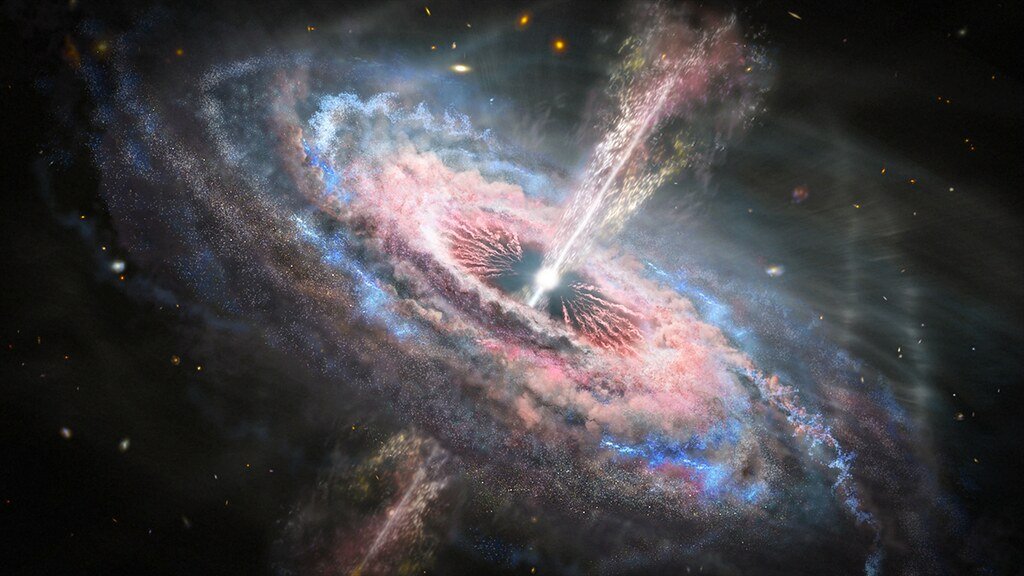

The Relentless Threat of Galactic Cosmic Rays (Image Credits: Flickr)
Astronomers and space agencies have long recognized cosmic rays as a formidable obstacle in humanity’s quest to reach Mars, demanding innovative defenses before any crewed mission launches.
The Relentless Threat of Galactic Cosmic Rays
Galactic cosmic rays, high-energy particles originating from distant supernovae, pose one of the greatest risks to astronauts venturing beyond Earth’s protective magnetic field. These particles travel near the speed of light and can pierce through spacecraft hulls, delivering damaging radiation to human tissue. Experts have warned that without adequate shielding, a round-trip journey to Mars could expose crews to radiation levels far exceeding safe limits.
Unlike the sporadic solar flares that astronauts on the International Space Station can sometimes evade, cosmic rays bombard space continuously. The European Space Agency reported that a Mars mission might result in radiation doses up to 700 times higher than those experienced on Earth annually. This constant exposure underscores the urgency for breakthroughs in protection technology, as current knowledge reveals gaps in our understanding of these particles’ long-term effects.
Health Risks Beyond the Horizon
Prolonged exposure to cosmic rays could elevate cancer risks and trigger degenerative diseases in astronauts, according to studies from NASA and other organizations. Particles from these rays disrupt DNA, potentially leading to mutations that manifest years after a mission ends. Astronauts have already shown higher rates of early-onset cataracts from shorter spaceflights, hinting at the amplified dangers of a Mars voyage lasting months or years.
The brain, heart, and central nervous system face particular vulnerabilities, with research indicating possible cognitive impairments and cardiovascular issues. Shielding the entire body proves challenging, as partial barriers can sometimes worsen the problem by generating secondary radiation particles. Space agencies emphasize that these health threats not only endanger individual astronauts but also complicate mission planning and crew selection.
Current Strategies and Their Limitations
Engineers have explored various shielding materials, from lightweight polyethylene to water-based barriers, to mitigate cosmic ray impacts. NASA’s ongoing heliophysics missions monitor solar activity, which influences radiation levels, allowing for better prediction during transit. However, these approaches fall short for deep-space travel, where full protection remains elusive.
Discussions among space enthusiasts highlight the impracticality of thick metal shields, which add excessive weight and cost to rockets. Partial shielding can trap and amplify radiation, turning a spacecraft into an unintended radiation chamber. Agencies like ESA continue testing prototypes, but experts agree that no solution yet meets the demands of a sustainable Mars habitat.
Innovative Paths Forward for Safer Journeys
Researchers propose creative solutions, such as constructing habitats in Martian lava tubes to leverage natural rock shielding against surface radiation. Artificial magnetic fields, inspired by Earth’s magnetosphere, emerge as a promising concept to deflect incoming particles. International collaborations aim to accelerate these developments, with upcoming lunar missions like Artemis II serving as testbeds for radiation protection technologies.
Advancements in materials science could yield self-healing shields or pharmacological countermeasures to repair cellular damage. By integrating data from current spacecraft, scientists hope to refine models of cosmic ray behavior. These efforts reflect a growing consensus that Mars exploration hinges on resolving this radiation puzzle before human boots touch the red planet’s soil.
- Galactic cosmic rays originate from supernovae and travel at near-light speeds.
- A Mars mission may expose astronauts to 700 times Earth’s annual radiation dose.
- Partial shielding risks creating secondary radiation particles.
- Lava tubes on Mars offer natural protection from surface exposure.
- Pharmacological aids could help repair DNA damage from rays.
- Artemis II will test shielding tech in lunar orbit.
Key Takeaways
- Cosmic rays demand comprehensive shielding to enable safe Mars travel.
- Health impacts include increased cancer risks and cognitive effects.
- Innovations like magnetic fields and underground habitats show promise.
As humanity edges closer to Mars, the cosmic ray challenge reminds us that exploration requires not just ambition but rigorous scientific safeguards. Overcoming this barrier will pave the way for multi-planetary life. What strategies do you believe will prove most effective in protecting future astronauts? Share your thoughts in the comments.