
Far below the reach of sunlight, where pressure could crush a submarine like a soda can, the ocean is anything but silent. For decades, hydrophones anchored in the abyss and drifting under polar ice have picked up eerie booms, howls, and droning hums that seem to come from nowhere. Some of these sounds have been traced to icebergs and whales, but others remain stubbornly unexplained, nagging at scientists like half-remembered dreams. At a time when the deep sea is facing new threats from mining, warming, and noise pollution, these mysterious signals are more than curiosities – they are clues to how little we know about most of our own planet. The question now is not just what is making these sounds, but how fast we can understand them before the deep ocean is changed for good.
The Hidden Clues Beneath the Waves
One of the strangest truths in ocean science is that we first “heard” much of the deep before we ever saw it. Since the Cold War, networks of underwater microphones originally built to track submarines have also been quietly recording the planet’s heartbeat, picking up distant earthquakes, erupting volcanoes, and unfamiliar calls echoing through the water column. To an analyst listening through headphones, some of these signals sound almost alive – a low moan rising and falling over minutes, or a rapid series of knocks like someone tapping on the hull from the outside. Yet even when the direction of the sound can be triangulated, the source region is often vast, stretching across hundreds of miles of seafloor or fractured ice.
These unexplained sounds function like crime-scene evidence in a world we can barely visit. Each one carries information about the environment that produced it: the energy involved, the depth, even the temperature and salinity of the water it passed through. For oceanographers, decoding them is like solving a puzzle where most of the pieces are still on the floor. Roughly about two thirds of the deep ocean remains completely unmapped at high resolution, and an even larger share has never been sampled with cameras or sensors. The result is a strange inversion of our usual relationship with Earth – we have high-definition images of distant galaxies, but only blurry acoustic snapshots of the canyons and trenches on our own planet.
The Bloop and Its Haunting Legacy
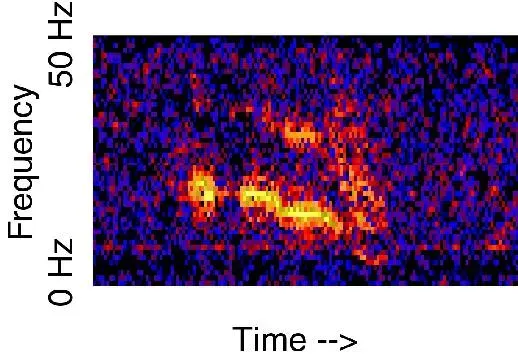
No list of mysterious ocean sounds is complete without the Bloop, the deep, powerful signal detected in the late 1990s that briefly ignited the collective imagination. Recorded on hydrophones more than three thousand miles apart, it seemed at first glance to behave like a biological call, scaling in frequency the way a whale’s song does, but at a volume that would require a creature larger than any known animal. For years, the Bloop was a canvas for speculation, spawning everything from cautious scientific debate to outlandish sea monster theories. Even ocean scientists admit it was unsettling to know that something could roar across the South Pacific that loudly and still remain invisible.
Subsequent analysis linked the Bloop to the fracturing and cracking of huge icebergs rather than a living giant, but its cultural shadow has never really faded. It became a symbol of how easily the ocean can surprise us, and how tempting it is to fill gaps in knowledge with stories. In a way, the Bloop’s “debunking” did not close the case so much as shift our focus: if ice alone can mimic life at such scales, what else are we misinterpreting in our acoustic archives? The Bloop also highlighted the sheer power of sound in the ocean, where low frequencies can travel for thousands of miles through a natural channel known as the SOFAR layer. What feels like a resolved mystery has instead trained us to be more cautious, and more imaginative, when we confront the truly unexplained.
Ten Sounds, Ten Different Suspects
The ocean’s most baffling noises do not come in a single flavor. Some, like the so‑called “Upsweep,” are long, rising tones that repeat seasonally in a broad swath of the Pacific, as if some unknown mechanism is switching on and off with the changing year. Others, such as the “Whistle” and “Train,” resemble mechanical signals, sliding steadily up and down in pitch in ways that evoke engines or alarms – yet no ships, cables, or industrial activity have been conclusively matched to them. Then there are impulsive bangs and booms that appear out of the blue from deep trenches, with signatures that look part earthquake, part explosion, and part something else entirely.
When scientists talk about ten unexplained sounds from the , they are usually grouping together a family of signals like these that defy easy classification. Possible suspects range from under-ice landslides and erupting volcanoes to methane gas bursts and the collapse of oversteepened slopes on the seafloor. A few might still be tied to unknown or poorly studied animals, particularly large squid, beaked whales, or entirely new groups of deep-diving species whose calls have never been cataloged. Some key working ideas include: – Interactions between magma and cold seawater at extreme depth – Sudden shifts in gigantic ice shelves or grounded icebergs – Resonance in submarine canyons or trenches acting like organ pipes Each unexplained sound forces researchers to refine or discard these hypotheses, slowly narrowing the field without yet closing the cases.
From Ancient Tools to Modern Listening Networks
Humans have been listening to the sea far longer than we have been able to record it. Early sailors put their ears to the hull or lowered simple listening tubes into the water to detect surf, reefs, or distant ships. In the twentieth century, the race to develop sonar fundamentally changed that relationship, transforming the ocean into a medium that could be actively probed with pings and pulses. During the Cold War, militaries laid down extensive hydrophone arrays across the Atlantic and Pacific, creating a secret global eavesdropping system designed to track enemy submarines. Decades later, parts of those networks were quietly repurposed for science, turning instruments of conflict into tools of discovery.
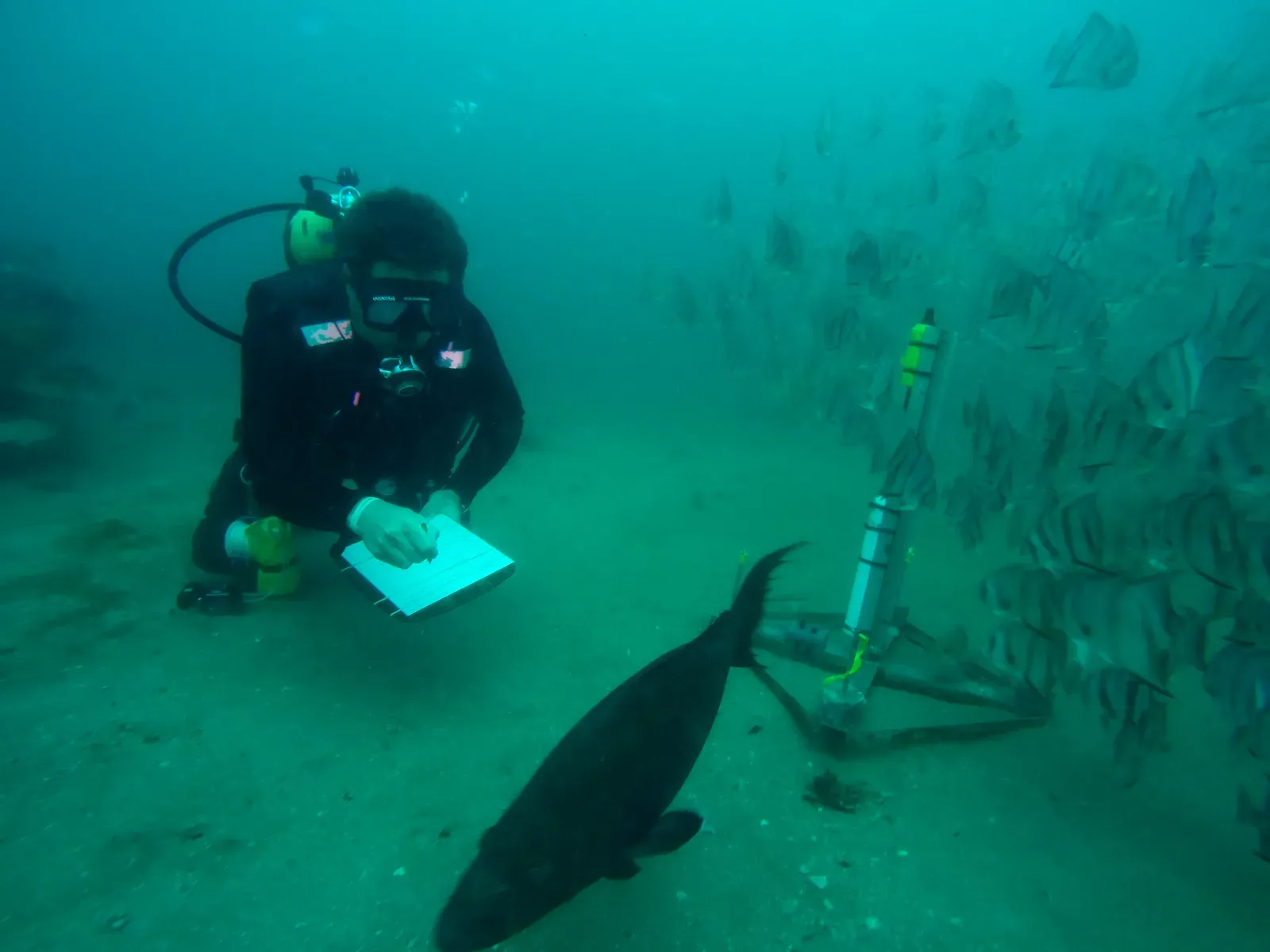
Today’s deep-ocean soundscape is monitored by a patchwork of technologies that would have been unthinkable to those early sailors. Autonomous gliders slowly zigzag through the water, towing compact hydrophones that can listen for months without surfacing. Cabled observatories on the seafloor stream continuous audio back to shore, while temporary listening stations are dropped into trenches for targeted campaigns. Despite this, huge regions of the deep remain essentially unmonitored, especially in the Southern Ocean and hadal trenches deeper than six thousand meters. In effect, we are running a global listening experiment with microphones scattered unevenly across a planet-sized concert hall, which explains why so many sounds come to us as tantalizing fragments rather than complete melodies.
Why It Matters: The Deep Ocean as an Early Warning System
It is tempting to treat these eerie sounds as fun curiosities, the auditory equivalent of ghost stories told around a campfire. But to ocean scientists, unexplained signals from the deep trenches are potential warning lights on the planetary dashboard. Many of the suspected sources – submarine landslides, gas releases, undersea volcanoes – are tightly connected to climate, tectonics, and even coastal hazards like tsunamis. If we can correctly interpret these acoustic signatures, they could provide early clues that a slope is becoming unstable or that volcanic activity is intensifying in a poorly monitored region. In that sense, the deep ocean is not just a mysterious backdrop; it is an active sensor network created by nature itself.
There is also a sobering comparison to be made with our traditional observing systems. Satellites give us high‑resolution views of the ocean surface, but they cannot see through water, and moored instruments are sparse and expensive to maintain. By contrast, sound can travel across entire ocean basins with relatively little loss, making it one of the few practical ways to monitor vast, remote areas continuously. Yet the vast majority of archived deep‑ocean recordings have never been fully analyzed, and only a small portion of detected signals have been confidently classified. Ignoring these unexplained sounds would be like having a network of smoke detectors that we never bother to interpret, even when some of them are clearly going off.
Global Perspectives From the Trenches
What makes these sounds especially compelling is that they do not respect national boundaries. A low‑frequency boom generated near a deep trench in the Southern Ocean can be picked up thousands of miles away, its energy funneled through natural sound channels that weave around continents. This has quietly turned unexplained deep‑sea acoustics into a global issue that demands cross‑border cooperation. Research groups in the United States, Europe, Asia, and the Southern Hemisphere now share recordings and analysis techniques, trying to match unknown signals detected on one side of an ocean to familiar events on the other. In a world often divided by politics, there is something almost hopeful about scientists bonding over strange noises from the abyss.
At the same time, the emerging soundscape is growing more crowded and contested. Commercial shipping, oil and gas exploration, naval exercises, and proposed deep‑sea mining add a rising layer of human noise that can mask or mimic natural signals. In some busy regions, roughly about one half of the low‑frequency sound energy is now attributed to human activities, complicating efforts to study subtle natural phenomena. That raises ethical and policy questions about how much acoustic disturbance fragile deep‑sea ecosystems can tolerate. Understanding the unexplained sounds already present is a crucial step in deciding what additional noise we are willing to inject into the system, and what might be lost if we drown out nature’s own messages.
The Future Landscape of Deep Listening
The coming decade is likely to transform how we listen to the deepest parts of the ocean, for better or worse. New generations of low‑power sensors can be deployed in swarms, turning individual hydrophones into distributed networks capable of triangulating mysterious sounds with far greater precision. Machine‑learning algorithms, trained on vast archives of labeled and unlabeled recordings, are beginning to tease apart overlapping sources that once sounded like indecipherable static. Instead of scientists scanning audio files by ear, computers can flag unusual patterns in near real time, alerting teams when something truly odd appears in the data. The hope is that this will move unexplained sounds from the category of “forgotten anomalies” into active research leads.
Yet technology alone will not solve the puzzle. Deep‑sea expeditions to visually confirm what is happening at the source of these signals are still rare and expensive, often relying on remotely operated vehicles that must survive crushing pressures in narrow weather windows. Some of the most intriguing sounds originate in polar or trench environments that are logistically brutal to reach. There is also a risk that resource extraction, particularly deep‑sea mining, could damage or alter the very regions we are trying to understand before we have a proper baseline. The future landscape of deep listening will depend on whether governments and institutions treat the unexplained as an irritant – or as a powerful argument for restraint and careful exploration.
From Mystery to Meaning: How You Can Engage
For most of us, the idea of unexplained sounds rising from Earth’s feels distant, like something out of a science fiction novel. But there are surprisingly direct ways to be part of the story. Publicly accessible projects now let you listen to snippets of real deep‑ocean recordings online, tagging what you hear and helping scientists sift through immense datasets that would otherwise sit untouched. Supporting organizations that fund ocean exploration, from university research programs to independent foundations, helps pay for the ships, robots, and sensors that turn eerie noises into scientific insight. Even something as simple as paying attention to news about deep‑sea mining or marine protected areas, and voicing your opinion to policymakers, connects your daily life to these hidden frontiers.
On a more personal level, staying curious about the ocean changes how we see our place on the planet. The next time you stand on a beach or look out over a calm bay, consider that far below the surface, in trenches deeper than Mount Everest is tall, the planet is crackling, booming, and murmuring in ways we still do not understand. Your attention, and your willingness to support careful, science‑driven exploration, is part of what determines whether those sounds remain unknowable background noise or become key pieces of Earth’s unfolding story. The mysteries will not vanish overnight – but whether they stay as unanswered riddles or become hard‑won knowledge depends partly on what we choose to do now.
Suhail Ahmed is a passionate digital professional and nature enthusiast with over 8 years of experience in content strategy, SEO, web development, and digital operations. Alongside his freelance journey, Suhail actively contributes to nature and wildlife platforms like Discover Wildlife, where he channels his curiosity for the planet into engaging, educational storytelling.
With a strong background in managing digital ecosystems — from ecommerce stores and WordPress websites to social media and automation — Suhail merges technical precision with creative insight. His content reflects a rare balance: SEO-friendly yet deeply human, data-informed yet emotionally resonant.
Driven by a love for discovery and storytelling, Suhail believes in using digital platforms to amplify causes that matter — especially those protecting Earth’s biodiversity and inspiring sustainable living. Whether he’s managing online projects or crafting wildlife content, his goal remains the same: to inform, inspire, and leave a positive digital footprint.