We like to tell ourselves we’re adaptable, adventurous, open to new possibilities. Yet when a promising job offer appears, a healthy habit beckons, or a relationship needs a hard but honest conversation, many of us feel something closer to dread than excitement. Change, even the kind that looks objectively positive, can land in the nervous system like a threat. Psychologists have spent decades trying to understand why our minds and bodies dig in their heels, and the answer turns out to be more than simple stubbornness. Beneath the surface lies a careful survival machine that evolved for stability in a dangerous world, not constant reinvention. The puzzle scientists are now asking is not just why we resist change, but how we might gently rewire that resistance into something more flexible, without losing the protective instincts that helped us get this far.
The Hidden Brain Alarm: Why Certainty Feels Safer Than Growth
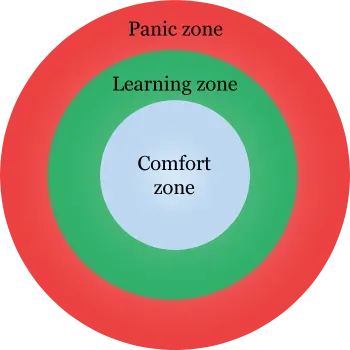
One of the most surprising insights from modern neuroscience is how strongly the brain prioritizes predictability over happiness. When routines are steady, your nervous system can “budget” energy efficiently, like a household that knows exactly what the bills will be every month. New situations, even hopeful ones, carry unknown variables, and those unknowns demand extra attention and energy. Brain imaging studies show that unpredictable changes can trigger activity in regions linked to threat detection and anxiety, helping explain why a promotion or a move to a nicer neighborhood can still feel like standing on the edge of a cliff. In that sense, resistance to change is not irrational at all; it is the brain’s attempt to avoid being blindsided.
This alarm system can be useful when a sudden change really does signal danger, like a car swerving toward you or an unexpected layoff email. But the system is crude: it often cannot distinguish between “good-scary” and “bad-scary,” reacting to both with a similar wave of stress hormones, muscle tension, and mental rumination. If you have ever delayed sending a promising application or avoided a difficult conversation that could improve your life, you have felt this bias toward the familiar in action. What feels like procrastination or self-sabotage is partly your internal safety officer pulling the emergency brake, even when you intellectually want to move forward.
From Ancient Survival to Modern Overwhelm

To understand why our brains cling to the status quo, it helps to rewind to a time before email and subway schedules, when a human life was shaped by weather, predators, and shifting food sources. For early humans, patterns meant survival: knowing where water usually flowed, when fruit ripened, or which paths predators favored reduced the odds of a fatal surprise. In that world, a cautious attitude toward sudden changes made sense; an unexplained rustle in the grass could be wind, but assuming it was a leopard cost nothing compared to being wrong the other way. Over thousands of generations, nervous systems tuned themselves to treat uncertainty like a problem to be controlled, not a playground to be explored.
Fast forward to the twenty-first century, and that same template has been dropped into a world of constant notifications, shifting job markets, and social media trends. Instead of a few major life transitions spread over years, many people now juggle dozens of micro-changes every week, from new software at work to evolving social norms. Our brains have not had time to evolve a separate “response to benign change” setting; the ancient machinery still lights up broadly when patterns are disrupted. This mismatch can leave us feeling exhausted and oddly threatened by changes that, on paper, promise better health, opportunity, or connection. The resistance is not a character flaw; it’s an evolutionary echo amplified by a high-speed world.
The Comfort of the Known: Habits, Identity, and Loss

Beyond biology, there is a quieter reason change feels dangerous: the stories we tell ourselves about who we are are built from familiar routines. If you’ve seen yourself for years as “the shy one,” “the reliable employee,” or “the person who never exercises,” then any change that challenges that identity can feel like a kind of loss. Psychologists talk about a “status quo bias,” a tendency to prefer what we already have simply because it is part of our mental home. Letting go of old habits means grieving not just actions but versions of ourselves, and grief – even for an outdated self – can be surprisingly heavy. It is easier, in the short term, to stay the same and avoid that internal funeral.
Habits also simplify life by putting parts of our day on autopilot, freeing up attention for other tasks. That is why you can drive a familiar route or make coffee without thinking much about it. When we try to install a new habit, like an exercise routine or a different way of responding to conflict, the brain has to work harder, and that extra effort feels awkward and draining. It is the psychological equivalent of switching from a smooth highway to a bumpy dirt road. Many people interpret that discomfort as a sign that the change is wrong, rather than as a predictable phase of rewiring behavior. So they retreat to the smoother path, even if they know it leads somewhere they do not actually want to go.
How Fear, Loss Aversion, and Social Pressure Team Up
Economists and psychologists have shown that people typically feel the pain of losing something more intensely than the joy of gaining something of equal value. This “loss aversion” may have helped our ancestors survive in lean environments, but it can badly distort decision-making in modern life. Given a choice between a sure but mediocre current situation and a risky but potentially better alternative, we often overweight the possibility of loss and underweight the possibility of improvement. That is part of why someone might stay in a stale job or a draining friendship; the imagined losses loom larger than the potential gains. Even when the odds are clearly stacked in favor of beneficial change, we can still freeze in place.
Layered on top of this is social influence. Humans are deeply attuned to what their group is doing, because being accepted used to be a matter of literal survival. When you contemplate a change – switching careers, leaving a religious community, coming out, or even just eating differently – you are often imagining not just personal consequences but social reactions. Will I be judged, rejected, mocked for changing? This anxiety can be heightened in cultures or families where loyalty to tradition is seen as a core virtue. The result is a triple threat: biological alarms about uncertainty, psychological dread of loss, and social fear of standing out. Together, they make even beneficial change feel like stepping into a courtroom where you suspect the verdict is already guilty.
The Hidden Clues: What Science Reveals About Who Resists Change – and Who Leans In
Not everyone resists change in the same way, and researchers have spent years studying individual differences in how people respond to uncertainty. Personality traits like openness to experience, tolerance for ambiguity, and general anxiety levels all shape how daunting a new path feels. Some studies suggest that people who score higher on curiosity are more likely to interpret change as an opportunity for learning rather than a threat. On the other hand, those who have lived through repeated, uncontrollable upheavals – such as conflict, displacement, or unstable caregiving – may understandably associate change with chaos. The body remembers, and it often remembers in the language of caution.
Scientists are also finding that context matters as much as personality. People tend to be more open to change when they feel they have some choice and control over its timing and details. Changes that are imposed suddenly, without explanation, trigger far more resistance and stress. There are intriguing hints that how we frame change – using words like “experiment” instead of “permanent decision,” for instance – can soften the internal alarm. Even small steps, like trying a new behavior for a week rather than committing forever, seem to help the brain treat change as manageable. These clues suggest that resistance is not fixed destiny; it is a pattern that can be nudged, shaped, and gently retrained.
Why It Matters: Resistance to Change in a Rapidly Shifting World
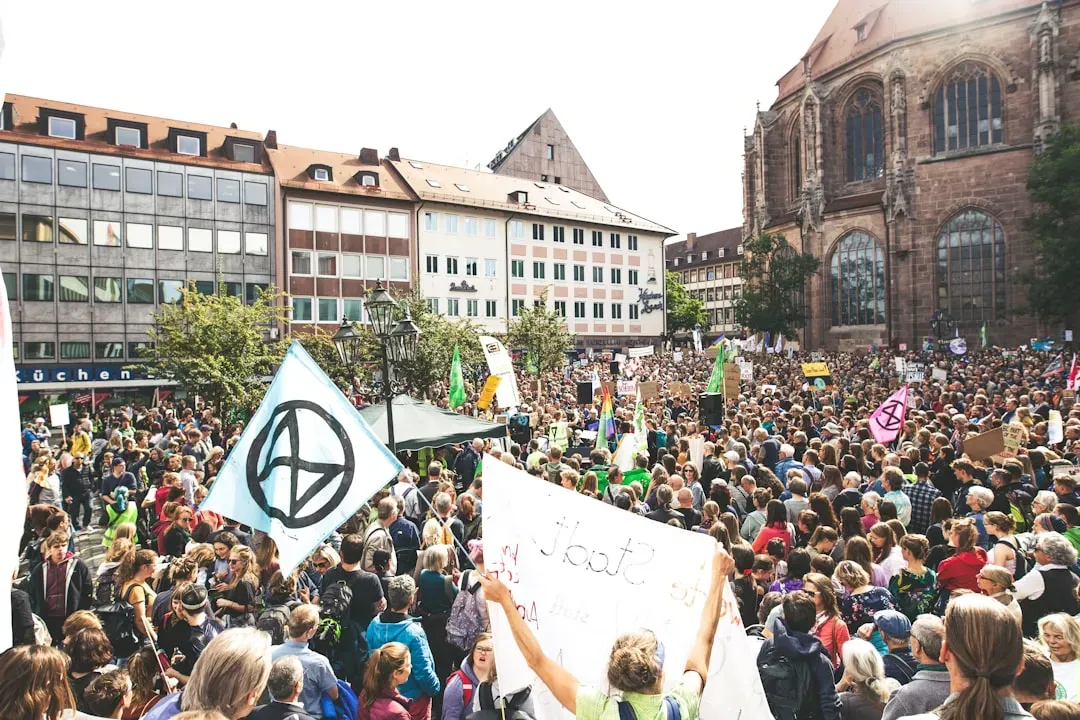
Understanding why we resist change is not just a self-help curiosity; it has real consequences for public health, politics, and the planet. When people hesitate to adopt medical advice, upgrade crumbling infrastructure, or shift away from harmful environmental habits, the cost of delay can be measured in illness, lost livelihoods, and degraded ecosystems. We see this in everything from slow uptake of preventive health screenings to uneven responses to climate science. Resistance to change can turn well-founded warnings into background noise, and each year of hesitation deepens the problems we eventually have to face. The stakes are no longer just personal comfort; they are collective survival.
At the same time, there is a risk in romanticizing change for its own sake, as if all resistance were backward and all disruption were enlightened. Many traditional practices encode hard-won knowledge about local ecosystems, community support, and long-term resilience. What matters is not forcing change or clinging blindly to the past, but becoming more skilled at asking: Which patterns genuinely protect us, and which ones are keeping us stuck? In a world of accelerating technological, social, and environmental shifts, our ability to answer that question may be as important as any specific innovation. Learning how resistance works under the hood can help policymakers, educators, and leaders design transitions that people can actually live with, rather than simply endure.
The Future Landscape: Can We Train Brains for Healthier Change?

Looking ahead, scientists and technologists are increasingly interested in whether we can deliberately reshape how humans respond to change. Digital tools already guide people through gradual habit shifts, using reminders, small rewards, and progress tracking to make new behaviors feel less overwhelming. Some research teams are exploring virtual reality as a way to safely rehearse big transitions, from public speaking to difficult conversations, allowing the brain to experience change in a controlled environment. There is growing interest in combining psychological insights with workplace design, urban planning, and education policy so that change is introduced in stages rather than as a shock. The aim is not to eliminate resistance, but to reduce the unnecessary friction that wastes time and energy.
There are challenges, too. Technologies that nudge behavior can easily be misused for manipulation, steering people toward choices that serve corporate or political interests more than their own. Unequal access to support, coaching, or mental health resources could widen existing gaps in who can adapt to a changing world. As climate pressures, automation, and demographic shifts reshape societies, those least equipped to navigate change are often the ones most exposed to it. The coming decades will likely test whether we can turn our understanding of resistance into fair, humane systems that help people adjust without breaking. Success will depend not only on clever apps or therapies, but on a cultural shift that treats resistance as a signal to listen to, not an obstacle to bulldoze.
Small Experiments: How to Work With Your Own Resistance

On a personal level, one of the most practical approaches to resistance is to stop treating it as the enemy. When you feel that tightening in your chest before a big decision, you can regard it as information: your brain predicting risk, not issuing a final verdict. Breaking changes into tiny, reversible experiments often lowers the stakes enough for your nervous system to come along for the ride. Instead of overhauling your entire diet, you try one new breakfast for a week; instead of quitting your job in a blaze of glory, you explore a class or side project that tests another path. These small moves train your brain to associate change with manageable discomfort and occasional reward, rather than catastrophe.
It also helps to recruit allies. Sharing your plans with a trusted friend, therapist, or community group creates a social buffer around the vulnerable early stages of change. Celebrating modest wins – showing up to the first workout, sending the email you have been putting off, asking a question you usually swallow – reinforces that the world does not collapse when you nudge your boundaries. Over time, this gentle exposure can shift your internal narrative from “I hate change” to “Change is hard, but I can handle small steps.” You are not trying to become a different species, just teaching your old survival brain a few new tricks.
Call to Action: Choosing Your Next Tiny Change

If resistance to change is baked into the human condition, the question is not how to erase it but how to dance with it more skillfully. One place to start is by noticing where your life feels cramped not because of external limits, but because an old story is still steering your choices. You might ask yourself: If fear of loss or disapproval were turned down just a little, what is one small experiment I would try this month? Maybe it is having a candid conversation, signing up for a class, or simply taking a different route on your daily walk to remind your brain that novelty can be safe. The goal is not to become fearless, but to become more honest about what you truly want and what you are actually protecting yourself from.
At a broader level, supporting institutions and policies that make change less punishing can help everyone’s nervous systems breathe easier. That might mean advocating for fair safety nets during economic transitions, backing mental health research, or learning how to communicate scientific findings in ways that respect people’s fears rather than shaming them. Each of us can also model a more compassionate view of resistance in our families, workplaces, and communities, recognizing that hesitation is often a sign of care, not laziness. Change will keep coming, whether we like it or not; the choice we have is whether to meet it with reflexive armor or with informed, patient curiosity.
Suhail Ahmed is a passionate digital professional and nature enthusiast with over 8 years of experience in content strategy, SEO, web development, and digital operations. Alongside his freelance journey, Suhail actively contributes to nature and wildlife platforms like Discover Wildlife, where he channels his curiosity for the planet into engaging, educational storytelling.
With a strong background in managing digital ecosystems — from ecommerce stores and WordPress websites to social media and automation — Suhail merges technical precision with creative insight. His content reflects a rare balance: SEO-friendly yet deeply human, data-informed yet emotionally resonant.
Driven by a love for discovery and storytelling, Suhail believes in using digital platforms to amplify causes that matter — especially those protecting Earth’s biodiversity and inspiring sustainable living. Whether he’s managing online projects or crafting wildlife content, his goal remains the same: to inform, inspire, and leave a positive digital footprint.