

For most of the last century, psychology has told us a comforting story: your personality is the steady backbone of who you are, predictable from early adulthood and largely resistant to change. But a quiet revolution in research is undermining that assumption, suggesting that our traits may be far more flexible than we thought, even well into midlife and beyond. This raises unsettling questions – if our personalities can shift, how much of our past behavior is really “who we are,” and how much is just a snapshot in time? At the same time, it opens an unexpectedly hopeful door for anyone who has ever felt trapped by labels like “too anxious,” “too shy,” or “not assertive.” The mystery now gripping personality science is not whether we can change, but how much, how fast, and under what conditions.
The Hidden Clues: When Lives Refuse to Match the Labels
Think about the friend who was painfully shy in high school, but now dominates the room at a reunion, or the once impulsive sibling who somehow became the calm center of their extended family. For years, stories like these were written off as anecdotes that did not really challenge the broader claim of personality stability. Yet long-running studies following people over decades have repeatedly found subtle but systematic shifts in traits like conscientiousness, emotional stability, and agreeableness, especially in midlife. The supposed “fixed” personality begins to look more like wet concrete: it firms up, but never quite turns to stone. Those lived contradictions – between the old labels and the current behavior – are the first clues that something bigger may be going on.
Researchers now see personality not as a rigid blueprint, but as a pattern of tendencies that emerges from our habits, relationships, and environments. When those conditions change dramatically – after a divorce, a health scare, a career upheaval – people often report feeling like an entirely different person, and detailed assessments frequently back that up. In some studies, people who intentionally work on traits such as becoming more organized or more outgoing show measurable changes over just a few months. The gap between the story we tell ourselves (“this is just who I am”) and the evidence from our behavior suggests that our inner narrative may be out of date far more often than we realize.
From Ancient Typologies to Modern Trait Science
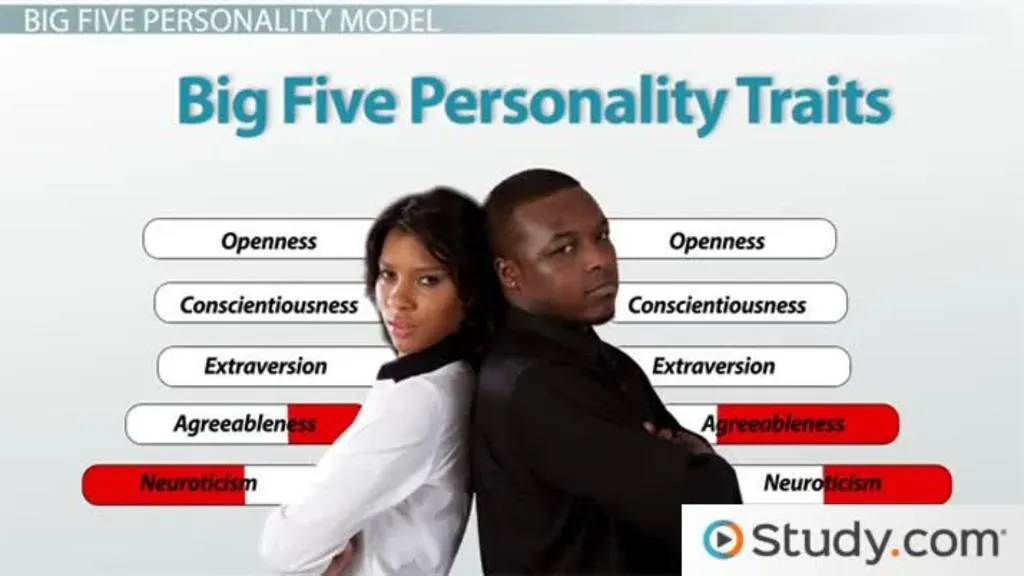
Humans have been trying to classify personality for as long as we have recorded history, from ancient systems of temperaments based on bodily fluids to early twentieth-century “character types.” Those early frameworks leaned heavily on the idea that people belonged in stable, almost destiny-like categories: melancholic, choleric, introvert, extrovert. Modern trait theories, especially the well-known Big Five model – openness, conscientiousness, extraversion, agreeableness, and neuroticism – were supposed to be the more scientific answer. Large studies suggested that, by early adulthood, scores on these traits become relatively stable, and that people maintain their rank order compared with others over time.
But “relatively stable” turned out to be more elastic than many textbooks implied. As statistical tools improved and datasets expanded, scientists started to notice that group averages do shift with age: people, on the whole, tend to become more conscientious and more emotionally stable from their thirties into their fifties, and often more agreeable as they navigate family, work, and community roles. Some researchers now argue that these patterns may be linked less to biological aging and more to changing social demands and life scripts. In other words, what looks like “maturity” might be a long training process, where the roles we occupy slowly sculpt the traits we exhibit, much like a river that carves out its own winding path through rock over time.
Personality as a Lifelong Construction Project
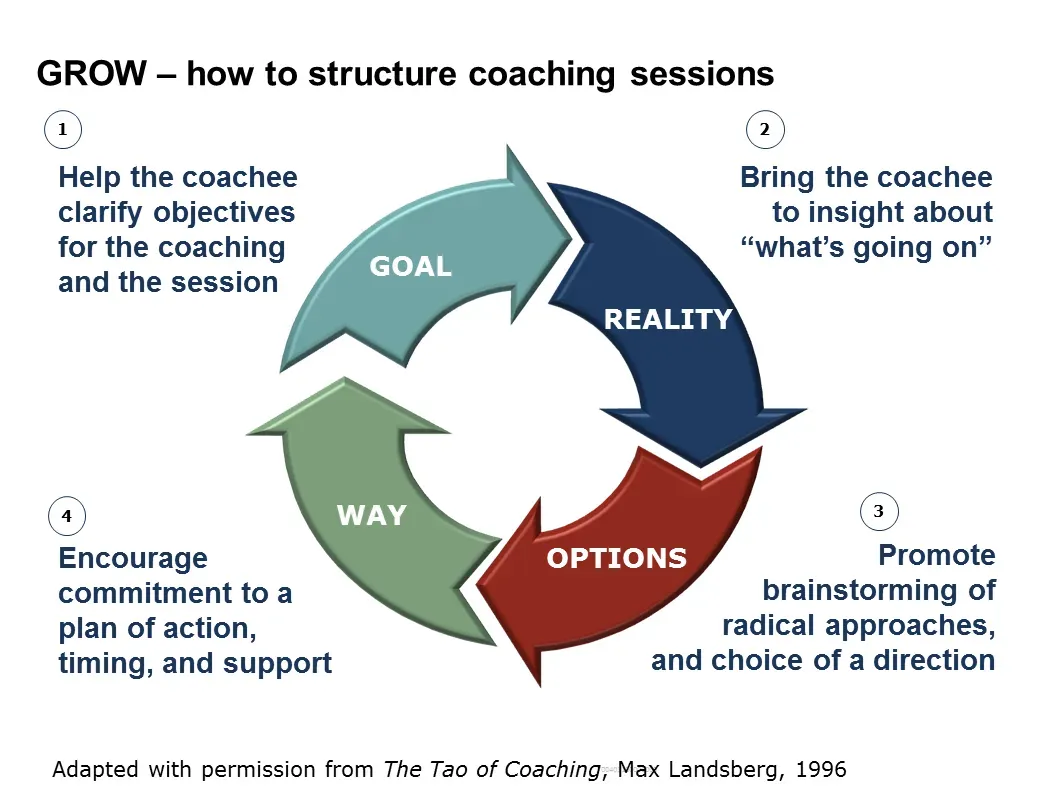
One of the most striking shifts in recent research is the idea that personality is not just discovered, but actively built. Studies on what psychologists call “intentional personality change” suggest that people who set clear, trait-focused goals – such as wanting to become more resilient under stress or more outgoing in social situations – can show measurable changes within weeks or months. These changes do not happen simply by wishing; they emerge from repeated behaviors that gradually become more automatic. If you repeatedly act “as if” you are the kind of person who plans ahead, shows up on time, and follows through, you eventually tilt your personality profile in that direction.
There is growing evidence that psychotherapy, structured coaching, and even self-guided interventions can nudge traits in meaningful ways. For instance, working with a therapist on managing anxiety can reduce neuroticism scores, while engaging in new, stimulating activities can foster openness. Some researchers describe personality as a long-running negotiation between our biology and our environment, where habits act as the daily votes we cast for the kind of person we are becoming. Instead of being passengers in a fixed psychological vehicle, we may be more like drivers who can, with effort and repetition, change lanes and even alter the route.
The Brain Behind the Shifts
If personality can change, the brain has to be part of the story. Neuroscience over the last few decades has repeatedly shown that the adult brain is more plastic than once believed, capable of reorganizing connections in response to experience, learning, and even deliberate practice. Long-term habits of thought and behavior are etched into neural circuits, but those circuits can be rewired, especially when new behaviors are repeated in emotionally meaningful contexts. This helps explain why major life events – parenthood, serious illness, bereavement, career transformation – often precede detectable shifts in personality traits.
Brain imaging studies suggest that traits such as impulsivity, sociability, and anxiety are associated with patterns of activity in networks involved in reward, attention, and emotional regulation. When people engage in sustained cognitive-behavioral therapy, mindfulness training, or intensive learning, those networks can change in both structure and function. While we are still early in understanding the precise pathways, the emerging picture is that personality-related tendencies are not fixed circuits, but living systems. They respond to our daily choices, our relationships, and even to the way we talk to ourselves, much as a muscle responds to repeated exercise or neglect.
Why It Matters: Rethinking Identity, Responsibility, and Hope
If personalities are not fixed, the implications cut straight to how we see ourselves and others. For one thing, the old assumption that “people never really change” becomes harder to defend, which complicates how we think about blame, forgiveness, and second chances. Past behavior still matters, but it may be a less reliable guide to future behavior than we once believed, especially when someone has gone through major experiences or targeted efforts at change. For those in midlife who feel stuck under a familiar label – too disorganized, too reactive, too withdrawn – the new science offers a rare combination of realism and optimism: change is possible, but it is usually gradual, effortful, and most successful when done intentionally.
This research also challenges how institutions operate. If traits can shift, then workplaces, schools, and even justice systems that assume stable personalities may be missing chances to support growth. Consider a few key stakes:
- Career development programs that treat employees as fixed “types” may overlook their capacity to grow into leadership, creativity, or collaboration.
- Educational systems that track children early based on temperament risk hardening temporary traits into lifelong expectations.
- Health interventions that ignore personality change might underestimate how much people can alter habits that affect longevity and mental health.
For many readers, especially those over forty-five who have already reinvented themselves at least once, this science may simply put a name to what they have lived: identity as a work in progress, not a finished portrait.
When Change Meets Culture: Global and Generational Perspectives

Personality does not evolve in a vacuum; it unfolds within cultural and historical contexts that shape what kinds of change are even thinkable. In some societies, stability and conformity are prized, and people may feel pressure to hold onto a consistent identity, even when their inner life is tugging in a different direction. In others, reinvention is almost expected, with career pivots, late-in-life education, and geographic moves treated as normal stages rather than dramatic departures. Cross-cultural research has found that average personality trait profiles can differ between countries and regions, reflecting differing social norms, economic conditions, and collective histories.
Generational shifts also play a role. People now in their forties, fifties, and sixties have lived through rapid changes in technology, work structures, and family life, all of which exert long-term pressure on traits like openness, conscientiousness, and social engagement. A grandparent learning video calls to keep up with distant grandchildren is not just gaining a skill; they may be stretching their comfort with novelty and uncertainty. Meanwhile, younger adults navigate social media, gig work, and economic instability, which can reward flexibility and self-presentation, potentially leading to different patterns of trait change over time. Personality, in this sense, becomes a living archive of how individuals adapt to their era.
The Future Landscape: Technologies That May Shape Who We Are
Looking ahead, the question is not only whether our personalities can change, but who or what will influence that change. Digital tools that track mood, behavior, and social interactions are already feeding into coaching apps and mental health platforms that promise customized nudges toward desired traits. Imagine systems that notice when you repeatedly avoid challenging conversations and gently guide you through planning and practicing more assertive responses. In principle, such tools could accelerate intentional personality change, turning what used to require years of trial and error into a more structured process.
At the same time, the prospect of technology-guided personality shaping raises deep ethical concerns. If employers, insurers, or platforms gain access to personality data and predictive models, they may be tempted to reward certain traits and discourage others, narrowing the range of acceptable identities. Pharmacological and neurostimulation approaches that influence mood and motivation could, in theory, be used not only to treat illness but to sculpt personality in more targeted ways. The global implications touch on autonomy, diversity, and the risk of a world where being “optimally personable” is treated like a performance metric. The science that shows our capacity for change also forces us to ask who gets to decide what kind of change is desirable.
Everyday Experiments: How to Engage With Your Own Fluid Personality

You do not need an app, a lab, or a therapist to begin exploring the idea that your personality is more flexible than you thought. Researchers studying intentional change often highlight small, repeated experiments as the engine of lasting shifts. If you want to nudge yourself toward greater openness, that might mean regularly saying yes to unfamiliar experiences, from a new cooking class to a different walking route. To cultivate conscientiousness, it could involve setting tiny, daily planning rituals and keeping promises to yourself, even when no one else is watching. The point is not to chase an idealized trait profile, but to treat your tendencies as adjustable, not immovable.
For readers who feel curious about this, a few simple starting points can help:
- Pick a single trait you would like to shift slightly, not overhaul completely.
- Define one or two concrete behaviors that reflect that trait in daily life.
- Track those behaviors for a few weeks, noticing how they feel and how others respond.
- Adjust based on what seems sustainable, meaningful, and authentic to you.
Over time, those experiments can accumulate into something that looks, from the outside, like a change in personality – but from the inside, it may just feel like finally catching up with the person you suspected you could become.
Suhail Ahmed is a passionate digital professional and nature enthusiast with over 8 years of experience in content strategy, SEO, web development, and digital operations. Alongside his freelance journey, Suhail actively contributes to nature and wildlife platforms like Discover Wildlife, where he channels his curiosity for the planet into engaging, educational storytelling.
With a strong background in managing digital ecosystems — from ecommerce stores and WordPress websites to social media and automation — Suhail merges technical precision with creative insight. His content reflects a rare balance: SEO-friendly yet deeply human, data-informed yet emotionally resonant.
Driven by a love for discovery and storytelling, Suhail believes in using digital platforms to amplify causes that matter — especially those protecting Earth’s biodiversity and inspiring sustainable living. Whether he’s managing online projects or crafting wildlife content, his goal remains the same: to inform, inspire, and leave a positive digital footprint.