A Meteor Shower Finale to Cap the Year (Image Credits: Cdn.mos.cms.futurecdn.net)
As the festive season unfolds in late December 2025, the night sky offers a serene escape from holiday bustle, revealing celestial gems perfect for family viewing.
A Meteor Shower Finale to Cap the Year
The Ursid meteor shower reaches its peak just before Christmas on December 21 and 22, providing a fitting prelude to the holiday period. Although the display typically yields modest rates of five to ten meteors per hour, clear skies can transform it into a memorable event. Observers in the Northern Hemisphere stand the best chance, as the radiant point lies in the constellation Ursa Minor.
Even after the peak, faint trails may linger through Christmas week, especially under dark rural skies. Patience rewards those who scan the northern horizon after midnight. This shower originates from debris left by comet Tago-Sato-Kosaka, adding a layer of cosmic history to each streak. For the best experience, allow your eyes to adapt to the darkness for at least 20 minutes.
Planetary Parades in the Evening Sky
Jupiter dominates the early evening heavens throughout the holiday stretch, shining brightly in Taurus and offering a prime target for binoculars or small telescopes. Its four largest moons, discovered by Galileo, dance around the planet, visible as tiny dots against its striped bands. On December 28, the waning gibbous moon joins Jupiter in a striking conjunction, creating a natural spotlight in the southeastern sky after sunset.
Saturn follows suit, lingering low in the west during twilight hours before setting early. Through a telescope, its rings present a classic view, tilted just enough for dramatic effect this season. Mercury makes a brief appearance in the morning sky around New Year’s, hugging the horizon at dawn. These alignments remind viewers of the solar system’s orderly ballet, accessible even from suburban backyards.
Lunar Phases and Conjunctions for Easy Viewing
The moon transitions through its phases during this window, starting with a waxing crescent on December 25 that sets early, leaving the sky dark for deeper observations. By December 30, it reaches full illumination, bathing the landscape in silvery light ideal for naked-eye stargazing. A notable event occurs on December 26, when the thin crescent passes near Saturn, framing a picturesque duo low in the southwest.
These lunar encounters simplify locating other objects, as the moon acts like a celestial signpost. No equipment is needed to appreciate the soft glow and subtle colors of these pairings. Families can turn such moments into traditions, sharing stories of ancient sky lore passed down through generations.
Deep-Sky Delights Under Holiday Lights
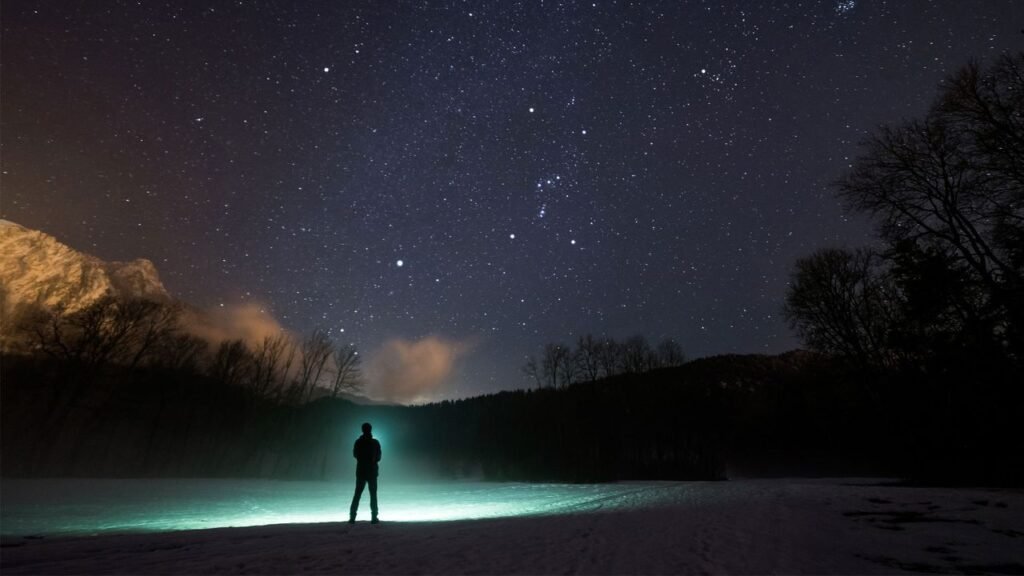
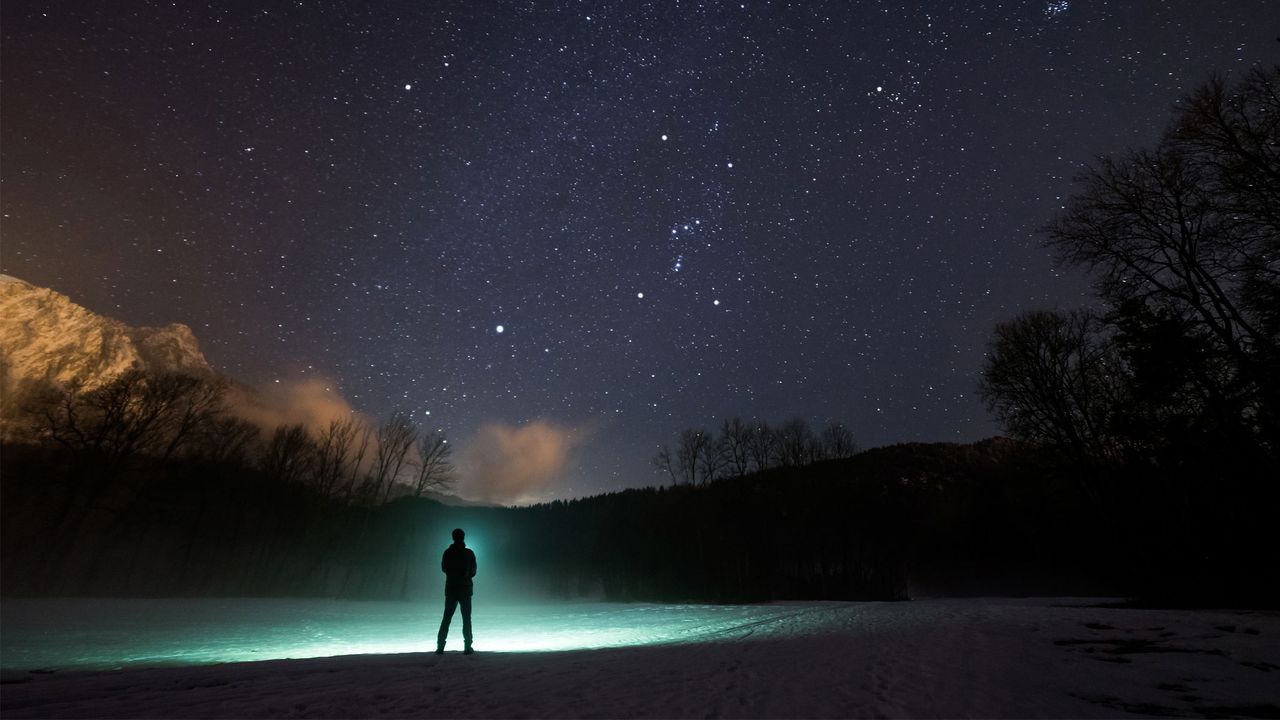
Beyond the solar system, the constellation Orion rises prominently in the east after dinner, heralding winter’s arrival with its distinctive belt of three stars. The Orion Nebula, a stellar nursery 1,300 light-years away, reveals itself as a fuzzy patch through binoculars, hinting at star formation in action. Nearby, the Pleiades star cluster sparkles like a celestial jewelry box, its blue hues contrasting the night’s chill.
For telescope users, the Andromeda Galaxy offers a faint but rewarding glimpse of our nearest large galactic neighbor, spanning 220,000 light-years across. Comet 3I/ATLAS approaches its closest to Earth around late December, potentially visible as a fuzzy blob with a tail under pristine conditions. These targets thrive in the short, crisp nights, encouraging bundling up for extended sessions.
To enhance your holiday skywatching, consider these practical steps:
- Choose locations far from city lights to minimize light pollution.
- Layer clothing and bring warm drinks to combat December’s cold.
- Use apps like Stellarium for real-time sky maps tailored to your latitude.
- Start observations 30 minutes after sunset when the sky deepens.
- Share views through a simple pair of binoculars if telescopes aren’t available.
Key Takeaways
- The Ursids and lingering Geminids provide shooting star excitement without special gear.
- Jupiter and Saturn deliver telescopic wonders, paired with the moon for easy spotting.
- Deep-sky favorites like the Orion Nebula invite exploration of the universe’s birthplaces.
In the quiet between holiday gatherings, the 2025 night sky from Christmas to New Year’s invites reflection on our place in the vast cosmos, blending wonder with the season’s spirit. What celestial sight will you chase this holiday? Share your plans in the comments below.