
Across the United States, the most mosquito-infested states form a kind of living constellation, blinking not with stars but with tiny wings and needle-like mouths. For public health officials, ecologists, and even astrophysicists who think in terms of complex systems, these insects are less a seasonal annoyance and more a planetary-scale experiment in how life responds to heat, water, and human expansion. As summers grow longer and warmer, and as urban sprawl reshapes wetlands into heat-trapping concrete, mosquito populations are redrawing the biological map of America. The question is no longer just which states “have it worst,” but what these mosquito hot zones reveal about a changing climate and our future on a warming world.
The Hidden Clues: What Mosquito Hotspots Reveal About Our Climate
It might sound dramatic, but the most mosquito-infested states in America are acting like warning beacons on a planetary dashboard. When you zoom out, states like Florida, Louisiana, Texas, and Georgia function the way bright galaxies do in a deep-space survey: they light up first, telling you where the underlying physics – in this case, heat, humidity, and standing water – are most intense. Warm nights, long summers, and frequent rainfall give mosquitoes multiple breeding cycles, which means more bites and a higher chance of disease transmission. Public health records and mosquito control data show that these states face persistent pressure from species like Aedes aegypti and Aedes albopictus, which are capable of carrying viruses such as dengue, Zika, and chikungunya.
Climate models project that many of these favorable conditions are creeping northward, stretching mosquito seasons in states that once had only brief summer swarms. Think of it like a habitable zone around a star slowly expanding: areas that were once marginal for mosquitoes now support multiple generations per year. Warmer temperatures speed up mosquito life cycles, shorten the time viruses need to develop inside the insect, and extend the months in which humans are outdoors and exposed. In effect, the worst-hit states are the front line of a broader shift, and they are quietly mapping out where the rest of the country might be headed.
From Gulf Swamps to Northern Suburbs: Where Mosquitoes Rule the Night
If you had to pick a “Milky Way” of American mosquitoes, you would start along the Gulf Coast. Florida’s year-round warmth and abundant wetlands give it a constant mosquito presence, with some counties tracking dozens of distinct species. Louisiana and Mississippi, with their bayous and floodplains, are similarly primed, especially after heavy rains or hurricanes that leave behind sprawling pools of stagnant water. Texas, stretching from humid coastal zones to warm interior cities, adds another vast band to this mosquito galaxy, where urban areas and rural landscapes both offer breeding sites.
But the story is no longer confined to the Deep South. States like New York, New Jersey, and Illinois now report substantial mosquito activity through longer parts of the year, especially in urban corridors with poor drainage and aging infrastructure. In parts of the Midwest and Northeast, residents who once joked about “mosquito season” now talk about a mosquito era stretching from late spring into early autumn. Cities, with their storm drains, rooftop puddles, and backyard containers, act like dense star clusters: lots of small, hidden pockets where mosquitoes can thrive unnoticed until they suddenly seem to be everywhere.
Universe Theories, Meet Backyard Bites: A Cosmic Lens on a Very Earthly Pest
On the surface, universe theories and mosquito bites could not be farther apart, but the same mindset that maps dark matter can help explain why some states drown in mosquitoes while others only dab at the occasional bite. Astrophysicists talk about structure emerging from simple rules – gravity pulling together gas and dust into stars and galaxies. Mosquito scientists, epidemiologists, and climate researchers are seeing something similar in the way temperature, water, and human behavior self-organize into swarms. Given enough warmth, enough standing water, and enough exposed skin, a predictable pattern emerges: dense populations of mosquitoes form in distinct bands across the country.
Some researchers now use modeling tools originally developed for astrophysics and fluid dynamics to simulate how mosquitoes move across landscapes. These models treat counties like pixels in a cosmic map, testing how small changes in rainfall or nighttime temperatures could shift mosquito ranges by hundreds of miles. In that sense, the most mosquito-infested states are not just statistics but data points in a grander experiment about how life reorganizes under stress. When you live in Florida or Texas and feel like the mosquitoes are getting worse every year, you are experiencing, on your own skin, a local echo of a much larger planetary narrative.
Why It Matters: From Backyard Nuisance to Public Health Constellation
It is tempting to dismiss mosquito-infested states as simply unlucky places where summers are sticky and bug spray is a way of life. But the distribution of mosquitoes across America has real consequences for disease risk, healthcare spending, and even regional economies. The most mosquito-heavy states are often the ones that must invest heavily in surveillance programs, larvicide treatments, and public education campaigns. These efforts aim to detect viruses like West Nile, dengue, or Zika early, before clusters of human cases flare up into full-blown outbreaks.
The contrast with traditional views of mosquitoes is striking. A few decades ago, mosquitoes were framed mainly as an irritation, something you slapped at during a barbecue and forgot about by winter. Now, public health experts treat them as moving nodes in a dynamic network of climate, trade, and human travel. For example, patterns like these matter:
- States with long, warm seasons can see multiple virus transmission cycles in a single year.
- Urbanized, lower-income neighborhoods with poor drainage tend to have more standing water and fewer resources for prevention.
- Tourism-heavy states risk both importing infected travelers and exporting infections when visitors go home.
When you stack these factors together, the states most overrun by mosquitoes start to look less like outliers and more like early indicators of vulnerabilities that other regions may soon share.
Global Perspectives: America’s Mosquito Belt in a Planetary Context
Seen from space, Earth is a blue planet, but for disease ecologists it is also streaked with invisible bands of mosquito habitat that wrap around the tropics and subtropics. The most mosquito-infested states in America lie along one of these bands, sharing environmental traits with parts of Central America, Southeast Asia, and sub-Saharan Africa. In all these regions, the same core ingredients – heat, humidity, and human-water contact – drive high mosquito density. That means lessons learned in Florida or Texas about surveillance and control can, in principle, inform strategies in places thousands of miles away.
At the same time, American states find themselves on the receiving end of global trends. International trade and travel help mosquitoes and the viruses they carry hitch rides across oceans inside shipping containers, airplane cabins, and even ornamental plants. Once they arrive, they search for climates reminiscent of their original homes, which is why the southern and southeastern states with long summers often become their preferred landing zones. The United States, in other words, is not an isolated system but a local patch in a global bioclimatic network, much like a single galaxy connected to a web of others. That perspective forces scientists to think not just in terms of national borders, but in terms of planetary patterns of risk.
Tracking the Swarm: Modern Tools Replacing Gut Feeling
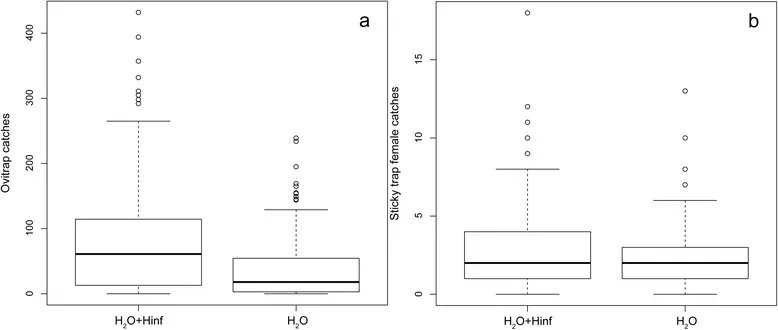
In the past, figuring out which states had the worst mosquitoes was mostly anecdotal – who complained the loudest, who had the most bug bites, who canceled the most picnics. Today, the process looks far more like a space mission than a campfire story. Public health agencies and research groups rely on networks of traps that sample mosquito populations weekly, genetic tools to identify species, and digital dashboards that track virus detections in real time. Some local programs in mosquito-prone states now use satellite data on rainfall, temperature, and vegetation to predict where breeding will explode next.
Compared with older methods, which often depended on manual inspections and delayed lab reports, this data-rich approach lets officials make faster decisions about where to spray or when to warn the public. It is similar to moving from naked-eye stargazing to high-resolution telescopes: the underlying sky is the same, but your ability to see patterns – and act on them – dramatically improves. There is still a lot of guesswork, especially when unusual weather hits, but the trend is clear. The most mosquito-infested states are becoming testbeds for increasingly sophisticated surveillance systems that might one day be deployed more widely as mosquito ranges continue to expand.
The Future Landscape: How Warming Skies Could Redraw the Mosquito Map
Looking ahead, scientists expect the national mosquito map to look very different by the middle of this century. Warmer average temperatures and milder winters mean that states previously considered mosquito-light could see longer periods of activity and the arrival of new, more aggressive species. Climate projections suggest that the kind of summer currently typical of the Gulf Coast may creep into parts of the Midwest and even the Northeast over coming decades. That does not mean every region will become a mirror of Florida, but it does mean the sharp divide between “mosquito states” and “safe states” is likely to blur.
Technological responses are racing to keep up. Gene-drive tools that could suppress certain mosquito populations, vaccines for mosquito-borne viruses, and eco-friendly larvicides are all under active development or early deployment. Yet each comes with trade-offs, uncertainties, and ethical debates, much like proposed planetary-scale interventions in climate or space exploration. The most mosquito-infested states now are likely to be the proving grounds where these tools are first adopted, tested, and contested. In that sense, backyards in Florida, Texas, and Louisiana might become the laboratories where humanity rehearses how to live with a shifting, more insect-heavy planet.
What You Can Do: Turning Annoyance Into Collective Action
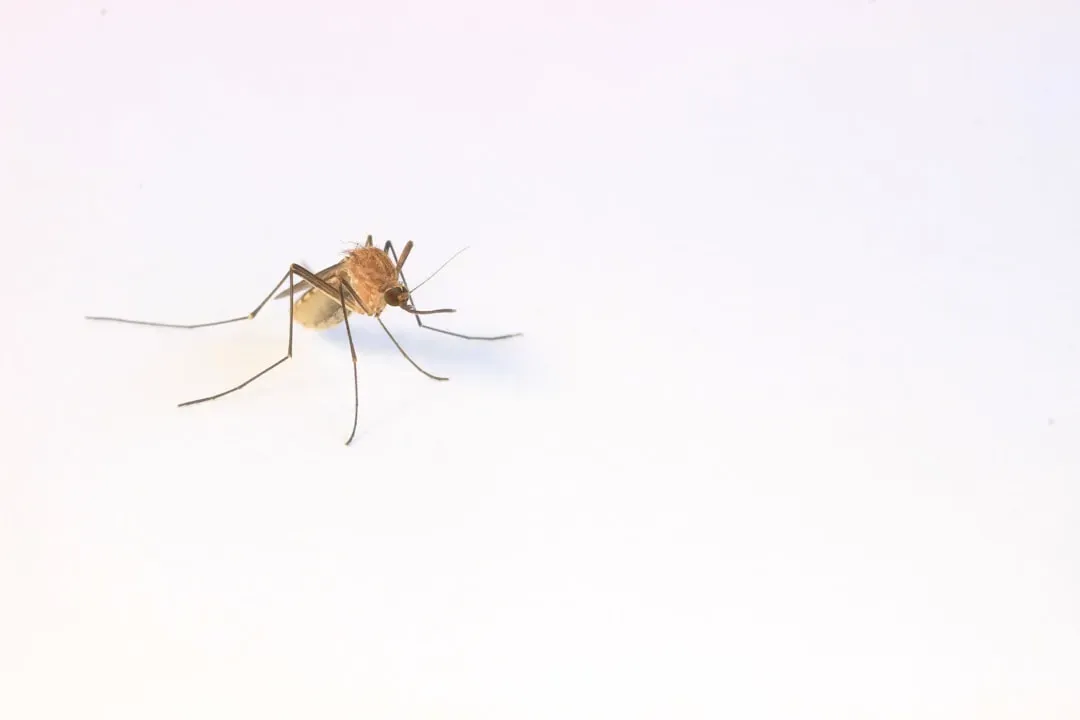
For all the cosmic analogies and sophisticated models, a lot of mosquito control still comes down to the habits of individual people in the states where mosquitoes are thickest. Emptying standing water from buckets, gutters, bird baths, and old tires deprives mosquitoes of breeding sites, shrinking local populations one small pool at a time. Using window screens, wearing long sleeves at dusk, and choosing repellents wisely can dramatically cut down bites and lower the odds of local transmission of disease. In many places, community groups and neighborhood associations already run clean-up days focused on drainage ditches and littered lots, which double as mosquito mitigation.
If you live in or travel to a highly infested state, you can also support larger-scale efforts. Paying attention to local health advisories, reporting dead birds or unusual clusters of illness, and backing well-designed mosquito control funding at the ballot box all feed into the broader system that keeps outbreaks in check. For those who feel strongly about research, supporting institutions that study mosquito ecology, climate impacts, and novel control tools helps move the science forward. It may not feel as glamorous as a rocket launch, but resisting mosquitoes, in the end, is another way of learning how to live wisely on a small, warming planet. And just like in astronomy, every careful observation and small action adds up to a clearer picture of the universe we actually inhabit.
Suhail Ahmed is a passionate digital professional and nature enthusiast with over 8 years of experience in content strategy, SEO, web development, and digital operations. Alongside his freelance journey, Suhail actively contributes to nature and wildlife platforms like Discover Wildlife, where he channels his curiosity for the planet into engaging, educational storytelling.
With a strong background in managing digital ecosystems — from ecommerce stores and WordPress websites to social media and automation — Suhail merges technical precision with creative insight. His content reflects a rare balance: SEO-friendly yet deeply human, data-informed yet emotionally resonant.
Driven by a love for discovery and storytelling, Suhail believes in using digital platforms to amplify causes that matter — especially those protecting Earth’s biodiversity and inspiring sustainable living. Whether he’s managing online projects or crafting wildlife content, his goal remains the same: to inform, inspire, and leave a positive digital footprint.