
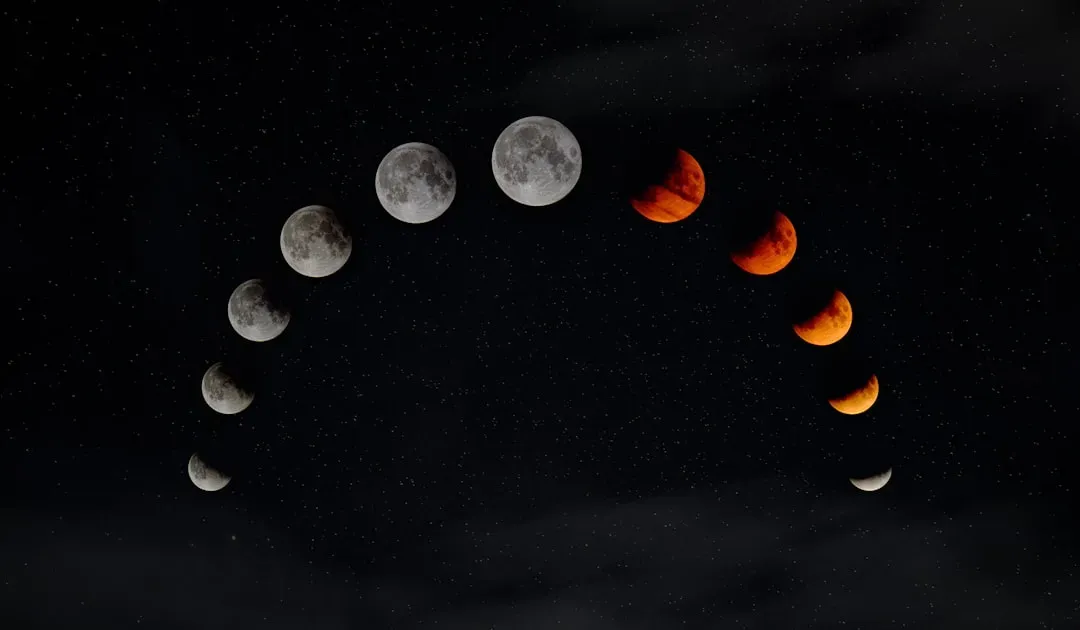
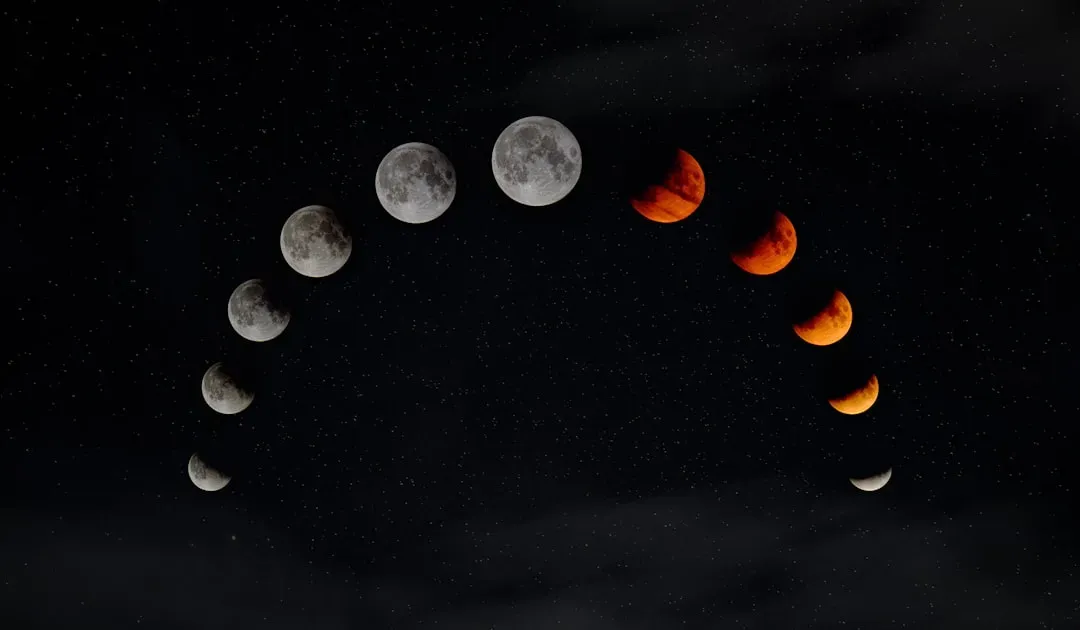
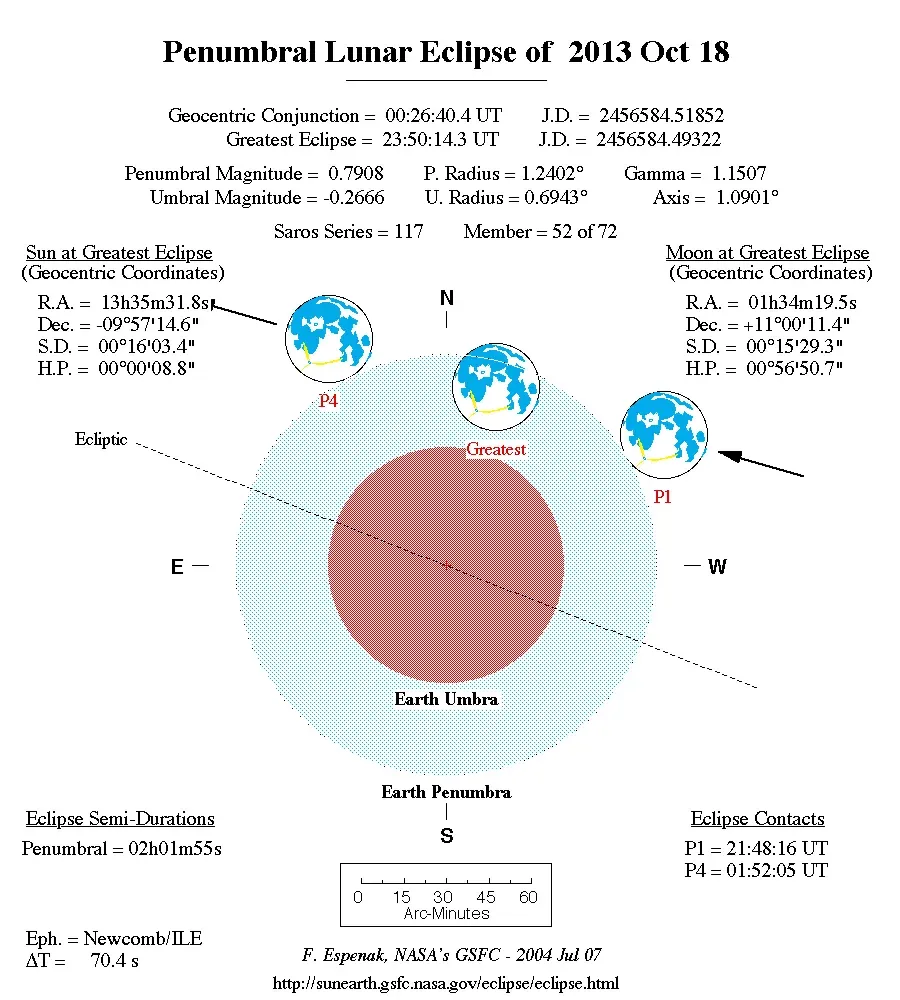
On paper, a lunar eclipse is simple geometry: the Sun, Earth, and Moon line up, and our planet’s shadow sweeps across the lunar surface. In practice, something much stranger happens. Instruments spike, animals fall silent, colors shift in ways no model quite predicts, and the night sky behaves like a laboratory where the laws of physics are nudged, stressed, and occasionally confounded. Scientists know the broad outlines, but when they zoom in on the details, they keep finding anomalies that do not quite fit. These are not wild paranormal claims, but subtle, persistent curiosities that keep eclipse chasers and researchers going back for more.
The Blood Moon That Refuses to Behave: Unpredictable Eclipse Colors
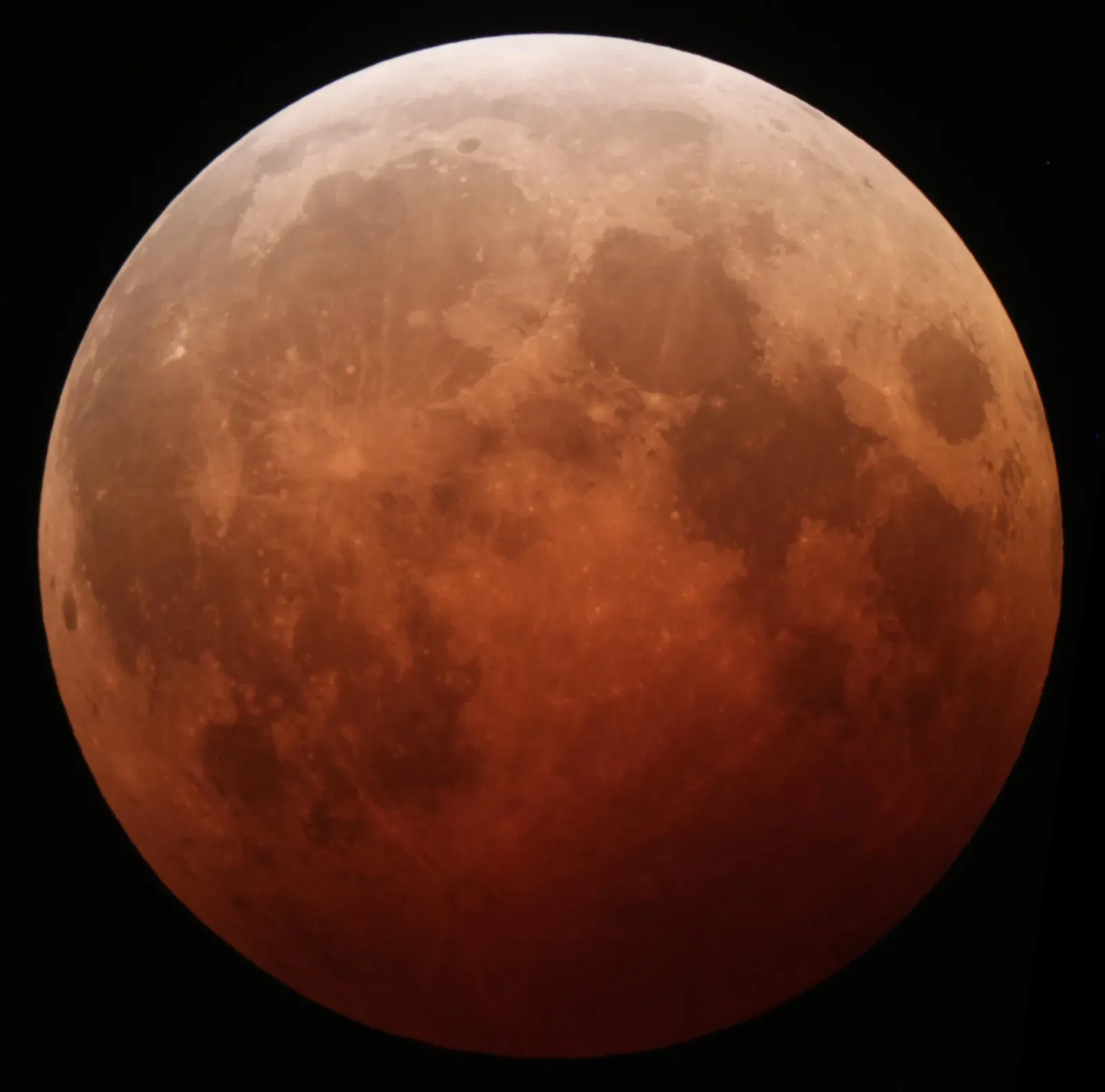
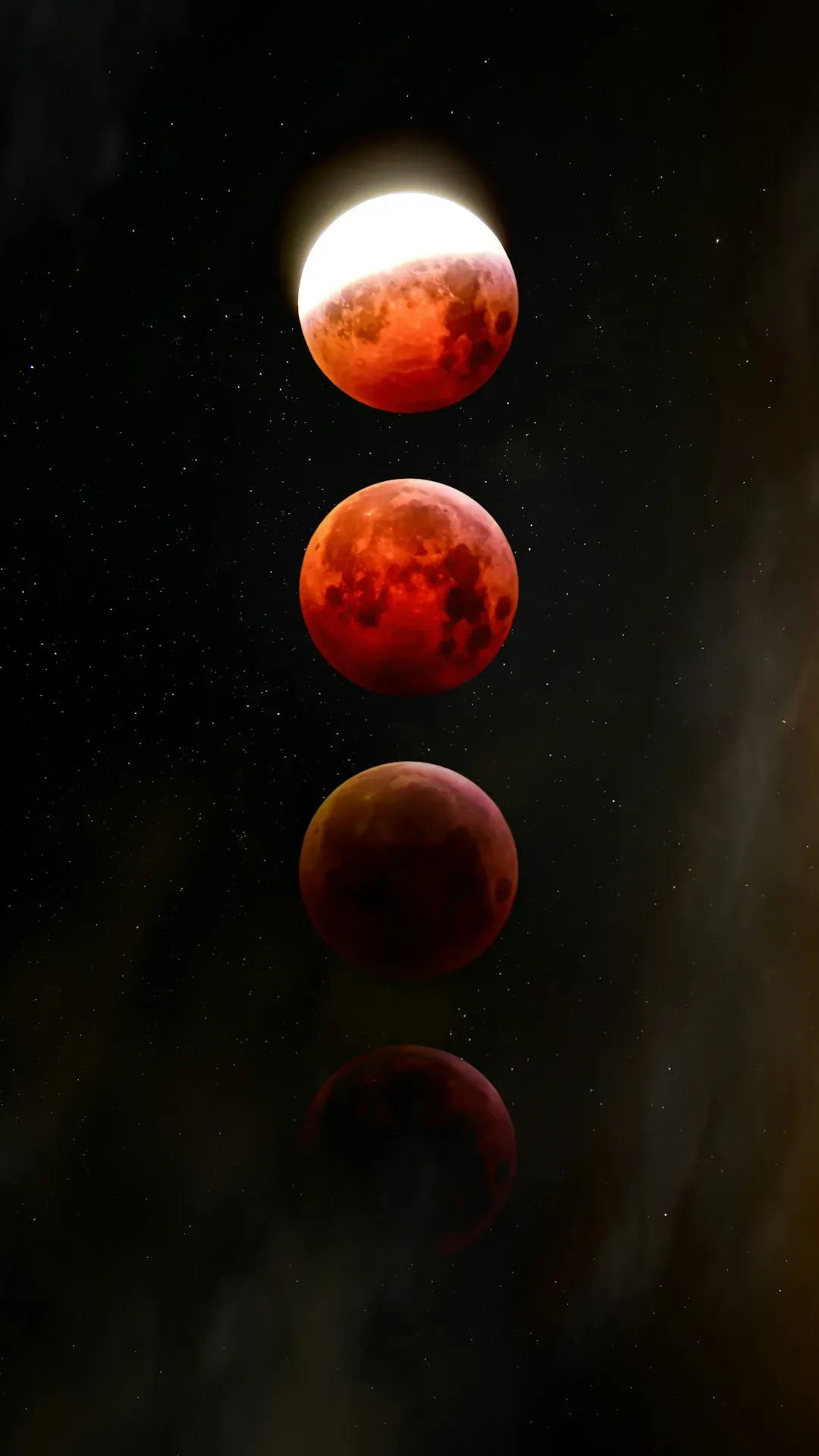
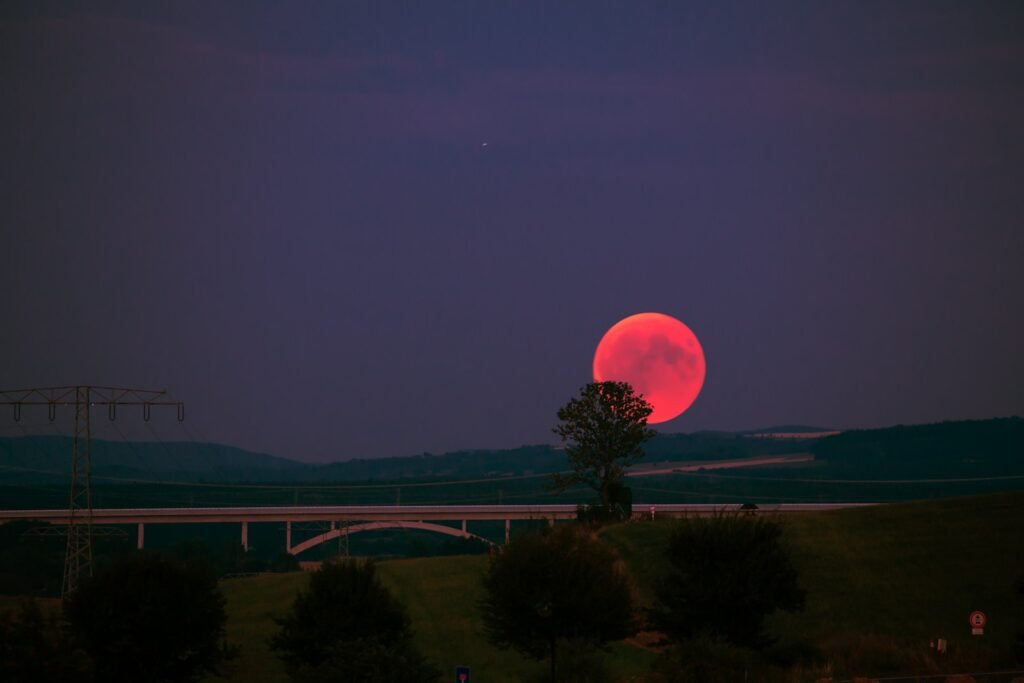
Every total lunar eclipse is supposed to turn the Moon into a familiar rusty “blood” disk, painted by sunlight refracted through Earth’s atmosphere. Yet when astronomers actually measure those colors, the Moon often defies prediction, sometimes turning unusually dark, sometimes copper-bright, and occasionally shifting in color from one limb to the other in ways our models struggle to replicate. Volcanic eruptions, wildfire smoke, and pollution all play a role, but even after those are accounted for, the exact shade and brightness can still surprise observers. During some eclipses, parts of the Moon appear almost gray-green or distinctly yellowish while other regions glow red, as if the lunar surface is being lit by different planets at once.
What makes this so puzzling is that radiative transfer models should, in theory, let us forecast both the brightness and hue of the eclipsed Moon with high precision. Instead, scientists are forced to treat each eclipse as a fresh experiment, taking spectra and wide-field images to reverse engineer what Earth’s atmosphere must have been doing. In a sense, the Moon becomes an enormous mirror revealing hidden features of our own air column – gravity waves in the stratosphere, patchy aerosol layers, or fine dust veils we did not know were there. The mismatch between prediction and reality turns every totality into a diagnostic puzzle and a reminder that even our home planet’s atmosphere remains less predictable than weather apps might suggest.
The Shadow Pulse: Mysterious Temperature Drops in Earth’s Upper Air
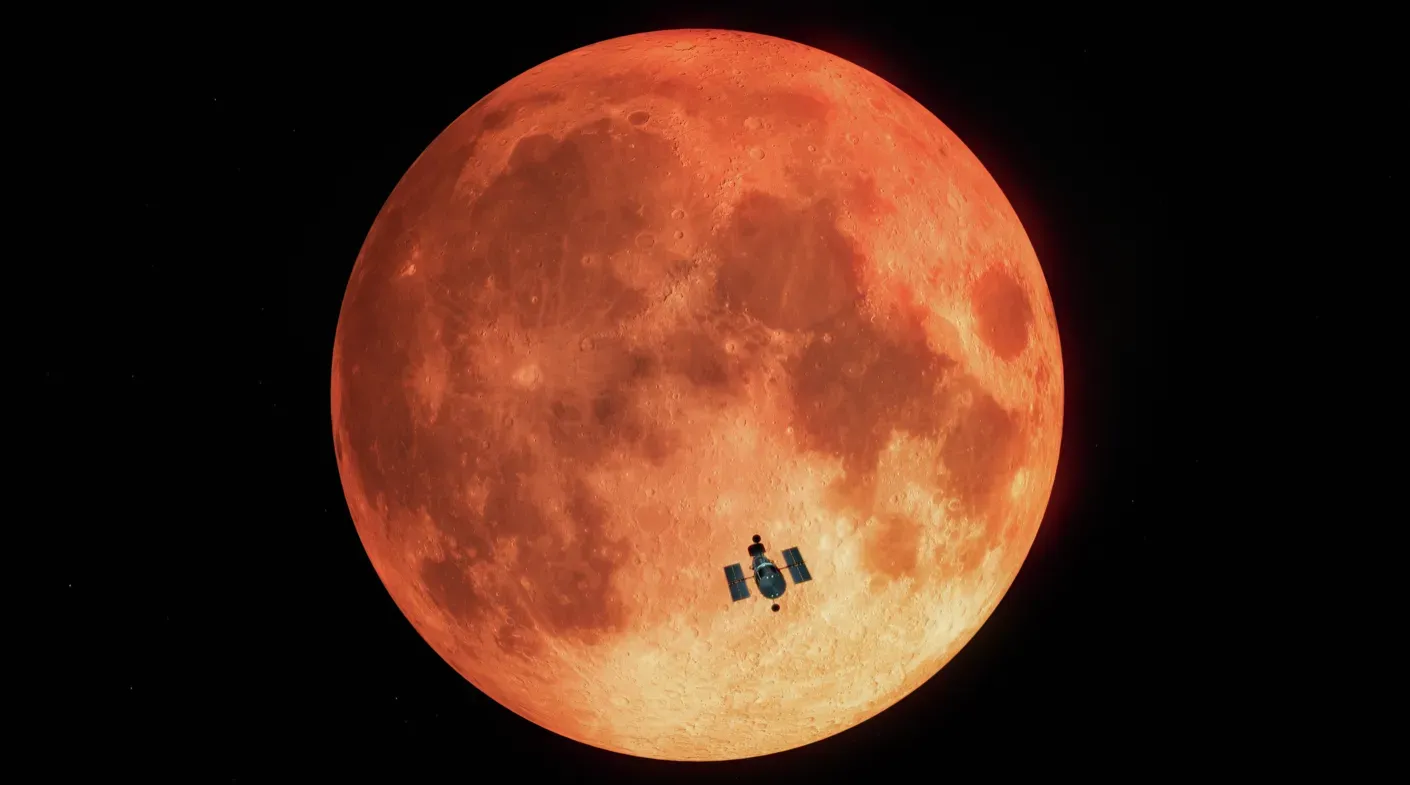
When the Moon enters Earth’s umbra, many people focus on the dramatic dimming of moonlight, but high above our heads, a quiet shock ripples through the atmosphere. Instruments aboard satellites and ground-based lidar have recorded sudden, localized drops in temperature in the upper atmosphere aligned with the eclipse track, almost like a cold bruise sliding across the sky. In theory, removing a portion of incoming sunlight for a couple of hours should have only a muted effect that smooths out quickly. Instead, observations sometimes show sharp gradients and wave-like patterns, as if the atmosphere is ringing in response.
Researchers suspect that this “shadow pulse” can trigger or amplify gravity waves – subtle undulations of air that transport energy and momentum over long distances. Some measurements hint that these waves change direction or grow unusually strong during totality, beyond what simple models predict for a moving patch of darkness. That matters because gravity waves influence jet streams, weather systems, and climate circulation, yet are notoriously hard to simulate correctly. Lunar eclipses, with their precisely timed and predictable geometry, ought to be easy tests of our understanding, but the atmospheric response keeps showing oddities that are still being debated in conference sessions and journal footnotes.
Sky Glow Oddities: Nighttime Brightness That Will Not Stay Constant
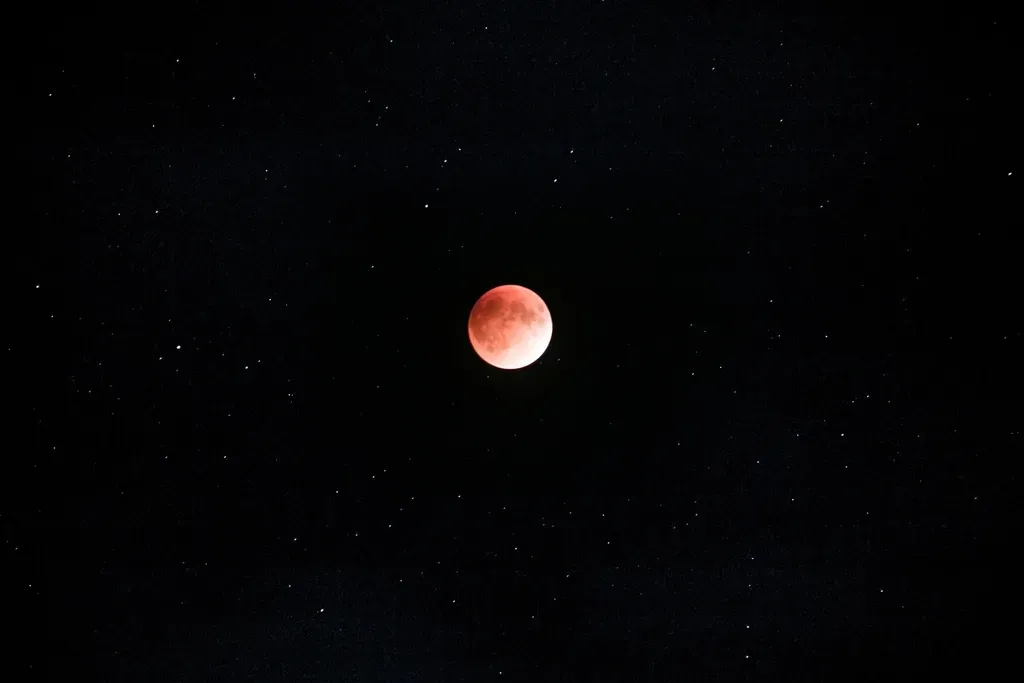
Stand under a clear sky during a total lunar eclipse, and it should, in principle, just get darker in a well-behaved way. Instead, sensitive cameras sometimes record brief brightenings or uneven “patches” of sky glow, even far from the Moon itself. Airglow – faint light emitted by oxygen, sodium, and other atoms high above Earth – seems to fluctuate in ways correlated with the progress of the eclipse. Some all-sky surveys have documented puzzling asymmetries, where one part of the sky brightens slightly while another dims, not easily explained by simple light scattering.
One hypothesis is that the rapid change in illumination subtly alters the chemistry of the upper atmosphere, briefly affecting how excited atoms release photons. Another idea is that the shifting shadow modifies the propagation of atmospheric gravity waves, which in turn modulate airglow layers like ripples on a pond catching city lights. Yet the detailed timing, amplitude, and spatial structure of these fluctuations remain messy, resisting tidy equations. For sky quality researchers and dark-sky advocates, these eclipse-induced anomalies offer both a complication and an opportunity: a natural stress test for models of how human light pollution and natural sky brightness intertwine. The fact that a shadow on the Moon can tweak the glow above our heads adds another layer of strangeness to an already otherworldly event.
Creatures of the Red Moon: Animal Behavior That Sudden Darkness Cannot Fully Explain
Stories of animals reacting to eclipses go back centuries, but careful observations during lunar eclipses have revealed patterns that do not fit the simple idea of “it gets dark, so they think it is night.” Some nocturnal species, especially insects and certain bats, show abrupt changes in activity precisely around the time totality begins, even though the drop in light is much gentler than during a solar eclipse. In a few documented cases, birds that were casually active under a bright full Moon fell silent during totality, then resumed calls as the Moon brightened again, as if they were responding not just to darkness but to the strange, reddish quality of the light. Amphibians such as frogs have also shown shifts in calling intensity that seem oddly synchronized with the changing color and brightness of the lunar disk.
Researchers admit they do not yet have a unified explanation, because lunar eclipses are relatively rare and often poorly monitored in the field compared with solar eclipses. Many animals use a combination of cues – light intensity, spectral composition, and even polarization – so a full Moon turning copper and dim might scramble those signals in a way we do not fully grasp. For species that migrate or navigate using celestial patterns, a warped Moon could act like temporary interference on a cosmic GPS. Field biologists are beginning to treat total lunar eclipses as controlled natural experiments, deploying acoustic sensors and camera traps to capture behavior that only reveals itself in this unusual lighting. As more data accumulate, scientists hope to disentangle what is merely a reaction to lower light from what might be a deeper sensitivity to the quality of moonlight itself.
The Hidden Clues: Strange Electrical and Radio Anomalies in the Ionosphere
If you ask space physicists why they love eclipses, many will point to the ionosphere – the electrically charged region of Earth’s upper atmosphere that reflects radio waves and shapes long-distance communications. During some total lunar eclipses, instruments have recorded unexpected fluctuations in electron density, changes in radio wave propagation, and brief anomalies in very low frequency signals. These effects are smaller than those seen during solar eclipses, but they are not trivial, and they tend to cluster in time with the deepest phases of totality. The mystery is that the change in solar radiation reaching the ionosphere during a lunar eclipse should be minimal, since the Moon, not Earth, is being shadowed.
Several teams have proposed that the geometry of the Sun-Earth-Moon system during an eclipse subtly changes how charged particles stream along magnetic field lines, or that the redistribution of light around Earth’s limb affects the ionosphere in ways our current models simplify away. Amateur radio operators have reported curious shifts in signal reach or clarity during some eclipses, providing a stream of real-world data that scientists are only beginning to mine systematically. These “hidden clues” hint that the ionosphere is more sensitive to small shifts in illumination and geometry than conventional wisdom suggests. In an era when satellite communication and navigation depend heavily on understanding this layer, even modest anomalies during lunar eclipses are worth more than a casual shrug.
From Ancient Omens to Precision Probes: Unexpected Lunar Surface Signals
Lunar eclipses once terrified sky-watchers, who read them as omens painted across the heavens, but today they serve as surprisingly powerful probes of the Moon’s own surface and exosphere. By watching how different regions of the lunar surface darken and redden, researchers can tease out subtle differences in regolith composition and texture. Near-infrared and thermal cameras have caught certain craters and highland areas cooling or changing brightness in ways that diverge from what standard heat-flow models predict. Occasionally, instruments have even reported transient glows or bright spots during totality that do not neatly match known topography or impact events.
Some of these fleeting signals may be artifacts or reflections from our own instruments, but others persist across multiple observations, hinting at genuinely unusual behavior. Lunar outgassing events – tiny releases of gas from the interior or surface – have been proposed as one explanation, with the sudden shift in illumination acting as a trigger or merely making them easier to spot. When Earth’s shadow crawls across the Moon, it changes surface temperatures and electrostatic charging conditions in a sharply defined pattern, potentially stirring up dust or altering local electric fields. For scientists trying to understand how the lunar environment behaves, especially as space agencies plan long-term bases, each eclipse becomes a chance to catch the Moon in an unusual mood. The gap between predicted and observed signals keeps the mystery alive and the cameras rolling.
Why It Matters: Eclipses as Natural Laboratories for a Fragile Planet
At first glance, many of these eclipse-only oddities might seem like harmless quirks – pretty colors, twitchy radio waves, confused frogs. But taken together, they highlight something deeper: our models of Earth’s atmosphere, ionosphere, and biosphere are still incomplete in ways that matter far beyond one night’s sky show. When predictions about temperature drops, sky glow patterns, or ionospheric behavior miss the mark during an eclipse, they reveal the limits of the equations we rely on for weather forecasting, climate projections, and communication reliability. Lunar eclipses compress big, slow processes into a timed, global-scale experiment where the forcing is known with exquisite precision.
Compared with traditional methods like long-term averages from weather balloons or slowly changing satellite orbits, eclipses offer a sudden, almost binary switch in key environmental parameters. That sharp contrast is like flicking a light on and off in a laboratory to see how fast a system reacts and where its weak spots are. If our models stumble under these controlled conditions, it suggests they might also struggle with abrupt changes driven by volcanic eruptions, geomagnetic storms, or even rapid shifts in climate patterns. In that sense, the unexplained phenomena of lunar eclipses are not just astronomical curiosities but stress tests for how well we understand a planet that is becoming increasingly vulnerable to extremes. The Moon’s brief descent into shadow holds up an uncomfortable mirror to the blind spots in our own science.
The Future Landscape: New Eyes, Citizen Scientists, and the Next Great Eclipses
The next generation of lunar eclipse research will not look much like the ad hoc campaigns of the past, when a few observatories pointed their telescopes skyward and hoped for clear weather. Today, networks of small automated telescopes, sensitive all-sky cameras, and orbiting platforms can coordinate to monitor everything from airglow ripples to thermal anomalies on the lunar surface. Machine learning tools are starting to sift through torrents of data to spot subtle patterns – a recurring temperature dip here, a particular spectral quirk there – that human analysts might miss. As more satellites carry particle detectors, radiometers, and radio receivers, each eclipse becomes a multi-layered experiment running across the atmosphere, ionosphere, and near-Earth space.
Citizen scientists are also stepping into a bigger role, armed with capable cameras, low-cost spectrometers, and software that lets them contribute calibrated measurements. Coordinated projects can turn an entire continent into a distributed observatory, mapping how eclipse darkness affects animal calls, local radio noise, or even handheld magnetometers. In the coming years, planned missions to the Moon’s surface and orbit may watch eclipses from the lunar perspective, measuring how Earth’s shadow and refracted light sweep across the regolith and tenuous exosphere. Each of these advances promises to chip away at the mysteries that have stubbornly clung to eclipse science. Yet there is a quiet expectation among researchers that new instruments will not simply answer old questions but uncover stranger, finer-grained anomalies we have not even imagined.
How You Can Take Part: Turning Awe into Action
You do not need a degree in astrophysics to contribute meaningfully the next time Earth’s shadow swallows the Moon. With a tripod, a modest camera, and a notebook, you can record the changing brightness and color of the eclipsed Moon, noting local weather, time stamps, and any oddities you see in the sky. During totality, you can pause to listen for changes in the soundscape – fewer insects, different bird calls – and jot down what you notice, even if it seems anecdotal. Community science platforms increasingly welcome eclipse observations, pooling them with professional data to build richer maps of how these events ripple through the atmosphere and biosphere.
You can also support observatories, dark-sky initiatives, and educational programs that use eclipses as gateways to deeper questions about climate, space weather, and planetary habitability. Sharing clear, fact-based information about what eclipses are – and what they are not – helps push back against superstition while preserving the sense of wonder these events naturally inspire. For many people, a total lunar eclipse is one of the few times they truly look up and think about the geometry of the solar system and the fragility of our atmosphere. Turning that moment of awe into curiosity, questions, and maybe a few data points is a small but meaningful way to be part of the story. When the next blood-red Moon rises, what will you be watching for?
Suhail Ahmed is a passionate digital professional and nature enthusiast with over 8 years of experience in content strategy, SEO, web development, and digital operations. Alongside his freelance journey, Suhail actively contributes to nature and wildlife platforms like Discover Wildlife, where he channels his curiosity for the planet into engaging, educational storytelling.
With a strong background in managing digital ecosystems — from ecommerce stores and WordPress websites to social media and automation — Suhail merges technical precision with creative insight. His content reflects a rare balance: SEO-friendly yet deeply human, data-informed yet emotionally resonant.
Driven by a love for discovery and storytelling, Suhail believes in using digital platforms to amplify causes that matter — especially those protecting Earth’s biodiversity and inspiring sustainable living. Whether he’s managing online projects or crafting wildlife content, his goal remains the same: to inform, inspire, and leave a positive digital footprint.