
On the largest scales we can see, the universe is doing something deeply counterintuitive: instead of slowing down under the pull of gravity, galaxies are racing away from each other faster and faster. For more than two decades, this runaway expansion has been blamed on a vague, unsettling concept called dark energy, a kind of cosmic anti-gravity that makes up most of the universe and yet refuses to show itself directly. Now, a wave of new telescopes, sky surveys, and daring theories is quietly transforming this unsettling label into something we can begin to test, probe, and maybe even explain. Scientists are still far from a final answer, but for the first time, they are mapping cracks in the old picture and glimpsing pieces of a more complete story. The mystery is still very much alive – but it is no longer drifting in the dark.
The Hidden Clues in the Expanding Sky
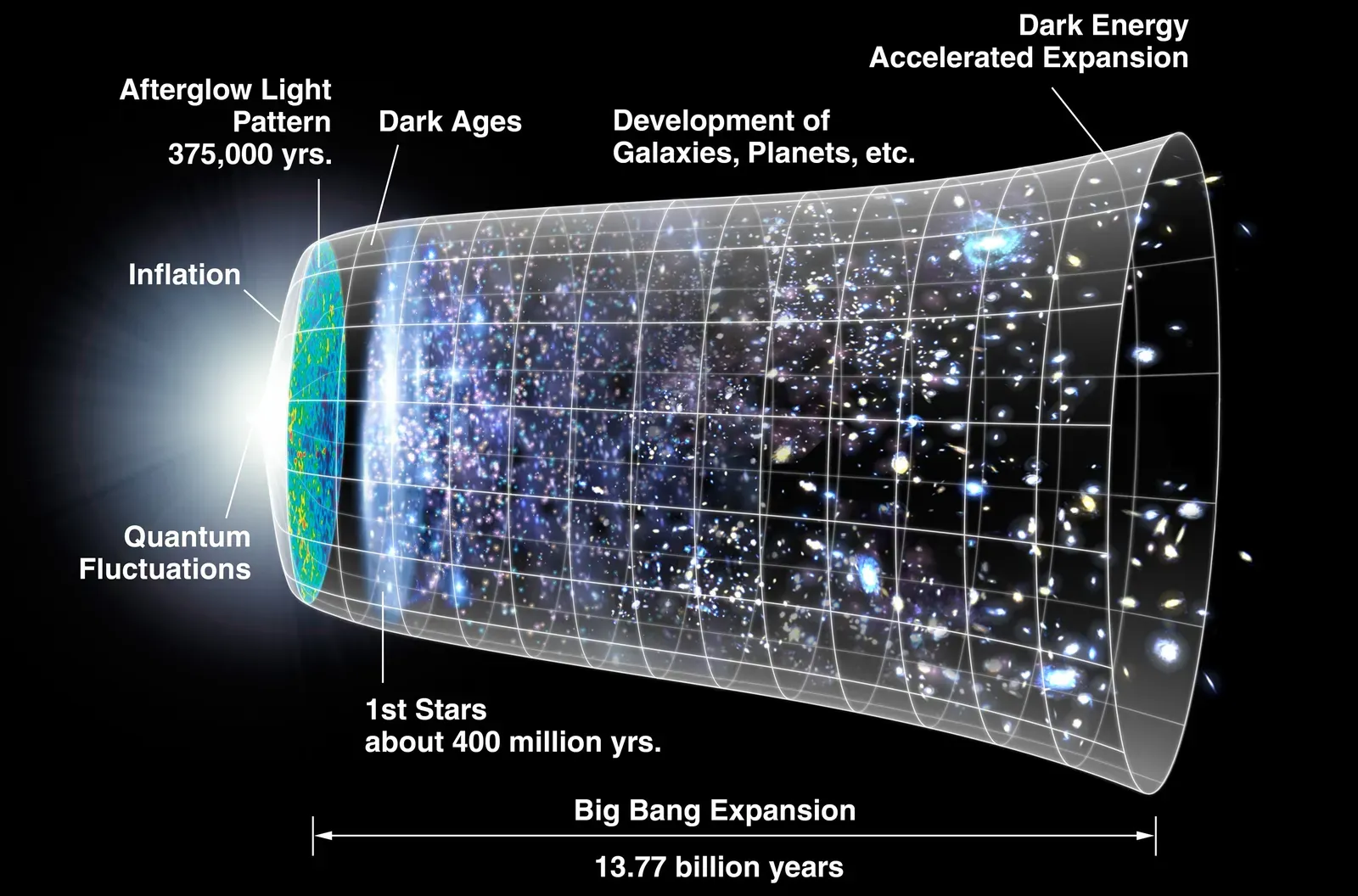
It is easy to forget that the discovery of accelerated expansion was an accident, born from astronomers expecting the universe to be slowing down. When two research teams in the late nineteen‑nineties used exploding stars in distant galaxies as cosmic mile markers, they were stunned to find those galaxies dimmer and farther than anticipated, as if some invisible hand were pushing them away. Since then, countless measurements have confirmed that space itself is stretching faster over time, with this mysterious driver now thought to make up roughly about two thirds of the total cosmic energy budget. Yet what we call dark energy started out less as a theory and more as a placeholder label for our ignorance, a way of saying something strange is happening here. The clues were real, but the story behind them was fragmentary and unsettling.
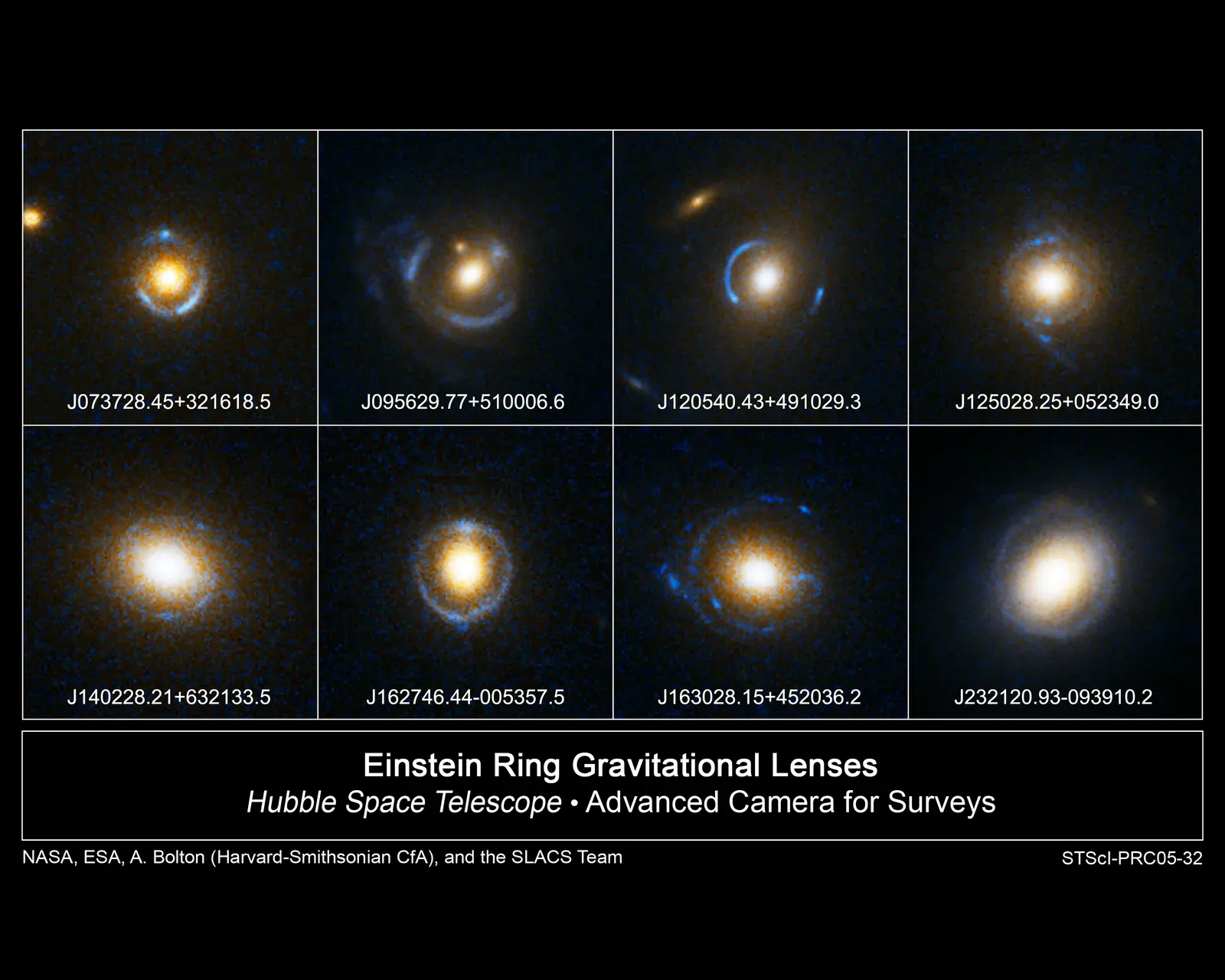
Over the last several years, those scattered clues have started to form patterns. By combining galaxy surveys, relic light from the Big Bang, and the way gravity bends light from background galaxies, researchers are now cross‑checking the acceleration with entirely different methods. Subtle discrepancies – like small tensions between how fast the universe appears to be expanding today versus how fast early‑universe data predicts it should be – are hinting that there may be more going on than a simple, uniform force filling space. Instead of a static, featureless background, dark energy may have a history, a texture, even a personality that changes over cosmic time. The sky is starting to look less like a fixed stage and more like an unfolding drama written into the fabric of spacetime itself.
From Einstein’s Blunder to a Testable Idea
The idea that empty space could push rather than pull is not as new as it sounds. More than a century ago, Albert Einstein added a term to his equations of gravity, the cosmological constant, to hold the universe steady against collapse, only to abandon it when evidence for cosmic expansion emerged. For decades afterward, that term was treated as a mathematical curiosity, an artifact of a particular moment in scientific history. Then the discovery of accelerated expansion turned the abandoned constant into a leading candidate for dark energy: perhaps the vacuum of space itself has a tiny, persistent energy that drives galaxies apart. In this view, the universe is like a rubber sheet with a barely noticeable built‑in tension that only becomes obvious over immense distances and times.
The trouble is that this seemingly simple idea runs into a brutal numerical problem when compared with quantum physics. When physicists estimate the energy of empty space using quantum theory, they get a value that is outrageously larger than what cosmic expansion allows, off by many orders of magnitude in a way that feels almost insulting. This mismatch has been called one of the most embarrassing problems in modern physics, a sign that something essential is missing from our understanding of gravity, quantum fields, or both. That disconnect has pushed researchers to take more exotic alternatives seriously, from slowly evolving energy fields to modifications of gravity on the largest scales. The once‑humble cosmological constant has gone from an afterthought to a litmus test for our deepest theories of reality.
New Eyes on the Dark: Telescopes That Weigh the Cosmos
If dark energy is shaping the universe, it should leave fingerprints not just on how fast space expands but also on how matter clumps together. That is where a new generation of sky surveys steps in, turning telescopes into instruments that can effectively weigh the cosmos. Projects like the Dark Energy Survey, the eROSITA X‑ray mission, and early data from deep‑imaging telescopes have already mapped hundreds of millions of galaxies and galaxy clusters, tracing how structures grew over billions of years. By comparing how much the universe has expanded with how much gravity has managed to pull matter into cosmic webs, scientists can infer how strong or subtle the mysterious repulsive influence must be. In a way, they are watching a grand tug‑of‑war between gravity and dark energy play out across time.
These observations are starting to stress‑test the simplest dark‑energy models. Some measurements suggest that cosmic structures grew a little less than expected under vanilla assumptions, a hint that dark energy might not be perfectly constant after all. Other data appear to line up nicely with the old picture, reminding everyone just how easy it is to be fooled by noise, biases, or hidden systematics when dealing with such delicate signals. Still, this back‑and‑forth is progress: theories now have to survive an onslaught of precise, independent checks rather than just fit a single expansion curve. The mysterious force is no longer a vague idea; it is a quantifiable influence with boundaries, uncertainties, and an observational dossier that grows thicker every year.
Cosmic Theories in Contest: Vacuum Energy, Fields, and New Gravity
As the data sharpen, competing explanations are lining up like contestants in an unusually abstract reality show. The simplest option remains vacuum energy, where dark energy is just a tiny, constant energy density of empty space, built into the universe from the beginning. But a growing camp of researchers explores dynamic dark‑energy models, where a new kind of field – somewhat analogous to the field that gives particles mass – evolves slowly over cosmic time and subtly changes the rate of acceleration. These models could, in principle, explain why the effects of dark energy become important only in the relatively recent universe rather than dominating from the start. They also predict mild deviations from the vanilla picture that next‑generation surveys might be able to pick out.
On a more radical front, some physicists argue that what needs modification is not a hidden ingredient but gravity itself. In these scenarios, Einstein’s general relativity is nearly perfect on solar‑system scales but bends the rules over intergalactic distances, slightly altering how space responds to matter and energy. The stakes are high: confirming such a deviation would mean rewriting one of the most successful theories in science. However, any new gravity theory has to thread a narrow needle, matching exquisite tests in our cosmic backyard while still producing a different expansion history on the largest scales. This theoretical tension is forcing ideas to become more concrete and predictive, and that pressure is exactly what can turn vague speculation into genuine understanding.
Why This Invisible Force Matters

It might be tempting to see dark energy as a distant curiosity, a problem for cosmologists hunched over huge datasets rather than something that affects daily life. But in a very real sense, this mysterious driver is deciding the long‑term fate of everything we know: whether galaxies eventually drift so far apart that night skies go dark, or whether cosmic structures keep forming in ever more intricate webs. The balance between gravity and this repulsive influence sets the overall geometry and destiny of the universe, shaping how stars, planets, and potentially life itself can emerge and persist. Understanding dark energy is also a gateway to unifying gravity with the quantum world, a major missing piece in the puzzle of fundamental physics. When you pull on this one thread, it tugs at questions about time, space, and even what it means for something to exist.
There is also a quieter, philosophical importance to this quest. Not long ago, many scientists believed cosmology was nearly finished, with only small details left to iron out. The discovery of accelerated expansion shattered that confidence and replaced it with a humbler, more adventurous attitude: the sense that our best theories might still be only approximations of a deeper reality. In classrooms and public talks, dark energy serves as a powerful reminder that science is not a closed book but a living, changing story. For students, it is often the topic that flips a switch, showing that major mysteries are not confined to ancient history but are unfolding now, within their lifetimes. In that way, this invisible force is quietly reshaping how humanity thinks about knowledge itself.
The Future Landscape: Giant Telescopes and Cosmic Maps
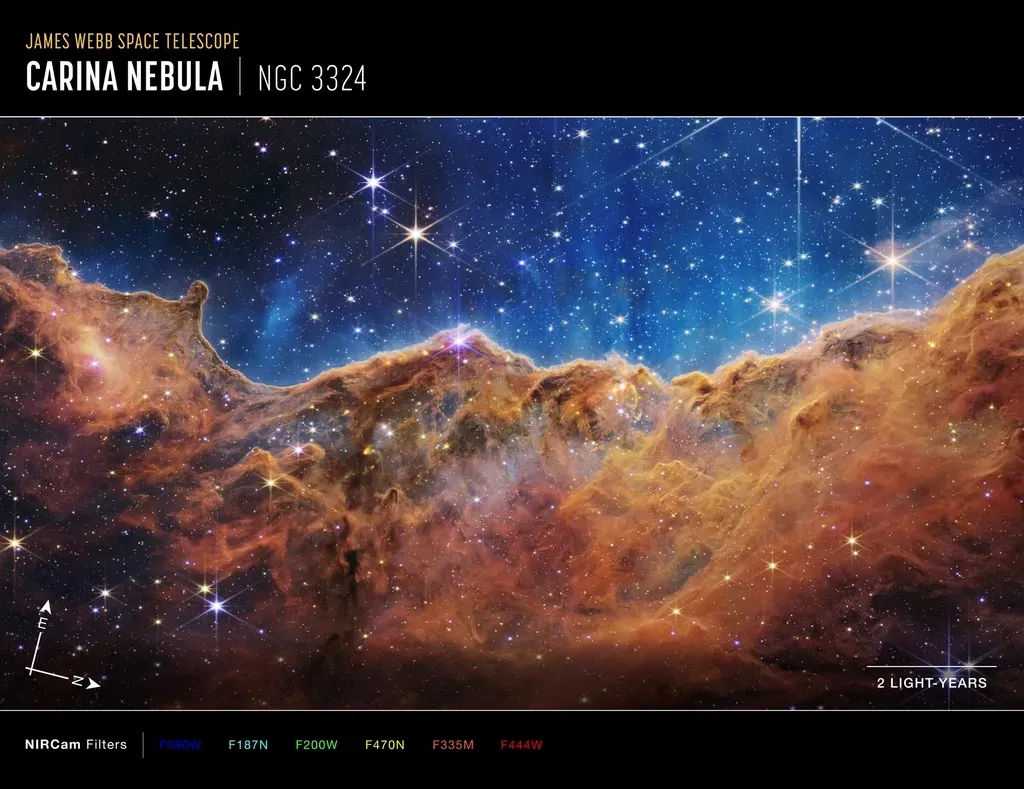
The next decade promises to turn the dark‑energy problem from a coarse sketch into a high‑definition portrait. New facilities, including wide‑field survey telescopes, space‑based observatories, and upgraded microwave instruments, are designed explicitly to map billions of galaxies and measure the large‑scale structure of the universe with unprecedented precision. These projects will track how cosmic expansion and the growth of structures have changed over time, giving scientists multiple, overlapping ways to constrain the properties of the mysterious force. If dark energy is truly constant, the data should converge on that answer with remarkable sharpness; if it evolves or hints at new physics, the deviations will be increasingly hard to dismiss as mere noise. Either outcome is profound: a confirmation would deepen the cosmological constant puzzle, while a deviation would open a door to new laws of nature.
Alongside these observatories, advances in computing and statistical methods are becoming just as crucial as the hardware. Extracting signals about dark energy from sprawling datasets demands algorithms that can spot delicate patterns without being misled by measurement errors, messy astrophysical processes, or our own assumptions. Researchers are training sophisticated models to simulate entire universes under different dark‑energy scenarios, then comparing those synthetic skies to what telescopes actually see. It is an unusual blend of theoretical physics, data science, and astronomy, all converging on a single question: what, exactly, is pushing the galaxies apart? The answer will not arrive in a single dramatic moment but through years of careful cross‑checks, where each new map of the sky narrows the range of what this force can be.
Living in an Accelerating Universe
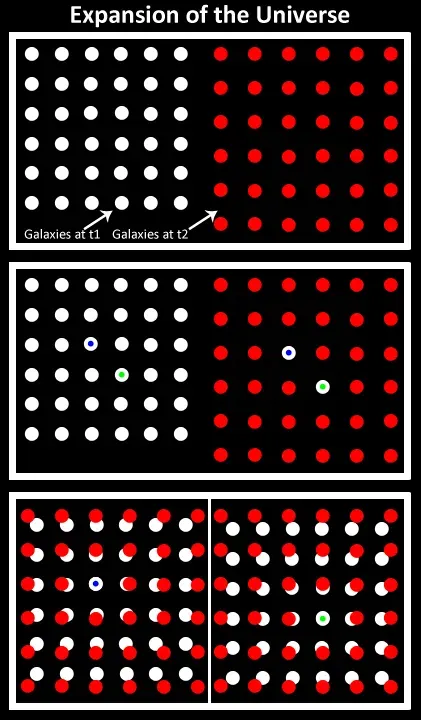
There is something quietly eerie about realizing that the universe is not just expanding but accelerating, as if the cosmic story is drifting away from us faster with each passing epoch. Far in the future, distant galaxies may slip beyond our observable horizon altogether, leaving hypothetical astronomers in a lonely island universe with no visible evidence of the wider cosmos. In that sense, we occupy a privileged window in cosmic time, one where the afterglow of the Big Bang and the large‑scale structure of the universe are both accessible to careful observation. Knowing this has changed how many researchers think about their work, adding a layer of urgency to the task of reading the universe’s grand diary before some pages fade from view. The accelerating expansion is not just a fact; it is a ticking clock on what can be empirically known.
On a more personal level, dark energy invites a kind of everyday awe. When you look up at the night sky, you are seeing not a static arrangement of stars, but a dynamic, expanding stage shaped by something we still do not fully grasp. The idea that the same physics guiding the fate of superclusters also quietly permeates the space between your atoms can be unsettling, but it is also strangely grounding. It reminds us that mystery is not a bug in our picture of reality – it is a feature that keeps science moving forward. In that way, living in an accelerating universe is not just a cosmological fact; it is an invitation to keep asking bigger, braver questions.
How You Can Engage With the Dark Energy Story
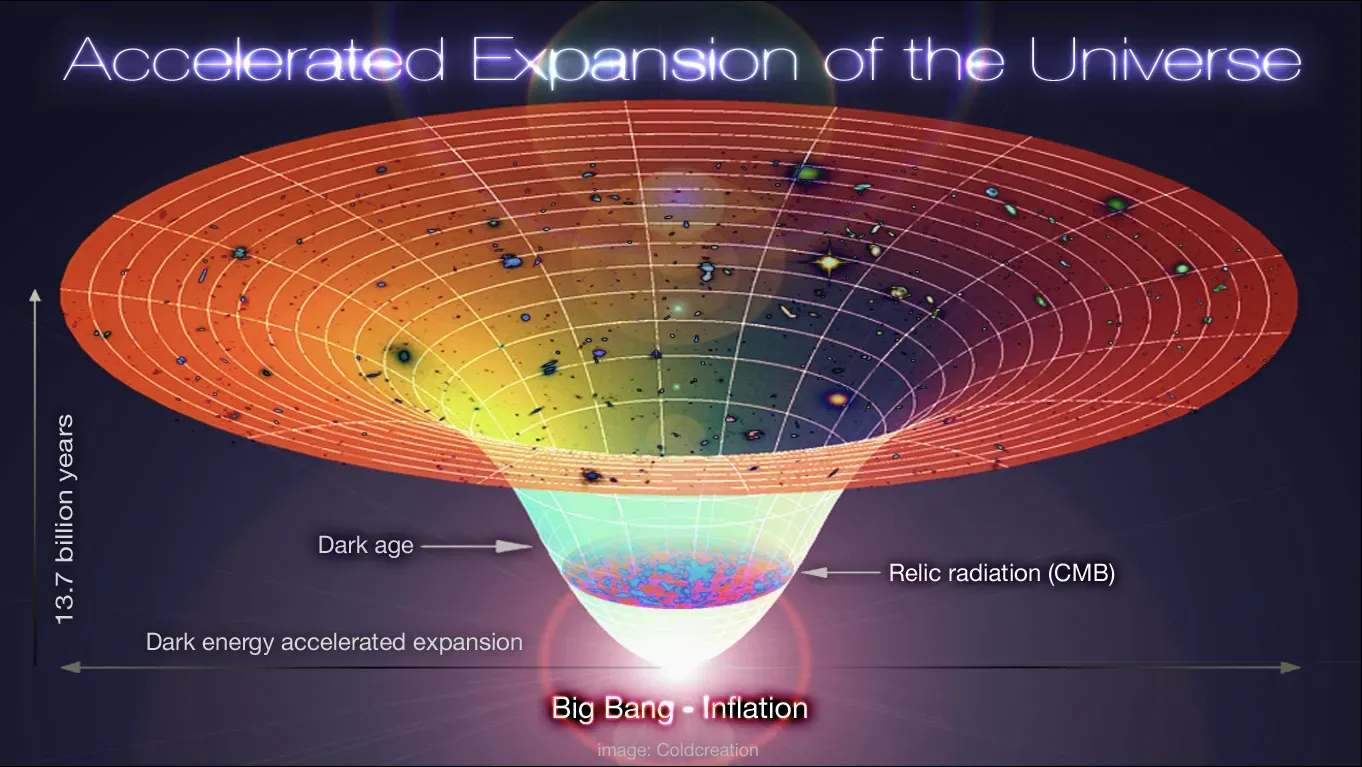
Even though dark energy operates on scales far beyond any lab or spacecraft, there are surprisingly concrete ways for curious people to be part of the unfolding story. Many of the big sky surveys rely on public involvement to classify galaxies, spot unusual objects, or flag potential errors in automated catalogs, and volunteers’ contributions can make measurable differences. Astronomy outreach programs, local observatories, and online lectures often feature the latest results on cosmic expansion, offering accessible ways to stay updated and to ask questions directly to researchers. Supporting public science funding and university research through civic engagement or philanthropy helps ensure that long‑term projects, which may run for decades, do not evaporate with the next budget cycle. In a field that depends on patience and continuity, that kind of support is not abstract – it is essential.
On a more individual level, engaging with dark energy can be as simple as taking the time to learn the basics and sharing that sense of wonder with others. The next time a headline announces a new tension in cosmological data or a fresh dark‑energy survey, it is worth pausing to appreciate what it means that we can even notice such things. Books, podcasts, and public courses on cosmology can turn intimidating jargon into familiar ideas, demystifying concepts like expansion, curvature, and vacuum energy. In the end, the mysterious force pushing galaxies apart is part of our shared cosmic environment, as real as gravity and starlight. Paying attention to it is one small way of honoring the strange universe we find ourselves in.
Suhail Ahmed is a passionate digital professional and nature enthusiast with over 8 years of experience in content strategy, SEO, web development, and digital operations. Alongside his freelance journey, Suhail actively contributes to nature and wildlife platforms like Discover Wildlife, where he channels his curiosity for the planet into engaging, educational storytelling.
With a strong background in managing digital ecosystems — from ecommerce stores and WordPress websites to social media and automation — Suhail merges technical precision with creative insight. His content reflects a rare balance: SEO-friendly yet deeply human, data-informed yet emotionally resonant.
Driven by a love for discovery and storytelling, Suhail believes in using digital platforms to amplify causes that matter — especially those protecting Earth’s biodiversity and inspiring sustainable living. Whether he’s managing online projects or crafting wildlife content, his goal remains the same: to inform, inspire, and leave a positive digital footprint.