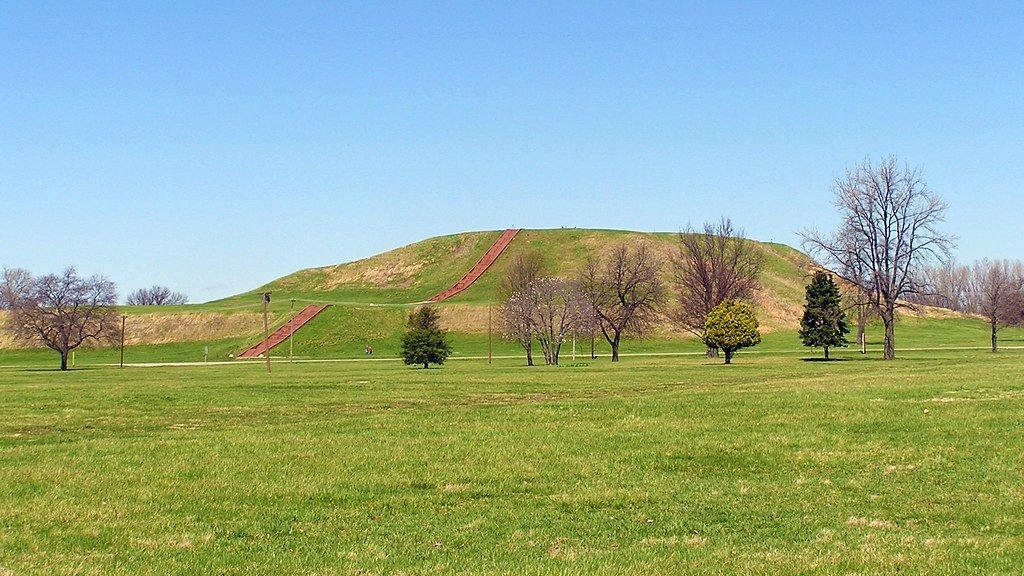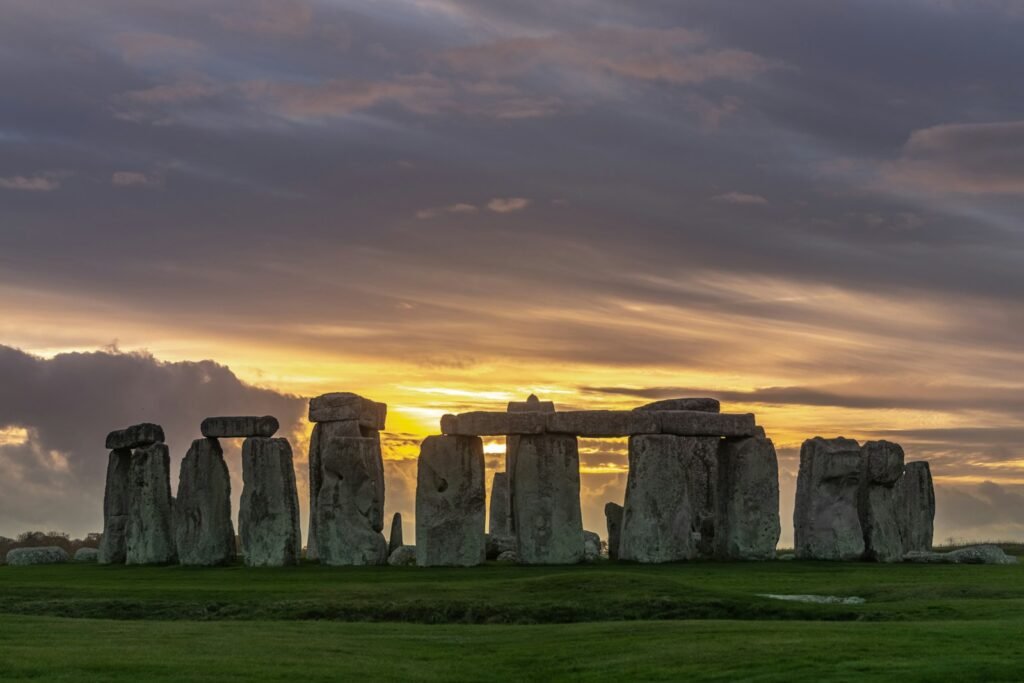

Twice a year, the spinning rock we call home performs a quiet but dramatic maneuver: it leans just enough toward or away from the Sun to rewrite the rhythm of light and darkness on Earth. For ancient sky-watchers, these solstices were sacred turning points that hinted at hidden forces in the cosmos; for modern physicists, they are precise markers in a universe governed by geometry, gravity, and quantum fields. The solstice is not just a date on a calendar, it is a visible crack in the everyday sky through which deeper questions shine: Why does the universe have seasons at all? How did a chaotic early cosmos give rise to such regular celestial choreography? As we track these extremes of daylight with atomic clocks and space telescopes, the solstice becomes a bridge between stone-age alignments and cutting-edge theories about how the universe began and how it might end.
The cosmic tilt: why solstices exist at all
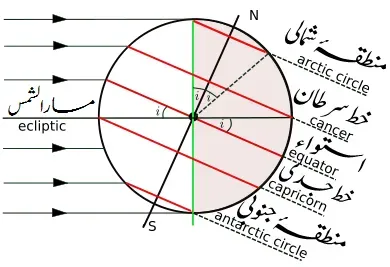
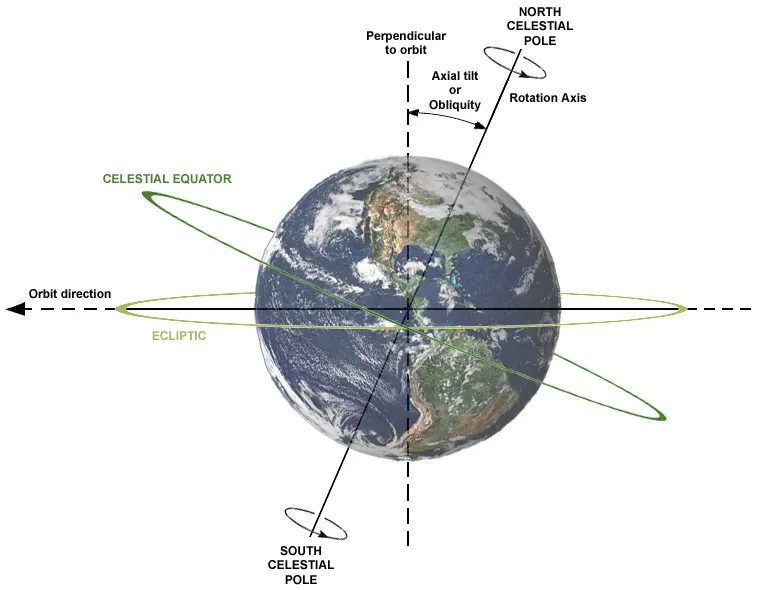
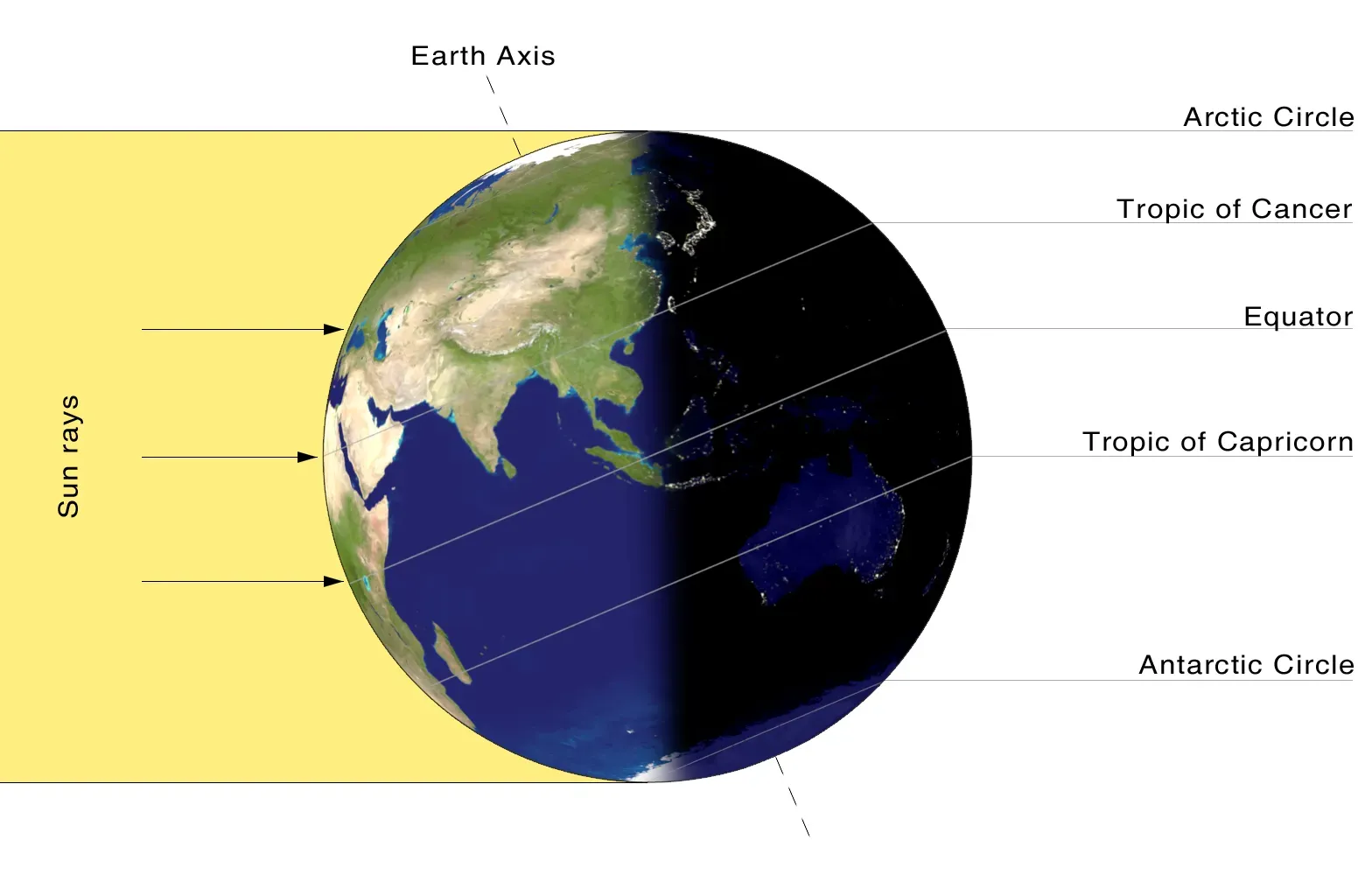
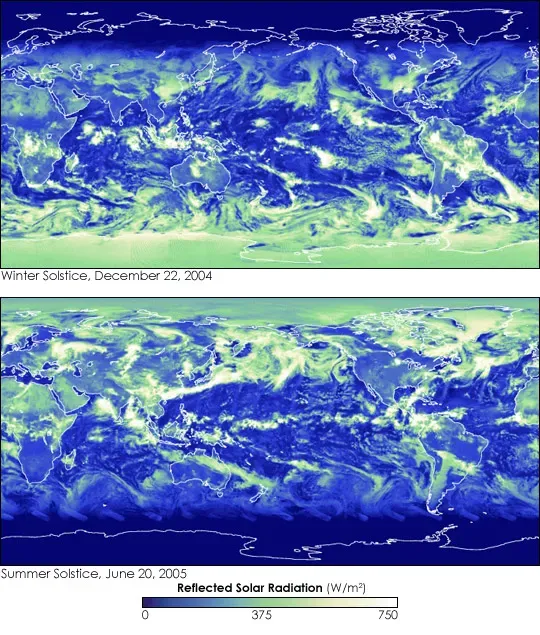
Here’s the first surprising truth: solstices have almost nothing to do with how close Earth is to the Sun, and everything to do with how the planet tilts. Earth’s axis is tipped by about twenty three and a half degrees relative to its orbit, and this lean means that, over the year, different hemispheres take turns being more directly lit. A solstice is simply the moment when that tilt points most strongly either toward or away from the Sun, giving one half of the planet its longest day while the other endures its longest night. From a physics point of view, it is a clean geometric configuration in four-dimensional spacetime, not an arbitrary seasonal quirk. In a universe that began in a hot, nearly uniform soup of particles, the fact that our planet settled into such a stable tipped spin is a quiet clue about how gravity sculpts order out of chaos.
Because of that tilt, the Sun’s path in the sky appears to “pause” at its highest or lowest arc, which is exactly what the word solstice hints at: a standstill of the Sun’s apparent motion. Observers have noticed this long before anyone knew about orbital mechanics, but now we can calculate it down to the millisecond using general relativity and precise ephemerides. In a sense, every solstice is a small, predictable experiment that confirms our modern picture of how Earth moves in the curved gravitational well carved out by the Sun. It is a reminder that even the poetry of a long summer evening or a winter’s deep dusk is anchored in hard, testable physics. The universe does not just allow beauty; it generates it from equations and initial conditions.
Ancient observatories: stone, shadow, and the first cosmic clocks
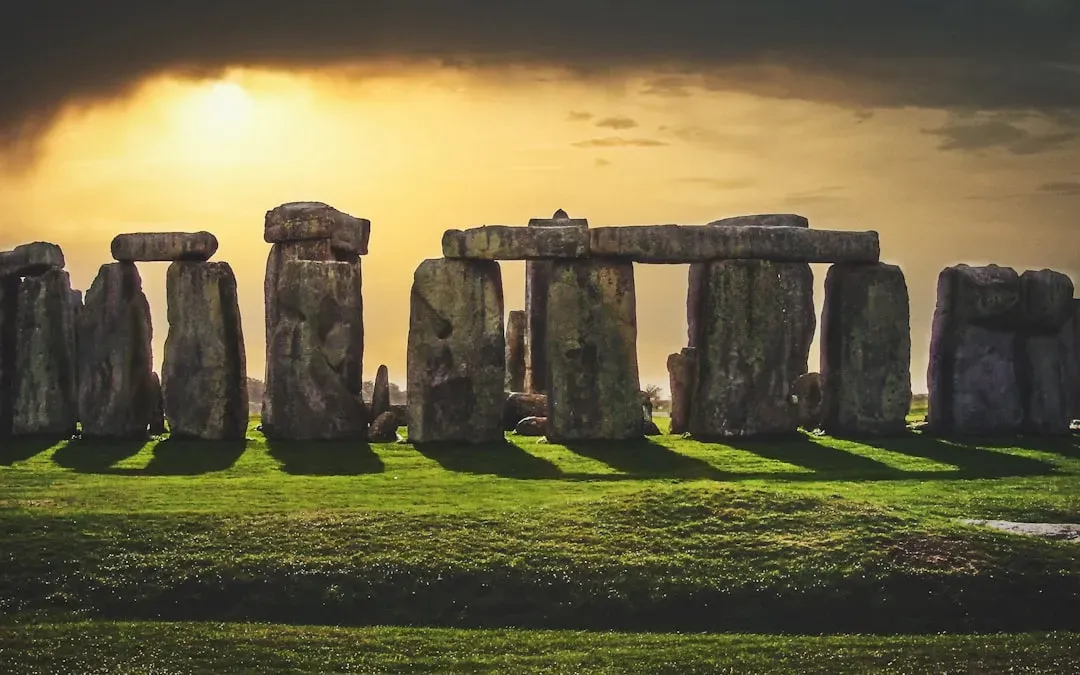
Long before satellites and quantum theory, people built in stone what we now build in code: devices to pin down the solstice in time. Monuments like Stonehenge in England or the solar-aligned temples of ancient Egypt were essentially giant, open-air observatories that used shadows and sightlines as their moving parts. On a solstice sunrise or sunset, light would pierce a particular passage, crown a standing stone, or line up perfectly with a carved axis, turning architecture into a calendar. These structures were not primitive curiosities; they were early attempts to sync human life with the deep periodicity of the cosmos. Harvests, migrations, and religious ceremonies all depended on reading the sky with enough accuracy when the light was about to turn.
What’s striking today is how closely some of these alignments match calculations made with modern astronomy software. Within small margins of error, many ancient sites still “work,” catching the solstice light in just the way their builders intended. To me, that continuity feels almost like a handshake across thousands of years between naked-eye observers and physicists with laptops. The same celestial mechanics that once guided agricultural rituals now calibrate spacecraft trajectories and climate models. The solstice stands at that intersection, a recurring appointment that both Neolithic builders and present-day scientists agree we cannot miss.
Solstices are not the coldest or hottest days – and that’s the point
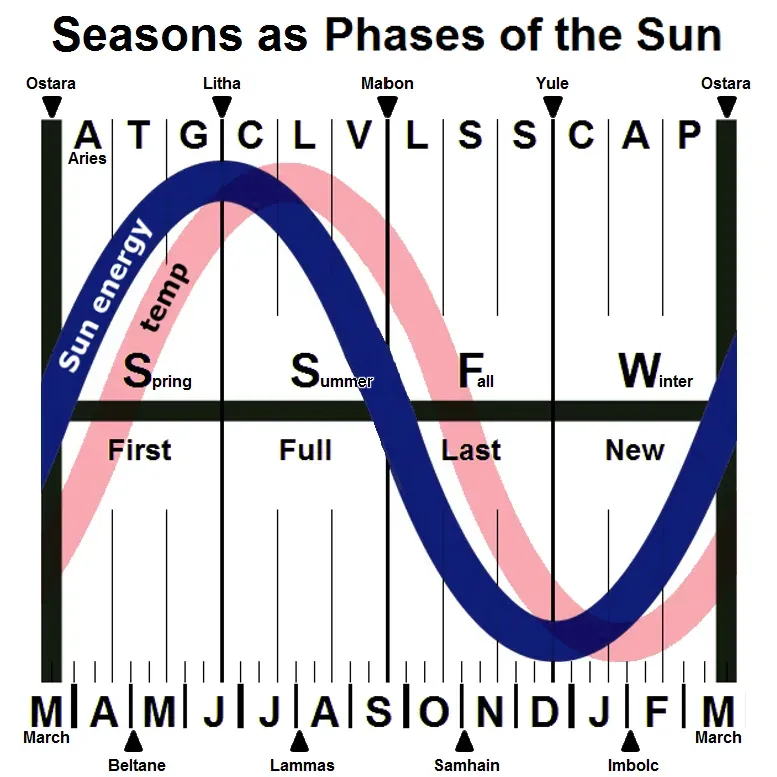
One of the most counterintuitive solstice facts is that the longest day does not feel like the warmest, and the longest night does not always feel like the coldest. Around the June solstice in the northern hemisphere, for instance, daylight has reached its maximum, yet the peak of summer heat tends to arrive weeks later. The reason lies in what climatologists call seasonal lag: oceans, land, and air all act like enormous heat reservoirs that take time to warm up or cool down. Energy keeps accumulating or bleeding away even after the Sun’s input has passed its extreme. This mismatch between astronomical event and human sensation is a good reminder that the universe doesn’t care about our intuitive timelines.
There is a deep physics lesson wrapped inside this simple observation. Systems with memory and inertia, from Earth’s climate to quantum materials, rarely respond instantaneously to the forces acting on them. In quantum field theory, particles can carry traces of past interactions in subtle ways, just as the atmosphere carries yesterday’s heat into tomorrow’s sky. When you stand outside on a sultry evening in July and realize the solstice happened weeks ago, you are feeling a macroscopic version of that delay. The solstice, in that sense, is like a starting gun whose echo keeps shaping the race long after the shot was fired.
Solstices in other worlds: seasons beyond Earth
Earth is not the only world with seasons, and that makes solstices a useful lens for comparing planets. Mars, for example, has a tilt similar to Earth’s, so it experiences something like Martian solstices, with polar ice caps that wax and wane and dust storms that sweep across the planet. Saturn’s huge tilt means that its rings go through dramatic changes in lighting, sometimes glowing wide open and sometimes nearly vanishing when seen edge-on from Earth. Tilt a world more aggressively and you get extreme seasons; reduce the tilt and the seasons flatten out to almost nothing. By measuring those tilts and their solstices, planetary scientists can reconstruct how collisions, migrations, and gravitational tugs shaped each planet’s history.
Even exoplanets orbiting distant stars are now being studied for hints of seasons, using minute changes in brightness or color as the planet circles its sun. A world locked with one face always toward its star may have no solstices at all, just permanent day on one side and eternal night on the other. That kind of alien climate forces us to rethink what we consider “normal” when we talk about habitable conditions. In a universe where some planets may never know the turning of the light, Earth’s balanced, gentle tilt starts to look like a fortunate roll of the cosmic dice. The very existence of solstices could be one of the quiet ingredients that make complex life, and eventually curious observers like us, possible.
The quantum Sun: how tiny particles shape the longest day

At solstice, it is tempting to think only in terms of big motions: spinning planets and orbiting worlds. But the light that stretches our day to its longest is built from countless individual photons, each a quantum packet traveling from the Sun’s surface to our eyes. Inside the Sun, nuclear fusion turns hydrogen into helium, releasing energy that takes thousands or even hundreds of thousands of years to random-walk from the core to the surface. Once freed, many of those photons race to Earth in just over eight minutes, a wavefront of quantum events that arrives slightly higher in the sky at solstice than at any other time. The seamless arc of daylight we see is actually the blur of uncountable quantum jumps smoothed out by distance and time.
Modern solar physics combines classical models of plasma behavior with quantum mechanics to understand how the Sun maintains its brightness and stability. During solstices, when sunlight reaches some regions more directly, the angle and intensity of those photons affect everything from plant photosynthesis to the power output of solar panels. At a deeper level, the same quantum rules that set how atoms absorb and emit light also govern the early universe, where intense radiation fields sculpted the first elements and structures. In that sense, the glow of a solstice sunset is a familiar, local expression of processes that once lit up the entire infant cosmos. Every extra minute of light at the edge of the longest day carries a whisper from that much stranger dawn.
Why it matters: the solstice as a cosmic Rosetta Stone
It might be tempting to file the solstice under “nice seasonal trivia,” but that misses its scientific punch. The ability to predict solstices accurately forced ancient societies to track time, refine their calendars, and confront the difference between observational error and underlying pattern. Today, nailing the exact moment of a solstice relies on a blended toolkit of Newtonian gravity, Einstein’s relativity, and quantum-level timekeeping with atomic clocks. When those predictions and measurements line up, it is a powerful, everyday confirmation that our picture of space, time, and motion is not wildly off. The solstice becomes, effectively, a recurring calibration event for our understanding of the universe.
Compared with traditional folk explanations that attributed seasons to changing distance from the Sun, the modern solstice story is more counterintuitive but also more unifying. It links your local sunrise in December or June to the curvature of spacetime and the conservation of angular momentum on a planetary scale. It highlights the way seemingly simple, observable phenomena can encode layers of physics, from orbital dynamics down to quantum interactions in the Sun. That is why many scientists see these sky events not as decorative but as diagnostic, revealing where our models work and where they might someday break. Every solstice we can explain is one more piece of evidence that our theories are, for now, keeping pace with the universe’s complexity.
Solstices as climate sentinels in a warming world
In the age of climate change, solstices double as fixed posts in a rapidly shifting landscape. The tilt of Earth and the timing of the solstice have not changed in any noticeable way over recorded history, but what happens around those dates has begun to drift. Phenomena that are tightly coupled to daylight, like flowering times and animal migrations, now collide with warming-driven changes in temperature and precipitation. Ecologists are seeing more mismatches, such as insects hatching before the plants they feed on have fully leafed out, or birds arriving on breeding grounds that no longer line up with peak food availability. The solstice becomes a clean reference point against which these biological shifts can be measured.
From a data perspective, this is incredibly useful. Because we know exactly when the solstice occurs in any year, researchers can compare a century of observations to ask how far seasonal behaviors have moved away from their traditional patterns. If plants now bud many days earlier relative to the spring equinox or if snow cover lingers longer past the winter solstice in some regions, those deltas become clear indicators of broader climate trends. It is a bit like having a metronome in a symphony where some instruments are gradually drifting off tempo. The beat provided by the solstice stays steady, making it painfully obvious where and how the music of the seasons is being rewritten.
The future of solstice science: new instruments, new questions
Looking ahead, solstices are poised to become even richer scientific touchstones as our tools sharpen. Space missions that monitor the Sun with unprecedented precision are refining our understanding of solar variability, helping scientists tease apart how much year-to-year change in daylight patterns is driven by our star versus our atmosphere. On Earth, networks of quantum-enhanced sensors and ultra-stable clocks are starting to detect tiny variations in gravity, rotation, and even ground movement, all of which subtly affect the exact timing and experience of a solstice. These technologies turn what seemed like a simple, repeating event into a platform for some of the most sensitive measurements we can make.
At the same time, cosmologists are using seasonal markers as convenient timestamps for massive sky surveys and dark-energy experiments that scan large swaths of the universe. Data collected at or near solstices and equinoxes can be cross-compared across years, revealing faint drifts in instrumentation or previously unnoticed patterns in cosmic background light. In my view, this future is where the poetic and the technical fully merge: a child watching the earliest winter sunset and a researcher comparing multi-year telescope data are, in different ways, tuning into the same cosmic beat. The solstice becomes both a cultural ritual and a scientific baseline, anchoring our curiosity as we push for new theories about dark matter, dark energy, and the ultimate fate of the universe.
How you can connect: small actions under a very large sky
Engaging with the solstice does not require a telescope, a physics degree, or a plane ticket to a famous stone circle. One of the simplest and most powerful things you can do is to actually watch the sky in the days around the solstice, noting where and when the Sun rises and sets, and how the light feels different. Keeping a small journal or photo series year after year turns you into your own long-term observer, contributing, in a personal way, to the human record of how the seasons unfold. You can also explore local traditions, lectures, or museum events that use the solstice as a gateway to talk about astronomy, climate, or cultural history. These shared experiences help link the intimate, emotional side of season-turning with the more abstract, mathematical side.
If you are inclined toward action, supporting organizations that preserve dark skies, fund basic physics research, or protect ecosystems sensitive to shifting seasons is a concrete way to make a difference. Even simple choices – like turning off unnecessary lights, planting native species, or introducing kids in your life to stargazing – reinforce a relationship with the sky that many of us have quietly lost. The next time a solstice rolls around, you will not just be marking a date; you will be participating in a long lineage of humans who used this moment to ask bigger questions about where we come from and where we are going. Under the longest day or deepest night, the universe is offering you a recurring invitation. The only real question is whether you will look up and accept it.
Suhail Ahmed is a passionate digital professional and nature enthusiast with over 8 years of experience in content strategy, SEO, web development, and digital operations. Alongside his freelance journey, Suhail actively contributes to nature and wildlife platforms like Discover Wildlife, where he channels his curiosity for the planet into engaging, educational storytelling.
With a strong background in managing digital ecosystems — from ecommerce stores and WordPress websites to social media and automation — Suhail merges technical precision with creative insight. His content reflects a rare balance: SEO-friendly yet deeply human, data-informed yet emotionally resonant.
Driven by a love for discovery and storytelling, Suhail believes in using digital platforms to amplify causes that matter — especially those protecting Earth’s biodiversity and inspiring sustainable living. Whether he’s managing online projects or crafting wildlife content, his goal remains the same: to inform, inspire, and leave a positive digital footprint.