
On the surface, reality seems solid, objective, and indifferent to what we think or feel. Rocks fall, stars burn, neurons fire, and none of it appears to care whether anyone is watching. Yet a growing mash‑up of neuroscience, physics, and philosophy is quietly asking a wild question: what if the mind is not just observing reality, but actively building it? This isn’t about wishful thinking or self‑help slogans; it’s about how the brain’s construction of a “world” might be more than a private illusion. As researchers probe consciousness with brain scanners, quantum experiments, and new mathematical models, a strange picture is emerging in which your experience is not a passive window, but an active architect. The mystery is no longer just what consciousness is, but how far its reach might extend.
The Hidden Clues: When Perception Rewrites the World
Open your eyes and you feel like you’re seeing the world as it is, but your brain is secretly editing almost everything before you become aware of it. Neuroscientists now describe perception as a kind of controlled hallucination, in which the brain constantly guesses what is out there and then updates those guesses with incoming signals. Classic illusions, like a stationary image that seems to shimmer or lines that look bent but are straight, expose this trick in action, revealing that the system you trust to define reality is biased, predictive, and sometimes wrong. More strikingly, brain‑imaging studies show that regions involved in vision can light up even when you merely imagine a scene, blurring the line between seeing and thinking. Your brain is not a camera; it is more like a film studio, writing, directing, and projecting a personal universe in real time.
These hidden construction processes are not just philosophical curiosities; they have measurable consequences. For example, roughly about one third of people can experience a change in what they report seeing simply from verbal suggestion about an image they are shown. Pain studies also reveal that expectations and beliefs can dramatically alter the intensity of pain people feel, even when the stimulus stays the same. Placebo responses are so robust that in some conditions they rival the effects of actual drugs, hinting that our inner models of the body can reshape bodily experience. All of these clues point in one direction: the boundary between what “is out there” and what “is in here” is more porous than our everyday intuition allows.
From Neural Storms to Inner Worlds: How the Brain Builds Reality
At the biological level, consciousness rides on tangled networks of neurons firing in intricate patterns, but it does not arise from raw activity alone. Many researchers now think that consciousness depends on how information is organized and integrated across distant brain regions, like a city coming alive only when its highways, power lines, and communication grids synchronize. Theories such as global workspace models suggest that when a particular pattern of signals wins a sort of competition and gets “broadcast” widely across the brain, it becomes part of conscious experience. Other approaches focus on predictive processing, in which the brain constantly compares its expectations to sensory input and updates when reality disagrees. In that view, what you experience is the brain’s best working guess about the causes of its sensory streams at any given moment.
This architecture means that the world you inhabit is not raw data but a negotiated settlement between the brain’s predictions and the body’s encounters with its environment. When prediction wins too hard, hallucinations and delusions can emerge; when sensory input dominates, the world can feel painfully sharp and chaotic. Consciousness, then, is not a passive light shining on pre‑existing facts, but a dynamic frontier where internal models and external signals meet. The mind‑bending twist is that this frontier doesn’t just describe how you see the world; it may be the only “world” you can ever directly access. In a very real sense, your brain is already the architect of the only universe you will ever personally know.
The Radical Hypothesis: Consciousness as a Co‑Author of Reality
Building on these insights, some scientists and philosophers are taking a bolder step: suggesting that consciousness does not merely model reality, but in some sense helps define what reality can be. This does not mean thoughts can magically suspend gravity or rewrite physical laws on a whim, but it does challenge the idea that the universe is fully describable without any reference to observers. In certain quantum experiments, for instance, the outcome depends on how a measurement is set up, and whether which‑path information about a particle is available, hinting that observation is woven into the fabric of events. While mainstream physicists generally resist the idea that human consciousness collapses wavefunctions in a mystical way, they do agree that measurement – and thus information – plays a central role in how physical possibilities become actual outcomes.
The new hypothesis reimagines consciousness studies by asking whether minds are not just late‑arriving spectators, but active participants in shaping which aspects of reality are meaningful, stable, and shareable. On this view, the brain constructs a workable universe from a vast sea of potential interactions, and shared realities emerge where many such constructions overlap through communication, culture, and biology. Instead of a single fixed universe in which small minds float like bubbles, we might be dealing with layered realities, negotiated by networks of conscious agents. This shift does not overthrow physics, but it reframes it, making experience itself a fundamental part of the story rather than an awkward afterthought. In that sense, your consciousness does not rewrite the cosmos, but it does carve out one version of it in which you can live, think, and act.
The Hidden Clues in Everyday Life: When Minds Move Matter
If this sounds abstract, consider how often thoughts and beliefs already shape the material world in practical, measurable ways. Financial markets can swing wildly based on collective expectations about the future, turning shared mental states into billions of dollars gained or lost. Placebo responses can trigger real biochemical changes, from the release of endorphins to shifts in immune activity, literally altering the body’s internal environment because of what a person believes. Psychological stress, which is rooted in perceived threat rather than objective danger, can change inflammation levels and even influence how genes are expressed over time. In each case, subjective experience reaches out and leaves fingerprints on the physical world.
Social realities provide another layer where consciousness behaves like an architect. Laws, currencies, borders, and moral norms exist because large numbers of people hold similar mental models and behave as if those models are real. When those shared beliefs shift, entire systems can collapse or transform with startling speed, as seen in sudden political revolutions or cultural movements that spread across the globe. You could say that these are “only” social constructions, but they influence food security, war and peace, technology, and the fate of ecosystems. The brain’s private universe, it turns out, is not so private after all; when minds align, they pour into institutions, infrastructures, and landscapes that outlast any individual.
Why It Matters: Challenging the Old Story of a Mindless Universe

Why should any of this matter beyond late‑night dorm room debates? Because for centuries, the dominant scientific story has treated consciousness as a side effect – an accidental flicker produced by neural machinery in a mindless cosmos. In that older view, you could in principle describe everything that matters in terms of particles and forces, with conscious experience tacked on afterward as a puzzling extra. If, instead, consciousness is both a constructed world and a co‑author of larger realities, then ignoring it is like trying to understand a novel while skipping every printed word. The stakes are high: it changes how we think about mental health, free will, ethics, and the purpose of scientific inquiry itself.
Reimagining consciousness as central rather than incidental also pushes back against a dangerously narrow view of what counts as “real.” Experiences of pain, awe, grief, or joy have often been sidelined because they are hard to measure, even though they drive human behavior more strongly than many measurable variables. A richer science of consciousness would take those inner landscapes seriously, not as fluffy add‑ons but as key data about how humans navigate the world. This shift can reframe how medicine treats patients, how education designs learning, and how policy makers assess well‑being beyond economic output. When we accept that minds help build realities, dismissing experience as “just subjective” starts to look like bad science, not hard‑nosed realism.
New Frontiers: Experiments at the Edge of Mind and Matter
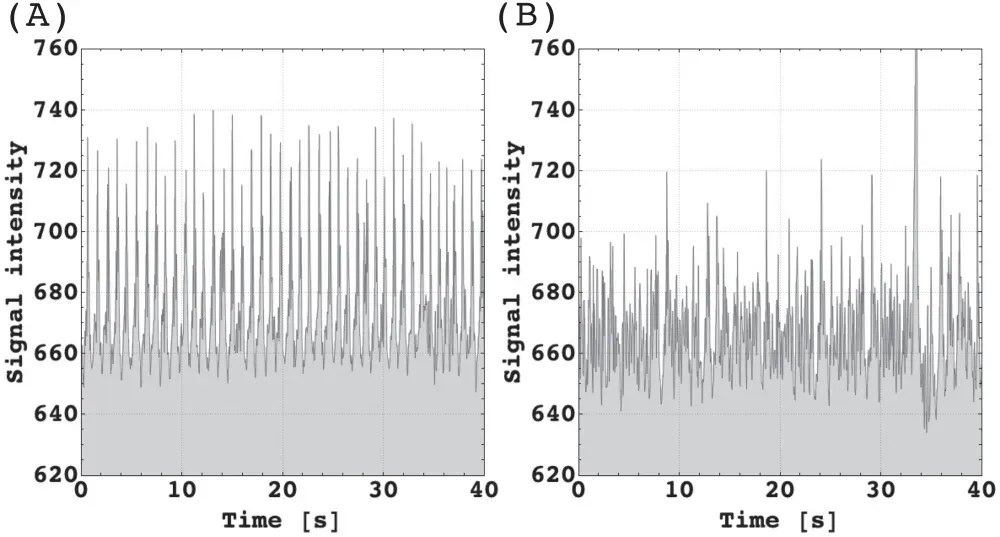
To move beyond speculation, researchers are testing these ideas with increasingly ambitious experiments. In neuroscience, teams are using advanced brain‑imaging tools and machine‑learning models to decode aspects of visual experience from neural activity, essentially reading out fragments of a person’s constructed world. Other labs are probing altered states of consciousness, from deep meditation and lucid dreaming to psychedelic experiences, to see how flexible the brain’s reality‑building machinery really is. Early findings suggest that when the usual predictive frameworks loosen, perception can become more fluid, more entangled with emotion, and sometimes more open to radically new interpretations of self and world. These states may offer natural laboratories for understanding how tight the grip of the “normal” universe really is.
On the physics side, innovative variations of classic quantum experiments are refining how we think about observation, information, and reality at microscopic scales. Some proposals explore “observer‑independent” formulations, while others lean into the idea that different observers can legitimately record different, incompatible facts about the same event. Whether or not these experiments will ultimately connect directly to human consciousness is still up for debate, but they keep the door open to a more observer‑centered cosmos than textbooks once suggested. At the crossroads of these efforts, new mathematical frameworks are being developed that treat conscious agents and their interactions as basic building blocks, not afterthoughts emerging from lifeless matter. It is early, messy, and controversial – but that is exactly how paradigm shifts usually begin.
The Future Landscape: Technologies That Could Test the Theory
Looking ahead, the next decade is likely to bring tools that make the “brain as architect” idea testable in ways that were impossible before. Ultra‑high‑resolution brain mapping, combined with real‑time stimulation technologies, may allow scientists to gently nudge specific networks and see how the constructed world changes from the inside. Imagine virtual reality systems tightly coupled to a person’s neural signals, updating not just what they see and hear, but how their brain predicts and explains those sensations. Such setups could probe whether changing internal models can consistently bend perception, emotion, and behavior in ways that fit the theory of consciousness as a reality‑builder.
Artificial intelligence systems might also become unlikely allies in this research. As machine‑learning models grow better at simulating human‑like perception and decision‑making, they can serve as sandboxes for testing different architectures of “constructed realities.” If certain designs reliably produce richer, more flexible models of their environments, that might hint at principles that biological brains also use. At the same time, questions about sentient AI will force us to sharpen our definitions of consciousness, agency, and moral status. On a global scale, if we accept that minds co‑create social and environmental realities, then future technologies that influence attention and belief – such as immersive media and neuro‑interfaces – will carry enormous responsibility. They will not just entertain us; they will help script the universe we end up living in together.
What You Can Do: Participating in the Reality You Help Create
If your brain is already constructing your world, and your consciousness is already shaping parts of reality, then you are not a passive bystander in the cosmic story. One simple way to engage is to pay closer attention to how your expectations, moods, and beliefs color what you perceive each day, like noticing how a stressful morning makes a neutral comment sound hostile. Supporting mental‑health initiatives, science education, and open discussion about consciousness is another concrete step, because the more we understand our inner architects, the more wisely we can use them. You can also follow and support reputable research groups studying consciousness, whether through public talks, citizen‑science projects, or small donations that help fund experiments at this strange frontier. Even conversations you have with friends and family about these ideas can shift how your small social universe understands mind and matter.
On a broader level, recognizing that shared beliefs build social realities suggests a form of quiet power in how you choose to direct your attention and care. When you amplify careful science instead of sensational misinformation, you help stabilize a shared world grounded in evidence rather than fear. When you support policies and communities that prioritize mental well‑being and curiosity, you are helping to design a future landscape where inner and outer worlds are taken seriously. None of this requires accepting mystical claims; it simply means acknowledging that consciousness is not a trivial byproduct, but a force with real consequences. In a universe where minds are architects, the question is not whether you are shaping reality, but what kind of reality you are helping to build.