

Science is supposed to clear up confusion, yet some of its deepest ideas behave like intellectual trapdoors: the more you tug at them, the more the floor seems to give way. From quantum particles that appear to know about distant events, to black holes that threaten to erase information itself, these paradoxes are not just party tricks for philosophers. They sit right at the foundations of physics, cosmology, and even logic, quietly mocking our best theories. Researchers keep poking at them with bigger telescopes, more sensitive detectors, and smarter algorithms, but full answers remain stubbornly out of reach. Think of this as a guided tour through the places where modern science still says, with a slightly embarrassed shrug: we genuinely do not know.
The Quantum Measurement Problem: When Reality Waits for You to Look
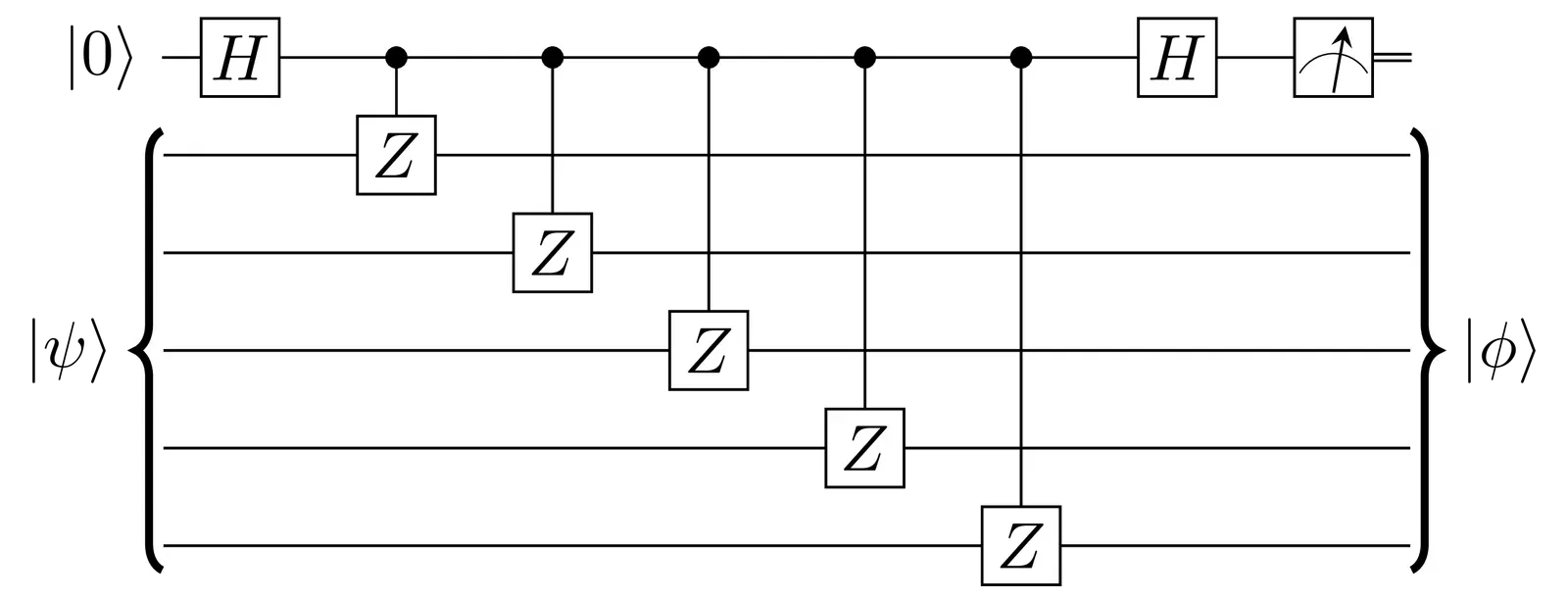
Imagine a world where a coin is not heads or tails until you actually peek at it – that is essentially the quantum measurement problem. In quantum mechanics, particles such as electrons are described by a wave function that encodes many possible outcomes at once, a superposition that seems almost deliberately designed to break your intuition. According to the equations, this wave function spreads and evolves smoothly, like ripples on a pond, until a measurement is made. Then, somehow, it appears to “collapse” to a single definite state, even though that kind of abrupt jump is nowhere in the math. Physicists can predict the odds of each outcome with astonishing precision, but they cannot agree on what the collapse really is – or even if it truly happens.
Different interpretations try to dodge the paradox in different ways, and none has won a decisive victory. The so‑called many‑worlds picture says there is no collapse at all, only a branching of reality into multiple, equally real outcomes, a solution as audacious as it is unsettling. Other approaches, such as objective collapse models, add new physical rules that force wave functions to snap into place, but these ideas are still being tested and constrained in laboratories. Meanwhile, experiments keep confirming that quantum mechanics works, without spelling out what counts as an “observer” or why measurements are special. The result is a theory that lets us build lasers and quantum chips, yet leaves us with an almost mystical gap in how possibilities harden into facts.
Schrödinger’s Cat: The Thought Experiment That Refuses to Die
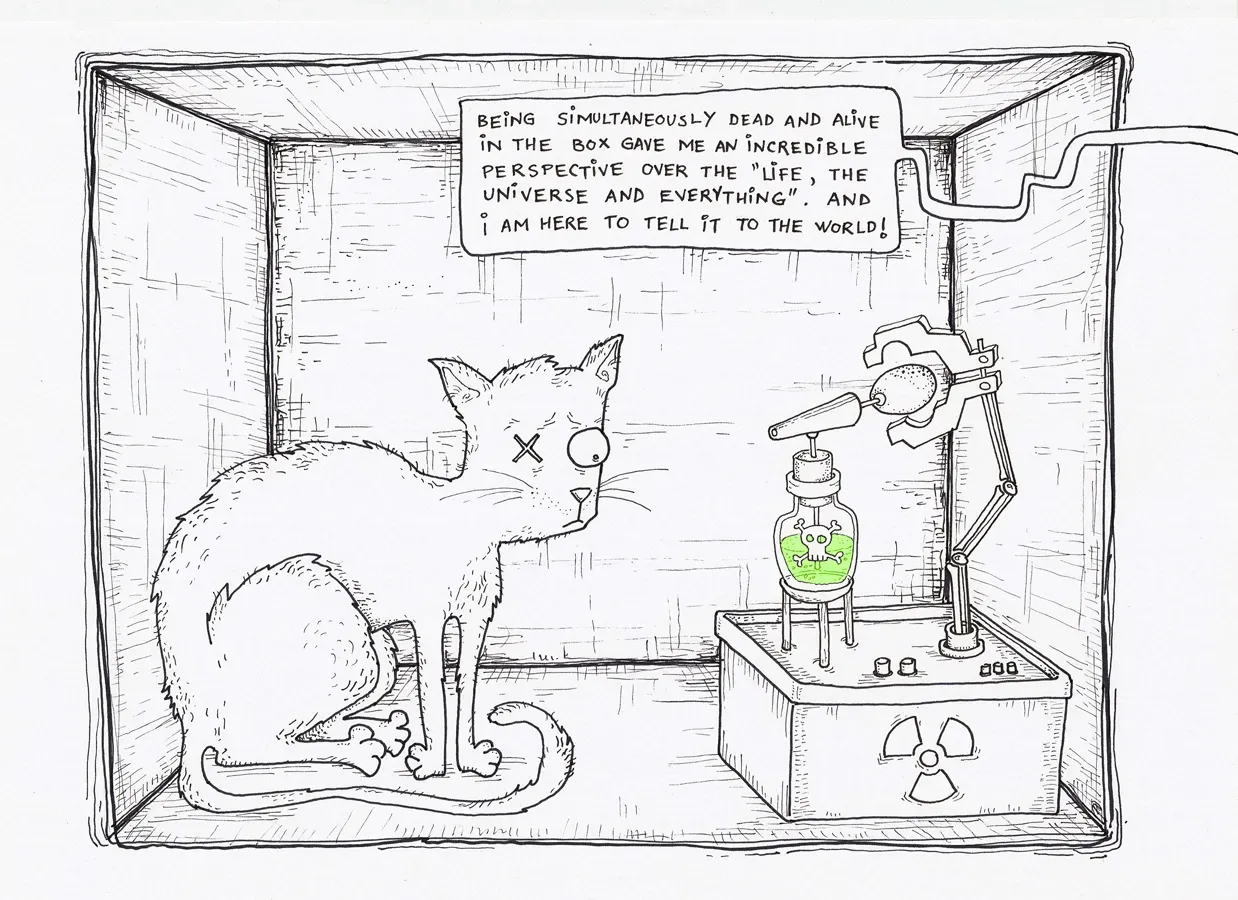
Few scientific puzzles have invaded popular culture quite like the imaginary cat that is somehow both dead and alive. Physicist Erwin Schrödinger dreamed up his feline prisoner in the 1930s to criticize the bizarre implications of applying quantum rules to everyday objects. In the setup, a single radioactive atom, which is in a quantum superposition of decayed and not decayed, is coupled to a lethal device in a sealed box with a cat. If quantum theory is taken literally, the entire cat‑plus‑apparatus system should share the atom’s fuzzy, superposed status until someone opens the box and checks.
The paradox is not about animal cruelty; it is about where we draw the line between the quantum world and the familiar one. If tiny particles can be in limbo, why not cats, tables, or people – or in principle, the whole universe? Modern experiments with increasingly large molecules and mechanical devices have shown that quantum superpositions can persist at scales that would have seemed unbelievable half a century ago. Yet we also know that macroscopic objects behave classically, apparently due to interactions with their environment that rapidly “decohere” quantum states. The unresolved question is whether decoherence is the whole story, or whether there is some deeper ingredient that saves cats from truly being both gone and not gone at the same time.
Einstein’s “Spooky Action”: Nonlocality and the EPR Paradox
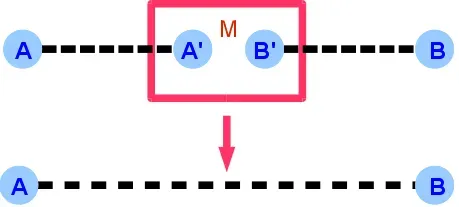
In the 1930s, Albert Einstein and collaborators tried to expose what they saw as a fatal flaw in quantum mechanics, and instead helped reveal one of its strangest strengths. Their argument, known as the EPR paradox, considered pairs of particles prepared in a special entangled state where measuring one instantly tells you something about the other, no matter how far apart they are. Einstein objected that this looked like a superluminal influence, famously branding it a kind of spooky action at a distance and suggesting that quantum theory must be incomplete. He hoped that hidden variables, unknown but perfectly local properties, would restore a more commonsense picture of the world.
Decades later, experiments inspired by John Bell’s theoretical work put these ideas to the test and found that nature violates the limits any local hidden‑variable theory would obey. Entangled particles show correlations that appear to defy classical logic, while still refusing to carry usable signals faster than light. In practical terms, that has opened the door to quantum cryptography and ultra‑precise sensing, technologies that depend on this nonlocal strangeness. Conceptually, though, physicists are still arguing about what the phenomenon actually says about reality. Does it mean spacetime is not the deepest level of description, that information is more fundamental than geometry, or that our usual idea of separable objects was always an illusion?
The Black Hole Information Paradox: Do Cosmic Trash Cans Erase Reality?
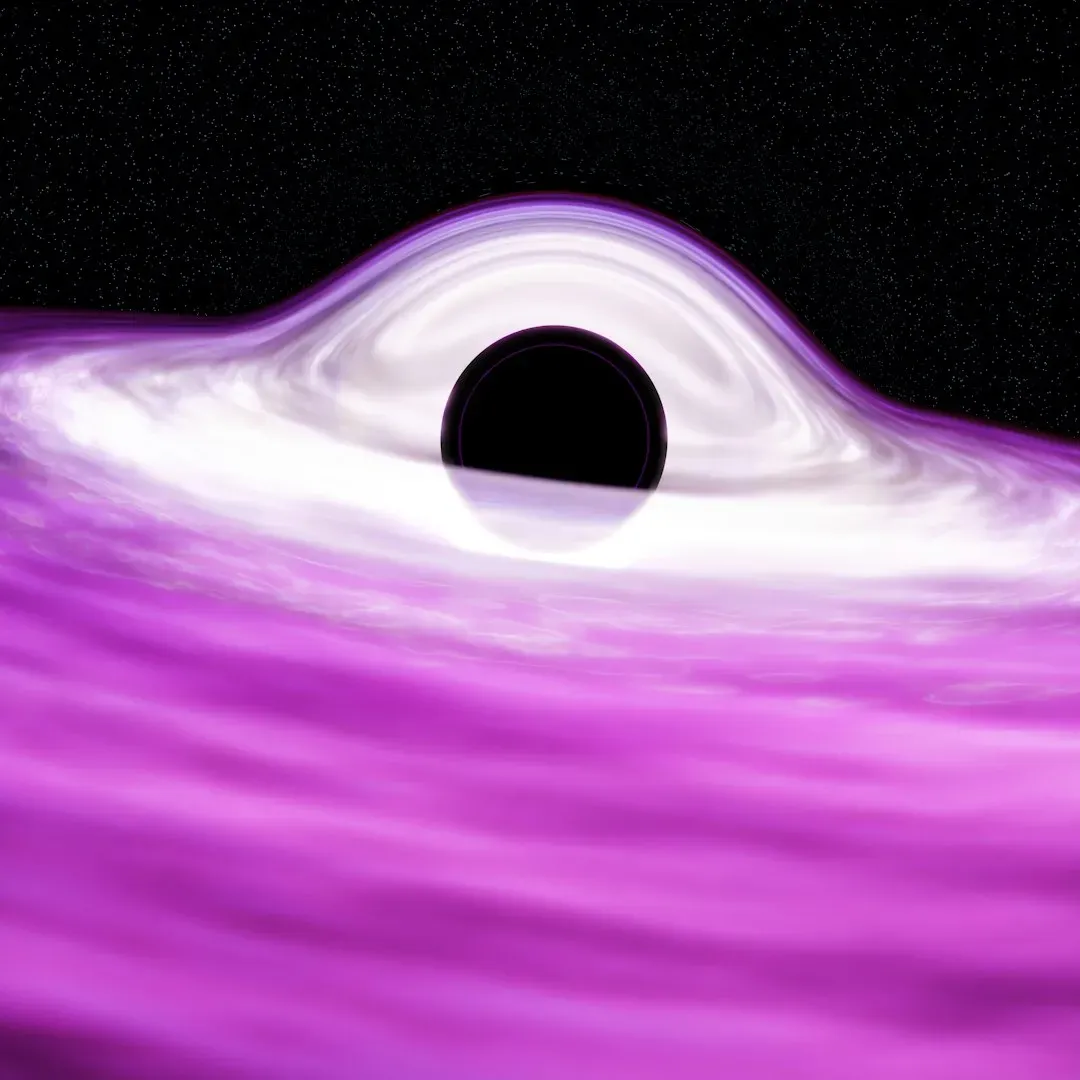
Black holes are often portrayed as ultimate shredders, swallowing matter and light so thoroughly that nothing escapes. In the 1970s, Stephen Hawking added a new twist by showing that quantum effects should make black holes radiate and eventually evaporate, turning them into slowly leaking cosmic embers. That radiation, according to his original calculation, appears almost perfectly random, carrying no obvious trace of the detailed information about what fell in. But in quantum theory, information about a closed system is not supposed to be lost; it can be scrambled or hidden, but not destroyed outright.
This clash between general relativity and quantum mechanics crystallized as the black hole information paradox, one of the most famous unresolved puzzles in theoretical physics. Over the past few decades, ideas from string theory, holography, and quantum gravity have suggested ways that information might cling to the event horizon or seep out in subtle correlations. Some proposals imagine that black holes are more like exotic quantum objects without a conventional interior, while others flirt with radical notions like firewalls that would incinerate anything crossing the boundary. Yet no consensus picture has emerged, and no direct experiment can probe the heart of a real black hole. For now, the paradox stands as a reminder that our two best theories of nature still refuse to fully share the same universe.
The Arrow of Time: Why We Remember the Past but Not the Future
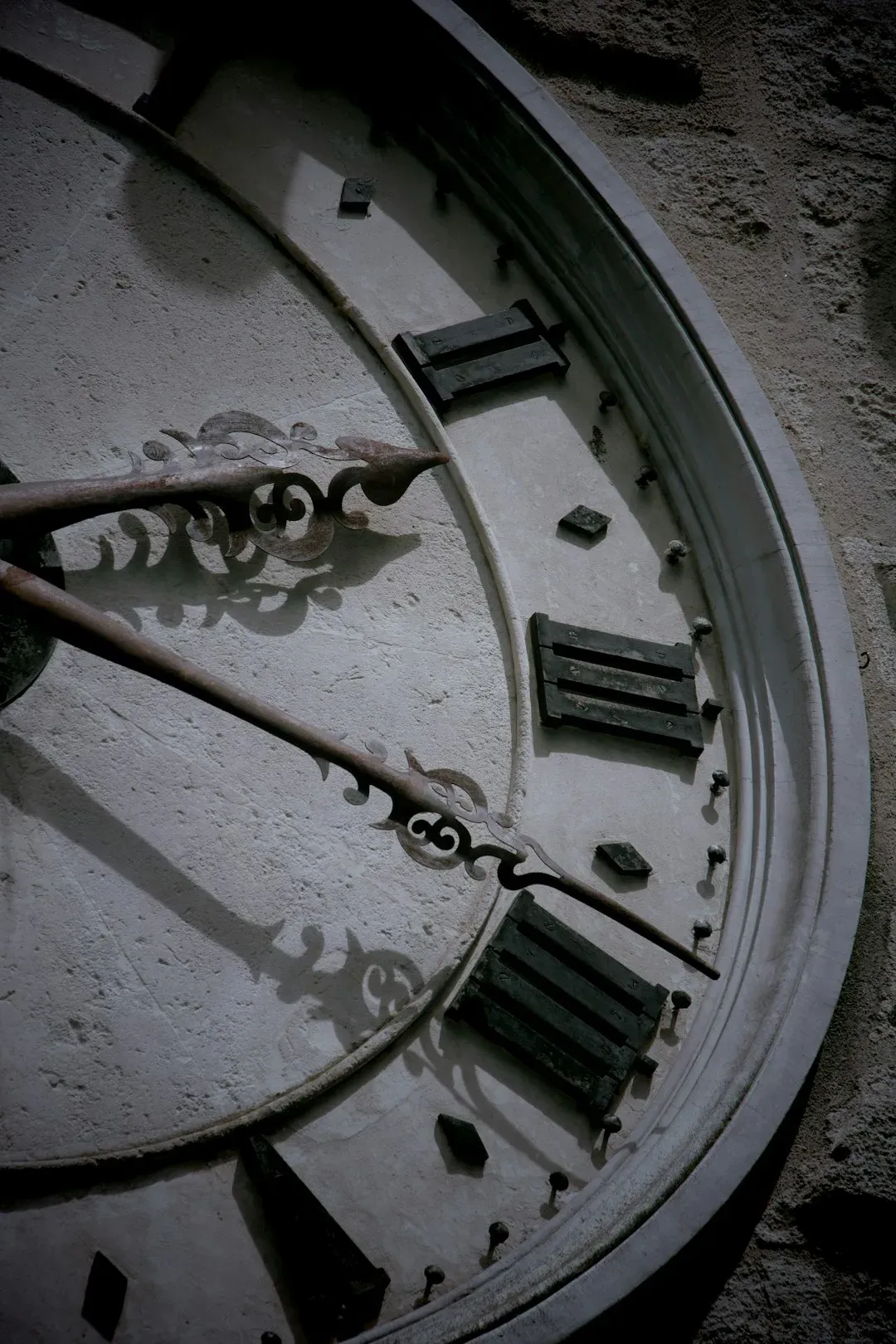
On the tiniest scales, the basic laws of physics are remarkably ambidextrous: run most of them backward, and they still make sense. Yet our lived experience is dominated by a one‑way arrow of time – eggs break but do not unbreak, ice cubes melt but never spontaneously form in a hot drink. The usual explanation leans on entropy, a measure of disorder that, according to the second law of thermodynamics, tends to increase. But the deep puzzle is why entropy was so low in the early universe to begin with, making room for this vast increase and giving time its apparent direction. That initial low‑entropy state looks, from a modern perspective, wildly special.
Cosmologists have proposed various scenarios to tame the paradox, from inflationary episodes that smooth out the cosmos to multiverse pictures where our observed history is just one branch among many. None has fully eliminated the sense that there is something profoundly unexplained about why yesterday feels different from tomorrow at the fundamental level. Intriguingly, of all the equations in everyday physics, it is the ones involving measurement, decay, and information that seem to build in an asymmetry. That has led some researchers to suspect that connecting thermodynamics, quantum mechanics, and cosmology more tightly might be the only way out. Until then, our coffee keeps cooling, our memories point backward, and time’s arrow continues to look more like an assumption than a derived fact.
The Fermi Paradox: Where Is Everybody?
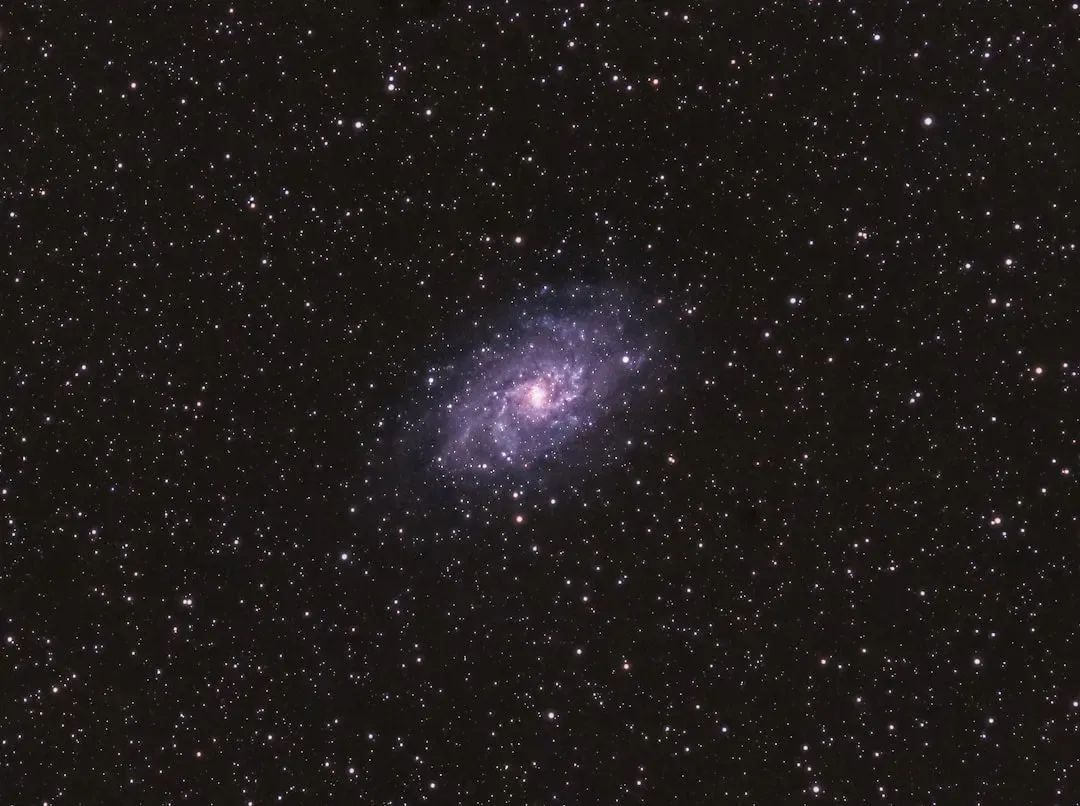
Look up at the night sky and you are staring at a staggering number of stars, many now known to host planets, some in regions where liquid water could exist. Given the age and size of the galaxy, simple calculations suggest that technologically capable civilizations could have arisen many times and, in theory, spread widely. Yet radio surveys, optical searches, and ever more sensitive space telescopes keep turning up the same result: an eerie silence and a conspicuous lack of obvious visitors. This clash between high expectations and meager evidence is known as the Fermi paradox, and it has become a kind of Rorschach test for our assumptions about life.
Proposed resolutions range from the reassuring to the deeply unsettling. Perhaps life is far rarer or more fragile than we think, with complex intelligence an almost freak outcome. Maybe civilizations tend to self‑destruct, retreat into virtual realities, or choose deliberate radio quiet to avoid unknown dangers. A more humbling possibility is that we are simply not looking in the right way, at the right wavelengths, or with the right pattern‑recognition tools, so the signals blend into cosmic background noise. The paradox matters because it forces us to ask hard questions about our own future and about whether human technology is an exception or a tiny part of a crowded, hidden story playing out across the galaxy.
Why These Paradoxes Matter: Cracks in the Foundations
It can be tempting to treat paradoxes as intellectual games, the physics equivalent of brain teasers to pass a rainy afternoon. But the puzzles above sit exactly where our most cherished theories collide, and they highlight cracks that cannot be ignored if we want a unified picture of reality. The quantum measurement problem, black hole information loss, and the arrow of time are not fringe curiosities; they determine how we think about causality, determinism, and even what it means for something to exist. By comparison, previous scientific revolutions – like moving from Newton to Einstein – were also driven by tensions and contradictions that seemed abstract at first. When those earlier paradoxes were finally addressed, the payoff included GPS satellites, nuclear power, and whole new branches of technology.
There is also a human dimension: these paradoxes shape how non‑scientists perceive the limits of knowledge and the authority of science itself. When people hear that information might disappear in black holes or that particles can influence each other across vast distances, it challenges long‑held beliefs about order and logic. That discomfort can feed both wonder and skepticism, depending on how the stories are told and investigated. Taking the paradoxes seriously, testing them where we can, and being honest about uncertainty are crucial for maintaining trust. They remind us that science is not a finished encyclopedia, but an ongoing argument with the universe, and the unresolved parts may end up changing everything we think we know.
The Future Landscape: Quantum Tech, Cosmic Observatories, and New Clues

Although these paradoxes remain unsolved, the tools we are building to probe them are getting dramatically more powerful. Quantum computers and simulators, still in their early stages, allow researchers to engineer controlled entanglement and decoherence, effectively stress‑testing interpretations of quantum mechanics in hardware. Next‑generation gravitational‑wave observatories and radio arrays aim to capture black hole mergers, neutron star collisions, and other extreme events in exquisite detail, offering fresh data to test ideas about information and the fabric of spacetime. Even precision laboratory experiments with tiny mechanical resonators and superconducting circuits are pushing quantum weirdness closer to the everyday scale of mirrors and drumheads.
At the same time, ambitious sky surveys and exoplanet missions keep expanding the search for life and intelligence beyond Earth, turning the Fermi paradox from a dinner‑table musing into a data‑driven discipline. Sophisticated algorithms now comb through torrents of astronomical data to catch faint, anomalous signals that previous generations would have missed. On the theoretical front, efforts to unify gravity and quantum mechanics – whether through quantum gravity, holographic dualities, or newer ideas – are increasingly shaped by the demand to tame black hole and cosmological paradoxes, not just to produce elegant equations. None of this guarantees resolution; some questions may linger for decades or longer. But the landscape is shifting from speculation to a messy, exhilarating period where thought experiments meet real experiments, and old paradoxes may finally start to yield new physics.
How You Can Engage: Staying Curious in a Perplexing Universe
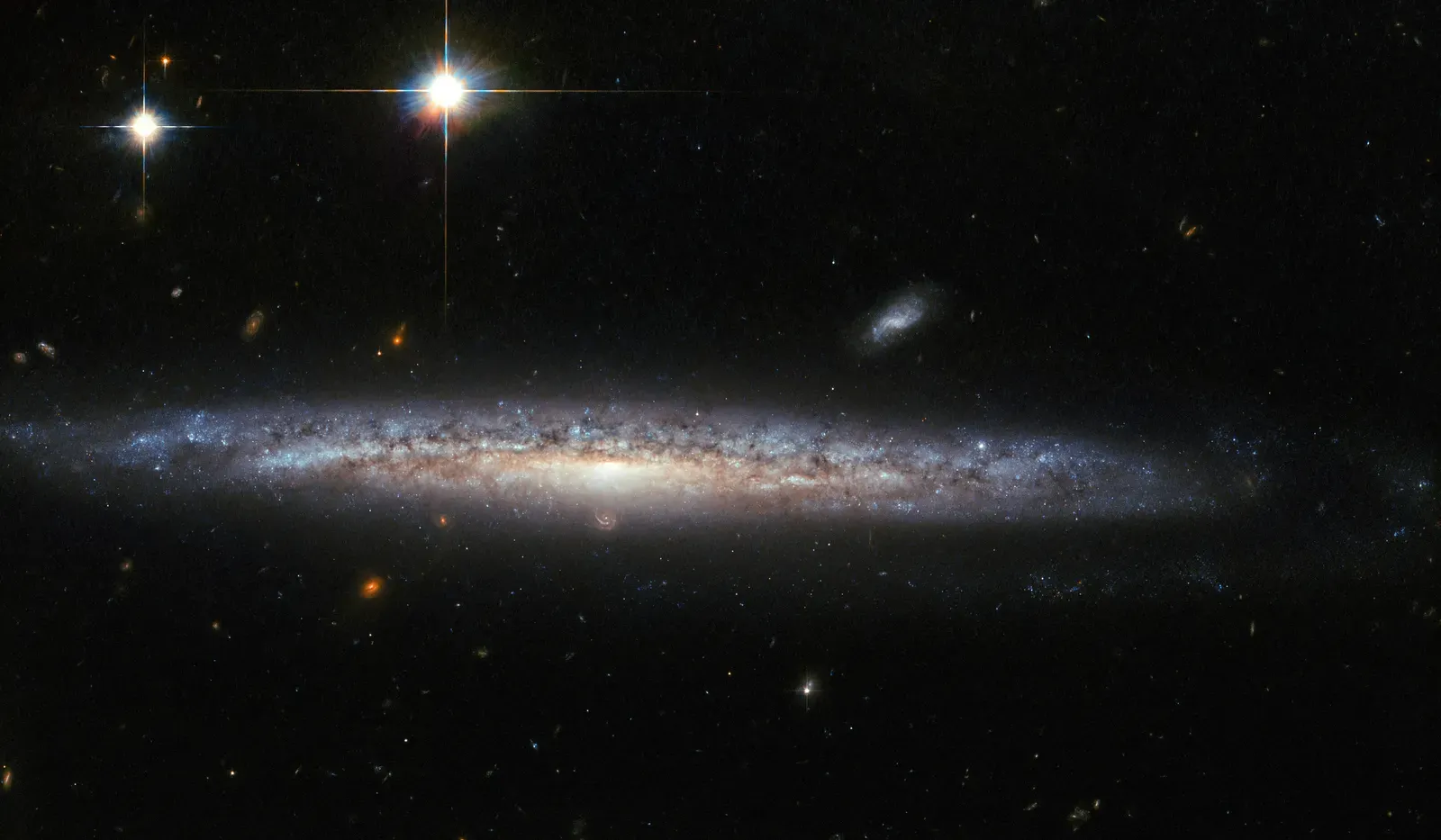
Even if you are not designing telescopes or proving theorems, there are simple ways to plug into this frontier of not‑knowing. One is to cultivate a tolerance, even an affection, for uncertainty – paradoxes are not proof that science is broken, but signs that it is still alive and kicking at the boundaries. Reading deeply reported books, following reputable science outlets, and listening to long‑form interviews with working researchers can give you a sense of how seriously these puzzles are taken and how much debate they generate. Supporting public observatories, science museums, and citizen‑science projects helps sustain the infrastructure that eventually feeds into headline‑making breakthroughs. On a smaller scale, asking better questions in classrooms, book clubs, or online discussions – questions that push beyond the quick answer – creates a culture that welcomes complexity rather than fleeing from it.
If these paradoxes leave you with a slight sense of vertigo, that is probably a healthy reaction. They tell us that the universe is not obliged to follow the narrative arcs we prefer, and that some of our most basic intuitions might be provincial quirks of life on one small planet. Engaging with that discomfort, instead of turning away, is one of the quietest but most powerful forms of participation in science. After all, every major shift in our understanding began with someone stubbornly worrying at an apparent contradiction until it finally broke open. The next time you hear about a cat in a box or a black hole eating information, you might pause and wonder: which of today’s paradoxes will tomorrow’s schoolkids find obvious?
Suhail Ahmed is a passionate digital professional and nature enthusiast with over 8 years of experience in content strategy, SEO, web development, and digital operations. Alongside his freelance journey, Suhail actively contributes to nature and wildlife platforms like Discover Wildlife, where he channels his curiosity for the planet into engaging, educational storytelling.
With a strong background in managing digital ecosystems — from ecommerce stores and WordPress websites to social media and automation — Suhail merges technical precision with creative insight. His content reflects a rare balance: SEO-friendly yet deeply human, data-informed yet emotionally resonant.
Driven by a love for discovery and storytelling, Suhail believes in using digital platforms to amplify causes that matter — especially those protecting Earth’s biodiversity and inspiring sustainable living. Whether he’s managing online projects or crafting wildlife content, his goal remains the same: to inform, inspire, and leave a positive digital footprint.