

Time travel sits in that strange borderland between science fiction and hard physics, where wild ideas sometimes survive the brutal test of equations. For more than a century, scientists have quietly discovered that the universe is far less rigid about time than our everyday lives suggest. Atomic clocks on airplanes tick differently, GPS satellites need constant time corrections, and black holes twist space and time into knots. What used to sound like fantasy now reads more like an invitation: if time already behaves strangely, how far could we push it? These ten ideas do not prove that we will ever build a time machine, but they show why many physicists no longer dismiss the question out of hand.
The Hidden Clues: Time Already Runs at Different Speeds
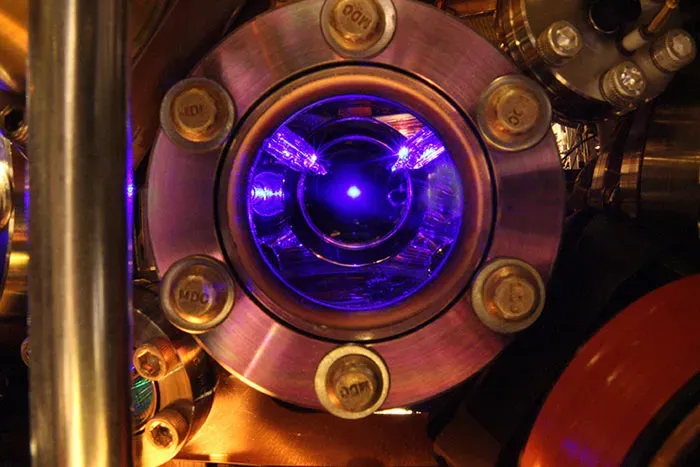
You do not need a time machine to see time travel in action; you just need two very precise clocks and a bit of altitude. According to Einstein’s theory of relativity, time itself slows down when you move faster or sit deeper in a gravitational field, and this is not just theory on paper. Atomic clocks flown around the world on jets have come back slightly out of sync with their twins on the ground, shifted by tiny but measurable fractions of a second. GPS satellites would drift by kilometers each day if engineers did not constantly correct for the fact that time in orbit runs a little quicker than it does on Earth’s surface. In a quiet, almost bureaucratic way, our navigation systems work only because we routinely account for miniature instances of time dilation.
These discrepancies are microscopic compared with the dramatic leaps imagined in science fiction, but the principle is the same: time is not absolute, and it can be stretched. Climb a mountain and, strictly speaking, you age a sliver faster than someone at sea level, simply because Earth’s gravity is weaker higher up. The effect is so small that it will never give you lottery-winning knowledge of the future, yet it proves that the universe already allows different timelines to unfold at different rates. Time travel is not something that starts with a glowing machine in a lab; it begins with a clock that ticks just a little differently depending on where you put it.
Relativity’s Loophole: Why Physics Does Not Fully Ban Time Travel
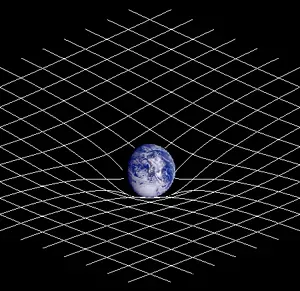
Einstein’s general relativity treats space and time as a flexible fabric that can be curved, twisted, and dragged by matter and energy. In some of the theory’s stranger solutions, that fabric folds back on itself to form what physicists call closed timelike curves, paths that loop through spacetime and, in principle, allow an object to return to its own past. These solutions are not casual thought experiments; they emerge from the same equations that accurately describe black holes and expanding galaxies. For example, a sufficiently fast-spinning, ultra-dense object could theoretically drag spacetime around with it so violently that paths into the past become mathematically possible. On paper, nothing in relativity itself slams the door on this sort of temporal boomerang.
Of course, “allowed by the equations” is not the same as “buildable in a lab,” and that is where skepticism rightly enters. These exotic scenarios usually require conditions that verge on the impossible, such as infinitely long cylinders of ultra-dense matter or perfectly stable wormholes threaded with bizarre forms of energy. Still, the fact that the most successful theory of gravity we have does not automatically outlaw backward time travel is startling. Instead of a clean prohibition, we get a universe full of technical caveats and extreme requirements, like a legal contract that begrudgingly leaves in a loophole. For many researchers, that loophole is precisely what keeps the time travel question scientifically alive.
Wormholes: Cosmic Shortcuts That Could Double as Time Machines
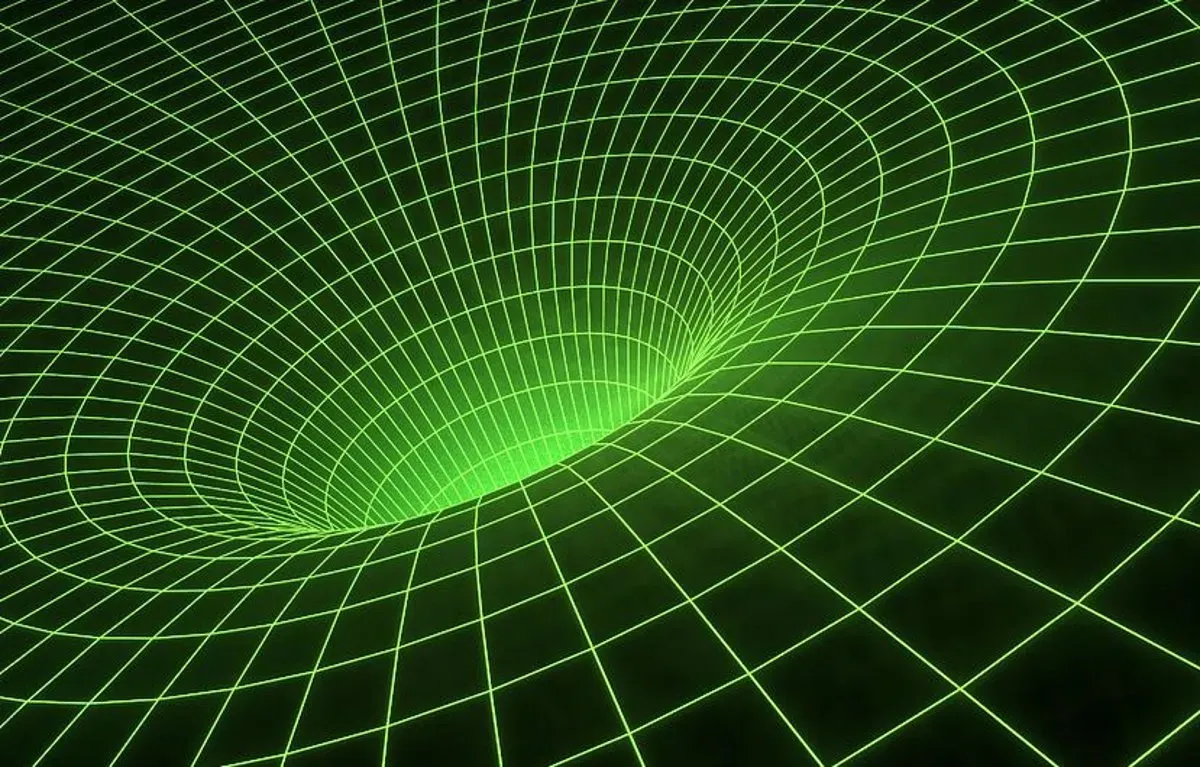
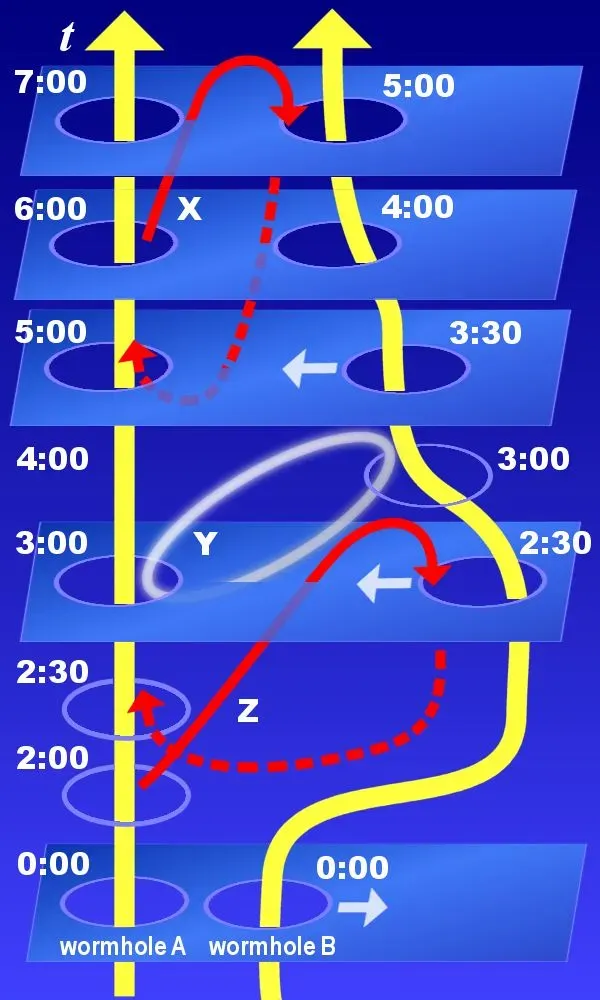
Wormholes are theoretical tunnels that might connect distant points in space, a bit like two shortcuts punched through the surface of a crumpled sheet of paper. If such a tunnel could be stabilized and held open, traveling through it would let you arrive somewhere far away faster than light could cross normal space between those points. But the truly mind-bending twist is that, under certain conditions, a wormhole could link not only different locations but also different moments in time. If one mouth of the wormhole experiences time more slowly – for instance, by being accelerated near light speed or parked near a massive object – then the two mouths fall out of sync. Step through the “younger” mouth and emerge from the “older” one, and you have effectively traveled into the past relative to your departure point.
There are brutal catches. To keep a wormhole from collapsing instantly, the math demands some form of negative or “exotic” energy that has never been produced in the necessary amounts. Quantum physics does hint that such energy densities are not forbidden, but harnessing them would be a technological leap far beyond anything currently imaginable. Some physicists argue that quantum effects might automatically destabilize any wormhole that threatens to become a time machine, acting like a built-in censorship system for the universe. Others think the door is still cracked open, at least conceptually. Either way, wormholes transform time travel from pure fantasy into a technical problem with well-defined, if outrageously difficult, requirements.
Quantum Weirdness: Retrocausality and Messages That Seem to Go Backward
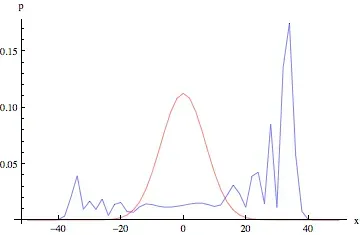
Zoom down to the quantum level and time starts to look even stranger, almost as if cause and effect occasionally swap seats. In certain interpretations of quantum mechanics, particles do not simply evolve from past to future; instead, their behavior can be influenced by conditions set both in the past and in the future. Experiments with entangled particles have shown that a measurement made on one particle appears to instantly affect the state of its partner, even when they are separated by large distances. To preserve the idea that nothing moves faster than light, some researchers explore models where information seems to travel along zigzag paths in spacetime, partially backward as well as forward. This is where the unsettling term “retrocausality” enters the conversation.
Most physicists agree that you cannot use these quantum tricks to send a clear message into your own past and, say, warn yourself about a bad stock investment. The correlations involved are statistical and only make sense when compared after the fact, not as neatly packaged information traveling in reverse. Still, the mere possibility that the quantum world might quietly knit together past and future in a two-way handshake is conceptually explosive. It hints that time might not be a rigid arrow but a more flexible tapestry, where events are linked in ways our everyday experience does not reveal. If a future, fully developed quantum theory leans into retrocausality, our entire understanding of what “before” and “after” mean could change.
Parallel Timelines: Why Some Physicists Embrace the Multiverse
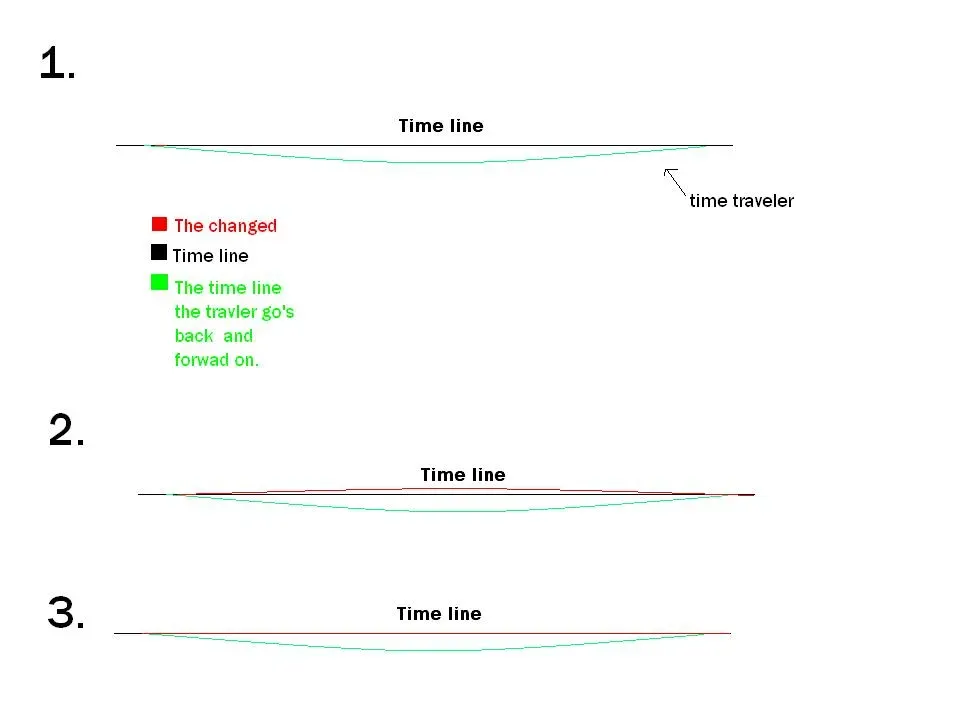
One of the biggest worries about backward time travel is the classic paradox problem: if you go back and change something vital, do you erase the very conditions that allowed your trip in the first place? To wriggle out of this logical trap, some physicists reach for the idea of many-worlds or multiverse interpretations, where every quantum event spawns branching timelines. In that framework, traveling to the past does not overwrite your own history; it moves you onto a different branch where events unfold differently from that point on. Your original timeline, the one where you pressed the start button on the time machine, still exists alongside the new version you just helped create. The paradox dissolves, replaced with a vast tree of alternate realities.
While the multiverse is still speculative, it is not a casual fantasy tacked onto physics for fun. It emerges as a serious attempt to make sense of quantum mechanics without introducing mysterious collapses or special observers. If our universe is already quietly splitting into an enormous number of unseen branches, then time travel might be less about rewinding a single tape and more about jumping tracks in an enormous cosmic rail yard. The price of avoiding paradox is accepting that there may be countless versions of you, each living out different consequences of different choices. For many people, that idea is more unsettling than any grandfather paradox could ever be.
Why It Matters: Time Travel as a Stress Test for Our Best Theories
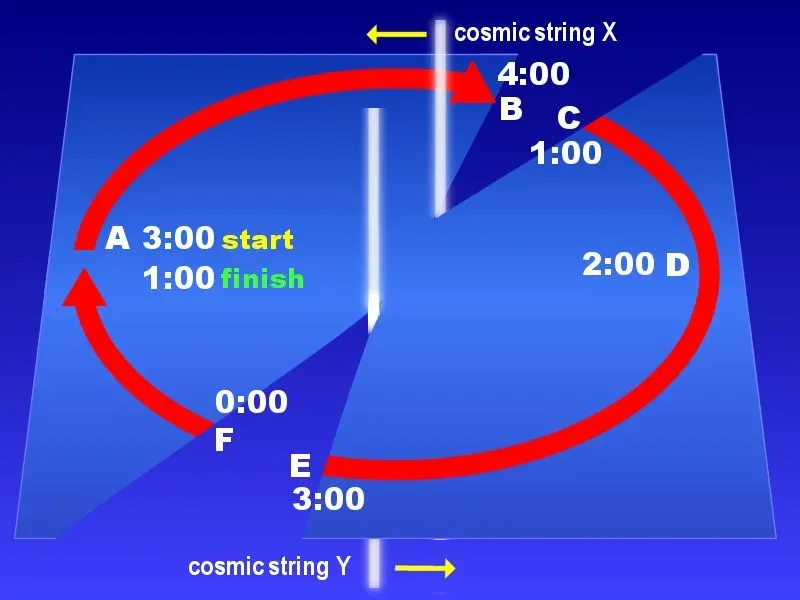
Time travel is not just a playground for screenwriters; it is a brutal exam for our most cherished scientific ideas. Whenever a theory allows time loops, paradoxes, or other temporal oddities, researchers are forced to ask whether the theory is incomplete, misapplied, or pointing toward a deeper layer of reality. The very act of trying to build consistent stories about time travel pushes physicists to refine concepts like causality, information, and the nature of spacetime itself. Much like imagining extreme engines helped real engineers build better cars and rockets, imagining extreme timelines helps scientists clarify what the laws of physics truly permit. Even if no one ever steps into a time capsule, the intellectual pressure of the idea improves our models of the universe.
There is also a cultural dimension: time travel stories shape how the public thinks about science, responsibility, and the future. They force us to confront questions about unintended consequences, ethical use of knowledge, and how much control humans should have over nature. Compared with traditional scientific topics like simple projectile motion, time travel demands that we combine physics with philosophy and even psychology. That blend can spark curiosity in people who might otherwise tune out at the mention of equations or cosmic geometry. In that sense, time travel serves as a gateway concept, pulling more minds into serious engagement with science than many straightforward subjects ever could.
The Human Factor: Memory, Perception, and the Brain’s Private Time Machine
Even if physics never hands us a working time machine, our brains already perform a subtler kind of temporal trickery every day. Neuroscientists have shown that the brain does not experience events in real time; it constantly buffers, edits, and reconstructs a narrative of what just happened. When you remember a moment from years ago, you are not replaying a perfect recording; you are rebuilding the scene from scattered data and present-day expectations. In a very real sense, every act of remembering is a trip to a reconstructed past, one that quietly shifts a little each time you visit it. That makes human memory less like a locked archive and more like a living, editable document.
This psychological time travel has real consequences for science and society. Eyewitness testimony, for example, can feel rock solid to the person giving it while being riddled with subtle distortions. On the more hopeful side, therapy techniques that help people reframe traumatic memories are essentially inviting them to revisit and rewrite their internal past. When you zoom out, the line between physics and experience blurs: we live inside stories about time that our nervous systems are constantly revising. While the cosmos handles the grand-scale stretching and curving of spacetime, our brains quietly run a parallel show, looping, editing, and skipping through the timeline of our lives.
The Future Landscape: From Relativistic Starships to Quantum Communication
Looking ahead, the most realistic form of time travel may come not from exotic wormholes but from very fast, very long journeys through space. If humanity ever builds starships capable of cruising at a significant fraction of light speed, their crews will experience time much more slowly than people back on Earth. A mission that feels like a decade onboard could correspond to many decades passing at home, effectively catapulting returning astronauts into their own future. This forward-only time travel is already baked into special relativity; we simply have not yet built machines powerful enough to make the effect dramatic. As propulsion technologies inch forward, this gap between ship-time and Earth-time becomes more than just an equation in a textbook.
At the same time, quantum technologies may flirt with the boundaries of what we consider temporal communication. Ultra-secure communication methods based on entanglement, ultra-precise atomic clocks, and future quantum networks could highlight more of the strange structure of time at tiny scales. None of these projects aims to build a polished time machine, but they all probe the edges of what time and information can do. The global implications are enormous: navigation systems, financial networks, climate monitoring, and deep-space exploration all depend on how well we can measure and coordinate time. In trying to master the practical side of timing, we may stumble on deeper clues about whether more dramatic manipulation of time is possible.
What You Can Do: Staying Curious at the Edge of the Timeline
Engaging with the science of time travel does not require a physics degree or a billion-dollar lab; it starts with staying curious and critical. Popular science books, reputable documentaries, and university outreach programs often cover relativity, quantum theory, and cosmology in accessible ways. By choosing carefully sourced material, you help create demand for explanations that respect both wonder and accuracy. Checking whether claims come from peer-reviewed research or established institutions is a simple habit that pays off whenever a sensational headline about time travel pops up. Curiosity laced with skepticism is one of the best tools the public has.
If you want to go a step further, you can support organizations and initiatives that push our understanding of time and the universe. That might mean backing space missions, following gravitational-wave observatories, or encouraging better science education in your community. Even simple acts – like discussing the real science behind time travel with friends instead of only the movie version – nudge the culture toward deeper engagement. As more people learn how strange time already is, from GPS satellites to quantum experiments, the conversation about what might be possible becomes richer and more grounded. The questions you ask today could help shape the kinds of answers future scientists are inspired to chase.
Suhail Ahmed is a passionate digital professional and nature enthusiast with over 8 years of experience in content strategy, SEO, web development, and digital operations. Alongside his freelance journey, Suhail actively contributes to nature and wildlife platforms like Discover Wildlife, where he channels his curiosity for the planet into engaging, educational storytelling.
With a strong background in managing digital ecosystems — from ecommerce stores and WordPress websites to social media and automation — Suhail merges technical precision with creative insight. His content reflects a rare balance: SEO-friendly yet deeply human, data-informed yet emotionally resonant.
Driven by a love for discovery and storytelling, Suhail believes in using digital platforms to amplify causes that matter — especially those protecting Earth’s biodiversity and inspiring sustainable living. Whether he’s managing online projects or crafting wildlife content, his goal remains the same: to inform, inspire, and leave a positive digital footprint.