For more than a century, physics has quietly chipped away at our common-sense idea of time as a straight line marching from past to future. Now, a wave of new theories and experiments is pushing a bolder claim: time itself might be less like an arrow and more like a tangled web, a block, or even a quantum haze. That idea is not just a philosophical curiosity; it could rewrite how we think about memory, causality, and even free will. From puzzling quantum experiments to bold cosmological models, researchers are starting to ask whether our sense of “before” and “after” is a mental shortcut rather than a fundamental truth. If they are right, our entire picture of reality may need an upgrade.
The Hidden Clues: When Experiments Break Our Intuition
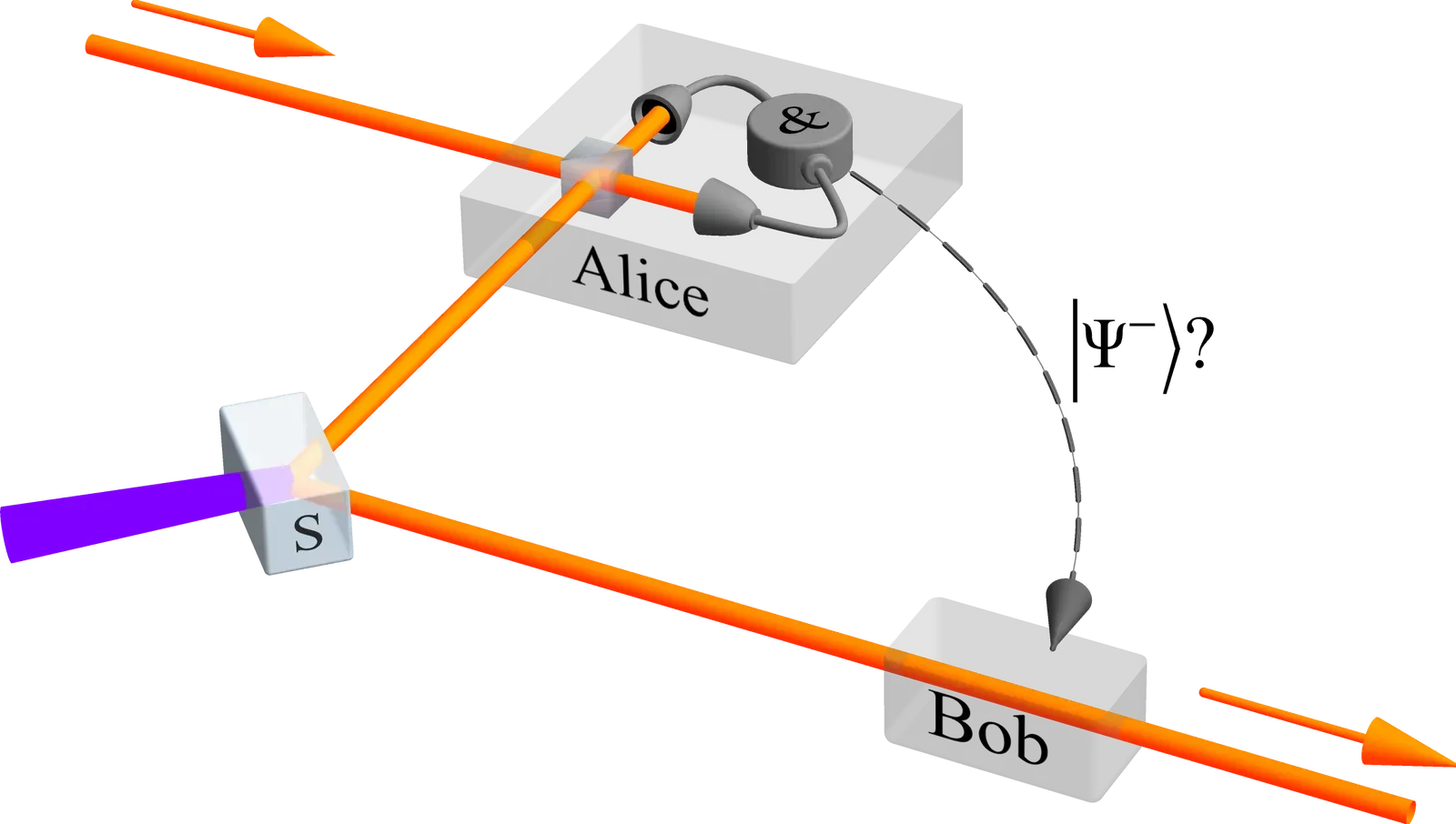
One of the most unsettling clues that time might not be strictly linear comes from quantum experiments where a particle seems to “decide” what it was in the past based on a choice made in the present. In delayed-choice experiments, for example, researchers decide how to measure a photon only after it has already traveled through an apparatus, yet the results behave as if the later decision shaped the photon’s earlier path. That does not mean messages travel backward in time, but it does suggest that our standard cause-then-effect narrative struggles to capture what is going on. Instead, the entire experimental setup, including the final measurement, appears to form a single, indivisible whole. The story we tell ourselves – first this happened, then that – may just be our brain’s way of smoothing out something stranger.
Another astonishing clue comes from experiments in which the order of events themselves becomes fuzzy. In so-called quantum “indefinite causal order” scenarios, two operations can be arranged so that there is no single well-defined answer to which one happened first. It is as if two phone calls could each be the cause of the other, depending on how you look at them. When physicists build such setups using entangled photons and clever interferometers, they see real, measurable advantages for information processing, hinting that this odd behavior is not just theoretical decoration. These findings point toward a universe where “before” and “after” can be more flexible than our everyday experience suggests.
From Einstein’s Block Universe to Quantum Timelines
The idea that time might not flow the way we feel it began long before modern quantum tricks. In Einstein’s theory of relativity, time and space fuse into a four-dimensional fabric where all events – past, present, and future – coexist. Many physicists describe this as a “block universe,” where our sense of moving from one moment to the next is more like scanning along a film reel than watching reality being created on the spot. In this picture, the future is as fixed as the past; what changes is just our subjective position along the timeline. That view alone is already radical compared with everyday belief, but quantum mechanics complicates it further.
Quantum theory introduces unpredictability, probabilities, and entanglement, raising the question of how a block universe can make sense if outcomes are not fixed until measured. Some modern approaches try to blend these worlds, proposing that the universe might be a static four-dimensional structure where quantum possibilities are encoded in the geometry of spacetime itself. Others explore models in which time emerges from entanglement and correlations, not as a pre-existing parameter but as something that appears when systems interact. These hybrid pictures often treat the flow of time as a useful illusion built on deeper, more symmetrical laws that do not distinguish past from future. The result is a growing sense that linear time, as we experience it, may be a secondary story layered on top of a timeless foundation.
Reversible Laws, Irreversible Lives
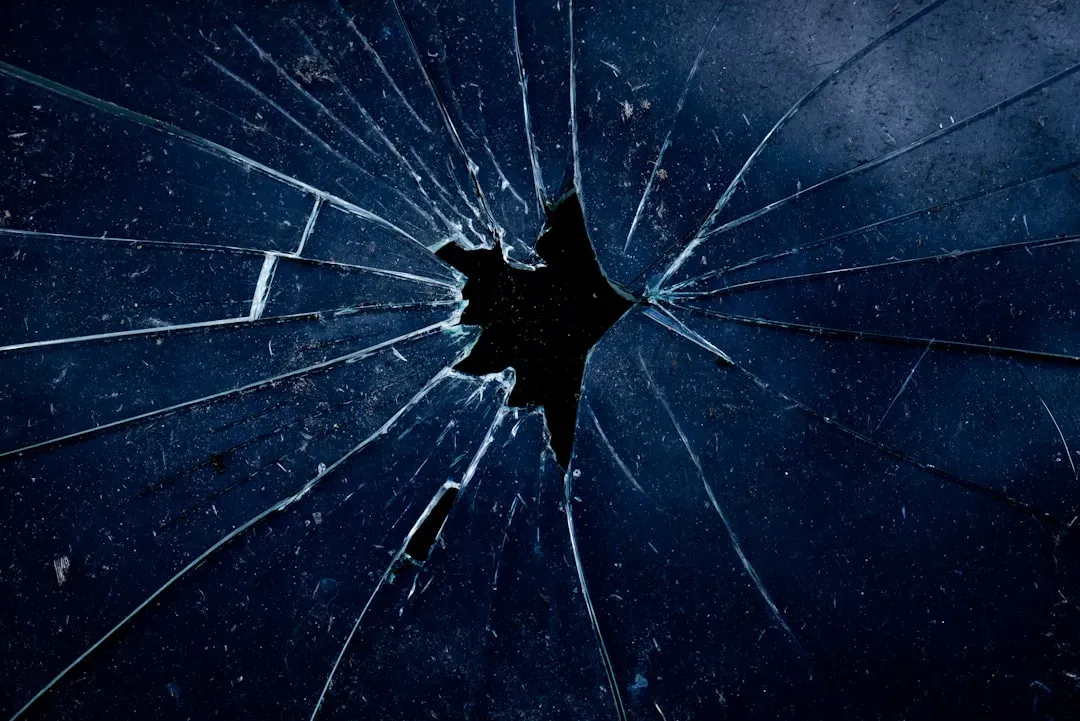
At the heart of this debate lies a stark contrast: the basic equations of physics mostly work the same whether you run them forward or backward, while human life unfolds in one direction only. Smash a glass, and it shatters; you never see the shards leap back into your hand. Yet if you wrote down the microscopic laws governing every particle of the glass and the air around it, you could reverse the motion mathematically and nothing would break. That mismatch has haunted physics for more than a century and raised the uncomfortable idea that the arrow of time might be more about statistics than about ironclad laws.
Modern thermodynamics explains that in a universe starting in a remarkably low-entropy state, the most likely outcome is that disorder grows, giving us a psychological sense of time’s direction. But that does not require time itself to be fundamentally one-way; it only requires that the universe had a special beginning. This subtlety opens the door to views where the fundamental rules have no preferred direction, and the feeling of “moving forward” arises from how information and entropy behave in large systems like brains. In such a picture, the apparent linearity of time is like a dominant current in a river: very real for anything floating in it, yet not a property of the water molecules themselves.
Quantum Retrocausality: Can the Future Influence the Past?
Some of the boldest theories on the table suggest that the future might play as big a role as the past in shaping events. In retrocausal interpretations of quantum mechanics, present outcomes depend not only on boundary conditions in the past but also on constraints in the future. Instead of a one-way chain of causes, the universe is treated as a kind of self-consistent story that must make sense from both ends at once. This does not mean you can send lottery numbers back to your earlier self, but it does mean that the usual “past causes future” slogan is no longer the whole tale.
These ideas gain traction because they can explain puzzling quantum correlations without invoking faster-than-light communication. If influences can run in both time directions within a single block of spacetime, then weird entanglement patterns start to look less spooky and more like global consistency conditions. Critics argue that retrocausality complicates our understanding of agency and responsibility, while supporters claim it restores locality and fits more comfortably with relativity. Either way, the debate forces us to reconsider whether time’s arrow is a basic ingredient of reality or a convenient approximation for beings living inside it.
Why It Matters: Causality, Free Will, and the Stories We Tell
It is tempting to file all of this under “physics oddities” and move on, but the implications are deeply personal. Our concepts of responsibility, regret, and hope all rely on the idea that the past is fixed, the future open, and the present the arena where choices are made. If the universe is a block where all moments coexist, then our sense of deciding what happens next might be more like reading a line in a book that is already written. That does not automatically kill free will, but it pushes philosophers and scientists to reframe it as something compatible with a fixed four-dimensional structure.
On a more practical level, revising our idea of time reshapes everything from how we think about memory to how we model complex systems. In neuroscience, some researchers already treat perception as a kind of time inference, where the brain uses past and predicted future states to construct a coherent present. In cosmology, debates about the beginning and end of time influence how we interpret data from the cosmic microwave background and distant galaxies. Even in everyday technology, a more flexible understanding of causality may help design new communication protocols and secure systems, especially as quantum networks develop. In short, how we imagine time guides how we imagine possibility itself.
Technologies on the Edge of Timelessness
Theories that loosen time’s tight grip are not only philosophical; they are starting to shape real technologies. Quantum computers, for example, exploit superposition and entanglement to explore many computational paths at once, effectively blurring the neat sequence of steps that classical devices follow. Some experimental protocols inspired by indefinite causal order show that placing operations in a “superposition” of different time orders can outperform any fixed sequence. This is more than a clever trick; it suggests that computing power may grow when we stop insisting on a rigid before-and-after structure.
Future communication networks may also lean on a more nuanced understanding of time. Quantum key distribution already assumes that information security relies on fundamental physical laws, not just human-made codes, and time correlations between entangled particles are part of what makes those systems work. As physicists test more ambitious schemes – like quantum repeaters spanning continents or satellite constellations sharing entangled states – subtle questions about when events occur and how they are ordered become crucial. At the same time, new experiments in quantum gravity, ultra-precise atomic clocks, and gravitational wave observatories could probe whether time behaves differently under extreme conditions. Step by step, our devices are becoming sensitive enough to test ideas about time that used to live purely on chalkboards.
Rethinking Reality: Human Experience vs. Deep Physics
All of this creates a tension between the world we live in and the world physics describes. We experience time as a steady river, but the equations often treat it as a coordinate, a label, or even an emergent bookkeeping device. Personally, the first time I dug into these ideas, it felt like learning that the “color” of the world is partly a trick of our eyes; the universe is not lying to us, but it is not telling the whole story either. Our language, built for survival in a slow, mid-sized world, is not well suited to talking about block universes or retrocausal influences. So we end up using metaphors – film reels, maps, webs – to bridge the gap between intuition and theory.
That gap can be unsettling, but it is also where scientific revolutions happen. In the past, shifts in perspective about Earth’s place in the cosmos or the nature of matter have forced cultures to reinvent old beliefs and build new ones. A non-linear or emergent view of time could be the next such shift, changing how we frame questions about identity, continuity, and change. Artists and writers are already playing with non-linear narratives that echo these scientific ideas, from looping storylines to branching timelines in interactive media. As those cultural experiments spread, they may help us internalize a deeper, more flexible understanding of time than the crude line we learned in school.
The Future Landscape: Open Questions and Radical Possibilities
Looking ahead, several big questions will shape the landscape of time research. Can we find a quantum theory of gravity in which time emerges from more fundamental, timeless building blocks, as some approaches to quantum cosmology suggest? Will future experiments with entangled systems, ultrafast lasers, or black hole analogues in the lab reveal cracks in our current assumptions about temporal order? And can we reconcile the block-universe feel of relativity with the indeterminism and probabilities baked into quantum mechanics without resorting to patchwork fixes?
The answers could ripple far beyond physics departments. A deeper understanding of time might influence how we design long-term institutions, think about climate responsibility, or frame ethical duties to future generations. Consider how our decisions today already shape conditions centuries from now; a richer temporal perspective might push us to treat distant futures as less abstract and more present in our moral calculus. On the technical side, time-aware architectures for AI, finance, and infrastructure could factor in complex feedback loops rather than simple cause-and-effect chains. For now, though, the greatest challenge is intellectual: accepting that the most familiar feature of our lives – time’s apparent flow – may be less fundamental than it feels.
How You Can Engage With the New Time Revolution

You do not need a physics degree to take part in this quiet revolution in how we think about time. One simple step is to explore trustworthy popular science books, lectures, and podcasts that dive into relativity, quantum mechanics, and cosmology without dumbing them down. As you listen or read, notice how often physicists emphasize symmetry, conservation, and global consistency instead of local cause-and-effect. Another step is to question your own assumptions in daily life: when you feel that the past is rigid and the future totally open, remember that nature’s laws might be telling a more nuanced story.
If you want to support the research directly, consider backing public science institutions, university outreach programs, or citizen science platforms that communicate cutting-edge physics. Many projects now share open data or offer virtual tools where curious people can explore simulations of spacetime, black holes, or quantum systems. Even simple actions – like encouraging science education in your community or pushing for policies that take the long view on environmental and technological risks – reflect a more sophisticated attitude toward time. The next big insight about reality might come from a lab, a computer model, or a thought experiment, but it will only matter if the rest of us are ready to think differently about what “before” and “after” really mean.