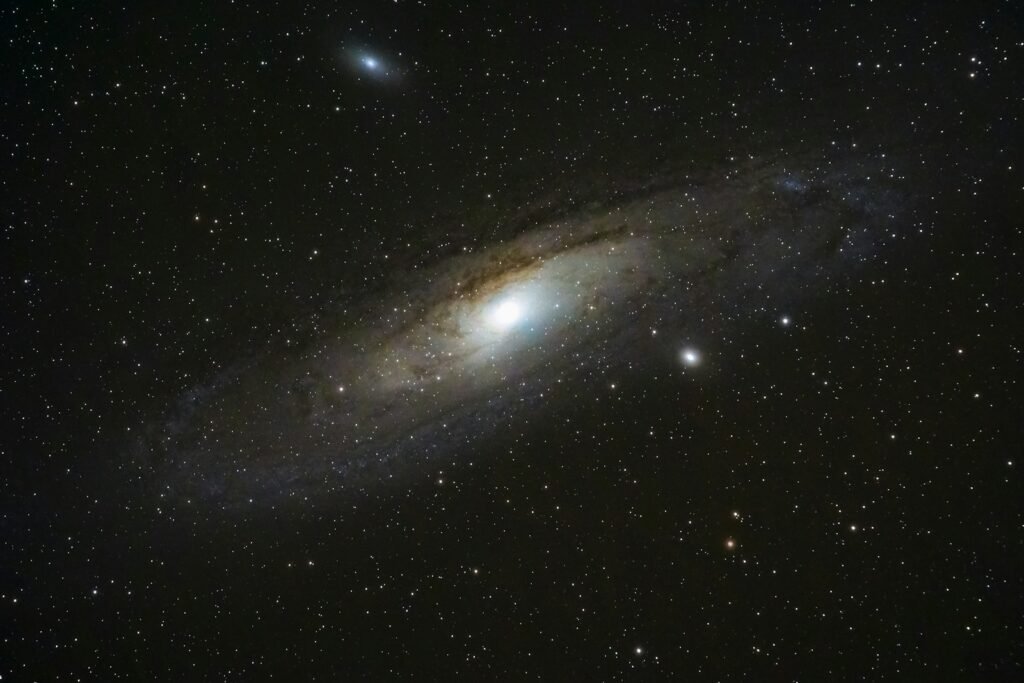

The universe, for all its glittering galaxies and serene night skies, may be racing not toward a quiet fade-out, but toward a violent, all‑crushing finale. New modeling of cosmic expansion is reviving one of the most dramatic ideas in cosmology: that space itself could one day slam into reverse, collapsing everything back into a searing fireball. It is a storyline that mirrors the Big Bang in reverse, transforming the comforting notion of an ever‑cooling cosmos into something more restless and cyclical. Yet buried in this apocalyptic narrative are remarkable clues about how the universe works, from the strange pressure of dark energy to the way your own body’s atoms were forged in earlier cosmic catastrophes. The mystery now is not just how the universe ends, but what its possible death tells us about its wild, creative beginning.
The hidden clues in a sky that looks calm
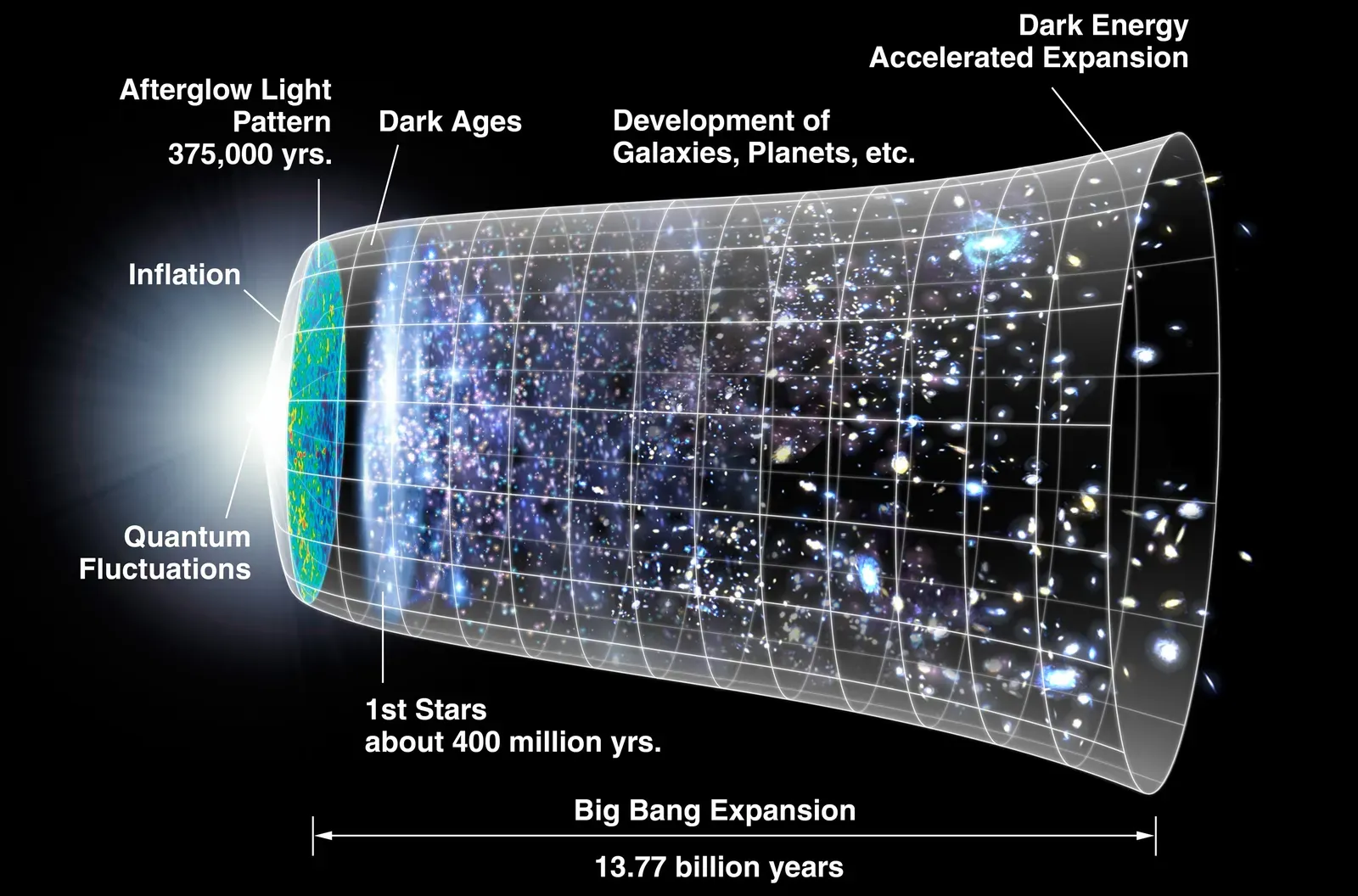
On a clear night, the universe appears almost frozen, like a still photograph scattered with stars. But behind that apparent calm, space is stretching relentlessly, carrying distant galaxies away from us at astonishing speeds. Astronomers measure this motion using redshift, the subtle stretching of light that reveals how long ago a galaxy’s glow left its home. Over the last few decades, careful surveys have shown that this expansion is not just ongoing, it is accelerating, as if some invisible agent were pushing everything apart.
That invisible agent is labeled dark energy, a term that says more about our ignorance than our understanding. Small changes in how dark energy behaves over time can completely rewrite the universe’s long‑term story, including whether we get a peaceful fade‑out or a catastrophic crunch. When researchers tweak their models using updated observations of galaxies and the cosmic microwave background, some scenarios allow dark energy to weaken or even reverse sign in the far future. In those versions of reality, the gentle outward push becomes an inward pull, and the same sky that now seems tranquil becomes evidence of a distant, gathering storm.
From big bang to big crunch: a universe that breathes
The idea of a big crunch is, in a sense, an act of cosmic symmetry. If the universe began in a hot, dense state – the Big Bang – why could it not end in one too, as gravity eventually overwhelms expansion? In classic big‑crunch models, the current era of expansion is only a phase, like the outward swing of a pendulum that must eventually reverse. Given enough mass and a strong enough gravitational grip, every galaxy, every atom, even the fabric of space itself would be dragged back together.
Physicists describe this using the same equations that first revealed the possibility of an expanding universe a century ago. By adjusting how much matter, radiation, and dark energy they include, they can generate very different fates: endless expansion, slow freeze, sudden rip, or ultimate crunch. What makes the big crunch so compelling is that it is not just a destructive end, but also a potential reset button, concentrating energy and matter into conditions similar to those of the Big Bang. In some speculative ideas, this could lead to a new expansion, a universe that breathes in and out across unimaginable timescales, with each cycle seeding the next.
The cosmic engine that built your body
It is easy to treat these grand scenarios as remote and abstract, but the same physics that might one day drive a big crunch already lives in your body. The atoms that make up your bones, blood, and brain were forged in earlier rounds of extreme compression and expansion. Hydrogen and helium formed in the Big Bang’s first minutes, but heavier elements like carbon, oxygen, and calcium were built later, inside massive stars and in the explosive deaths of supernovae. Those explosions are local, miniature versions of the universe’s broader ability to turn gravitational collapse into creative chemistry.
In that sense, the possibility of a future big crunch is a scaled‑up echo of a process we already know well: collapse leading to transformation. When stars collapse, their cores heat up enough to fuse new elements; if the universe collapses, its densities and temperatures could once again unlock exotic physics. Roughly about one third of the atoms in your body come from especially violent stellar processes, where matter was crushed and heated before being flung back into space. The story of your body is therefore not separate from cosmic doomsday models; it is a preview, written on a smaller stage. If gravity once turned chaos into chemistry that could think, it is not unreasonable to imagine it could also rewrite the universe itself in a final, crushing act.
The hidden fingerprints of a possible cosmic collapse
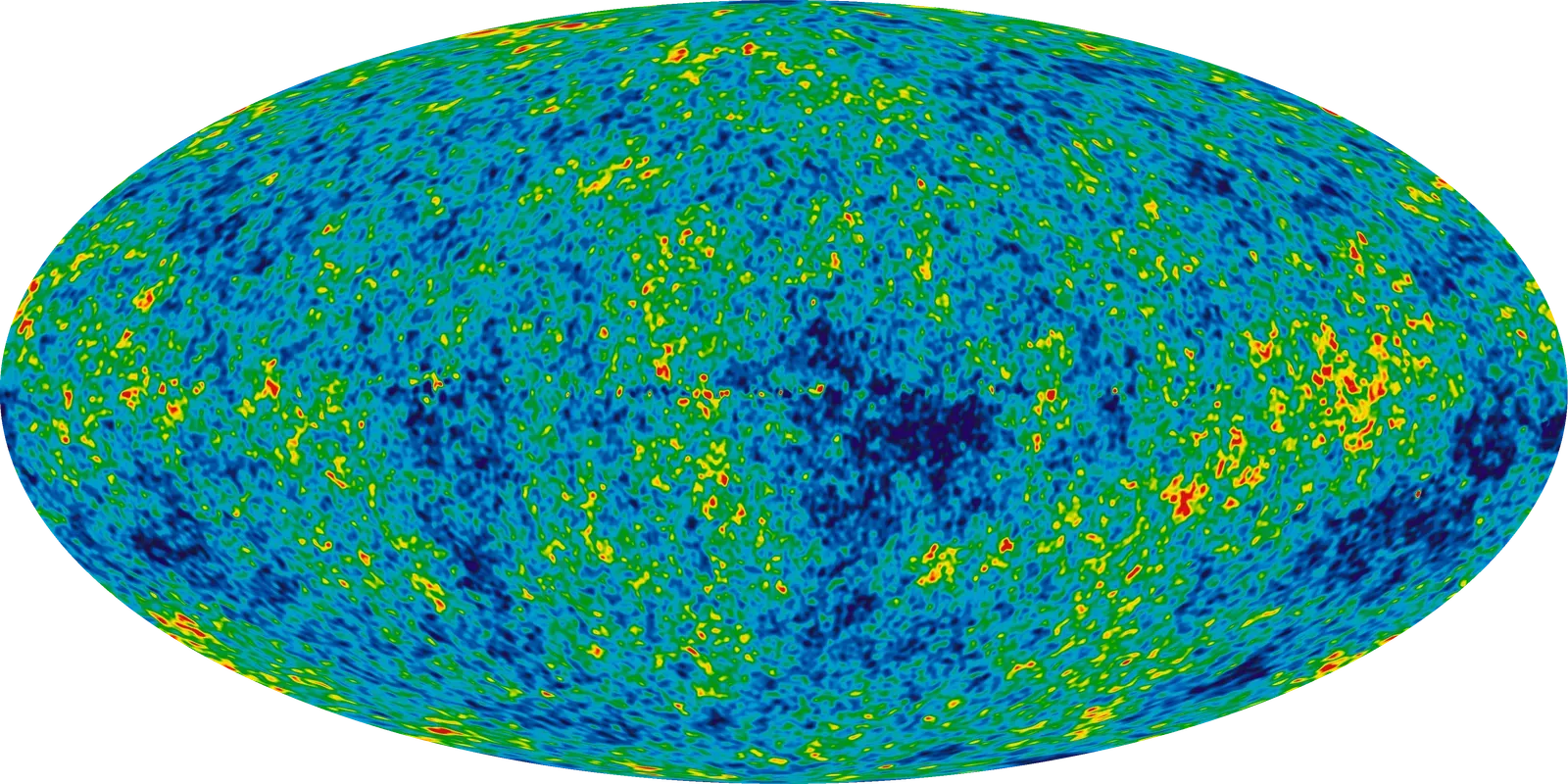
If scientists are going to make a serious prediction about a big crunch, they need more than dramatic storytelling – they need subtle fingerprints in the data. One key source is the cosmic microwave background, the faint afterglow of the Big Bang that still bathes the universe. High‑precision measurements of this radiation reveal tiny ripples in density, like a baby picture of the cosmos frozen when it was only a few hundred thousand years old. These ripples encode how much matter and radiation filled space, and they help set the stage for how expansion should evolve over billions of years.
Another set of clues comes from large‑scale galaxy surveys that map how matter is arranged across cosmic distances. Patterns in these maps – such as baryon acoustic oscillations, the fossilized waves of matter from the early universe – act as standard rulers to track expansion over time. By comparing these measurements with predictions from different cosmological models, researchers can test whether dark energy behaves like a constant, or changes gradually, or might even flip from repulsive to attractive in the extremely distant future. Some mathematically consistent models suggest that if dark energy decays or reverses, the universe could slow, halt, and collapse on very long timescales, vastly longer than the current age of roughly about fourteen billion years. The big crunch, if it lies ahead, is not tomorrow’s headline, but it could be written into these ancient patterns of light and structure.
Why it matters: a death story that rewrites the beginning
At first glance, arguing over how the universe ends might sound like the ultimate academic distraction, a problem for creatures who will never live to see the answer. But the choice between an endless expansion and a big crunch is not just a detail tacked onto the end of time; it reaches all the way back to the physics of the Big Bang itself. Different endings emerge from different rules about gravity, quantum fields, and the vacuum of space, so testing those endings helps narrow down which rules are really at play. When scientists refine big‑crunch scenarios, they are often testing deep ideas like whether spacetime is fundamentally smooth or grainy, or whether new particles or forces are hiding in the cosmic mix.
There is also a profound philosophical and human dimension: a cyclic universe with big bangs and big crunches tells a very different story than a one‑way universe that expands until it freezes. In a cyclic picture, our cosmos is not a unique, one‑off miracle but part of a longer chain of cosmic lives and deaths, each potentially with its own physical constants and histories. That changes how we think about questions like fine‑tuning, the apparent coincidences that let stars, planets, and living bodies exist at all. Personally, I find it oddly comforting that some models hint at a universe that reboots instead of simply going dark forever, even if that reboot would erase everything we know. Debating these possibilities forces us to confront what we really mean by beginnings, endings, and meaning in a universe that does not care what we prefer.
Big crunch vs. other cosmic endings
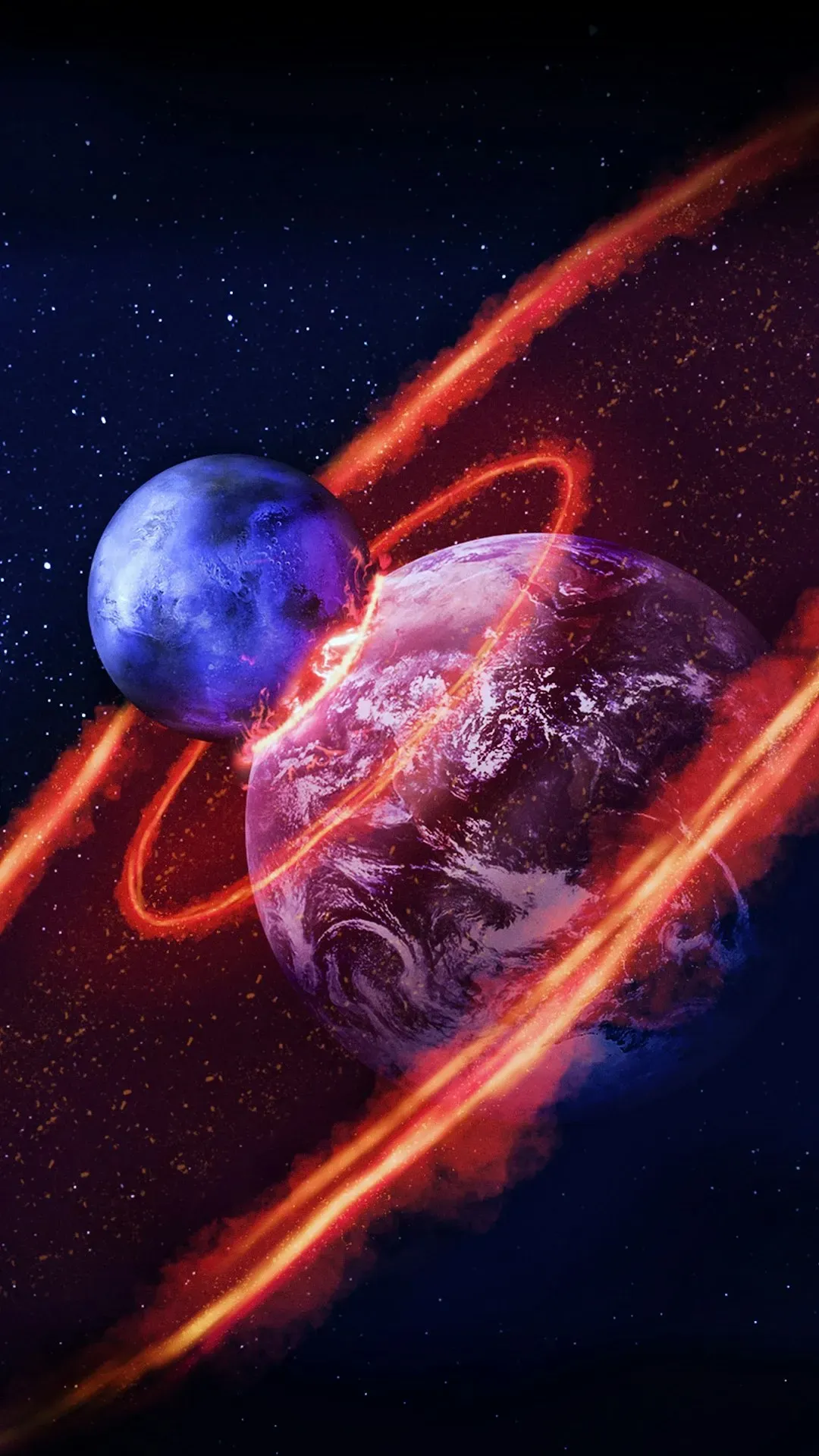
The big crunch is only one contender in a crowded field of cosmic doomsday ideas, and comparing them helps highlight what makes it unique. In the so‑called heat death or big freeze, expansion continues forever, galaxies drift apart, and the universe cools toward a thin soup of fading radiation and dead stars. In the big rip scenario, dark energy becomes so strong that it tears apart galaxies, stars, planets, and finally atoms themselves in a runaway expansion. Each of these possibilities arises from a different assumption about dark energy’s behavior and the total matter content of the universe.
What sets the big crunch apart is its emphasis on gravity’s eventual victory over expansion, turning the universe into a closed, finite system that folds back on itself. That has strong implications for information, entropy, and the ultimate fate of structure, because a collapsing universe compresses and heats rather than diluting and cooling. From a human perspective, the details may not change much – we are dealing with timescales far beyond stellar lifetimes – but scientifically, they lead to very different pictures of what is possible. In a big‑freeze cosmos, history is a one‑way slide toward uniformity; in a big‑crunch cosmos, history is a loop that might reset. Thinking through those differences sharpens our tools, much like comparing different medical diagnoses forces doctors to understand the body better, even before they know which diagnosis is right.
The future landscape: new telescopes, new tests, new surprises
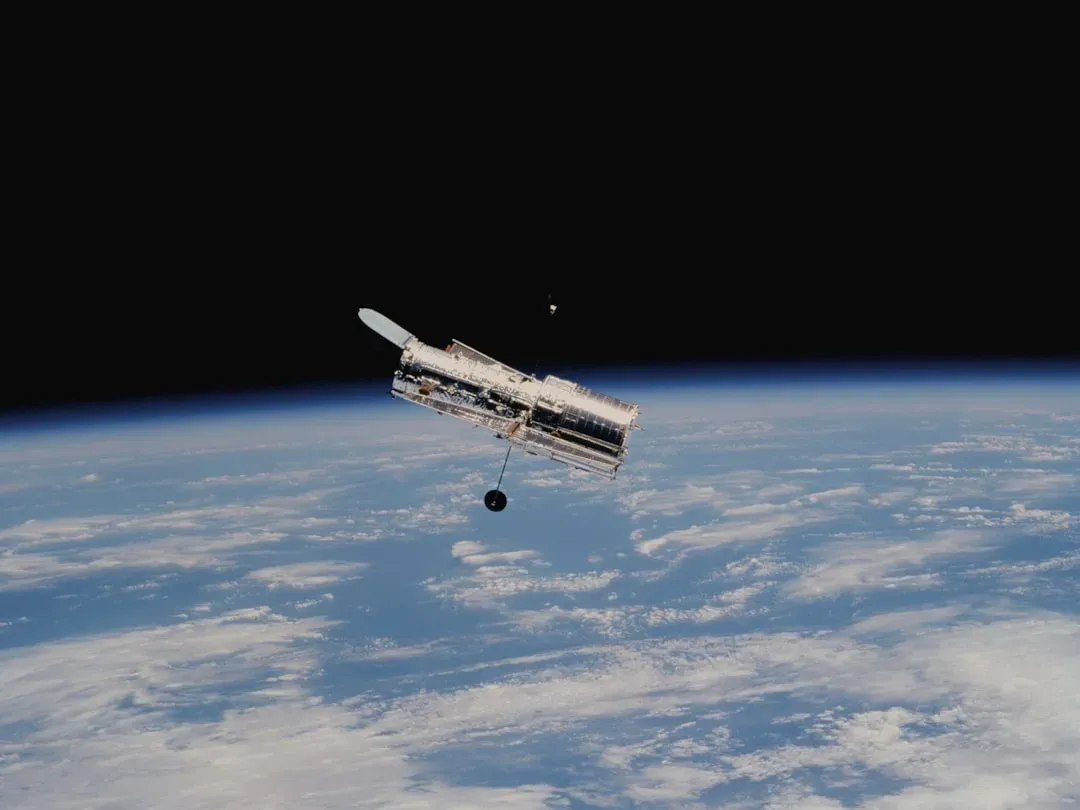
The big question now is how to move these ideas from the realm of theory into the realm of testable science, and that is where the next generation of instruments comes in. New space telescopes and massive ground‑based surveys are being designed to track the universe’s expansion more precisely than ever, by watching how billions of galaxies cluster and move over time. These projects aim to pin down how dark energy behaves across cosmic history, looking for even tiny deviations from a simple, constant push. If they find that dark energy’s strength has changed over billions of years, that would open the door to models where it might eventually weaken or reverse, nudging the universe toward a future crunch.
Physicists are also exploring connections between cosmology and particle physics, looking for signatures of new fields that could drive both early‑universe inflation and late‑time collapse. Laboratory experiments that measure gravity at very small scales, or that search for exotic particles, could feed directly into our understanding of cosmic fate. At the same time, improved simulations running on supercomputers are exploring how structure might behave in a universe on the brink of re‑collapse, testing whether galaxies, black holes, and dark matter halos respond in unexpected ways. The landscape ahead is not just about more data but about more creative cross‑talk between disciplines, because the universe’s ending will likely be written in multiple scientific languages at once. The most surprising outcome of all would be discovering a fate that does not fit any of our current categories, forcing us to rethink everything from the Big Bang to the atoms in our hands.
What this means for us: bodies, stories, and cosmic humility
On the scale of human lifetimes, the big crunch is so distant it might as well be a myth, and yet thinking about it reshapes how we see ourselves right now. Your body is a temporary arrangement of particles that have already survived earlier cosmic dramas, from the deaths of stars to the collisions of galaxies. Knowing that the universe itself might one day be squeezed into an unimaginably hot, dense state adds another layer to that story: even the grandest structures are ultimately as fragile as a soap bubble. There is a kind of humility in accepting that everything from our tallest buildings to our deepest memories is riding on forces far beyond our control.
At the same time, this perspective can be strangely empowering. If the universe is capable of building conscious beings out of the debris of previous cosmic cycles, then our curiosity and creativity are themselves products of that long, improbable chain. Taking care of our small corner of space and time – this planet, this century, this fragile biosphere – becomes more meaningful, not less, when we see how rare and contingent it is. Like climbers on a vast mountain who know the peak is unreachable, we can still take pride in how far we climb and what we learn along the way. The possibility of a big crunch does not make our lives trivial; it makes them part of a story far larger and stranger than any one epoch.
How you can engage with the universe’s fate
Most of us will never build a telescope or write a cosmology paper, but there are still real ways to connect with this research. One simple step is to stay curious: follow updates from major observatories and space agencies, and treat news about dark energy or galaxy surveys as part of an unfolding detective story rather than distant trivia. Many observatories and science organizations now offer open data and citizen‑science projects where volunteers help classify galaxies or spot transient events. By contributing your time, you are helping refine the measurements that ultimately feed into models of the universe’s fate.
You can also support science education and public outreach in your own community, whether by attending public talks, encouraging local schools to invite researchers, or donating to programs that bring astronomy to under‑resourced areas. Even small actions, like visiting a planetarium or sharing a clear explanation of cosmology with a friend, help build a culture that values long‑term, big‑picture thinking. In a universe that might one day collapse into a blaze of unimaginable energy, choosing to understand and appreciate its current, delicate structures is a quiet but meaningful act. Our bodies may be made from the ashes of old stars, but our choices – what we fund, what we teach, what we wonder about – shape the story we tell while the universe still has room to expand.
Suhail Ahmed is a passionate digital professional and nature enthusiast with over 8 years of experience in content strategy, SEO, web development, and digital operations. Alongside his freelance journey, Suhail actively contributes to nature and wildlife platforms like Discover Wildlife, where he channels his curiosity for the planet into engaging, educational storytelling.
With a strong background in managing digital ecosystems — from ecommerce stores and WordPress websites to social media and automation — Suhail merges technical precision with creative insight. His content reflects a rare balance: SEO-friendly yet deeply human, data-informed yet emotionally resonant.
Driven by a love for discovery and storytelling, Suhail believes in using digital platforms to amplify causes that matter — especially those protecting Earth’s biodiversity and inspiring sustainable living. Whether he’s managing online projects or crafting wildlife content, his goal remains the same: to inform, inspire, and leave a positive digital footprint.