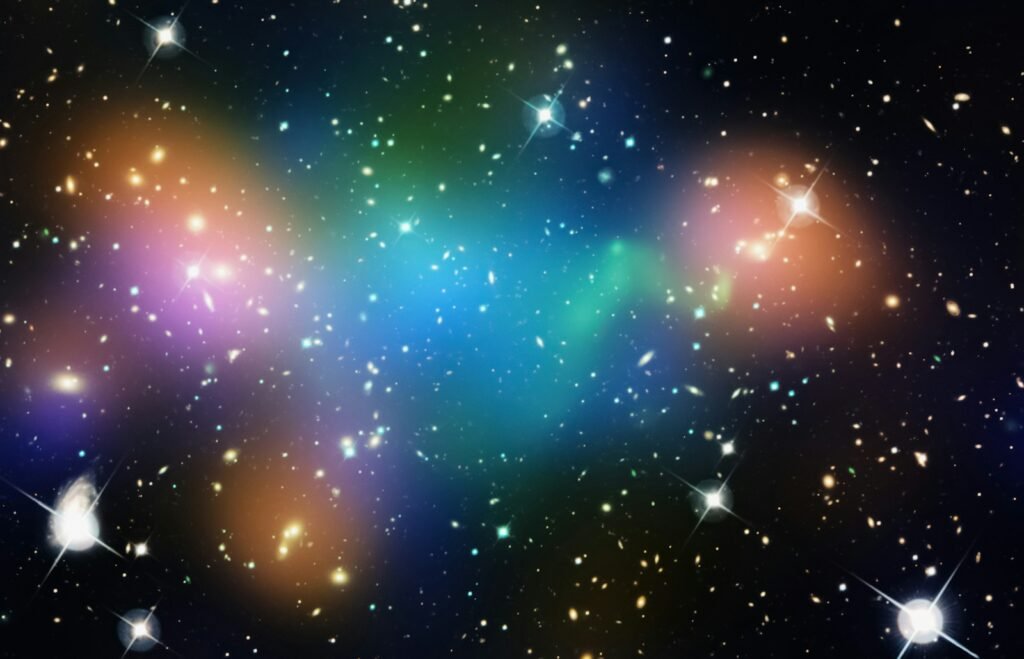

For more than a century, cosmology has told a relatively clean story: the universe began in a searing hot Big Bang, space expanded, matter cooled, and the rest is history written in stars and galaxies. But a new generation of quantum theories is quietly tearing at the edges of that tidy narrative, suggesting the beginning might not have been a beginning at all. Instead of a single explosive birth, the cosmos may have emerged from a quantum mist, a bounce, or even a timeless sea of probabilities. That possibility is forcing physicists to ask unsettling questions: What does it mean for the universe to “start” if time itself is a quantum object? And what if the deepest clues to our origin are not written in fire and gravity, but in the ghostly logic of the quantum world?
The Hidden Clues in the Cosmic Afterglow
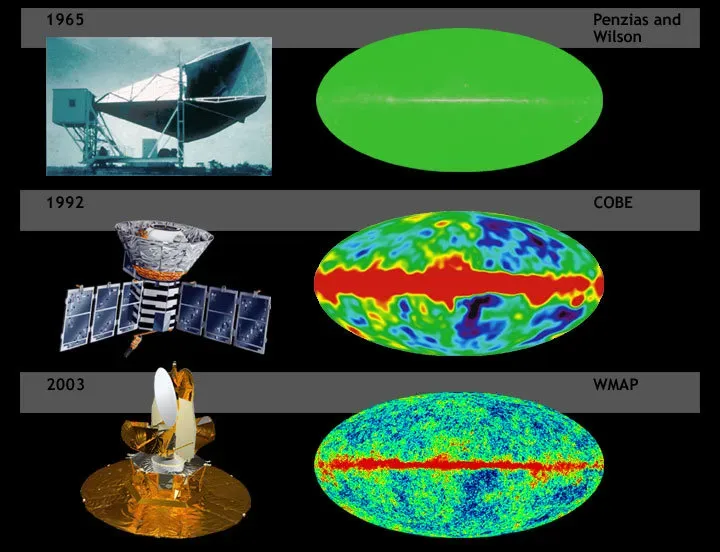
Look up on a cold, clear night, and the sky feels eternal, but the best evidence for the universe’s early story is something you cannot see: the cosmic microwave background, a faint afterglow of the Big Bang. This radiation, first measured in detail by satellites like COBE, WMAP, and Planck, is often treated as a snapshot of the universe when it was just a few hundred thousand years old. Hidden in its barely perceptible temperature ripples, though, are subtle fingerprints that may come from quantum effects operating at unimaginably early times. Those tiny fluctuations seeded every galaxy, every star, and eventually every planet and person, but they may also hold hints that the universe’s first moments did not follow the classical script.
Quantum-inspired models predict small deviations from the patterns expected in standard Big Bang cosmology, like minute asymmetries or correlations across regions of the sky that should never have “talked” to each other. A few of these oddities have shown up in the data: a slightly lopsided distribution of power on large angular scales, or an unexpected “cold spot” that some researchers argue might be more than a statistical fluke. On their own, these anomalies are not a smoking gun, and many cosmologists remain cautious about overinterpreting them. Still, for theorists working on quantum cosmology, they are tantalizing whispers that the classical Big Bang may have been shaped, or even replaced, by a deeper quantum process. The universe’s baby picture, in other words, may be photobombed by quantum mechanics.
From Einstein’s Universe to the Quantum Frontier
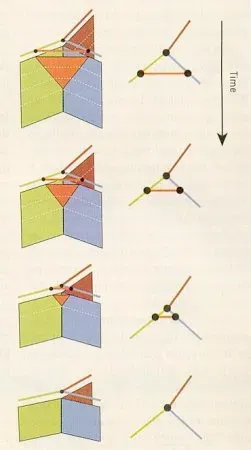
The standard cosmic origin story begins with general relativity, Einstein’s immense achievement that describes gravity as the curvature of spacetime. Run the equations backward, and the universe contracts until everything – space, time, matter, energy – is squeezed into a single, infinitely dense point called a singularity. That singularity is a mathematical red flag, a signal that the theory has been pushed past breaking. Physicists have long believed that near such extremes, general relativity must give way to a more complete description that includes quantum mechanics. The quest to merge those two pillars has given rise to some of the boldest ideas in modern physics.
Loop quantum cosmology, a simplified cousin of loop quantum gravity, suggests that space itself is made of discrete “atoms” of geometry, and that when the universe is compressed enough, quantum pressure prevents a singularity. Instead of a beginning from nothing, you get a bounce from a previous contracting universe. Other approaches, such as string theory–inspired models, paint the early universe as a higher-dimensional landscape or a collision of extended objects, where quantum fluctuations determine which version of the cosmos actually inflates into existence. These theories disagree on crucial details, but they share one radical implication: the Big Bang might not have been the first event, but rather a transition between different quantum phases of reality. In that sense, our so‑called beginning could be more like a page turn than the opening line of the book.
Quantum Foam, Timeless Seeds, and the End of “Before”
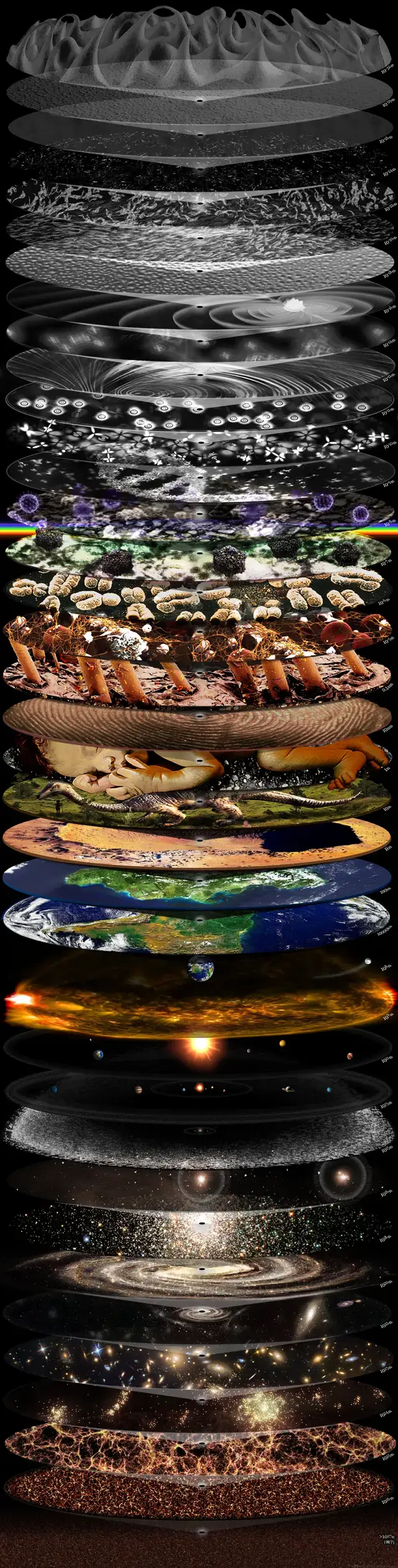
At the smallest imaginable scales, the universe may not resemble a smooth spacetime at all, but a frothing quantum foam where energy and geometry fluctuate wildly. In this regime, familiar concepts like “before” and “after” may simply break down. Some proposals in quantum cosmology treat time as an emergent property, something that arises from deeper, timeless quantum states when the universe reaches a large enough scale. In that view, asking what happened “before” the Big Bang could be as meaningless as asking what is north of the North Pole. The origin story would not start at a clock time of zero, but at a transition from a fundamentally quantum description to the classical reality we inhabit.
One class of models, sometimes called no‑boundary or quantum creation scenarios, imagines the early universe as a kind of rounded-off geometry where time gradually morphs from a spatial dimension into the ticking parameter we experience. Quantum mechanics then determines the likelihood of different ways that this geometry could emerge, with some histories more probable than others. Other ideas, like causal set theory or emergent spacetime from quantum entanglement, go further and suggest that spacetime is a macroscopic illusion woven from underlying quantum relationships. In all these cases, the comforting idea of a clean starting gun for the universe gives way to something stranger: an origin that is less an explosive event and more a phase change in the fabric of reality itself.
The Hidden Quantum Story in Relic Particles and Waves
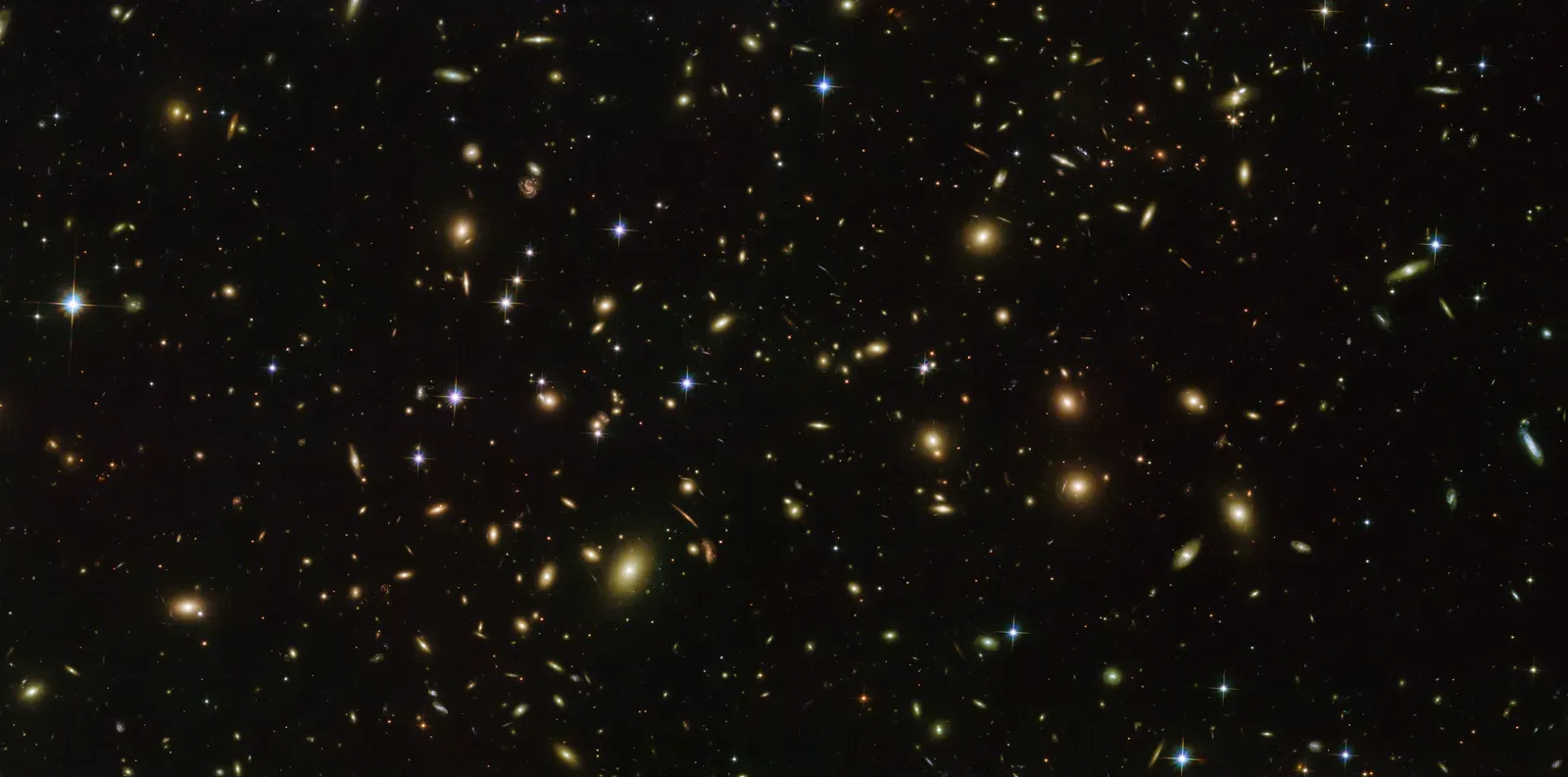
If quantum mechanics really did sculpt the universe’s origin, its echoes should not be confined to distant microwave photons. Physicists are hunting for other relics: primordial gravitational waves, subtle distortions in the pattern of galaxy clustering, and hypothetical particles such as axions that may have been forged in the earliest instants. Experiments like the BICEP and POLARBEAR telescopes, along with upcoming observatories, are combing the sky for a specific curling pattern in the polarization of the cosmic microwave background that would point to gravitational waves from an inflationary phase. Quantum cosmology twists that story, predicting that these waves could carry imprints of a bounce, a pre‑existing universe, or a departure from classical spacetime at the highest energies.
On the particle side, underground detectors and ultra-sensitive radio telescopes are looking for signs of dark matter candidates and exotic relics that standard cosmology cannot easily explain. If certain masses or interaction strengths show up more often than others, they could hint that quantum processes shaped not just how the universe expanded, but what kinds of particles were allowed to exist in the first place. Even large galaxy surveys, mapping millions of galaxies across billions of light‑years, are being pressed into service as probes of the early quantum universe. Patterns in how matter clumps on the largest scales can reveal whether primordial fluctuations had a purely random, classical character, or whether they carried the subtle non‑Gaussian fingerprints expected from more exotic quantum origins. Each of these measurements is like a geological core sample, drilling back through cosmic time toward a buried quantum layer.
Why It Matters: Rethinking What a “Beginning” Even Is
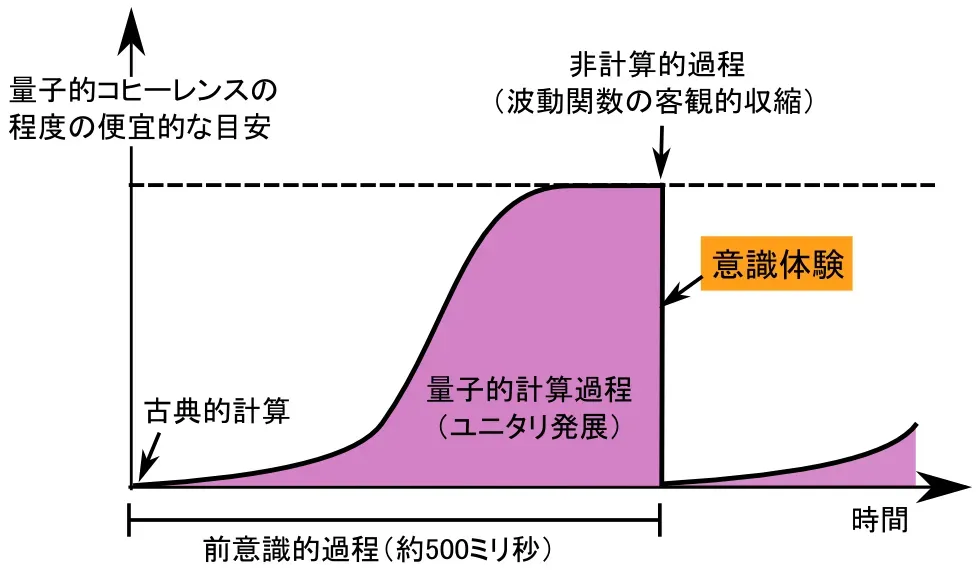
It might be tempting to treat all this as philosophical garnish on top of an otherwise settled cosmological picture, but the stakes are much higher. If quantum mechanics truly reshapes the universe’s origin story, then our deepest assumptions about causality, time, and even what counts as an explanation are up for revision. Classical cosmology invites you to imagine a chain of events, each causing the next, marching all the way back to a singular starting point; quantum cosmology often replaces that chain with a web of probabilities and multiple potential histories. That is not just a mathematical twist, but a fundamental shift in what it means to answer the question of why there is something rather than nothing.
Compared with traditional Big Bang models, quantum-origin scenarios can also address long-standing puzzles in a more natural way. For example, instead of fine‑tuning conditions to avoid a singularity, some bounce models automatically prevent one because of the discrete structure of spacetime. Instead of imposing initial conditions by hand, no‑boundary-style theories aim to derive them from a deeper quantum measure over possible universes. This matters for more than just aesthetics. It affects how we interpret every cosmic measurement we make, from dark energy surveys to black hole mergers, because it changes what counts as a “natural” or “expected” outcome. In that sense, understanding the quantum origin is as practical for cosmology as understanding plate tectonics was for geology: it rewrites the map of what questions we can reasonably ask.
Global Efforts to Decode the Quantum Dawn
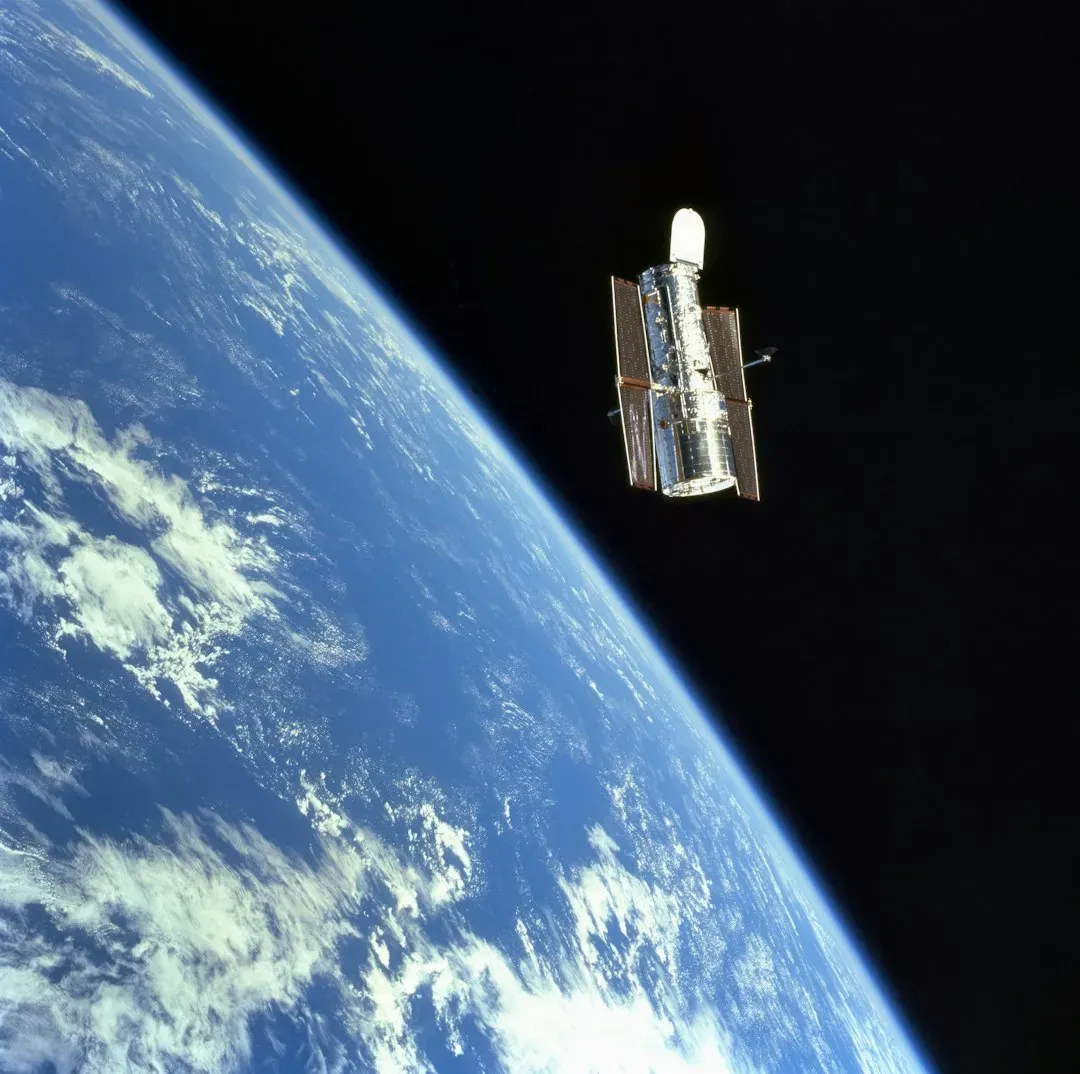
Peering this far back in time is not a solo effort or even a single‑discipline project; it is a global, multi‑decade collaboration. Observatories in Antarctica, the Atacama Desert, and space itself are all feeding data into the same hunt for early-universe clues. Teams of theorists in Europe, North America, Asia, and beyond are building quantum gravity models, running massive numerical simulations, and arguing – sometimes fiercely – over which predictions actually distinguish one theory from another. This is less like a tidy lab experiment and more like interpreting a half‑erased prehistoric cave painting, where every new measurement slightly sharpens or blurs the outlines.
Key projects contributing to this quantum origin quest include satellite missions measuring the cosmic microwave background with exquisite precision, ground-based telescopes mapping the large‑scale structure of galaxies, and gravitational‑wave observatories listening for low‑frequency ripples that may carry primordial information. Alongside them, laboratory experiments with ultra‑cold atoms, quantum simulators, and high‑energy collisions are exploring how quantum fields behave under extreme conditions that may echo the early cosmos. The result is a patchwork of constraints that gradually rules out some possibilities while keeping others alive. It is slow, frustrating work, and yet it is also one of the most genuinely international scientific enterprises on the planet – an effort to reconstruct our shared cosmic origin story using every tool we can build.
The Future Landscape: Telescopes, Quantum Tech, and New Cosmic Maps
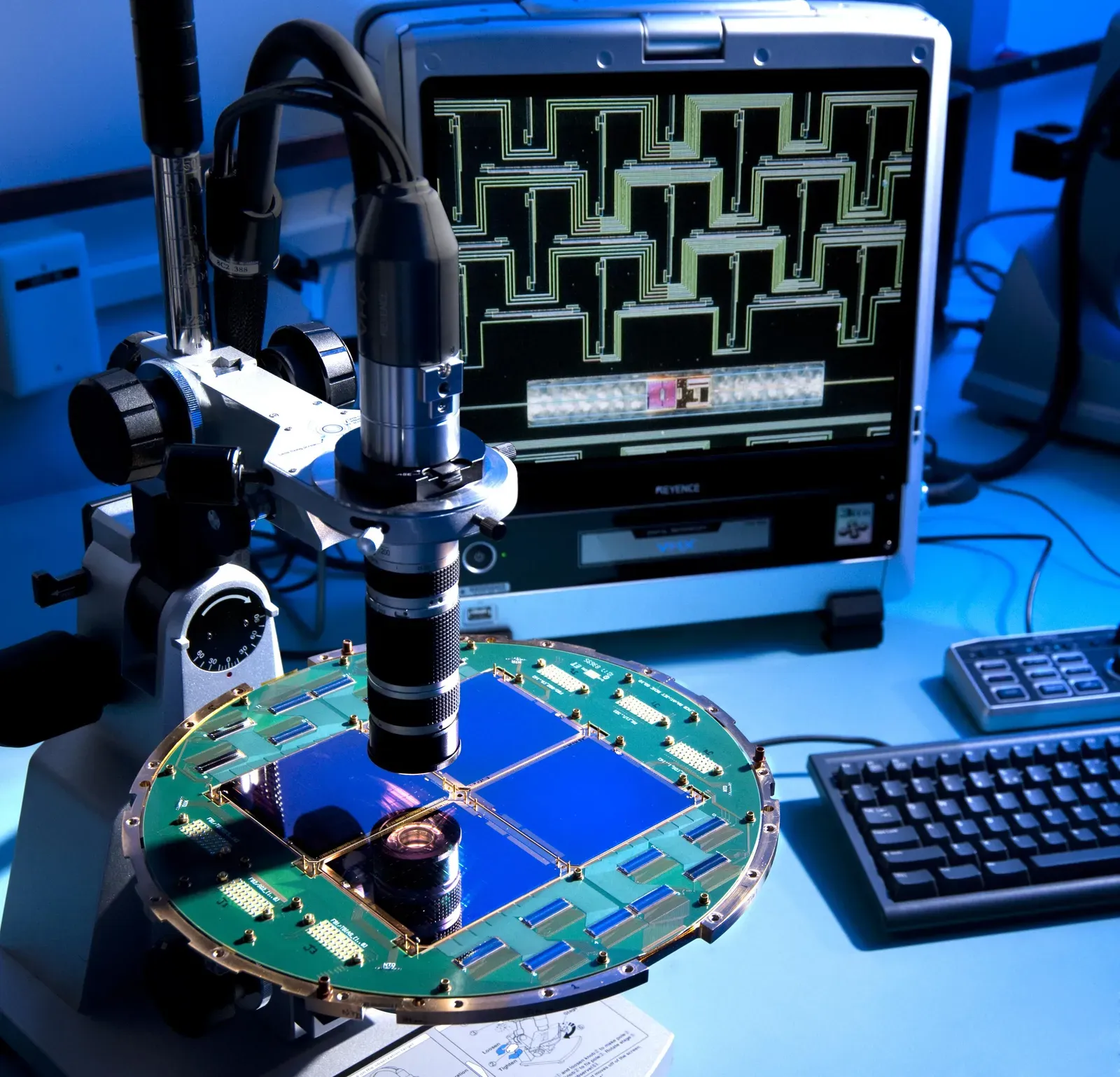
The next few decades promise an avalanche of data that could push quantum cosmology from speculation toward testable science. New space missions are being designed to measure the polarization of the cosmic microwave background more sensitively than ever, aiming to catch the faint whisper of primordial gravitational waves if they exist. Planned gravitational‑wave observatories in space and on Earth will open frequency bands where signals from the earliest moments might be hiding. Meanwhile, massive galaxy surveys will map the positions and motions of tens of millions of galaxies, turning the universe into a three‑dimensional laboratory for early-universe physics. These instruments are not just better cameras; they are more like upgraded senses for an entire species trying to remember its birth.
On the theoretical and technological side, advances in quantum information science are starting to reshape how physicists think about spacetime itself. Ideas linking quantum entanglement to the geometry of space are being explored with the help of quantum computers and simulators, which can test toy models that are impossible to handle with classical methods. At the same time, improved numerical relativity and machine‑learning techniques are letting researchers explore vast landscapes of possible quantum cosmologies, searching for those that both make sense mathematically and match observations. None of this guarantees a clean answer, and it is entirely possible that new data will complicate the picture rather than clarifying it. But for the first time, we are building the tools that might let us tell whether the universe really bounced, tunneled, or emerged from a quantum haze.
How You Can Stay Part of the Cosmic Conversation
Most of us will never debug a quantum gravity equation or calibrate a cryogenic detector in the middle of the Antarctic night, but that does not mean we are locked out of this story. Public funding decisions, science literacy, and even cultural attitudes toward curiosity play a quiet but crucial role in whether ambitious, long‑term projects like next‑generation space telescopes ever get off the ground. One simple way to stay engaged is to follow mission updates from major observatories, read accessible explainers from reputable science outlets, and treat big cosmology headlines with both excitement and healthy skepticism. Instead of asking only whether a new theory sounds wild, it is worth asking what concrete predictions it makes and how those could be tested. That kind of informed curiosity is the invisible backbone of serious science.
There are also more direct ways to participate. Citizen science platforms occasionally invite the public to help classify galaxies, spot gravitational lenses, or sift through subtle patterns in astronomical data, tasks that can contribute to understanding the early universe. Supporting science education programs, local planetariums, and public lectures helps keep the pipeline of future cosmologists and quantum theorists flowing. Even small actions – sharing nuanced articles instead of sensational ones, encouraging kids’ questions about the night sky, or backing organizations that advocate for research funding – feed into the ecosystem that makes boundary‑pushing science possible. After all, if quantum mechanics really is rewriting , it is rewriting our own story too, and that is a narrative everyone has a stake in, whether they ever touch a telescope or not.
Suhail Ahmed is a passionate digital professional and nature enthusiast with over 8 years of experience in content strategy, SEO, web development, and digital operations. Alongside his freelance journey, Suhail actively contributes to nature and wildlife platforms like Discover Wildlife, where he channels his curiosity for the planet into engaging, educational storytelling.
With a strong background in managing digital ecosystems — from ecommerce stores and WordPress websites to social media and automation — Suhail merges technical precision with creative insight. His content reflects a rare balance: SEO-friendly yet deeply human, data-informed yet emotionally resonant.
Driven by a love for discovery and storytelling, Suhail believes in using digital platforms to amplify causes that matter — especially those protecting Earth’s biodiversity and inspiring sustainable living. Whether he’s managing online projects or crafting wildlife content, his goal remains the same: to inform, inspire, and leave a positive digital footprint.