On a quiet January night in 2024, a network of ultra-precise atomic clocks ticked along as usual – until they didn’t. For just a fraction of a moment, several of them slipped out of sync in a way no one expected, as if time itself had snagged on something invisible. At almost the same moment, a gravitational-wave observatory recorded a faint, puzzling signal that didn’t match any known black hole or neutron star collision. When researchers tried to reconstruct what happened, their standard equations faltered, like a map that suddenly runs out of ink at the edge of an unexplored continent. Now physicists are staring at the glitch and asking a question that sounds almost heretical: did we just stumble on a crack where space-time stops behaving classically at all?
The Hidden Clues in a Stutter of Time
Imagine your entire understanding of time is built on clocks that agree with one another down to a billionth of a second – and then, without warning, they don’t. That is essentially what confronted teams monitoring networks of optical atomic clocks, which are so sensitive they can detect tiny changes in Earth’s gravitational field or even shifts in fundamental constants. For one short window, a cluster of these clocks, separated by hundreds of miles, experienced a synchronized but unexplained blip. No power surge, no software bug, no maintenance error could account for it, and the anomaly didn’t line up neatly with any known solar flare, geomagnetic storm, or local disturbance.
Physicists often treat such glitches like crime scenes: they cordon off the data, reconstruct the timeline, and try to rule out every mundane suspect. In this case, the “crime” was a subtle desynchronization that then mysteriously healed itself, leaving behind only a digital trace. The weird part is not that one clock glitched, but that multiple, independent instruments did so in a correlated way, as if some unseen ripple passed through them. It was like hearing the same strange note ring out from pianos in different cities at the exact same time. That echo is what makes scientists uneasy, and also deeply excited.
When Gravity Waves Don’t Behave by the Book
Just as clock specialists were puzzling over their data, researchers working with gravitational-wave detectors noticed something equally odd. Their instruments are designed to catch space-time “chirps” from massive cosmic collisions – clean, predictable signatures that classical general relativity describes with remarkable precision. But one particular event, aligned suspiciously close in time to the clock irregularities, did not look like a neat chirp from two merging black holes or neutron stars. Instead, it showed a faint, extended distortion that did not fit the best catalogs of simulated waveforms.
Classical physics is very good at telling us how gravity behaves on large scales, especially when masses move in relatively smooth, continuous ways. Here, however, the signal looked more like static wrapped around a whisper, something that might come from exotic objects or processes at the edge of our theories. Some researchers proposed mundane explanations, from instrumental noise to subtle seismic disturbances that slipped through filters. Others noted that parts of the pattern stubbornly refused to disappear even after every known source of experimental error was subtracted. The combination of an anomalous gravitational-wave–like signal and nearly coincident timing glitches was enough to make even cautious scientists wonder if something deeper was at play.
Where Classical Physics Runs Out of Road
Classical physics treats space and time as a smooth fabric and matter as objects that follow well-defined trajectories, influenced by forces that can be written down in neat equations. Newton’s laws and Einstein’s general relativity have passed countless tests, from predicting planetary motion to guiding spacecraft slingshots around distant worlds. Yet they assume that the underlying stage – the space-time backdrop – is continuous and behaves the same way everywhere, at least on scales we can measure. When you zoom in far enough, however, those assumptions collide with the grainy, probabilistic world of quantum mechanics, where particles can be in superpositions and events are ruled by probabilities rather than certainties.
Most of the time, these two realms are neatly separated: classical physics for big, slow things; quantum theory for tiny, fast, or ultra-cold systems. The suspected space-time glitch lands right in the uncomfortable overlap, where neither description feels fully adequate. If the anomaly is real, it could be hinting that space-time itself has a quantum structure that occasionally leaks into our macroscopic instruments. In that sense, classical physics has not failed so much as reached the boundary of its jurisdiction, like a law that works flawlessly in one country but has no authority across the border. The glitch is the border marker, daring physicists to cross.
From Ancient Timekeepers to Quantum Clocks
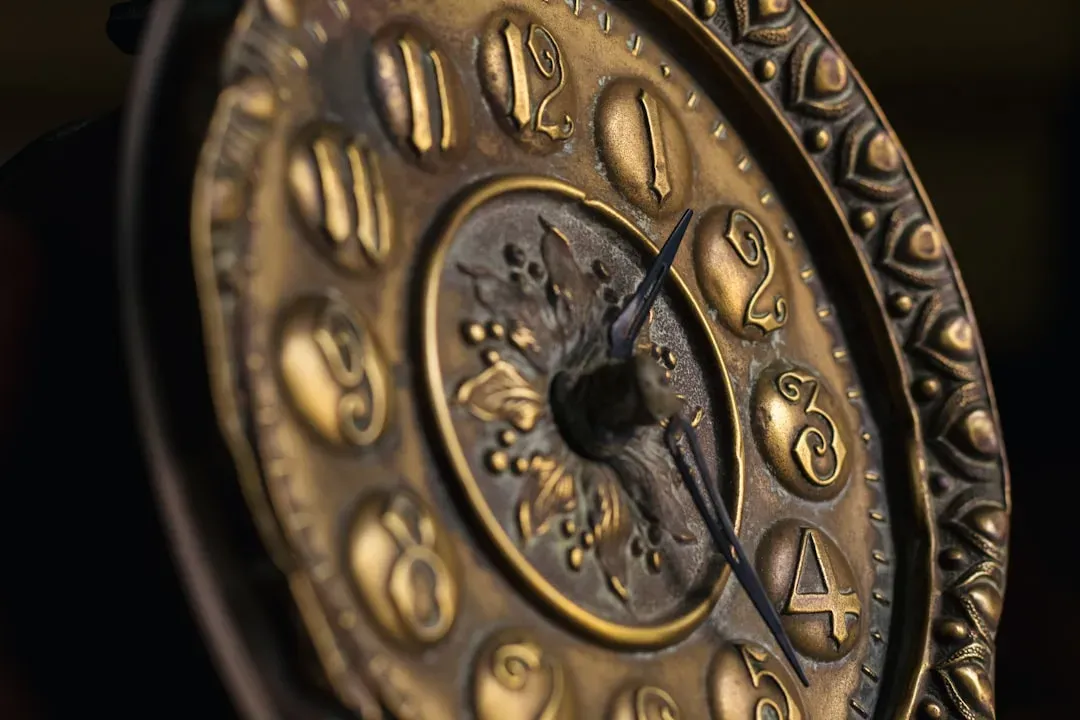
Humans have been chasing time for thousands of years, from tracking shadows on stone to measuring the swing of pendulums and the vibration of quartz crystals. Each step in clockmaking sharpened our sense of regularity in nature, revealing patterns in the motion of planets and the rhythm of atoms. Today’s optical lattice clocks, which trap clouds of atoms in standing waves of laser light, are so precise they would lose or gain less than a second over the age of the universe. That extraordinary sensitivity turns them from mere timekeepers into scientific instruments capable of probing gravitational fields, testing relativity, and searching for shifts in the so-called fundamental constants.
Seeing such refined clocks misbehave in concert is like watching a line of master violinists suddenly slip off-key in the same bar of music. It forces scientists to ask whether there is a physical phenomenon they have not accounted for, something that operates at the intersection of gravity, quantum behavior, and perhaps even dark matter. Some theoretical models, for example, predict that passing clumps or waves of dark matter could very slightly alter the ticking of clocks without leaving a clear electromagnetic trace. Whether or not that is the case here, the episode underscores how far we have come from sundials, and how those ancient tools have evolved into sensors for the deepest riddles of the cosmos.
The Hidden Interconnections of a Quantum Universe
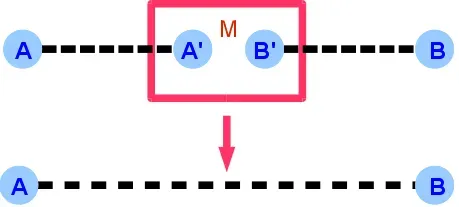
The most unsettling aspect of the suspected space-time glitch is how it hints at an invisible web connecting distant places and seemingly unrelated devices. Quantum physics already tells us that particles can be entangled, sharing linked properties even when separated by large distances. In carefully controlled experiments, this leads to correlations that defy classical intuitions about locality and cause-and-effect, although they never allow faster-than-light communication. Now, correlated anomalies in unrelated instruments raise the more speculative question of whether larger-scale structures of space-time might sometimes amplify or reflect similar kinds of non-classical linkage.
To be clear, most researchers are deeply cautious about invoking quantum entanglement or exotic physics to explain an odd pattern in the data. Still, the coincidence invites creative hypotheses: could fluctuations in a quantum field underlying space-time produce synchronized perturbations observers can only see with their most sensitive tools? Might what we call a “glitch” actually be a fleeting exposure of a deeper coherence in the universe, one that never shows up in day-to-day life but becomes visible at extremes of precision? These questions are not claims; they are prompts, pushing theorists to connect dots between gravity, quantum fields, and cosmology. The interconnections may turn out to be mundane, but the hunt for them is already reshaping how scientists think about measurement itself.
Why It Matters: Cracks, or New Windows, in Reality
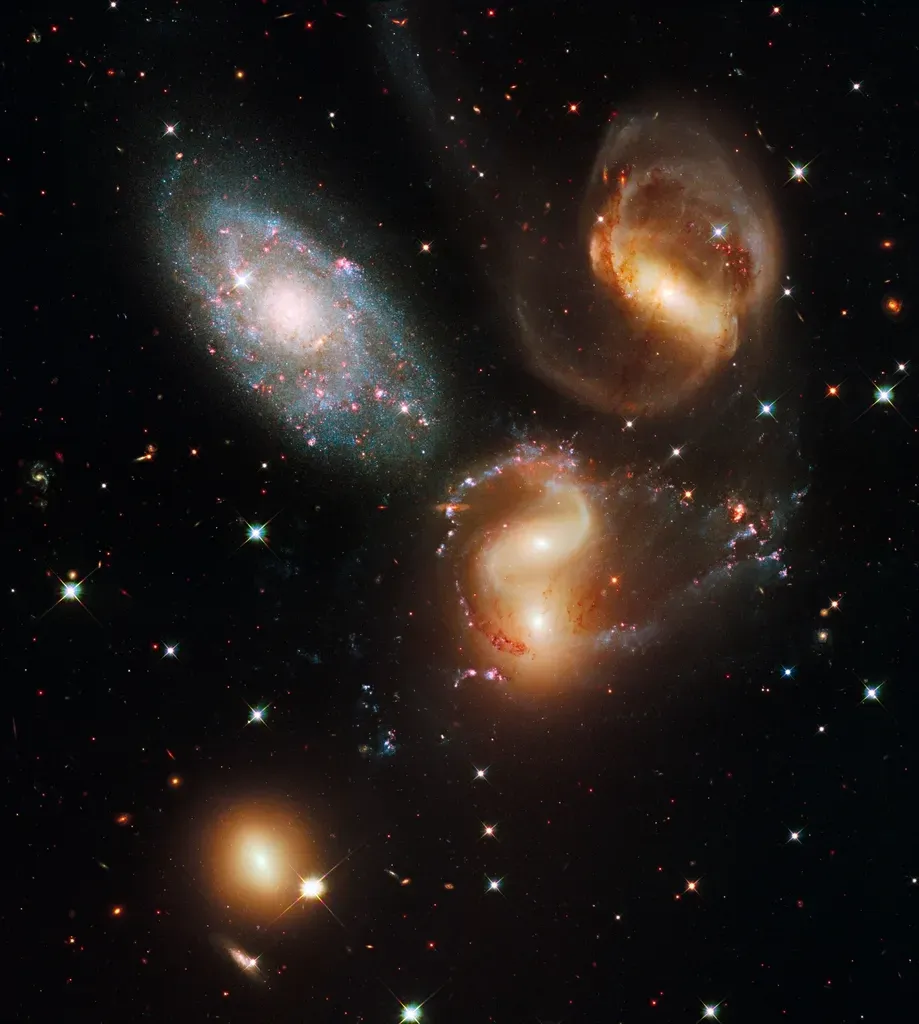
On the surface, a tiny timing anomaly and a strange gravitational-wave–like signal can sound like esoteric problems only a handful of experts care about. But episodes like this have an outsized impact because they stress-test the foundations of our understanding, much like a hairline crack in a bridge girder can reveal hidden weaknesses in the entire structure. If the glitch withstands scrutiny and cannot be folded back into classical explanations, it could point toward new physics that changes how we think about space, time, and causality. That would ripple outward, influencing everything from cosmological models of the early universe to how we interpret data from particle colliders.
Even if the anomaly ultimately turns out to have a conventional cause, the effort to track it down will leave a lasting legacy. Scientists are already developing better cross-checks between instruments, more rigorous methods for correlating data across different observatories, and more detailed models of environmental noise. In a way, the universe is forcing us to raise our standards, to measure more carefully and think more broadly about what counts as “just an error.” The episode also feeds into a long-standing philosophical tension: whether reality is fundamentally smooth and classical, with quantum oddities emerging only in special conditions, or whether the quantum character of the world is always there, merely averaged out at human scales. That is why this matters far beyond one blip on a graph.
The Future Landscape: Cosmic Sensors and Deeper Tests
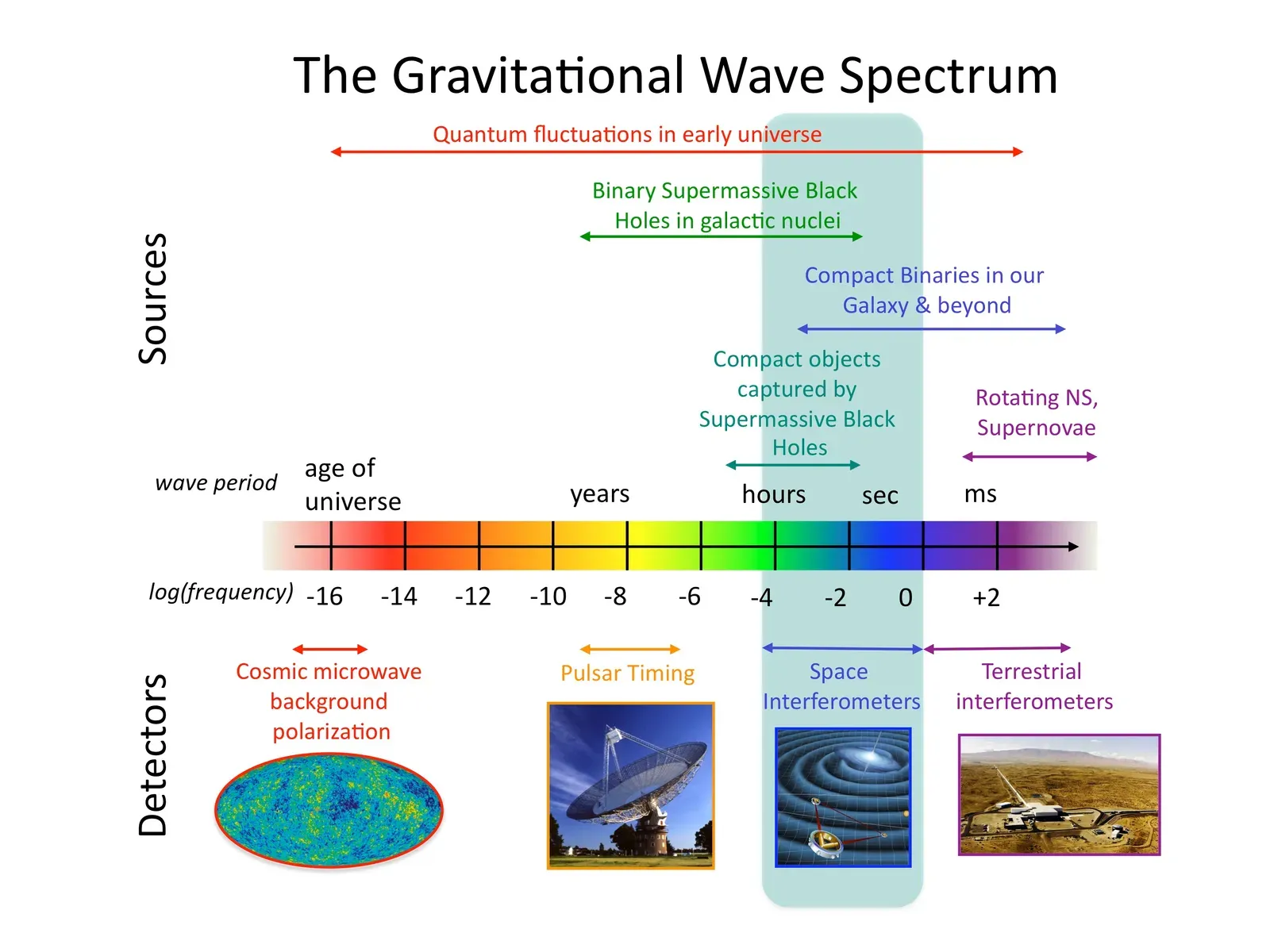
Looking ahead, scientists are not content to wait passively for another mysterious glitch; they are building networks to actively seek them out. New generations of optical atomic clocks are being linked across continents via fiber-optic cables and even explored for satellite deployment, creating a planet-spanning web of time sensors. Planned and upgraded gravitational-wave observatories, from ground-based facilities with longer arms to space-based interferometers, will be able to capture fainter and more complex signals. Together, these instruments will turn Earth into a kind of distributed antenna for subtle distortions in space-time and in the quantum fields that may underlie it.
This future landscape comes with real challenges. Researchers have to distinguish genuine cosmic signals from the growing background noise of human technology, climate-driven environmental shifts, and even the quiet flexing of Earth’s crust. There are also political and financial hurdles in maintaining long-term, globally coordinated experiments that may or may not find something revolutionary. Yet the potential payoff is enormous: a clearer view of how quantum mechanics and gravity interact, and perhaps even the first concrete hints of a unified description of nature. The space-time glitch, whether it stands or falls under further scrutiny, has already sketched the outlines of this next experimental frontier.
How You Can Engage with the New Physics Frontier
Most people will never align a laser in a vacuum chamber or analyze gravitational-wave data at three in the morning, but that does not mean they are shut out from this unfolding story. One simple step is to follow and support public-facing observatories, science communication projects, and citizen-science platforms that share real-time data and explanations. Many gravitational-wave and timekeeping collaborations now release visualizations, alerts, and educational resources aimed at curious non-specialists who want to understand what the blips on the screen actually mean. Paying attention to how these experiments are funded, and voicing support for basic research to policymakers, also plays a quiet but important role in keeping this work alive.
There are more hands-on options, too. Some projects invite volunteers to help sift through noisy datasets, flagging unusual patterns that automated algorithms might miss or misclassify. Others encourage students and educators to build simplified tabletop versions of key experiments, turning abstract ideas about space-time into something you can see and tweak. Even simply talking about these questions – whether time is truly smooth, whether the universe hides deeper connections than our senses reveal – keeps them alive in our culture. The next time you glance at a clock on your phone, you might remember that behind that casual number lies an entire world of precision, mystery, and, just possibly, glitches pointing toward new physics.