
Some corners of our planet behave so strangely that even in 2025, with satellites overhead and sensors in the deep sea, scientists are still shrugging and saying, “We’re not quite sure.” From lights that dance over lonely marshes to birds that seem to navigate with an invisible map, Earth keeps slipping out of our grasp just when we think we understand it. For bird watchers and nature lovers, these mysteries are not just curiosities; they are invitations to look closer, to stay out a little later, to keep the binoculars raised when everyone else has gone home. As a science journalist, I’ve spent years chasing these puzzles, and the most unsettling part is how often the best answer we have is “maybe.” These ten show how wild, unfinished, and wonderfully confusing our planet still is.
The Vanishing Birds: Where Do Billions of Migrants Really Go?
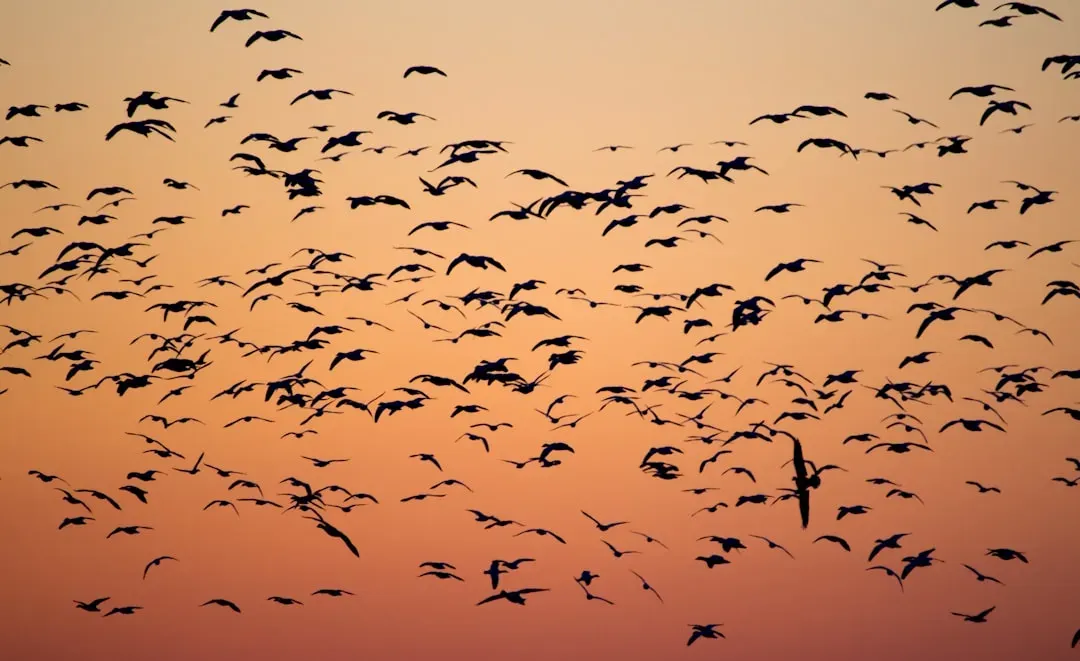
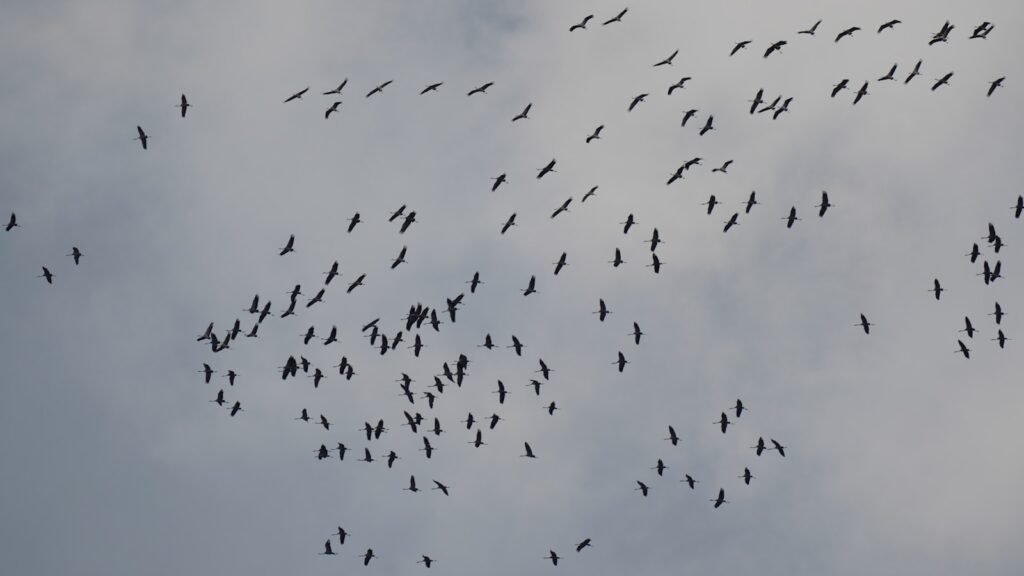
Every spring and fall, the sky fills with rivers of birds, yet for a surprising number of species, we still do not know exactly where they spend most of the year. Ornithologists call this “the missing migration,” and it’s not just a poetic phrase; for some songbirds, we can track when they leave and when they return, but not what happens in between. Tiny geolocator tags and satellite transmitters have begun to reveal secret stopover sites and hidden wintering grounds, yet many gaps remain, especially in remote regions of Africa, South America, and the open ocean. The mystery is worsened by the fact that many of these unsurveyed places are under threat from agriculture, mining, and rapid development. Bird watchers often have the odd experience of knowing a bird intimately on its breeding grounds while realizing they’re essentially blind to the other half of its life.
Researchers have discovered, for example, that some shorebirds travel from Arctic tundra to mudflats thousands of miles away without stopping, but the details of their refueling “pit stops” are still murky for numerous species. In the tropics, dense forests, lack of infrastructure, and political instability can make field studies almost impossible, leaving marked gaps on our migration maps. Acoustic monitoring – placing remote microphones to record night flight calls – is helping to trace who passes where, but even that data can be maddeningly ambiguous. This missing information is not just a cartographic annoyance; without knowing where birds go, conservationists cannot protect the habitats they depend on. So the next time a warbler flashes through your backyard, remember you may be seeing only the visible tip of a much larger secret journey.
Strange Lights in the Night: Are “Ghost Lights” a Natural Phenomenon?

From the swampy marshes of the southern United States to lonely roads in rural Asia, people keep reporting ghostly lights that float, flicker, and vanish without leaving a trace. These so-called will-o’-the-wisps or “ghost lights” have inspired folklore for centuries, but modern science still does not have a single agreed-upon explanation. Some chemists suspect the slow oxidation of gases like phosphine and methane rising from decaying organic matter, which can, under the right conditions, briefly ignite. Others point to bioluminescent insects, distant car headlights refracted by temperature inversions, or even piezoelectric effects from stressed rocks along fault lines. Yet year after year, serious investigators visit specific hotspots and come back with more questions than answers.
Bird watchers sometimes encounter these lights when they are out at dawn or dusk in remote wetlands, turning a routine outing into something that suddenly feels uncanny. In a few well-known locations, repeated observations suggest the phenomenon is real and recurring, not just misidentified airplanes or imagination. Instruments have occasionally picked up unusual electromagnetic readings or quick bursts of light too brief for the naked eye, hinting that multiple mechanisms might be at play. The frustrating part is that the conditions needed – humidity, temperature, gas concentration, wind – are incredibly specific and hard to catch in the act. Until someone consistently records the full physical process from start to finish, ghost lights will remain perched awkwardly between folklore and physics.
Magnetic Minds: How Do Birds Sense the Invisible Field?
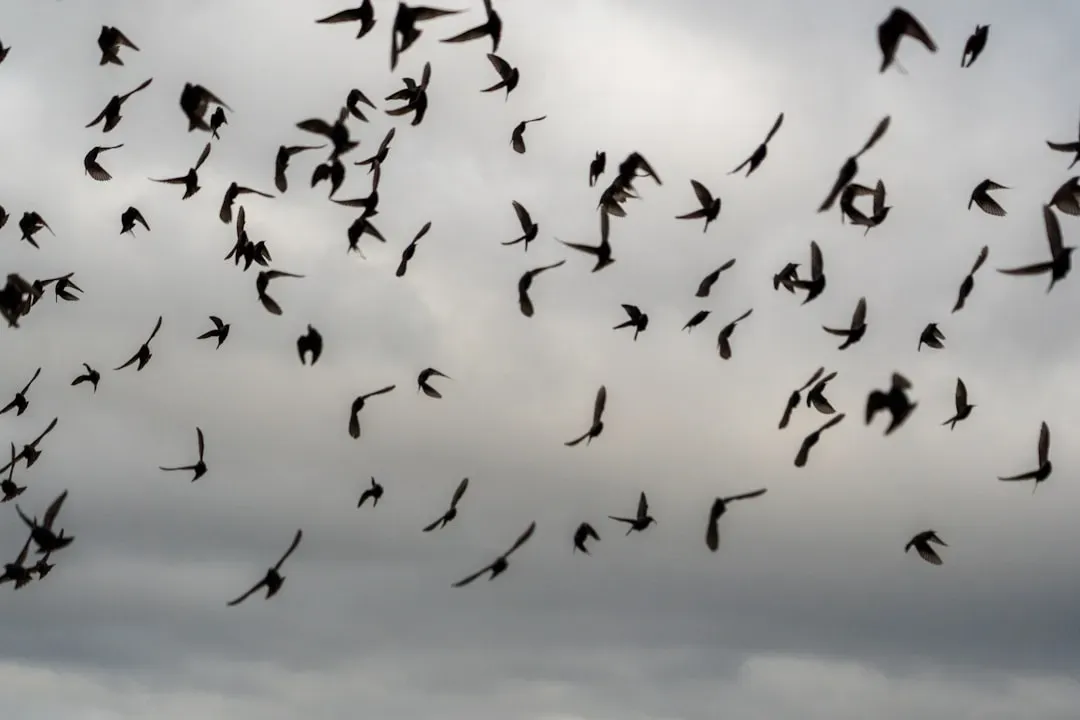
One of the most extraordinary in modern biology is how birds seem to read Earth’s magnetic field like a built-in compass. Experiments show that many migratory species can detect subtle changes in magnetic direction and inclination, adjusting their routes even on overcast nights when the stars and sun are hidden. For decades, scientists hunted for “magnetite crystals” in bird beaks or brains that might act like tiny compass needles, but the evidence has been patchy and often contradictory. More recently, attention has shifted to the eyes, where special light-sensitive proteins might support a quantum-level reaction affected by magnetism. If that sounds more like science fiction than ornithology, you’re not alone; I remember first reading those papers and feeling like I’d stumbled into a physics lab by mistake.
What makes this mystery so fascinating is that it points to a sensory world we can’t experience ourselves, an extra channel of information layered over the landscape. Some lab studies suggest that birds literally “see” the magnetic field as faint patterns overlaid on their normal vision, perhaps as dim bands or gradients in certain colors. At the same time, radio noise and artificial lighting from cities appear to disrupt magnetic orientation in controlled experiments, hinting that human activity may be scrambling an ancient navigation system. Despite decades of research, no single model fully explains all the behavioral data from different species, latitudes, and seasons. Until we understand this invisible compass, our maps of migration are missing a crucial legend describing how birds actually read the planet beneath their wings.
Ocean Whispers: What Drives Deep-Sea “Biological Hotspots”?

Far below the waves, where sunlight never penetrates, strange oases of life flare up in places that, on paper, should be barren. These deep-sea “biological hotspots” gather birds overhead, fish in the midwaters, and glowing plankton in dizzying swarms, all clustered around invisible features like underwater mountains, front lines between water masses, or upwelling zones. Oceanographers can map temperature, salinity, and currents with exquisite precision, yet they still cannot fully predict where or when these hotspots will form. Sometimes seabirds will suddenly appear by the thousands, dive-bombing a patch of water that looked empty only hours before, leaving stunned observers scrambling for explanations. It is as if the ocean is constantly whispering hints of abundance that our instruments only half-hear.
For nature enthusiasts scanning the horizon from a cliff, these hotspots can feel like miracles: nothing, nothing, nothing – then chaos and life. On satellite images, fine ribbons of different water masses and subtle eddies often correlate with higher productivity, but not in a simple, linear way. Zooplankton migrations, fish schooling behavior, and the timing of plankton blooms all intertwine in a complex choreography that models still struggle to capture. The stakes are high, because many marine birds depend on these ephemeral buffets to fuel long migrations or raise chicks. As climate change alters ocean temperatures and wind patterns, understanding how and why these hotspots form is quickly shifting from a beautiful puzzle to an urgent survival question.
Sky Quakes and Mystery Booms: What’s Shaking the Air Above Us?
Every year, people around the world report unexplained booms that rattle windows and startle flocks of birds into sudden flight, yet leave no obvious crater, smoke trail, or seismic record. These “sky quakes” or mystery booms often occur near coastlines but have also been heard far inland, sometimes accompanied by faint flashes of light or pressure waves. Meteor entries, military aircraft, offshore explosions, and small earthquakes can explain some incidents, but a stubborn fraction remains unaccounted for even after careful investigation. Atmospheric scientists suspect there may be rare combinations of temperature layers, wind shear, and topography that can carry sound in strange, focused ways. Having once heard a similar boom while birding along a quiet estuary – and watching every egret and gull explode into the air – I can attest to how unsettling it feels.
The challenge is that these events are fleeting and unpredictable, making them hard to study with dedicated equipment. Citizen reports, social media posts, and acoustic networks have helped build rough maps of where such booms occur, but the data are noisy and inconsistent. In some cases, analysis later links the sound to faraway storms or distant supersonic aircraft whose shock waves bent along temperature inversions. In others, no clear source ever materializes, leaving residents with only a story and a lingering unease. As monitoring technologies improve, we may gradually shrink the unexplained category, but for now, the sky still occasionally speaks in a voice we do not fully understand.
Ancient Avian Highways: How Old Are Today’s Migration Routes?
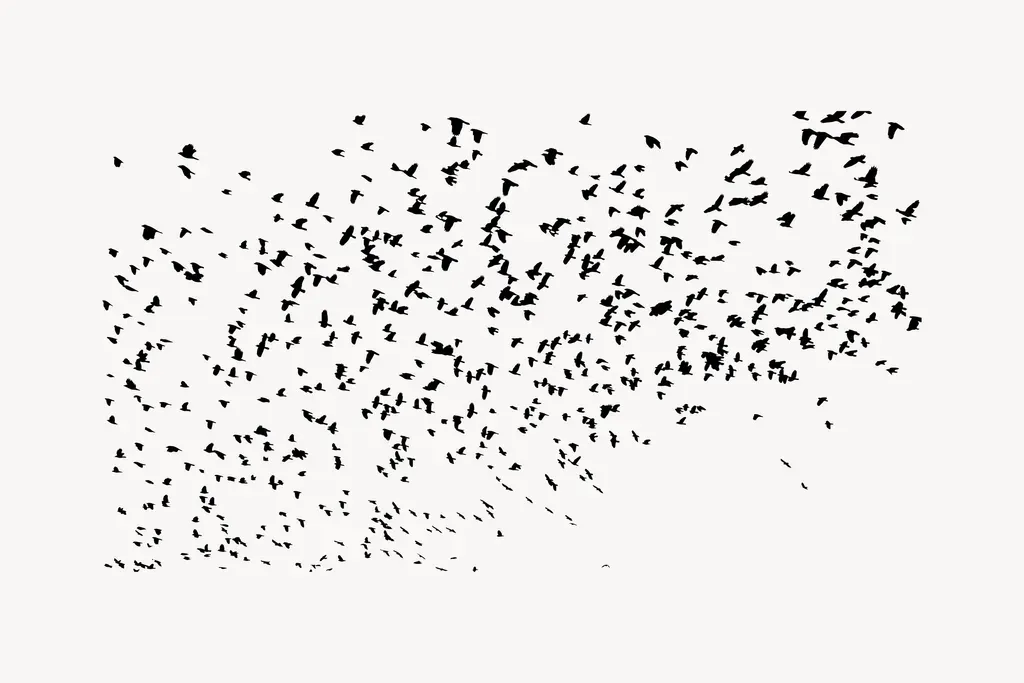
When you watch cranes spiraling high on a thermal or geese tracing a perfect V across the horizon, it is tempting to think these routes are timeless. But one of the big unresolved questions in avian science is just how old modern migration pathways really are. Did birds begin these long-distance journeys millions of years ago, shifting slowly with ice ages and continental drift, or did many routes crystallize relatively recently in response to human-altered landscapes? Fossils are notoriously stingy with migration evidence, and even genetic studies can only infer so much about behavior in the deep past. Some researchers argue that certain flyways are ancient highways, while others suspect they are more like dynamic detours, constantly rerouted by climate and food availability.
Clues pop up in surprising places: coastal cultures that have long timed festivals to arriving flocks, layered sediments full of bird bones at predictable times of year, and even isotopic signatures in old feathers preserved in museum drawers. Yet none of these data can definitively map out a million-year-old migration in the way a weather radar can trace tonight’s flight. For bird watchers, this uncertainty adds an extra layer of awe; the pattern you see overhead may be a thread in a story stretching back to mammoths – or a new chapter still being written. Understanding the age and flexibility of migration routes matters because it tells us how resilient birds might be to rapid environmental change. If flyways are more fluid than fixed, some species may adapt more easily, while others tied to ancient, narrow corridors could face steeper odds.
Why It Matters: What These Mysteries Reveal About Our Place on Earth
At first glance, ghost lights, mystery booms, or missing migration maps might sound like niche trivia for late-night forums and field nerds, but their significance runs much deeper. Each unresolved question is a reminder that Earth is not a solved puzzle; it is a living system that still defies our instruments, algorithms, and ego. When we admit that we do not fully understand how birds navigate or why deep-sea hotspots flare up, we are also admitting that our predictions about the future – of climate, food webs, and extinctions – carry big blind spots. Compared to the neat diagrams in school textbooks, the real world is more like a half-finished sketch with entire sections left blank.
For decades, environmental policy relied heavily on what we thought we knew: stable migration routes, predictable seasons, relatively fixed coastlines and currents. Now, as data reveals just how changeable and mysterious these systems are, it challenges those old assumptions and forces a humbler, more cautious approach. For bird watchers and nature enthusiasts, engaging with these mysteries can shift how we see ourselves – not as masters of the planet, but as curious guests who are still learning the house rules. That shift in perspective may be one of the most important cultural changes we can make in the face of accelerating environmental instability. When wonder replaces complacency, protection of wild places stops being optional and starts feeling like basic common sense.
The Future Landscape: Can New Tools Finally Crack Earth’s Strangest Riddles?

In the next decade, a wave of new technologies is poised to pry open some of these long-standing mysteries, though likely not in the neat, cinematic way we might hope. Ultra-light GPS tags, small enough now to be carried by warblers and swifts, are already revealing migration detours and hidden stopovers we had no idea existed. Swarms of autonomous ocean gliders and deep-diving robots are beginning to map fine-scale currents and temperature layers that may underlie those elusive biological hotspots. At the same time, networks of microphones, cameras, and even magnetometers – many operated by citizen scientists – are building massive datasets on bird movements, strange booms, and unexplained lights.
Yet with every new dataset comes a fresh tangle of questions, and that is where the real challenge lies. Artificial intelligence may help spot patterns too complex for human eyes, but algorithms are only as good as the assumptions baked into them. If we assume, for instance, that migration routes are stable, we might miss signs that birds are quietly rewiring their paths in response to climate change. There is also a social dimension: much of the world’s biodiversity lies in regions with limited funding and infrastructure, where high-tech tools are scarce. Whether these mysteries get solved will depend as much on global cooperation and equitable science as on better sensors and faster chips.
How You Can Engage: Turning Curiosity into Action
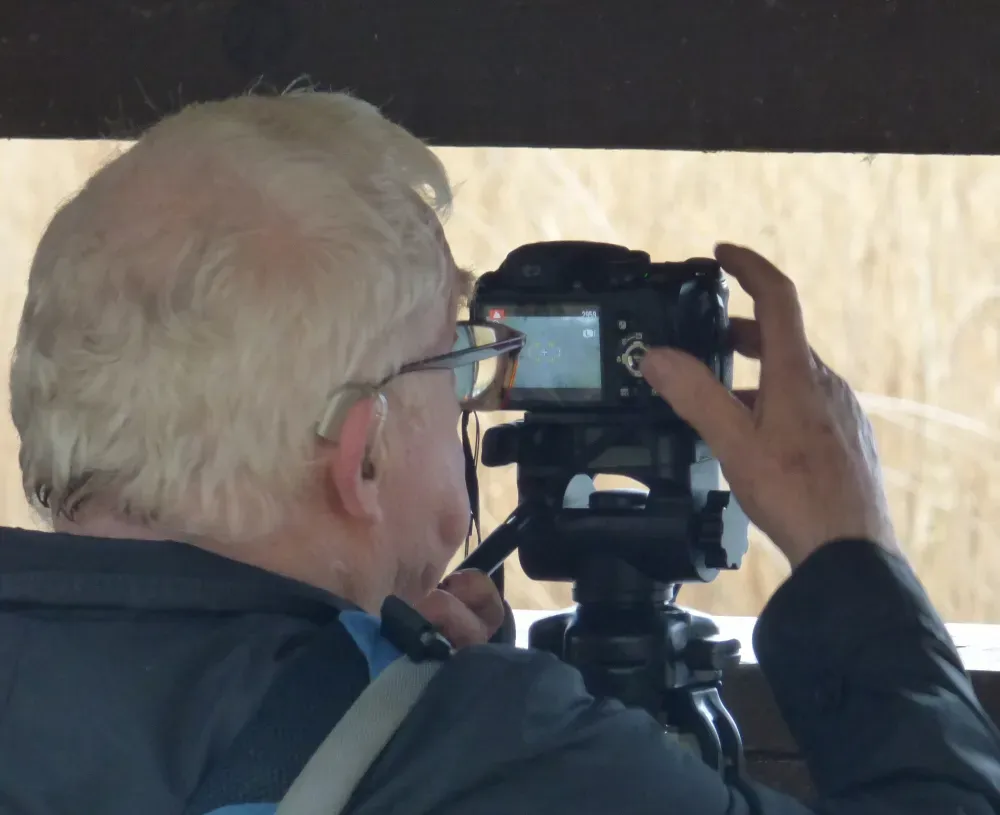
You do not need a lab coat or a grant budget to be part of this unfolding story; in fact, many of the biggest breakthroughs in bird and nature science now lean heavily on ordinary observers. Simple actions like submitting your bird sightings to community science platforms, joining local migration counts, or logging unusual events – mystery lights, sudden bird flocks, strange sounds – can feed directly into research databases. For those who live near coasts, wetlands, or urban green spaces, careful notes on timing, weather, and behavior turn casual outings into valuable field records. Supporting conservation groups that protect key habitats along migration routes or critical marine hotspots helps secure the stage on which these mysteries play out.
Even small lifestyle shifts matter: reducing light pollution around your home, for instance, can make night skies safer for migrating birds whose magnetic and celestial cues are easily scrambled. Talking about these mysteries with friends, children, or local community groups keeps the sense of wonder alive and pushes back against the tired idea that “science has already figured everything out.” Curiosity, when shared, becomes a kind of quiet activism – a way of insisting that the hidden workings of our planet are worth noticing and defending. The next time you step outside at dawn or stand under a darkening sky, you are not just a spectator; you are a potential data point, a witness, and maybe even the person who spots the clue everyone else has missed.
Suhail Ahmed is a passionate digital professional and nature enthusiast with over 8 years of experience in content strategy, SEO, web development, and digital operations. Alongside his freelance journey, Suhail actively contributes to nature and wildlife platforms like Discover Wildlife, where he channels his curiosity for the planet into engaging, educational storytelling.
With a strong background in managing digital ecosystems — from ecommerce stores and WordPress websites to social media and automation — Suhail merges technical precision with creative insight. His content reflects a rare balance: SEO-friendly yet deeply human, data-informed yet emotionally resonant.
Driven by a love for discovery and storytelling, Suhail believes in using digital platforms to amplify causes that matter — especially those protecting Earth’s biodiversity and inspiring sustainable living. Whether he’s managing online projects or crafting wildlife content, his goal remains the same: to inform, inspire, and leave a positive digital footprint.