Every era thinks it has the past more or less figured out – until an object comes out of the ground that makes archaeologists quietly say, “Wait… what?” From precision-carved stone spheres to enigmatic copper scrolls, some artifacts refuse to sit neatly inside our timelines and tidy explanations. They are not proof of lost alien empires or time travelers, but they do expose how incomplete our story of human ingenuity still is. As scientific tools get sharper, these relics of stone, metal, and clay keep pushing back, forcing us to redraw the limits of what ancient people could know, build, or imagine. And in that tension between mystery and evidence, our understanding of who we are – and how far we can go – gets just a little more interesting.
The Baghdad Battery: Power Source or Misunderstood Jar?
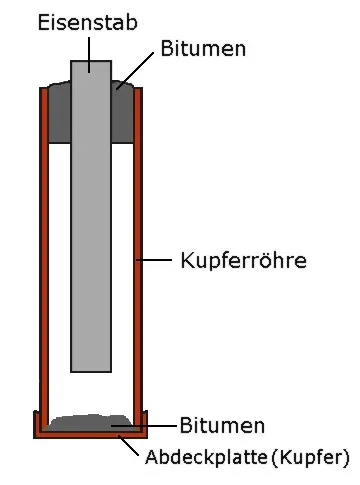
It sounds like the start of a science fiction plot: in the 1930s, workers near modern-day Baghdad unearthed small clay jars holding copper cylinders and iron rods, later dubbed the “Baghdad Battery.” When you pour a mild acid like vinegar or grape juice inside, the setup can produce a low-voltage electric current, enough to plate metal or give a faint tingle on the skin. That has fueled decades of speculation that ancient craftsmen in the Parthian or Sasanian period may have experimented with electrochemistry long before modern physics had a name for it. Museums and TV shows have eagerly recreated the jars, lighting tiny bulbs or powering simple devices to dramatize the possibility. The reality, though, is that no written records from that period mention electricity, and many scholars argue the jars could just as easily have been used for storing scrolls or sacred texts, with any “battery” behavior purely accidental.
What makes the Baghdad Battery so compelling is how it sits on the edge between plausible science and wishful thinking. On one hand, ancient people were skilled observers who experimented constantly with metals, dyes, and acids, so stumbling into a primitive electroplating technique is not impossible. On the other, archaeologists rightly point out that a few jars with metal parts do not suddenly rewrite the history of electricity. The jars force experts to confront how cautious we must be when interpreting function from form, especially when context is fragmentary or poorly recorded. For the public, they offer a vivid gateway into thinking about how many trial-and-error discoveries were probably made and lost without ever being written down. Whether or not they were true “batteries,” they remind us that scientific curiosity is not an invention of the modern lab but a very old human habit.
Antikythera Mechanism: The Clockwork Computer From a Shipwreck
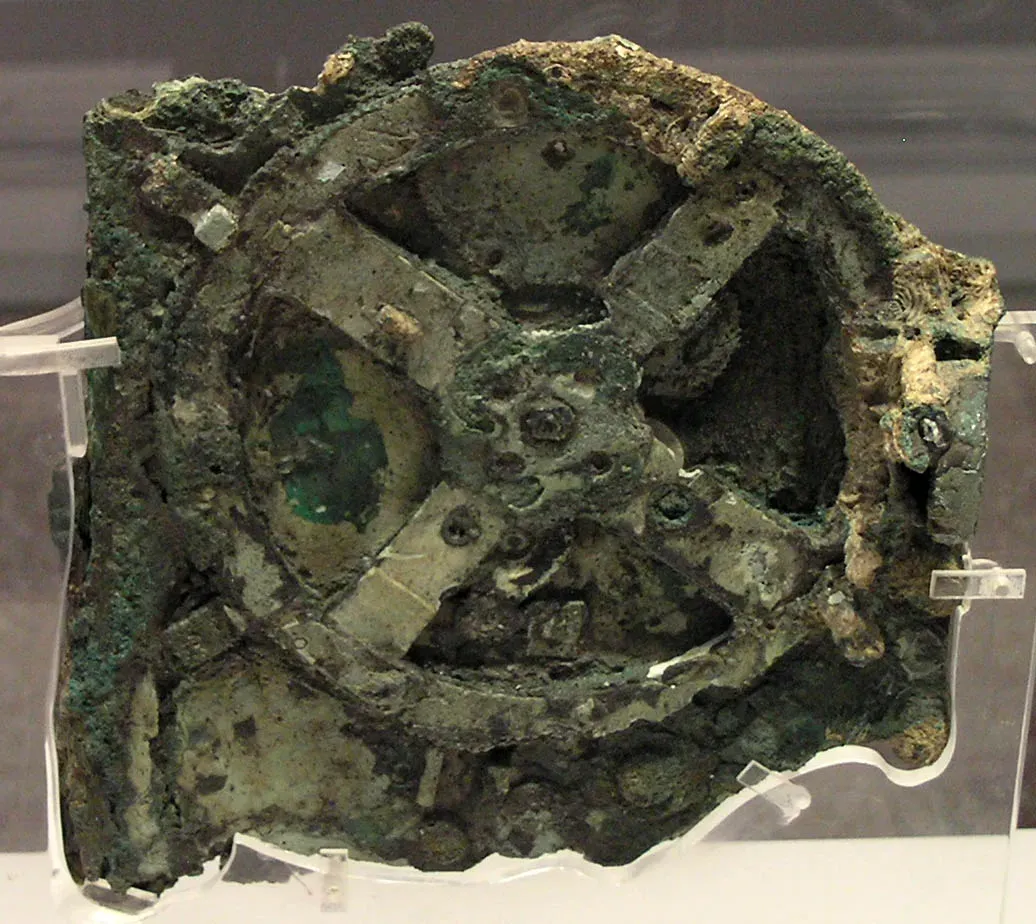
When sponge divers off the Greek island of Antikythera spotted a Roman-era shipwreck in 1900, they expected statues and amphorae, not a corroded lump of bronze gears that would rewrite the history of engineering. The Antikythera Mechanism, dated to roughly the second century BCE, turned out to be a complex geared device that could predict eclipses, model the motions of the sun and moon, and track athletic cycles like the ancient Olympic Games. Tomography scans and painstaking reconstructions have revealed dozens of interlocking gears, inscriptions, and dials that essentially form an analog computer. It is so sophisticated that for years some historians argued it had to be a one-off masterpiece, the product of a genius working in near isolation. Yet its existence alone implies a broader tradition of high-precision craft and mathematical know-how that has barely survived in the record.
For modern scientists, the mechanism is a stunning demonstration of how far ancient engineering could go when mathematics, craft, and astronomy came together. Researchers have used 3D X-ray imaging and surface scanning to read faint Greek text on the corroded plates, recovering instructions and astronomical labels that deepen the sense of a purpose-built scientific instrument. The device anticipates mechanical clocks by more than a millennium, calling into question linear narratives where advanced technology always marches steadily forward. Its gears also raise uncomfortable questions: if something this complex could vanish from history for centuries, what else might have been lost in fires, shipwrecks, and forgotten workshops? In that sense, the Antikythera Mechanism is less a closed mystery and more a provocation, urging archaeologists to look again at fragments they once dismissed as mere “scrap metal.”
The Costa Rican Stone Spheres: Perfect Shapes With No Clear Story
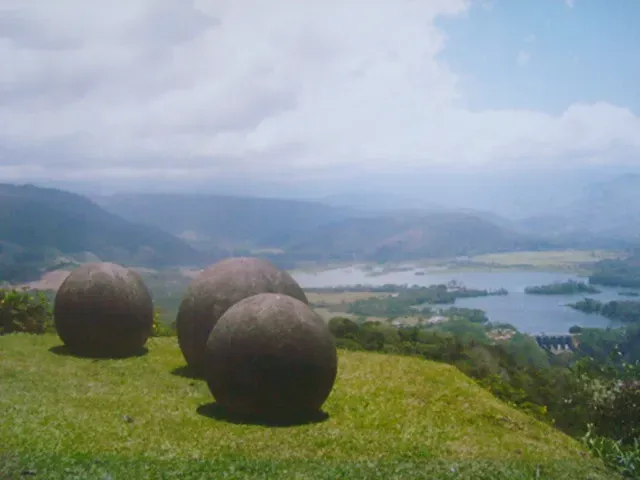
Scattered across the lowlands and jungles of Costa Rica are hundreds of nearly perfect stone spheres, some small enough to cradle in your arms and others as wide as a person is tall. Carved by pre-Columbian cultures starting more than a thousand years ago, they are made from hard rock like gabbro and granodiorite, shaped with such precision that modern surveyors have measured only tiny deviations from true roundness. Yet their purpose remains maddeningly unclear: there are no surviving written accounts from the societies that made them, and colonial-era destruction scattered many from their original positions. Local legends have suggested they belonged to gods, giants, or even contained hidden gold, which led to some being dynamited in the past. Archaeologists now find them embedded at the entrances of ancient settlements and arranged along key axes, hinting at ceremonial, political, or cosmological roles.
What makes the spheres especially intriguing to scientists is the combination of heavy labor and apparent standardization without an obvious practical payoff. It would have taken coordinated teams, specialized stoneworkers, and a lot of time to grind these rocks into smooth globes using sand and abrasion tools. That investment suggests they must have carried weighty symbolic meaning, perhaps marking elite space, territorial claims, or pathways aligned with the sun and stars. Comparisons with carved stones elsewhere in the Americas show that cultures often turned simple shapes into powerful identity markers or spiritual anchors. Still, without texts or clear context, interpretations remain open, and that uncertainty fuels a steady stream of speculative theories. In the meantime, conservationists in Costa Rica are racing to protect the spheres from looting and erosion so that future technologies – like ground-penetrating radar surveys of surrounding sites – might finally clarify how they were used.
The Phaistos Disc: A Message From a Lost Script
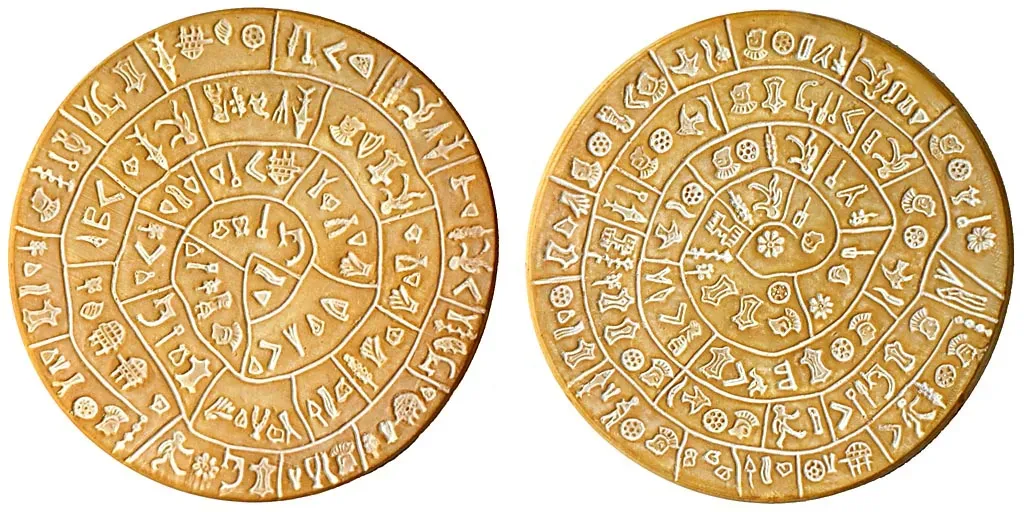
In 1908, archaeologists digging at the Minoan palace site of Phaistos on Crete uncovered a small fired-clay disc stamped on both sides with spiraling symbols. These characters, pressed with individual seals rather than hand-etched, form one of the earliest known examples of movable-type-like printing, but the script itself remains undeciphered. The disc shows repeated symbols that look like human figures, plants, tools, and abstract shapes, all arranged in a carefully planned sequence. Some scholars see possible echoes of known Minoan scripts like Linear A, while others suspect it records a wholly separate language or even a ritual chant. Debate has raged over whether it is a religious hymn, a political proclamation, or something more mundane like a game or inventory.
The Phaistos Disc frustrates linguists and captivates the public precisely because it sits so close to the edge of understanding. We can see clear structure and repetition, which suggests grammar and syntax, but without a bilingual “Rosetta Stone” or longer related texts, decoding it is like trying to solve a crossword with almost no clues. Computer-assisted pattern analysis has proposed possible phonetic values and word boundaries, yet none of the competing decipherments has convinced the broader scholarly community. At the same time, the disc’s uniqueness raises a thorny question: was it a widely used technology, now lost, or a one-off creation that happened to survive? As imaging tools improve and more Minoan sites are excavated, researchers hope to find matching symbols that could finally give these stamped signs a voice. Until then, the disc stands as a tantalizing reminder that entire writing systems can slip into silence.
The Copper Scroll: A Treasure Map or Spiritual Metaphor?
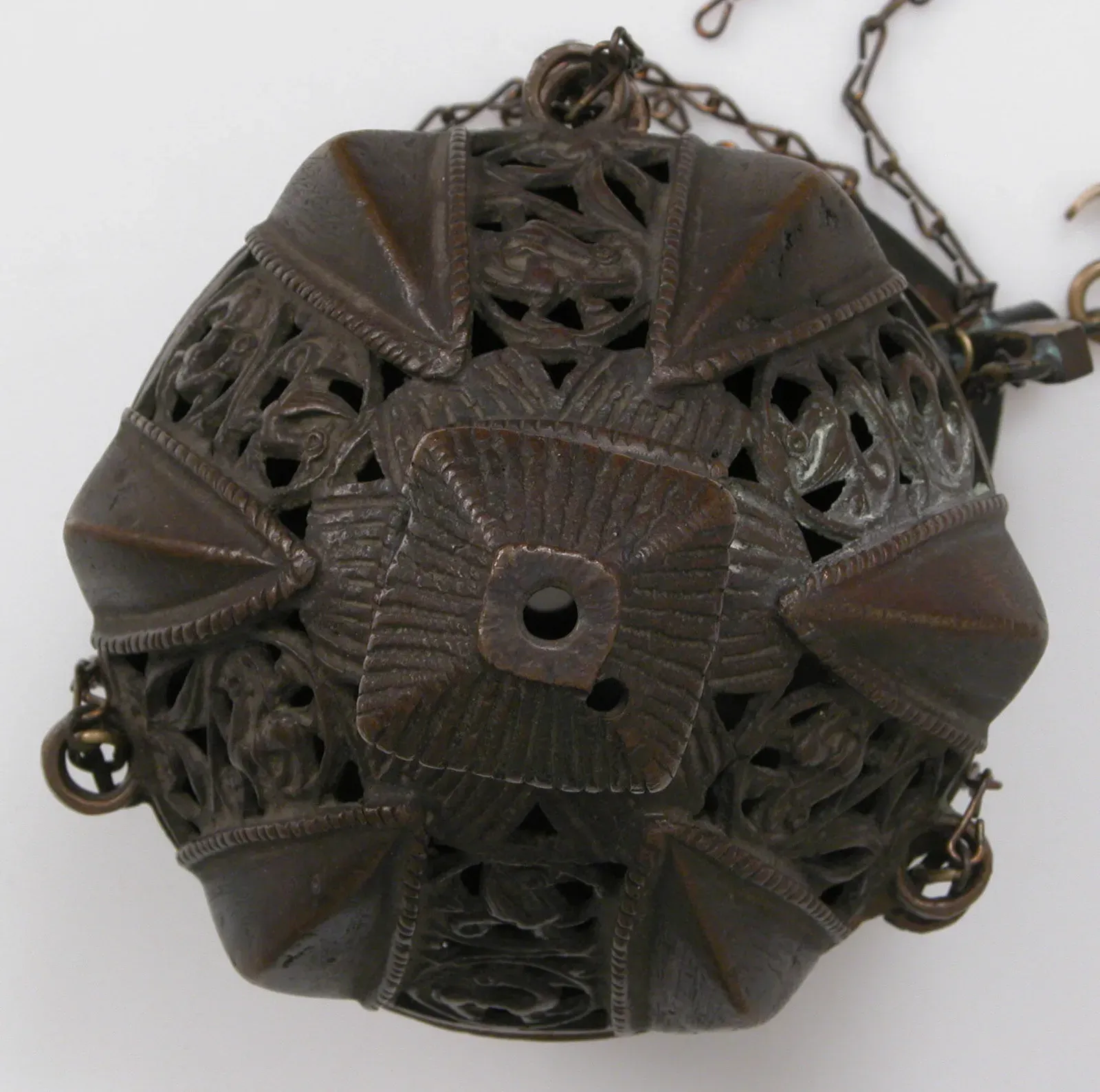
Among the famous Dead Sea Scrolls discovered in caves near Qumran in the mid-twentieth century, one stands out as particularly strange: the Copper Scroll. Unlike the others, which were ink on parchment or papyrus, this one was etched into rolled sheets of copper, then oxidized so heavily that conservators had to cut it into strips to read the text. What they found was not a theological treatise but a detailed list of supposed treasure deposits – massive quantities of gold, silver, and temple artifacts hidden at dozens of locations. The text uses cryptic place names and measurements, enough to sound like a logistical document rather than a legend. Unsurprisingly, it sparked waves of treasure hunting, both amateur and state-sponsored, none of which has definitively confirmed any of the listed hoards.
For historians, the Copper Scroll raises deeper questions than where the gold might be buried. Was it a practical inventory created during a crisis, perhaps as Roman forces threatened Jerusalem, or an intentionally symbolic text meant to convey spiritual wealth using the language of material riches? Its script style and language differ subtly from other Dead Sea Scrolls, hinting at possible different origins or scribal traditions. Some researchers see the choice of durable copper as a conscious attempt to preserve critical knowledge through chaos, while others argue it underscores ceremonial or ritual significance. The inability to match its sites confidently to real-world locations shows the limits of trying to map ancient landscape terms onto modern geography. In a way, the scroll itself has become the treasure: a rare, stubborn artifact that resists both simple decoding and simple dismissal.
Nebra Sky Disc: Bronze Age Star Map or Royal Prop?
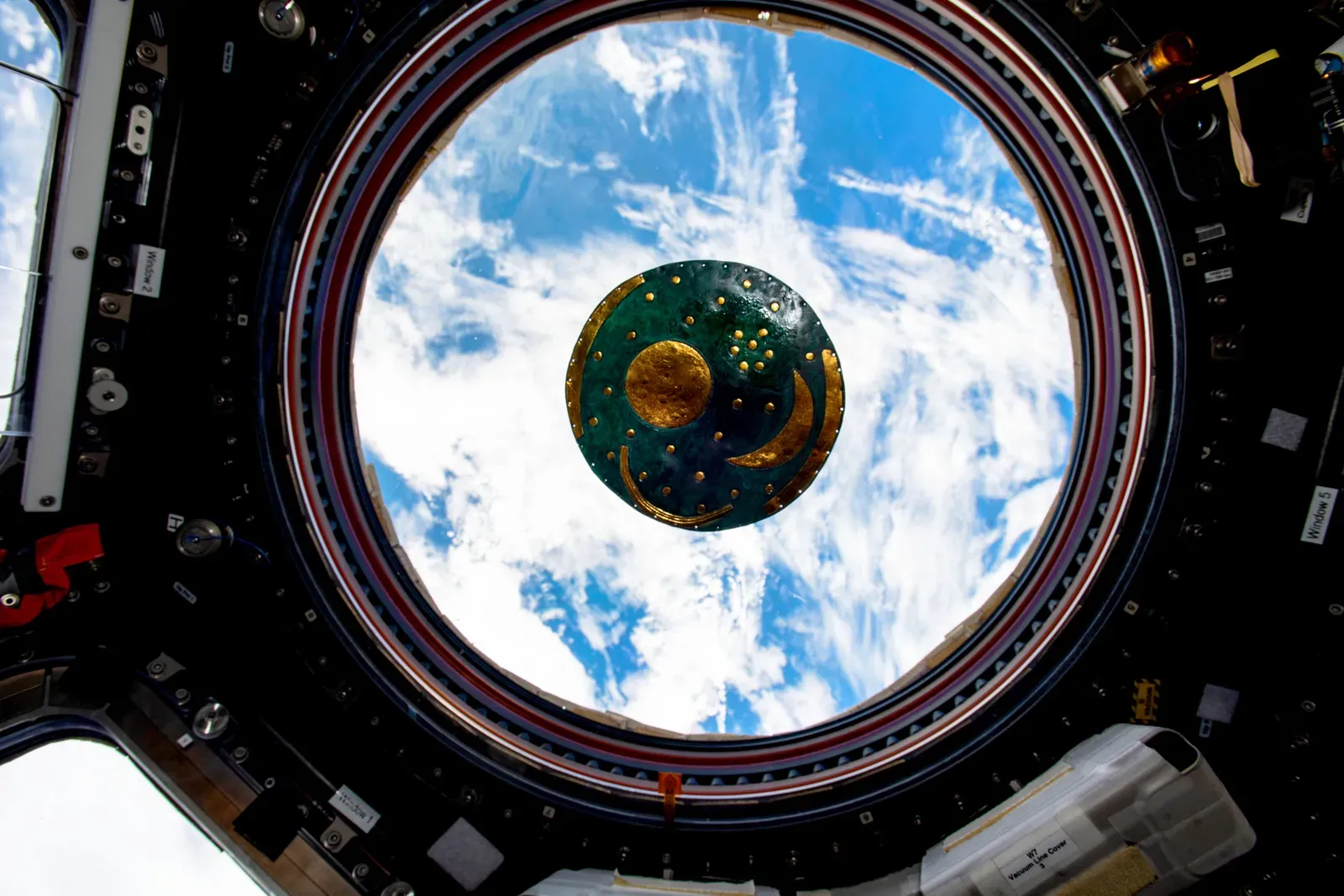
In a forest clearing in Germany in the early 2000s, illegal metal detectorists dug up what looked like a corroded bronze plate with odd gold inlays. The object, later seized by authorities and authenticated, turned out to be the Nebra Sky Disc, now dated to the early Bronze Age, more than three and a half thousand years ago. Its surface shows gold shapes interpreted as the sun or moon, a cluster resembling the Pleiades star group, and later-added arcs that may represent horizons or solstice points. If that interpretation is correct, the disc could be one of the oldest concrete depictions of the night sky in Europe. It suggests that communities of metalworkers and ritual specialists were encoding astronomical knowledge in portable ceremonial objects, not just in alignments of stones or buildings.
Even with advanced dating and compositional analysis, the disc’s exact role remains contested. Some archaeologists view it as a practical teaching tool for marking key agricultural times tied to the sun and stars, while others see it more as a prestige item used by elites to legitimize their authority. Metallurgical studies show that the copper and gold likely came from distant sources, implying far-reaching trade networks and a sophisticated appreciation of materials. At the same time, the disc’s discovery via looting damaged its archaeological context, leaving gaps about how it was originally deposited and used. Ongoing debates about authenticity in its early years also show how cautious scientists must be when something appears that seems too perfectly “mysterious.” Yet as more Bronze Age sites in central Europe yield evidence of sky-watching practices, the Nebra disc looks less like an anomaly and more like a rare surviving piece of a larger cosmic conversation.
London Hammer and Out-of-Place Objects: When Context Collapses
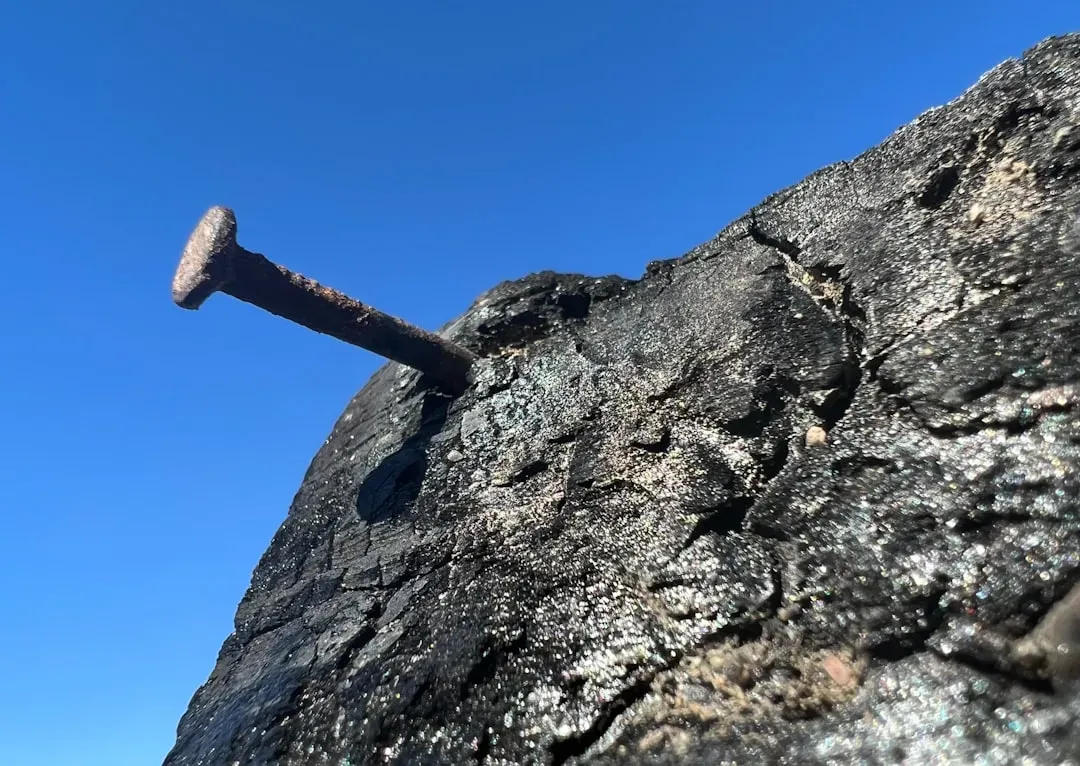
If you spend time on the fringes of archaeology online, you quickly run into claims about “out-of-place artifacts” that supposedly prove advanced ancient civilizations or visits from other worlds. One of the most repeated examples is the so-called London Hammer, a nineteenth- or early twentieth-century metal hammer encased in a concretion of mineral-rich rock found near London, Texas. Photos of the hammer emerging from hardened material have been used to suggest it is millions of years old, predating humanity itself. Geologists and archaeologists, however, point out that relatively recent objects can become encased in carbonate concretions that look like stone, especially in certain environments. In this view, the hammer is a perfectly ordinary tool that became wrapped in an unusual natural shell, then misinterpreted as a fossilized anachronism.
The London Hammer is important not because it rewrites prehistory, but because it highlights how fragile context is in archaeology. When an object is removed from its original layer without careful documentation, wild stories rush in to fill the vacuum. Serious scientists have examined the hammer and its surrounding material, finding evidence consistent with recent mineral buildup rather than ancient rock strata. This does not stop it from circulating as “proof” of suppressed discoveries, illustrating how narratives can outpace evidence in the public imagination. For researchers, the lesson is that preserving context – where an object is found, what surrounds it, how it is documented – is as critical as the artifact itself. Without that, even a simple hammer can become an unsolvable riddle for all the wrong reasons.
Why These Artifacts Matter Far Beyond Their Mysteries
It is tempting to treat these artifacts as mere curiosities, the archaeological equivalent of campfire stories meant to spook or impress. But they matter far more than their headline-ready mysteries suggest, because they expose the blind spots in our own assumptions about progress and knowledge. When something like the Antikythera Mechanism appears centuries “too early,” it challenges the idea that sophisticated technology must always move in a straight, upward line. The Costa Rican spheres and Phaistos Disc remind us that whole artistic systems and writing traditions can almost vanish, leaving behind just enough to puzzle us. Even contested items like the London Hammer show how easily people bend evidence to fit pre-existing beliefs, which has direct parallels in modern debates over climate data, vaccines, or genetic engineering.
There is also a quieter, more human reason these objects matter: they reconnect us with the curiosity and creativity of people whose names we will never know. The copper scroll-maker carefully etching lines into metal, the sky-disc artisan inlaying gold constellations, the Minoan worker pressing tiny seals into wet clay – they were all doing their best to record, predict, impress, or protect something they cared about. Their tools and techniques may differ from ours, but the impulse to capture knowledge and leave a mark is instantly recognizable. That continuity undercuts the idea that “ancient” automatically means naive or unsophisticated. When we acknowledge that, we can approach both their achievements and their unknowns with a mix of respect and healthy skepticism, rather than defaulting to either romantic fantasies or dismissive shrugs.
The Future of Studying Mysterious Artifacts: From AI to Atomic-Level Scans
In the past, making sense of puzzling artifacts depended heavily on the expert eye and a good magnifying glass; today, the toolkit looks more like a high-tech hospital than a dusty museum. Researchers now use synchrotron radiation, neutron imaging, and ultra-high-resolution 3D scanning to peer inside corroded devices like the Antikythera Mechanism without prying them open. Artificial intelligence models are being trained to spot faint inscriptions, reconstruct damaged texts, and even propose possible language structures for undeciphered scripts. Isotopic analysis can trace the geographic origins of metals and stones down to specific ore deposits, helping to map trade networks surrounding objects like the Nebra Sky Disc. These methods do not magically solve mysteries overnight, but they dramatically expand the kinds of questions we can ask from a single fragment.
The next few decades will likely see even more radical tools enter the field, including quantum-level sensors and portable scanners that can be carried into remote caves or jungle sites. At the same time, there are serious challenges: looting, climate-driven erosion, and development threaten to destroy archaeological contexts faster than scientists can study them. There is also the risk that sensational claims will race ahead of careful peer review, especially when “mysterious” artifacts intersect with viral social media. International collaboration and open data will be crucial to balance excitement with rigor, allowing independent teams to reanalyze scans and test competing interpretations. If that balance can be struck, the same digital platforms that spread dubious theories about out-of-place objects could also help crowdsource new insights into legitimate enigmas. The real frontier may not be in finding ever-weirder artifacts, but in learning to read familiar ones in completely new ways.
How Curious Readers Can Engage With These Ancient Mysteries
You do not need a doctorate or a passport to remote digs to play a meaningful role in how these stories unfold. One simple step is to be a demanding consumer of archaeological news: look for reports that explain dating methods, context, and alternative interpretations instead of just promising to “rewrite history.” When you come across a viral post about a supposedly impossible artifact, check whether professional archaeologists or reputable institutions have weighed in before sharing it. Many museums now offer detailed online exhibits with high-resolution images, interactive 3D models, and curator essays that go far beyond the label text on a display case. Spending time with those resources is a powerful way to sharpen your own sense of what makes an explanation plausible or shaky.
If you want to go further, you can support organizations that fight looting and promote ethical archaeology, from local historical societies to international heritage groups. Some research projects invite the public to help classify artifacts or transcribe inscriptions through citizen science platforms, turning collective curiosity into actual data. Visiting sites and museums respectfully, following regulations on metal detecting and artifact collecting, and encouraging kids to ask hard questions about the past all help build a culture that values evidence over easy stories. In a world awash with manufactured mysteries, choosing to engage thoughtfully with genuine archaeological puzzles is a small but meaningful act. After all, the next breakthrough may not come from a dramatic new discovery, but from a fresh pair of eyes looking differently at something we thought we knew.