You probably think you know how animals find their way across thousands of miles of open ocean. Science has made stunning progress in understanding migration patterns, right? Here’s the thing, though: even with all our modern technology and brilliant researchers, some of nature’s greatest travelers still puzzle us completely. We’ve tracked them, tagged them, and studied them for decades, yet the full picture remains frustratingly out of reach.
What drives a tiny butterfly to navigate continents it’s never seen before? How does an eel find a specific patch of ocean thousands of miles away in the middle of nowhere? These aren’t just curiosities. They’re genuine mysteries that remind us how much we still don’t understand about the natural world around us. Let’s dive in and explore seven animal migrations that continue to baffle scientists, challenge our theories, and leave us wondering what secrets these creatures are keeping.
The Monarch Butterfly’s Impossible Journey

Monarch butterflies travel over 3,000 miles from North America to central Mexico in what can only be described as one of nature’s most mind-boggling feats. The truly perplexing part? These monarchs know the way to the overwintering sites even though this migrating generation has never before been to Mexico.
Think about that for a moment. You’re asking an insect with a brain smaller than a pinhead to navigate across an entire continent to a location it’s never visited. Various studies have shown this behavior both in natural systems and laboratory settings, yet there remains much to be researched about the underlying mechanisms for interpreting the orientation and timing cues, and it remains unclear how monarchs effectively navigate to a single shared migratory location from variable starting locations. Scientists know monarchs use a time-compensated sun compass and possibly magnetic fields, but honestly, the complete picture of how they pull this off generation after generation is still being pieced together. A study published in 2016 suggests that the critters navigate based on their relative position to the sun, but scientists are still ironing out exactly how this works.
Arctic Terns Flying to the Ends of the Earth
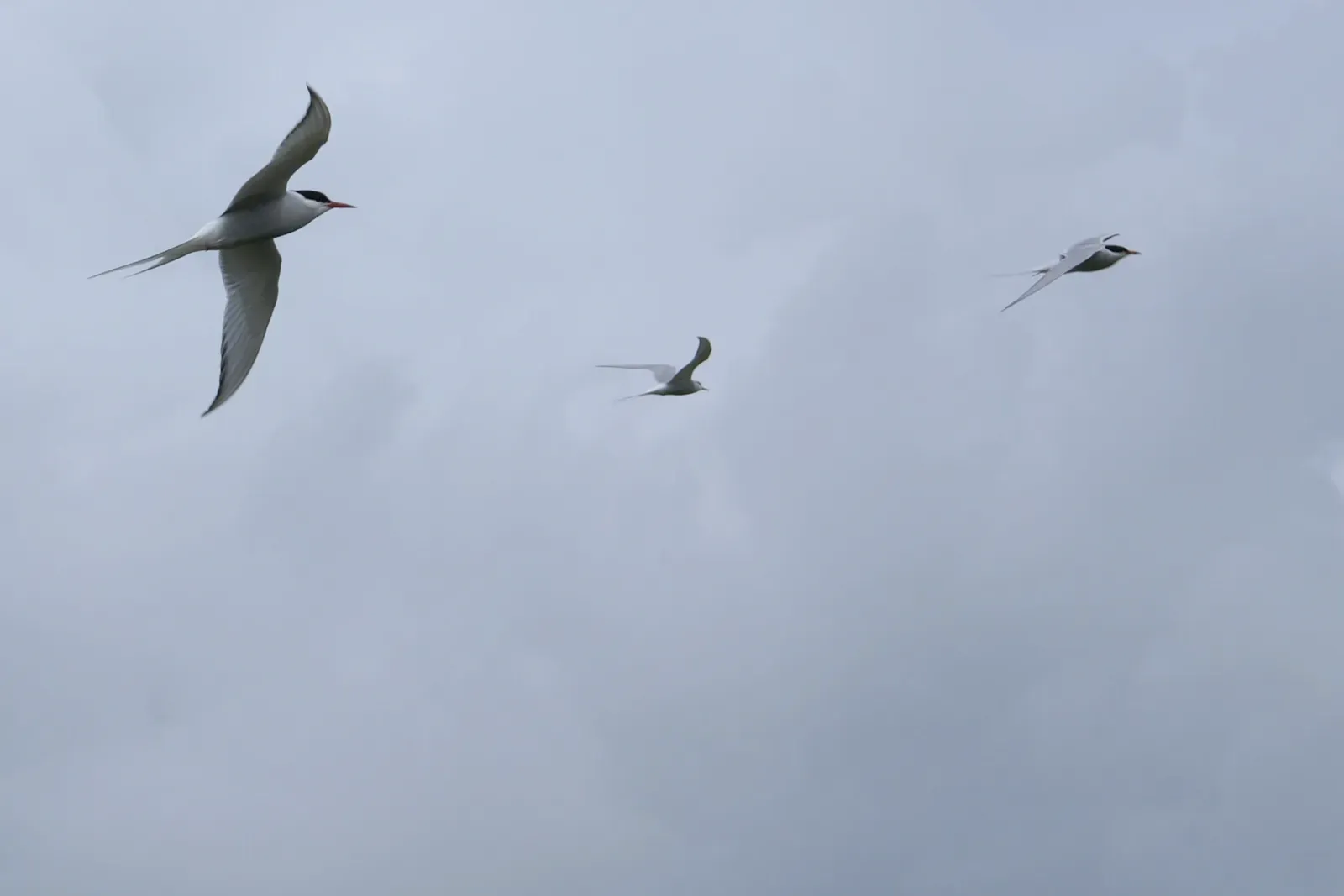
Arctic terns have been tracked covering a staggering 96,000 km in ten months from the end of one breeding season to the start of the next, which are by far the longest migrations known in the animal kingdom. These birds essentially chase summer from pole to pole, experiencing more daylight than any other creature on the planet. Let’s be real, that’s absolutely extraordinary for a bird weighing little more than a hundred grams.
Scientists know that terns are moving and flying constantly, even at night, and that flying is the most energetic activity that any animal can undertake, yet they don’t yet know how they do it. The terns follow winding routes rather than straight lines, and researchers discovered they make detours to take advantage of wind patterns. Still, the navigation system that allows such precision across vast oceans remains incompletely understood. Scientists recently discovered the birds make several thousand-mile detours to capitalize on global wind patterns and preserve energy, but the fundamental question of how they know where they’re going in the first place continues to perplex experts.
European Eels and the Sargasso Sea Mystery
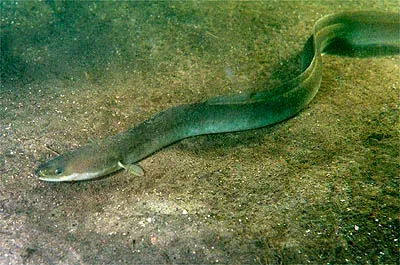
For centuries, the European eel mystified everyone from ancient Egyptians to Aristotle and even Sigmund Freud. In 2022, researchers finally tracked a group of migrating eels to the middle of the Atlantic Ocean in an area known as the Sargasso Sea, confirming decades of speculation. Yet here’s where it gets really interesting: Scientists have yet to observe a mating in the wild, which will likely be the next great eel mystery to solve.
Fundamental questions therefore remain about the oceanic migration of adult eels, including navigation mechanisms, the routes taken, timings of arrival, swimming speed and spawning locations. These slippery creatures spend most of their lives in European rivers, then suddenly transform and swim up to 10,000 kilometers to spawn in a specific region of ocean they’ve never been to before. We think that the European eel reproduces in the Sargasso Sea because this is the place where we have found the smaller larvae, but we have never found a European eel egg or the eels spawning. The navigation mechanisms allowing this feat remain largely theoretical, making the eel one of nature’s most enduring enigmas.
Salmon’s Uncanny Ability to Find Home
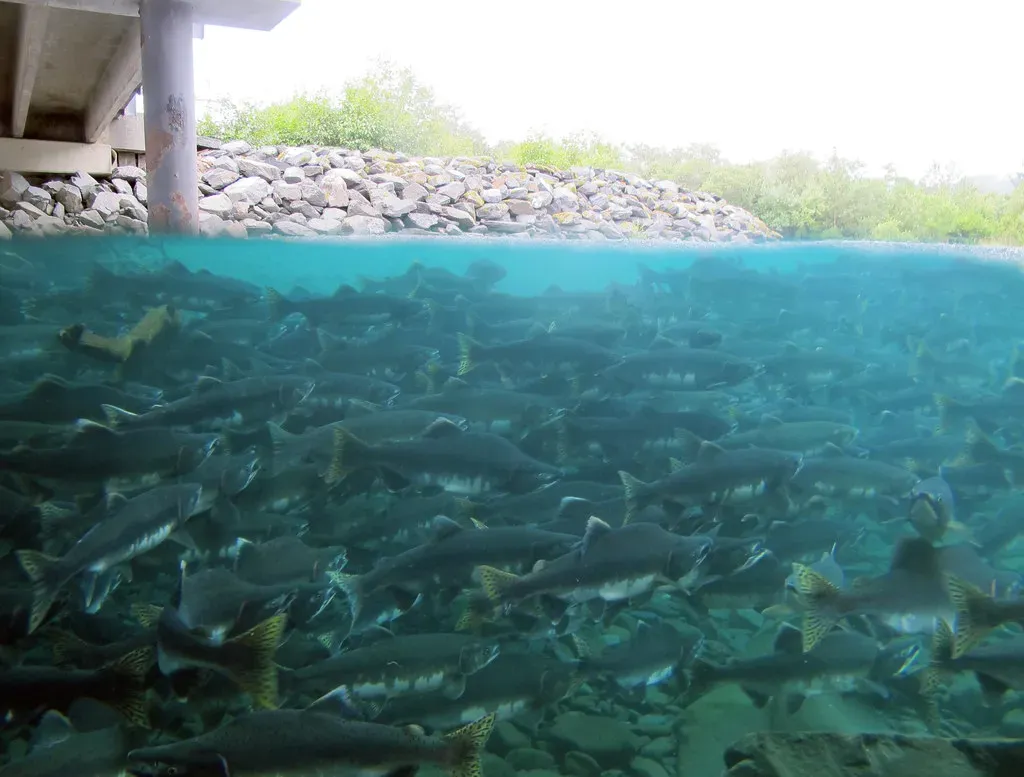
Salmon perform one of nature’s most celebrated migrations, swimming thousands of miles through open ocean before returning to the exact stream where they hatched. Scientists believe that salmon navigate by using the earth’s magnetic field like a compass, and when they find the river they came from, they start using smell to find their way back to their home stream. Sounds simple enough, but the reality is far more complex and mysterious.
Here’s something that’ll blow your mind: A salmon with extremely poor vision in both eyes survived the vast expanse of the North Pacific Ocean and returned to Kodiak Island as a mature adult, having been in the ocean for two years migrating with other fish. This demonstrates that vision plays a minimal role compared to other senses. Recent studies have shown slight natural movement of the earth’s magnetic field causes slight shifts in migration route of returning salmon, suggesting that the salmon essentially have their own internal global positioning system via the magnetic field. What science hasn’t fully cracked is how all these navigation systems integrate in the salmon’s brain, or why some salmon migrate rapidly while others take much longer routes to reach the same destination.
Sea Turtles Navigating by Earth’s Magnetism
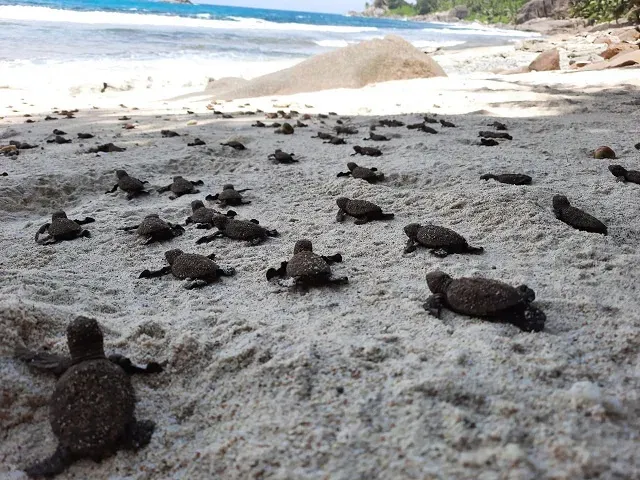
Baby green turtles that have hatched on the beaches of Ascension Island, in the middle of the Atlantic, find their way across the ocean to the ancestral feeding grounds off the Brazilian coast, and years later, when the time comes for them to lay their eggs, they then make their way back to Ascension Island, only six miles across and over 1,400 miles away, with no land in between. How on earth does a creature with no parents to guide it accomplish this?
Their ability to navigate is one of the great unsolved mysteries of biology. Loggerhead turtles that hatch on the coast of Florida are definitely the most impressive magnetic navigators because the tiny little hatchlings perform an extraordinary journey, they get caught up in the north flowing Gulf Stream and then they’re taken right the way around the entire North Atlantic Ocean using ocean currents. Scientists know turtles detect magnetic fields, but precisely how they create mental maps and remember routes they’ve never consciously traveled before remains frustratingly unclear. One of the things that always seems most mysterious is how many animals migrate with incredible precision to a very particular destination without ever having been there or been shown where or how to go.
Bar-Headed Geese Flying Over Mount Everest
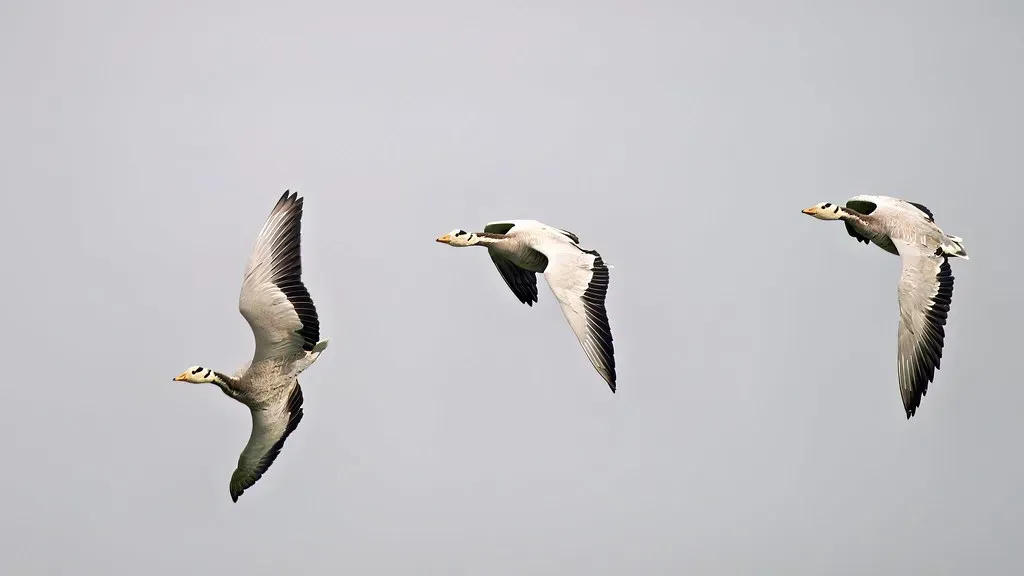
Some animal migrations aren’t just about distance but about altitude. Bar-headed geese fly over the Himalayas during their annual migration, reaching heights where oxygen is dangerously thin and temperatures plummet. Ornithologists suspect bar-headed geese fly over Mt. Everest because they have been doing so since before it existed, and when it began rising up from the land, some 60 million years ago, they simply moved upward with it.
This explanation raises more questions than it answers, honestly. How does evolutionary memory persist across millions of years? Why don’t the geese simply find easier routes around the mountains? The physiological adaptations allowing them to function at such extreme altitudes are better understood than the navigational choices that put them there in the first place. I know it sounds crazy, but these birds are following ancient pathways that predate the world’s tallest mountains, and we’re still trying to figure out how that information gets passed down through countless generations.
The Unexplained Mechanics Behind Animal Navigation
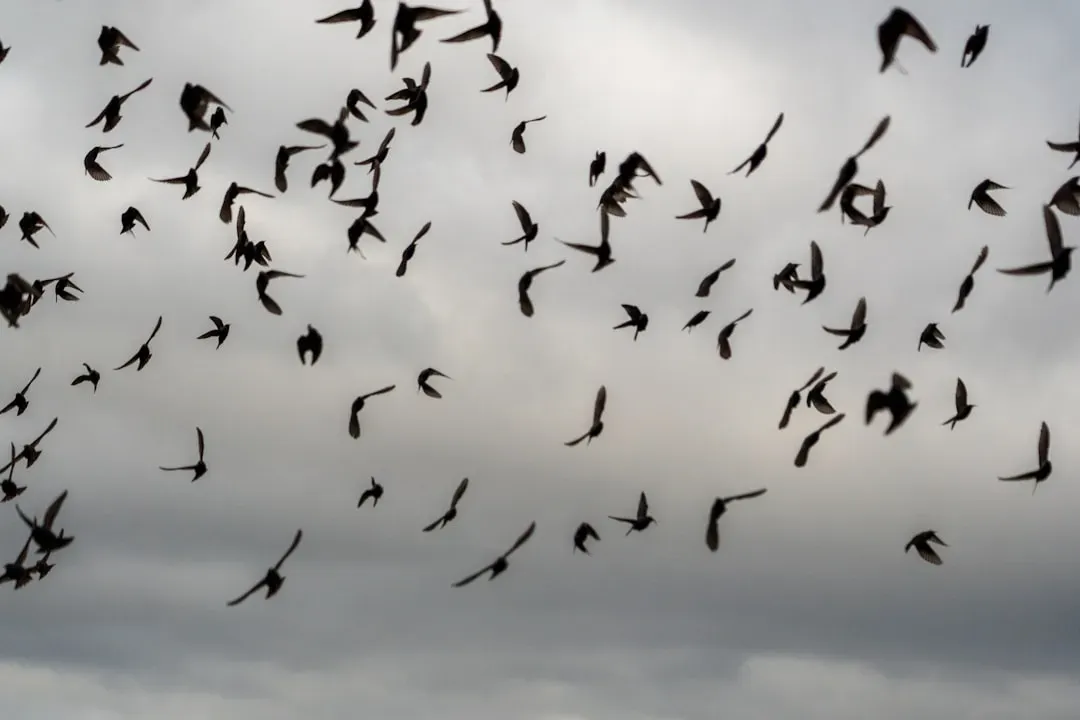
When you step back and look at all these incredible journeys together, a bigger mystery emerges. One of the flaws with current theories is that the heavenly bodies are not always visible, either due to cloudy conditions or, in the case of fish or marine turtles, because they are underwater; another is that the Earth’s magnetic field is constantly varying and therefore cannot be relied upon, and as for the sense of smell, this may help when an animal is nearing its destination but not when it is thousands of miles away in mid ocean.
Many bird species possess a mysterious built-in compass that helps them navigate vast distances during migration through a magnetic sense known as magnetoreception, which is still not fully understood by scientists, and research suggests that birds might see magnetic fields through specialized proteins in their eyes, yet the exact mechanism is elusive, and while theories abound, the precise biological basis of this sense remains one of the great unsolved puzzles of ornithology. Like many of these animals, they just seem to know the way intuitively. That word – intuitively – carries so much weight. It suggests there’s something operating beyond what our current scientific framework can measure or explain.
Conclusion
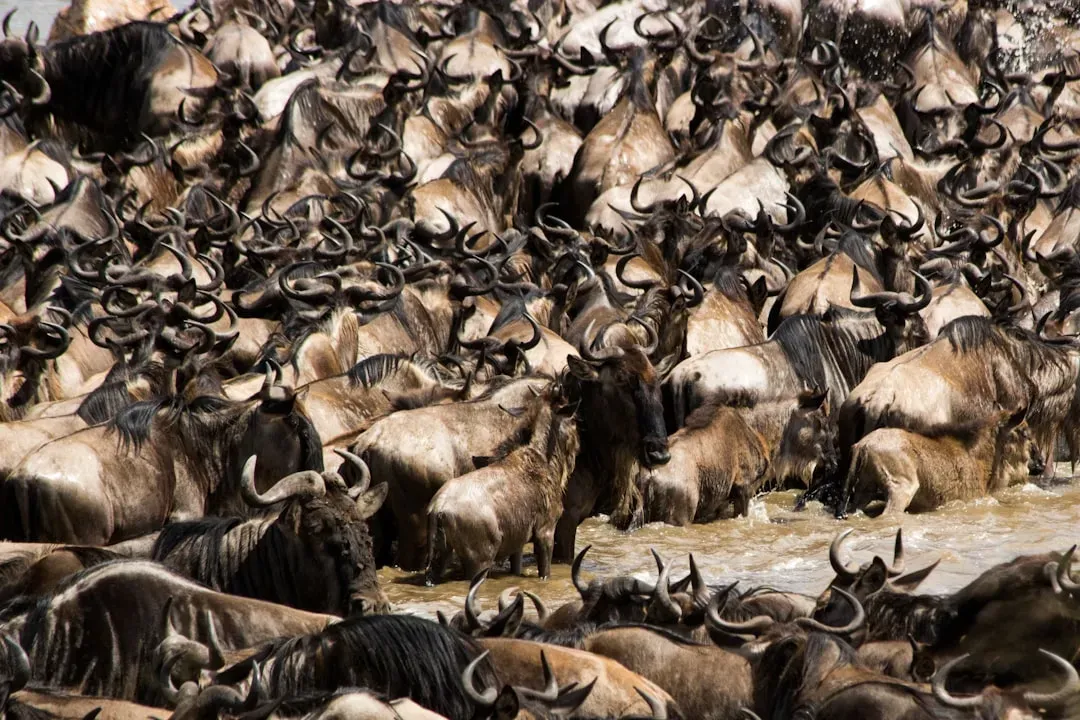
There are mysteries in nature, phenomena that cannot be wholly explained by reductionist science, although this is not to say that they have no explanation or that they cannot be understood. The seven migrations we’ve explored represent just a fraction of nature’s navigational wonders that continue to challenge our understanding. From butterflies crossing continents to eels finding pinpoint locations in vast oceans, these creatures accomplish feats that our most sophisticated technology struggles to replicate.
What makes these migrations truly fascinating isn’t just what we don’t know but what they reveal about the limits of human understanding. Perhaps the wild still holds secrets we’re not meant to fully explain, only to witness in awe. These incredible journeys remind us that nature operates on levels of complexity we’re only beginning to appreciate.
What do you think drives these animals across such impossible distances? Does it make you see migration in a different light?