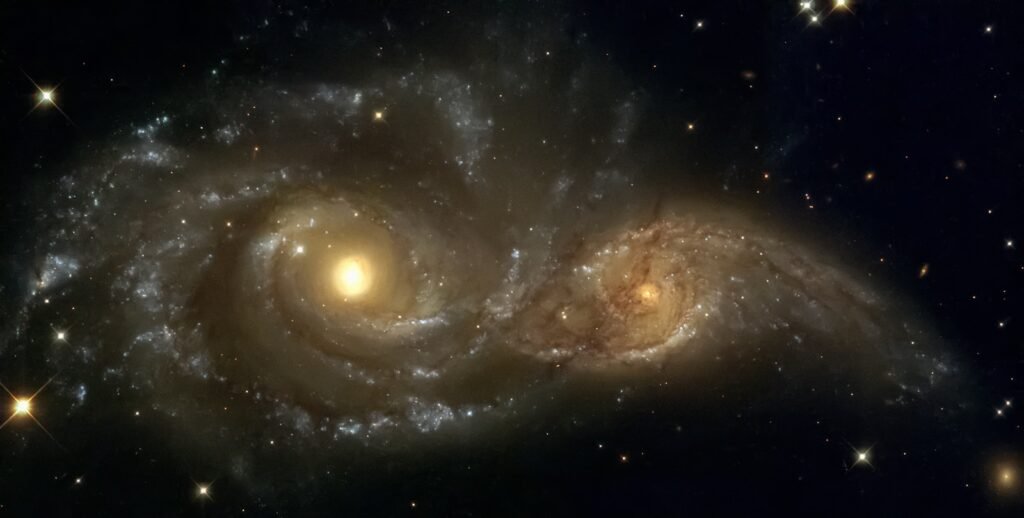

On paper, our universe should have torn itself apart, collapsed in on itself, or never formed complex structures at all. Yet here we are, orbiting a star in a galaxy stitched together by forces that, in many cases, we still don’t fully understand. From cosmic glue that seems too weak to do the job, to subatomic “rules” that appear suspiciously fine‑tuned, physics is littered with tensions between what equations predict and what reality insists on doing. At the same time, archaeologists keep digging up objects that suggest ancient people noticed and perhaps even harnessed these strange forces long before we had modern theories. The result is a surprisingly emotional story: a universe that feels almost precarious, held together by threads that look like they should snap, and a human history full of puzzling clues that say we’ve been wondering about those threads for a very long time.
The Gravity Paradox: Why Galaxies Should Fly Apart
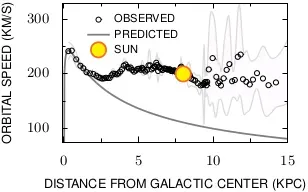
Walk outside on a clear night and every star you see is part of a galaxy that, according to our equations, should not be holding itself together. When astronomers in the twentieth century began measuring how fast stars orbit around their galactic centers, they found something shocking: the outer stars were moving so quickly that visible matter alone could not provide enough gravity to keep them bound. It was like watching children on a carousel going so fast they should be flung off into the dark, and yet they stayed. To reconcile this, scientists invoked an invisible mass they called dark matter, a substance that neither emits nor reflects light but appears to outweigh normal matter by several times. The strange part is that, even now in 2025, nobody has directly detected a dark matter particle in a lab, despite decades of ultra-sensitive experiments deep underground.
Historical records reveal that the puzzle of “too much motion, too little matter” has been with us longer than you might think. In the early twentieth century, astronomers like Fritz Zwicky were already noticing that galaxy clusters behaved as though they were far heavier than their visible content suggested. Today, the vast majority of cosmologists work with models where dark matter is simply accepted as a fundamental ingredient, the invisible scaffolding of the cosmos. But a small and vocal group of researchers argue that what is really wrong might be our understanding of gravity itself, especially at very low accelerations. Either way, the night sky is quietly telling us that something crucial is missing from our current picture of how gravity keeps the universe in one piece.
The Cosmic Fine‑Tuning Problem: Why Everything Is “Just Right”
If gravity is the universe’s glue, then the values of fundamental constants are the mold in which that glue sets. Physicists have spent decades calculating what the universe would look like if you nudged quantities like the strength of gravity, the mass of the electron, or the charge of the proton even a little. What they keep finding is unnerving: change some of these values by a tiny fraction, and stars do not form, chemistry never gets interesting, and no one is around to argue about it. It is as if the dials of reality have been set within shockingly narrow ranges that just happen to allow galaxies, planets, and biology to emerge. This apparent fine‑tuning has become one of the most hotly debated topics in modern cosmology.
To make sense of it, scientists have floated explanations that sound more like science fiction than textbook physics. One idea is the multiverse: an enormous ensemble of universes, each with different random settings for the physical constants, where we naturally find ourselves in one that permits observers. Another focuses on deeper underlying theories, hoping that what looks like fine‑tuning is really just the inevitable outcome of more fundamental laws we have not discovered yet. Meanwhile, philosophers and some physicists wrestle with the unsettling implication that our entire cosmic history depends on numbers that seemingly could have been otherwise. The strange part is not just that the universe is habitable, but that, by our current calculations, it seems almost improbably so.
Ancient Skywatchers and the First Dark Matter Clues
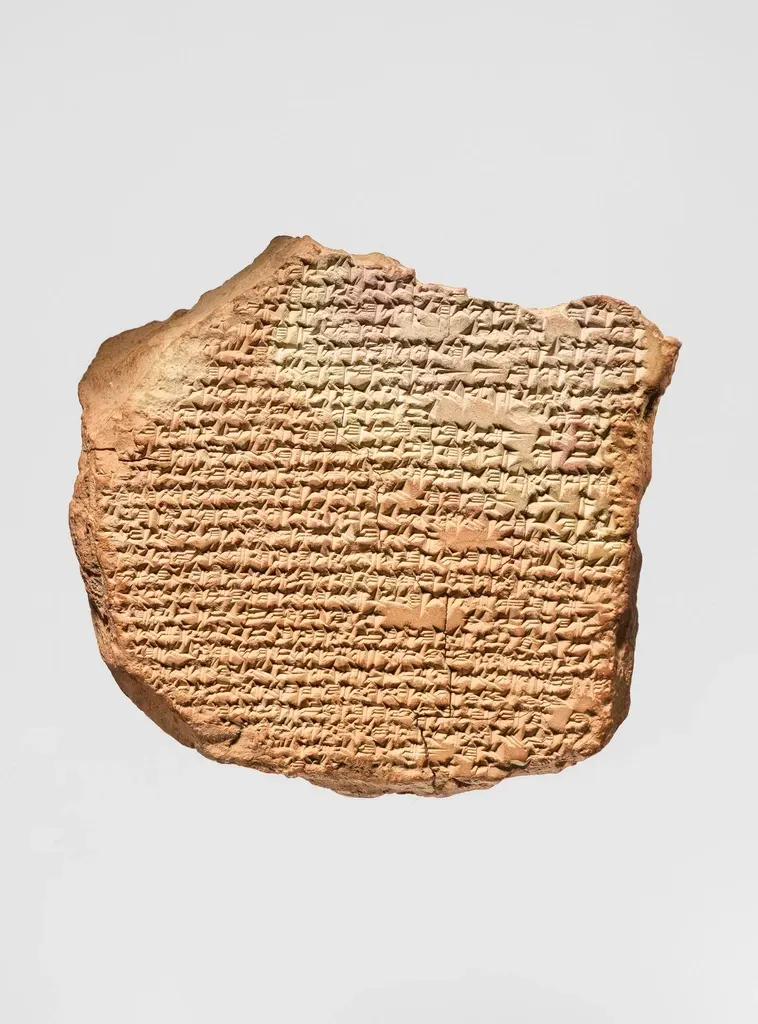
Long before scientists named it “dark matter,” ancient skywatchers were obsessively tracking motions in the heavens that did not easily fit their models. Babylonian clay tablets, some more than two thousand years old, record extremely precise planetary positions over long periods of time. These early astronomers did not know about invisible mass, but they did notice irregularities and “wandering” motions that forced them to invent increasingly sophisticated geometric schemes. In a way, they were among the first to be confronted with the gap between simple gravitational expectations and messy celestial realities. Their tools were clay, bronze instruments, and naked eyes, yet their data foreshadowed the delicate dynamical studies we use in today’s galaxy surveys.
What is striking from an archaeological perspective is just how advanced some of these ancient observations were. Bronze Age and Iron Age artifacts, such as carefully aligned stone circles, temple complexes, and shadow-tracking devices, reveal cultures that were actively modeling the dynamical behavior of the sky. Many of these structures align not only with solstices and equinoxes but also with more subtle lunar cycles that require long‑term tracking to notice. While they had no concept of dark halos encasing galaxies, they were already treating the sky as a problem in motion and mass. When modern astronomers infer hidden matter from how galaxies rotate, they are – in spirit – continuing a tradition of reading invisible forces from visible trajectories that stretches back thousands of years.
Electromagnetism in Stone: Mysterious Ancient Artifacts
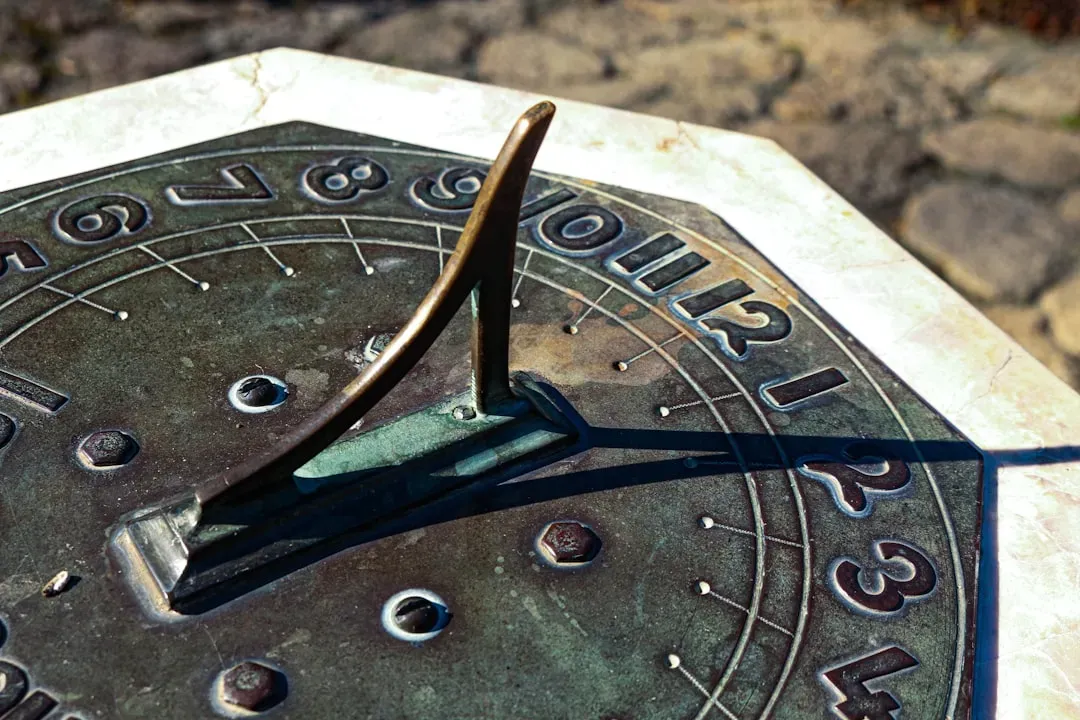
Not all strange forces are cosmic; some are quietly humming in the rocks beneath our feet. Archaeologists have uncovered artifacts that hint at an early, almost uncanny intuition for magnetism and electricity. Ancient Chinese records describe lodestones that align themselves north‑south, and excavated compasses suggest that people were using Earth’s magnetic field for orientation long before there was a formal theory of electromagnetism. In the Mediterranean world, fragments of engraved amber and iron show that people had noticed static electricity and attraction effects when certain materials were rubbed. These observations might have seemed like small curiosities at the time, but they were glimpses into forces that would one day power entire cities and global communications.
There are also objects that still provoke debate. Artifacts like the so‑called “Baghdad Battery” have been suggested by some as primitive electrochemical cells, though mainstream archaeologists are cautious and see them more as storage vessels misinterpreted by modern imaginations. Whether or not that specific claim holds up, it is clear that ancient craftspeople were experimenting with metals, acids, and magnetic minerals in ways that brushed up against the same forces we now describe with Maxwell’s equations. The idea that people working with clay jars, iron rods, and naturally magnetized stones were unknowingly probing the same invisible fields that bind atoms and guide compasses today is a reminder that our relationship with the universe’s hidden forces is older and stranger than it first appears.
The Hidden Clues in Subatomic Symmetry

When scientists finally peered inside the atom, they expected to find a clean, symmetric machine. Instead, they found a jumble of particles and forces that mostly balance, but not quite. One of the deepest puzzles is why the laws of physics treat matter and antimatter almost the same, but just enough differently that matter wins out. Laboratory experiments suggest that if the symmetries were perfect, the early universe should have produced equal amounts of both, which would have annihilated each other into light and left almost nothing behind. Yet clearly, that did not happen, because galaxies, stars, and people made of matter exist in abundance.
Physicists now talk about “broken symmetries,” subtle imbalances in quantum rules that tilt the universe toward matter. High‑energy experiments have measured some of these effects, but they do not yet seem strong enough to fully account for the amount of matter we observe. That gap leaves room for new physics: additional particles, interactions, or entire sectors of reality that standard models have not captured. In a way, the cosmos looks like an old archaeological site where you can see the broad outlines of an ancient structure, but key walls and rooms are missing. We know some symmetry had to break to keep our universe from dissolving into radiation; we just do not yet know where the missing stones are buried.
Why It Matters: A Universe on the Edge of Understanding
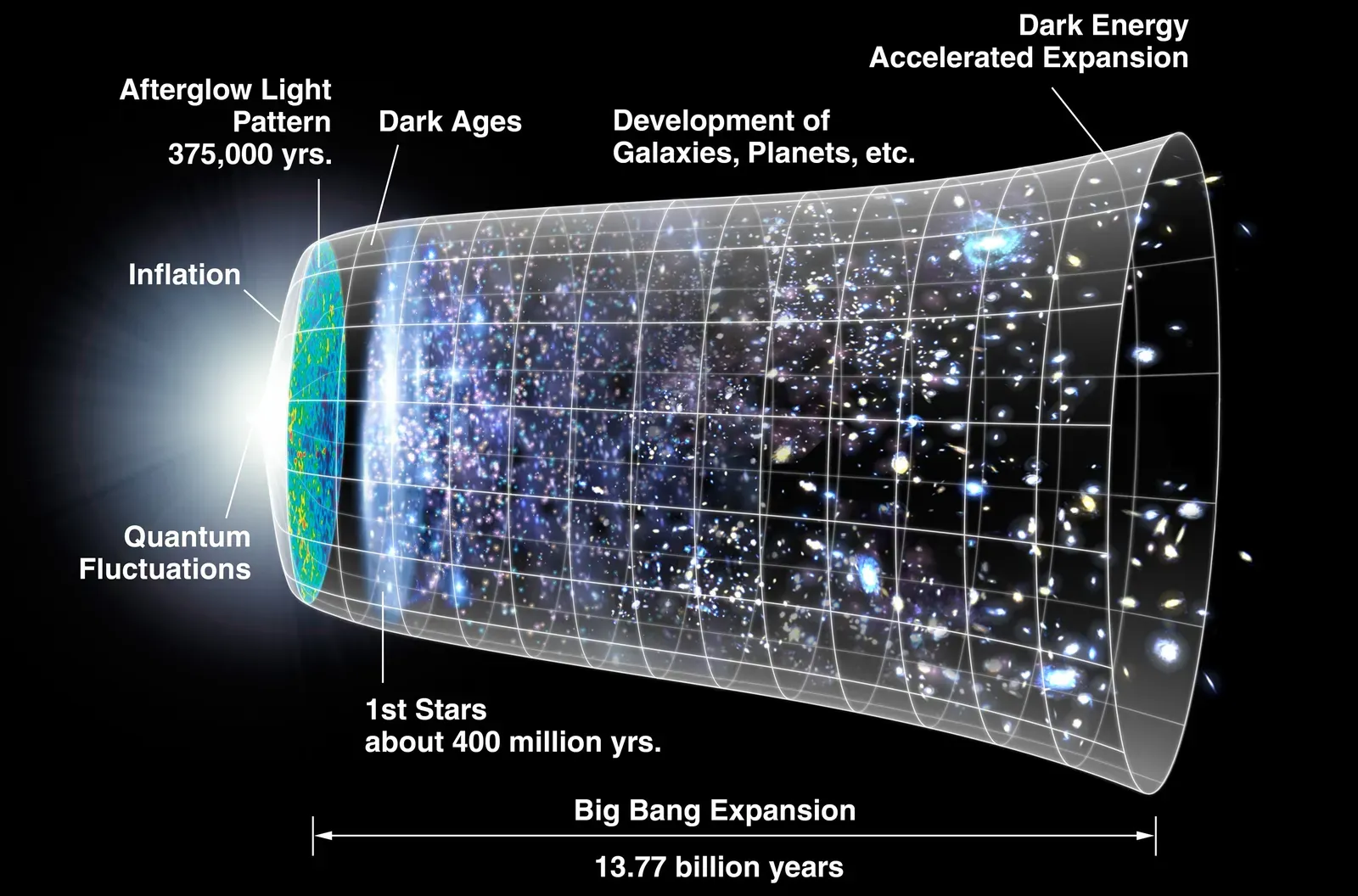
It is tempting to treat all of this as an abstract puzzle, the kind of thing only theorists with chalk-covered blackboards need to worry about. But the question of why the universe holds together cuts straight to how we see ourselves and our history. Traditional physics once promised a tidy, clockwork cosmos governed by simple, elegant laws; that story has fractured as dark matter, dark energy, and fine‑tuning problems have piled up. Meanwhile, archaeology has shifted from viewing past societies as technically naive to recognizing them as careful observers who left behind sophisticated records of how they experienced the same strange forces. The more we learn, the less the universe feels like a solved machine and the more it resembles an unfolding investigation.
Compared to older, more rigid scientific narratives, this newer picture is humbler and, frankly, more thrilling. It suggests that we are living at a moment when basic assumptions about space, time, and matter are legitimately up for revision. Technologies built on past understanding – GPS, medical imaging, particle accelerators – already show how deep physics can shape daily life. If the next big correction to our theories is as dramatic as the leap from classical physics to quantum mechanics, the ripple effects could be just as transformative. Understanding these forces is not only about answering cosmic trivia; it is about charting the boundaries of what might be possible for our species.
From Ancient Tools to Modern Detectors
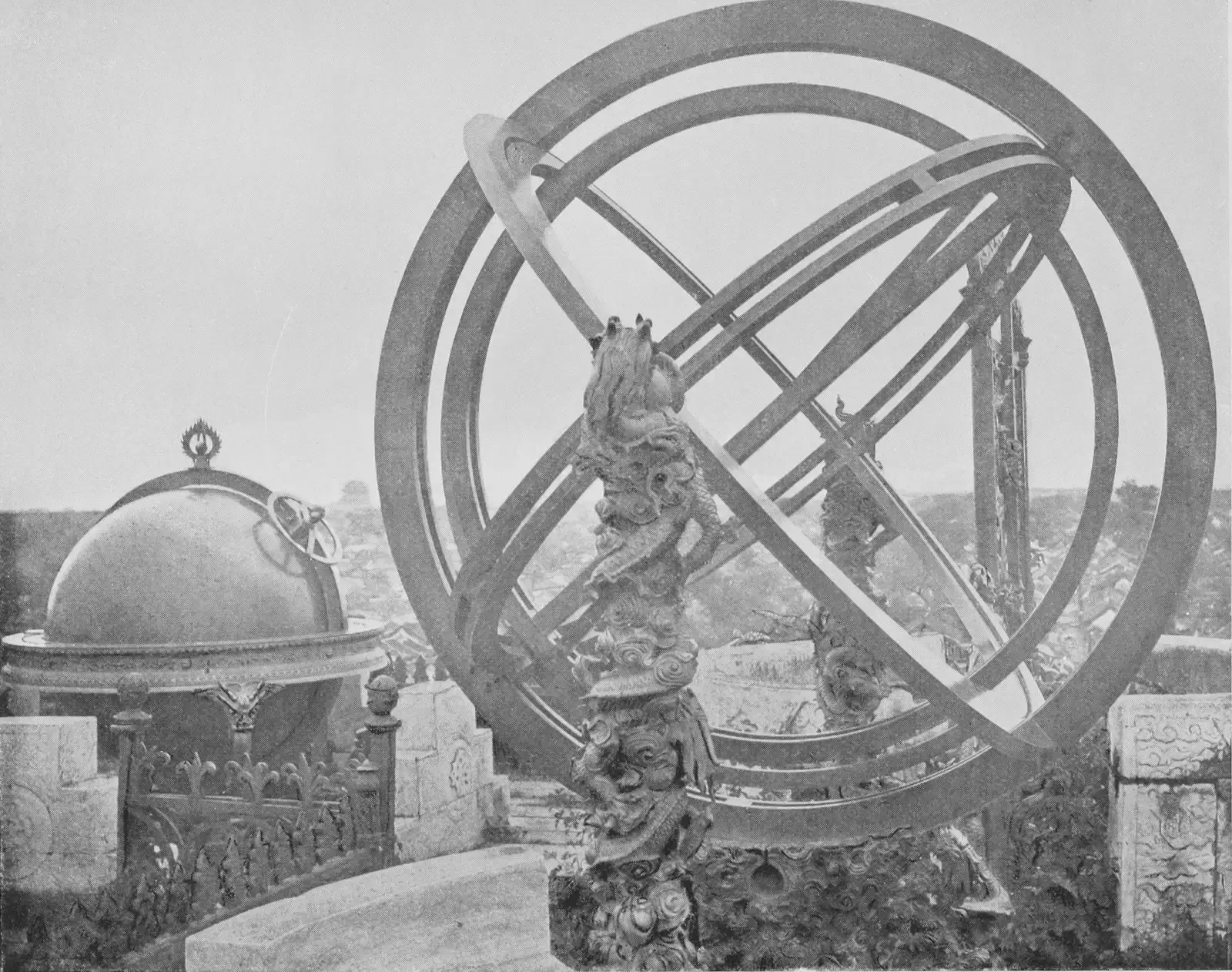
When I first stood in a dark stone chamber aligned with the rising sun at midwinter, the precision felt eerie, almost technological. That same drive to align, measure, and track is now expressed in instruments that are unimaginably more sensitive than a carved doorway or a standing stone. Today’s dark matter experiments sit beneath mountains in ultra‑clean cryogenic labs, waiting for a single exotic particle to nudge an atomic nucleus. Gravitational‑wave observatories stretch across kilometers, able to sense distortions in spacetime thousands of times smaller than a proton. These machines may look nothing like an ancient gnomon or a magnetic spoon needle, yet they are built on the same fundamental urge: to coax hidden forces into leaving visible scratches on our instruments.
What links these eras is not just curiosity but methodology. Ancient astronomical records, carefully etched and cross‑checked over generations, now help modern scientists refine models of Earth’s rotation and long‑term orbital changes. Likewise, excavated compasses and early electrical curiosities remind us that discovery is often incremental and messy, not a single lightbulb moment. As we deploy new detectors in space and underground, we are layering fresh data on top of a very long, very human archive of observations. In that sense, the universe is being studied by a civilization that has been practicing for millennia with stone, bone, bronze, and now silicon and superconductors.
The Future Landscape: New Physics and New Mysteries
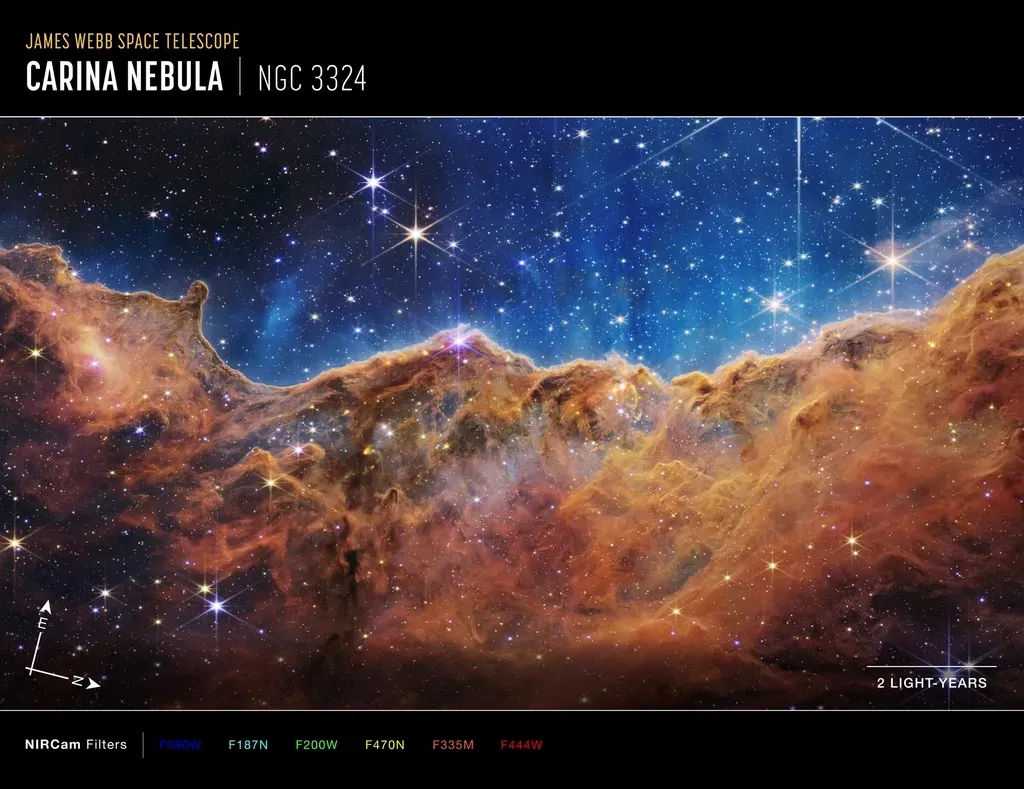
Looking ahead, the hunt for the strange forces that hold everything together is set to intensify rather than wind down. Next‑generation telescopes are mapping the distribution of galaxies with unprecedented precision, searching for subtle fingerprints of dark matter and dark energy in the cosmic web. Particle physicists are designing experiments to look for ultra‑light dark matter fields, hidden forces that could gently sway atoms or oscillate fundamental constants over time. There is serious talk of space‑based interferometers that could detect gravitational waves from the early universe, offering a direct glimpse of how spacetime behaved moments after the Big Bang. Each of these projects is expensive, technically brutal, and aimed directly at the gaps in our understanding.
Yet for every new instrument we build, we also risk uncovering fresh anomalies that complicate the picture further. Some cosmological surveys already hint at small but persistent tensions in measured expansion rates, pushing theorists to consider tweaks to gravity or exotic new particles. In the same way, future archaeological discoveries – an unexpected alignment here, an unfamiliar metalworking technique there – may challenge neat timelines about when humans first grasped certain physical principles. The global implications are twofold: new physics could eventually reshape technologies and energy systems, while new histories could reshape how cultures see their own scientific heritage. The universe may become more knowable in some ways, and stranger in others, at the exact same time.
How You Can Engage With a Universe That “Shouldn’t” Exist

It is easy to feel like a spectator in all of this, watching experts debate dark matter and ancient observatories from a distance. But there are simple, concrete ways to plug into the story of a universe that seems improbably well held together. You can support sky‑darkening initiatives that protect night skies from light pollution, giving both professional observatories and backyard telescopes a clearer view of the cosmic structures that sparked these mysteries. Many archaeological sites and science museums now offer public programs that connect ancient artifacts with modern physics, turning a casual visit into a mini deep dive through space and time. Citizen science platforms invite volunteers to classify galaxies, transcribe old observatory logs, or even help flag anomalies in real data.
Engaging does not have to mean becoming a physicist or archaeologist; it can be as simple as following research updates from observatories, labs, or digs and sharing the most intriguing findings with your own community. Public funding decisions often track what voters care about, so paying attention and speaking up in favor of basic research actually matters. In the end, the universe is being held together not only by gravity and quantum fields, but also by a fragile web of curiosity, collaboration, and long‑term thinking. Whether that web strengthens or frays is partly up to us. What role do you want to play in a cosmos that, by all rights, looks like it should not have been so generous to begin with?
Suhail Ahmed is a passionate digital professional and nature enthusiast with over 8 years of experience in content strategy, SEO, web development, and digital operations. Alongside his freelance journey, Suhail actively contributes to nature and wildlife platforms like Discover Wildlife, where he channels his curiosity for the planet into engaging, educational storytelling.
With a strong background in managing digital ecosystems — from ecommerce stores and WordPress websites to social media and automation — Suhail merges technical precision with creative insight. His content reflects a rare balance: SEO-friendly yet deeply human, data-informed yet emotionally resonant.
Driven by a love for discovery and storytelling, Suhail believes in using digital platforms to amplify causes that matter — especially those protecting Earth’s biodiversity and inspiring sustainable living. Whether he’s managing online projects or crafting wildlife content, his goal remains the same: to inform, inspire, and leave a positive digital footprint.